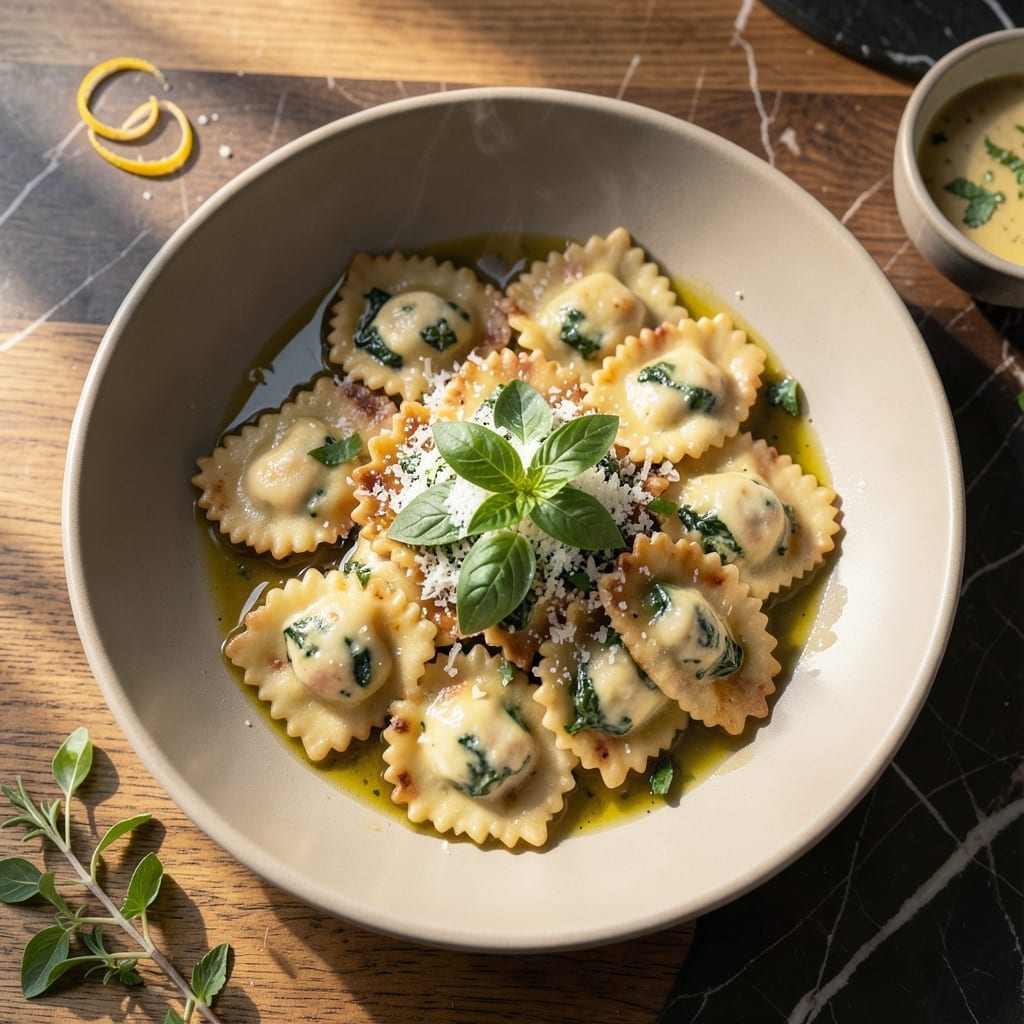
Making gluten-free pasta that holds up to boiling and stuffing can be a challenge, but this recipe delivers pillowy results every time. The dough comes together quickly with simple ingredients.
You’ll create tender ravioli pockets that maintain their shape while cooking. The fresh fillings elevate this dish beyond ordinary, making it restaurant-worthy at home.
Ingredients for Gluten Free Pasta Recipe for Ravioli
A handful of specialty flours and fresh herbs create restaurant-worthy ravioli at home.
| Ingredient | Amount | Notes |
|---|---|---|
| Gluten-Free All-Purpose Flour Blend 🌾 | 2 cups | Plus extra for dusting surfaces |
| Tapioca Starch 🌾 | ½ cup | Adds elasticity to dough |
| Xanthan Gum 🧪 | ½ tsp | Omit if blend contains it |
| Large Eggs 🥚 | 4 whole | Room temperature preferred |
| Extra-Virgin Olive Oil 🫒 | 1 tbsp | For dough pliability |
| Kosher Salt 🧂 | ½ tsp | Diamond Crystal preferred |
| Ricotta Cheese 🧀 | 1 cup | Whole milk for richness |
| Parmesan Cheese 🧀 | ½ cup | Freshly grated from block |
| Fresh Spinach Leaves 🥬 | 1 cup | Blanched and finely chopped |
| Garlic Cloves 🧄 | 2 cloves | Minced for filling |
| Nutmeg 🌰 | ¼ tsp | Freshly grated preferred |
| Lemon Zest 🍋 | 1 tsp | From one medium lemon |
| Black Pepper 🌶️ | ¼ tsp | Freshly ground for filling |
[recipe_ingredient_scaler]
The gluten-free flour blend is critical here. King Arthur Measure for Measure or Bob’s Red Mill 1-to-1 are reliable options with consistent results. Tapioca starch adds the necessary stretch to prevent cracking during boiling. Most blends already contain xanthan gum—check the label before adding extra. For the best texture, weigh your flours: 1 cup of GF blend equals approximately 140 grams.
No ricotta? Cottage cheese blended smooth works in a pinch, though the texture will be slightly different. For a dairy-free version, mashed firm tofu with a squeeze of lemon juice mimics ricotta’s tang. Freshly grated nutmeg is worth the effort—pre-ground loses its aroma quickly. If spinach isn’t your thing, blanched Swiss chard or kale can be substituted with similar results.
The dough can rest in the fridge for up to 24 hours if wrapped tightly. Filled ravioli freeze beautifully on a tray before cooking—store in airtight bags for up to 3 months. Bring frozen ravioli to a boil directly from the freezer, adding 1-2 extra minutes to the cooking time.
Why You’ll Love This Recipe
- No Fuss Dough: The gluten-free flour blend and xanthan gum do all the work—just mix, roll, and stuff.
- Rich, Buttery Bite: Honestly, the eggs and olive oil give it that classic ravioli taste without the gluten.
- Freezer Friendly: I make a double batch and freeze half for those I-don’t-want-to-cook nights.
- Budget Stretcher: A pound of filling goes further when wrapped in this homemade pasta.
Step-by-Step Instructions for Gluten Free Pasta for Ravioli
Master the technique for creating delicate, elastic dough that rolls and shapes beautifully.
Step 1: Prepare the Gluten Free Pasta Dough
In a large mixing bowl, whisk together the 2 cups Gluten-Free All-Purpose Flour Blend, 0.5 cup Tapioca Starch, and 0.5 tsp Xanthan Gum until fully combined. The xanthan gum acts as a binder, replicating the elasticity that gluten would typically provide.
Create a well in the center and add the 4 whole Large Eggs, 1 tbsp Extra-Virgin Olive Oil, and 0.5 tsp Kosher Salt. Using a fork, gradually incorporate the dry ingredients into the wet until a shaggy dough forms. This initial mixing ensures even distribution of liquids.
Step 2: Knead and Rest the Dough
Turn the dough onto a surface dusted with additional gluten-free flour blend. Knead for 8-10 minutes until smooth and slightly tacky, but not sticky. The dough should spring back when pressed lightly with your finger, indicating proper development.
Wrap the dough tightly in plastic wrap and let it rest at room temperature for 30 minutes. This resting period allows the starches to hydrate fully and the xanthan gum to activate, making the dough more pliable and easier to roll.
Step 3: Create the Spinach and Ricotta Filling
In a mixing bowl, combine the 1 cup Ricotta Cheese, 0.5 cup Parmesan Cheese, 1 cup Fresh Spinach Leaves (blanched, drained, and finely chopped), 2 cloves Garlic Cloves (minced), 0.25 tsp Nutmeg, 1 tsp Lemon Zest, and 0.25 tsp Black Pepper. Mix until all ingredients are thoroughly incorporated.
The filling should be thick but spreadable. The ricotta provides creaminess, while the parmesan adds a sharp, salty depth. The spinach contributes freshness, balanced by the warmth of nutmeg and brightness of lemon zest.
Step 4: Roll, Fill, and Shape the Ravioli
Divide the rested dough into four equal portions. Working with one portion at a time (keep the rest covered), roll the dough through a pasta machine on the widest setting. Fold the sheet in thirds, like a letter, and repeat the process two more times to ensure even thickness.
Gradually decrease the setting and roll the dough through once more at each level until you reach the second-thinnest setting. The sheet should be thin enough to see your hand through it but still sturdy enough to hold the filling. Lay the sheet on a floured surface and place 1 teaspoon of filling at 2-inch intervals along the length.
Lightly brush the dough around the filling with water to moisten. Lay a second sheet of dough on top and press gently around each mound of filling to remove air pockets. Use a ravioli cutter or sharp knife to cut into individual ravioli, ensuring each is sealed tightly at the edges.
Pro Tips For Making Gluten Free Pasta Recipe For Ravioli
- Rest the Dough: After mixing, let the dough sit covered for 20-30 minutes—I learned this the hard way when my first batch cracked while rolling because the xanthan gum needed time to hydrate fully.
- Use Extra Tapioca: Dust your work surface and rolling pin with tapioca starch instead of flour to prevent sticking; it’s the one thing that actually changes the outcome with gluten-free dough.
- Skip Overworking: Handle the dough as little as possible once it comes together, or it’ll turn gummy from the xanthan gum—my grandmother swore by this, and she was right.
- Roll Thin: Aim for 1/16-inch thickness when rolling; any thicker and your ravioli will taste doughy rather than delicate, even with the extra-virgin olive oil in the mix.
Pro Cooking Tips for Perfect Results
Dough Consistency
If your dough feels too dry, add 1-2 tsp water at a time until it comes together. Conversely, if it’s too sticky, sprinkle in additional gluten-free flour blend, 1 tbsp at a time. The ideal texture should be smooth and slightly tacky but not stick to your hands. 💡
Rolling Perfection
Use a pasta machine for even thickness—I recommend the Marcato Atlas. If rolling by hand, aim for sheets about 1/16 inch thick. Dust your surface generously with flour to prevent sticking, but brush off excess before layering the sheets.
Sealing Trick
Press out all air pockets around the filling before sealing. Use a fork to crimp the edges, creating a tight seal that prevents filling from leaking during cooking. This also gives your ravioli that classic ridged edge look.
Boiling Water
Use a large pot with plenty of water—at least 4 quarts—to prevent sticking. Salt the water generously, about 1 tbsp kosher salt per quart. The water should be at a rolling boil before adding your ravioli.
Cooking Time
Fresh ravioli cook quickly—usually 2-3 minutes once they float to the surface. Taste one to check for doneness; the dough should be tender but still hold its shape. Avoid overcrowding the pot, as this can cause sticking. 🔥
Drying Option
If not cooking immediately, dust the shaped ravioli with gluten-free flour and let them dry on a floured tray for 10-15 minutes. This prevents sticking and makes them easier to handle when transferring to boiling water.
Nutrition Facts
Frequently Asked Questions
Can I use a different flour blend?
Yes, but check if it contains xanthan gum first. King Arthur or Bob’s Red Mill work best for elasticity. Avoid single flours like almond—they lack structure.
Why did my ravioli crack while boiling?
This usually means the dough was too thin or didn’t rest long enough. Roll to 1/16 inch thickness and rest for 30 minutes to prevent breaking.
Can I make these ahead of time?
Freeze uncooked ravioli on a tray, then transfer to a bag. Cook from frozen, adding 1-2 extra minutes to the boiling time.
How do I know when they’re done?
They’ll float to the surface after 2-3 minutes. Taste one—the dough should be tender but still hold its shape.

Trained in classic French technique but raised on slow-cooked ribs and spicy rubs, she blends culinary skill with smoke and soul.
- Recipe for Boneless Pork Chops in Cast Iron Skillet: Sear and Baste to Juicy Perfection - October 3, 2026
- Recipe for Boneless Cross Rib Roast: Slow-Roasted Beef with Herb Crust - October 3, 2026
- Hamburgers in Sauce Recipe Crock Pot: Slow-Cooked Savory Delight - October 3, 2026