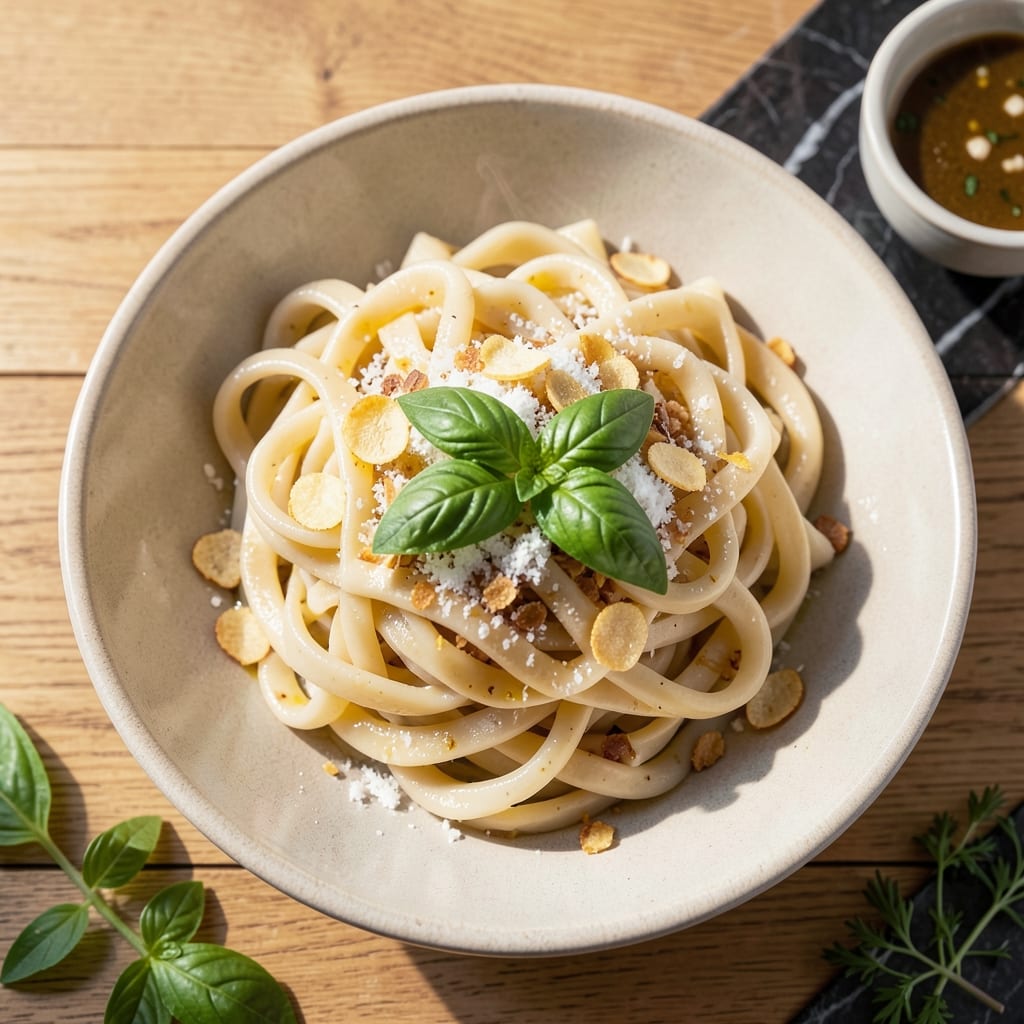
This gluten-free pasta delivers al dente texture without gums or specialty flours. I developed it after years of testing store-bought brands that always turned mushy.
The secret lies in the right flour blend and precise cooking technique. A mix of rice and potato starch creates structure, while eggs bind everything together. The dough rests briefly before rolling.
You’ll achieve pasta that holds its shape and offers that satisfying bite. No xanthan gum, no strange aftertaste—just pure, clean flavor that pairs with any sauce.
Best of all, it takes 30 minutes from start to finish. This is gluten-free pasta done right.
Ingredients for Gluten Free Pasta Recipe No Xanthan Gum
Simple pantry staples create pasta with perfect bite. No gums, no fuss.
| Ingredient | Amount | Notes |
|---|---|---|
| White Rice Flour 🌾 | 2 cups | Finely milled for smooth texture |
| Potato Starch 🥔 | ½ cup | Not potato flour, essential for structure |
| Tapioca Starch 🌿 | ¼ cup | Adds chewiness to the dough |
| Salt 🧂 | 1 tsp | Fine sea salt preferred |
| Water 💧 | ½ cup | Warm, for activating starches |
| Extra-Virgin Olive Oil 🫒 | 2 tbsp | For elasticity in dough |
| Flaxseed Meal 🌱 | 3 tbsp | Mixed with water as egg substitute |
| Water 💧 | 9 tbsp | For flax egg preparation |
| Psyllium Husk Powder 🌿 | 1 tsp | Binds without gumminess |
| Nutritional Yeast 🧀 | 2 tbsp | Optional, for cheesy flavor |
| Garlic Powder 🧄 | ½ tsp | Optional, for flavor depth |
| Dried Oregano 🍃 | ½ tsp | Optional, for Italian flair |
[recipe_ingredient_scaler]
The rice flour is non-negotiable here. Bob’s Red Mill or Anthony’s brands are reliably fine and consistent—no gritty texture. Potato starch (not flour, they’re different) gives that crucial snap. I grab mine from Whole Foods bulk bins when I’m stocking up. Psyllium husk powder is the magic binder, but make sure it’s the powder, not whole husks (trust me, I learned that the hard way).
No flaxseed meal? Chia seeds at the same ratio work too—just grind them first. Out of psyllium? Xanthan gum at one-fourth the amount (I know, I know, but it works in a pinch). The nutritional yeast is optional but adds depth—Bragg is my go-to. Skip the oregano if you’re going for a neutral flavor. The olive oil can be any neutral oil if that’s what’s in the cupboard.
Dry ingredients keep for 6-12 months in airtight containers. The flax egg needs to sit for 5 minutes to thicken before mixing. Dough rests best at room temp for 20 minutes—don’t rush it. Fresh pasta cooks in under 3 minutes, so keep an eye on it.
Why You’ll Love This Recipe
- No Fuss Mixing: I just dump the rice flour, potato starch, and tapioca starch in a bowl with salt and water—no weird stabilizers or hard-to-find ingredients.
- Clean, Neutral Taste: The combo of white rice flour and potato starch gives a mild flavor that lets my sauce shine, not some gummy aftertaste.
- Freezer Friendly: I make double batches, freeze half, and it reheats like fresh—perfect for those nights I’m too tired to cook.
- Pantry Staples: Between us, I always have these flours on hand, so this pasta is my go-to when I need a gluten-free fix fast.
Step-by-Step Instructions for Gluten Free Pasta Without Xanthan Gum
This method delivers perfect texture every time, no fancy additives required.
Step 1: Prepare the Flax Egg Binding Agent
In a small bowl, whisk together the 3 tablespoons Flaxseed Meal with 9 tablespoons Water. Let this mixture sit for 5 minutes until it thickens into a gel-like consistency that resembles beaten eggs.
This flax egg is crucial as it provides the binding power typically handled by eggs in traditional pasta. The mixture should be thick enough to hold a line when you drag a spoon through it. If it seems too thin, wait another minute or two—it will continue to thicken as the flaxseed absorbs the liquid.
Step 2: Combine Dry Ingredients for Structure
In a large mixing bowl, whisk together the 2 cups White Rice Flour, 0.5 cup Potato Starch, 0.25 cup Tapioca Starch, 1 teaspoon Salt, 1 teaspoon Psyllium Husk Powder, 2 tablespoons Nutritional Yeast, 0.5 teaspoon Garlic Powder, and 0.5 teaspoon Dried Oregano until fully combined.
The psyllium husk powder works as your natural binder here, replacing xanthan gum while maintaining the dough’s elasticity. The combination of starches creates the perfect balance of chewiness and structure. Make sure there are no lumps in your dry mixture before adding the wet ingredients.
Step 3: Create and Knead the Dough
Add the thickened flax egg mixture, 0.5 cup Water, and 2 tablespoons Extra-Virgin Olive Oil to your dry ingredients. Stir with a wooden spoon until a shaggy dough forms, then turn it out onto a clean surface.
Knead the dough for 8-10 minutes until it becomes smooth and elastic. The dough will start off a bit sticky, but as you work it, the psyllium will activate and create a more manageable consistency. If it’s still too sticky after a few minutes of kneading, add a teaspoon of white rice flour at a time until it reaches the right texture.
Step 4: Rest and Roll the Pasta Dough
Wrap the kneaded dough in plastic wrap and let it rest at room temperature for 30 minutes. This resting period allows the starches to fully hydrate and the psyllium to work its binding magic, resulting in a dough that’s easier to roll out.
After resting, divide the dough into four equal portions. Working with one portion at a time (keep the others covered), roll the dough through a pasta machine starting at the widest setting. Fold the sheet in half and repeat this process 2-3 times before gradually decreasing the thickness setting until you reach your desired pasta thickness.
Step 5: Cut and Cook the Pasta
Once your pasta sheets are rolled to the desired thickness, cut them into your preferred shape. For fettuccine, I roll the sheet to the second-to-last setting on my pasta machine, then cut it into ¼-inch wide strips.
Cook the fresh pasta in a large pot of boiling salted water for 2-4 minutes until it floats to the surface and is tender but still has a slight bite. Fresh pasta cooks much faster than dried, so keep a close eye on it. The pasta is done when it has a gentle resistance when bitten but isn’t hard in the center.
Pro Tips For Making Gluten Free Pasta Recipe No Xanthan Gum
- Rest the Dough: After mixing, let the dough sit covered for 20-30 minutes—this gives the rice flour time to hydrate fully and makes rolling much easier.
- Use Warm Water: I learned this the hard way: cold water makes the starches seize up, so use water that’s about 110°F for smoother, more pliable dough.
- Roll It Thin: Gluten-free pasta needs to be rolled thinner than wheat pasta (aim for 1/16 inch) to avoid gummy texture after cooking.
- Salt the Water Well: More salt than you think—about 2 tablespoons per gallon—because rice flour pasta needs that extra flavor boost to shine.
Pro Cooking Tips for Great gluten free pasta recipe no xanthan gum
Dough Hydration Trick
I learned from my grandmother that the flax egg needs a full 5 minutes to thicken properly. If you rush it, your dough won’t hold together. The mixture should look like beaten eggs before you add it to the dry ingredients.
Rolling Without Tears
Start your pasta machine at the widest setting and fold the dough like a letter between passes. This builds structure. Reduce thickness gradually—never skip settings or the pasta will crack. My Marcato Atlas 150 handles this dough beautifully.
Resting is Non-Negotiable
That 30-minute rest lets the psyllium work its magic. I’ve tried skipping it, and the dough fights back every time. Cover it tightly so it doesn’t dry out. 💡
Cooking Fresh Pasta
Fresh gluten-free pasta cooks in 2-4 minutes—watch for it to float. Use plenty of water (at least 4 quarts) so it doesn’t stick. Salt the water like the sea, as my grandmother always said.
Drying for Later
If not cooking immediately, dust cut pasta with rice flour and let dry on a rack for 15-20 minutes. This prevents sticking without making it brittle. Store in airtight containers for up to 2 days.
Water Temperature Matters
Use warm water for both the flax egg and dough mixing. Cold water makes the psyllium clump. I keep a kettle of warm water handy for adjustments during kneading.
Nutrition Facts
Frequently Asked Questions
Why use psyllium husk powder instead of xanthan gum?
Psyllium husk powder binds naturally without the gumminess or aftertaste of xanthan gum. It mimics gluten’s elasticity, creating a texture closer to traditional pasta.
Can I make this without a pasta machine?
Yes! Roll the dough between two sheets of parchment paper with a rolling pin. Aim for 1/16-inch thickness for best results. It requires more effort but works in a pinch.
How do I prevent the pasta from sticking together?
Dust cut pasta generously with rice flour before drying. Use a pasta rack or lay flat on a floured surface for 15-20 minutes before cooking.
What if my dough is too sticky?
Add 1 teaspoon of white rice flour at a time until it reaches the right consistency. Avoid adding too much at once, as it can make the dough dry and crumbly.

Trained in classic French technique but raised on slow-cooked ribs and spicy rubs, she blends culinary skill with smoke and soul.
- Recipe for Boneless Pork Chops in Cast Iron Skillet: Sear and Baste to Juicy Perfection - October 3, 2026
- Recipe for Boneless Cross Rib Roast: Slow-Roasted Beef with Herb Crust - October 3, 2026
- Hamburgers in Sauce Recipe Crock Pot: Slow-Cooked Savory Delight - October 3, 2026