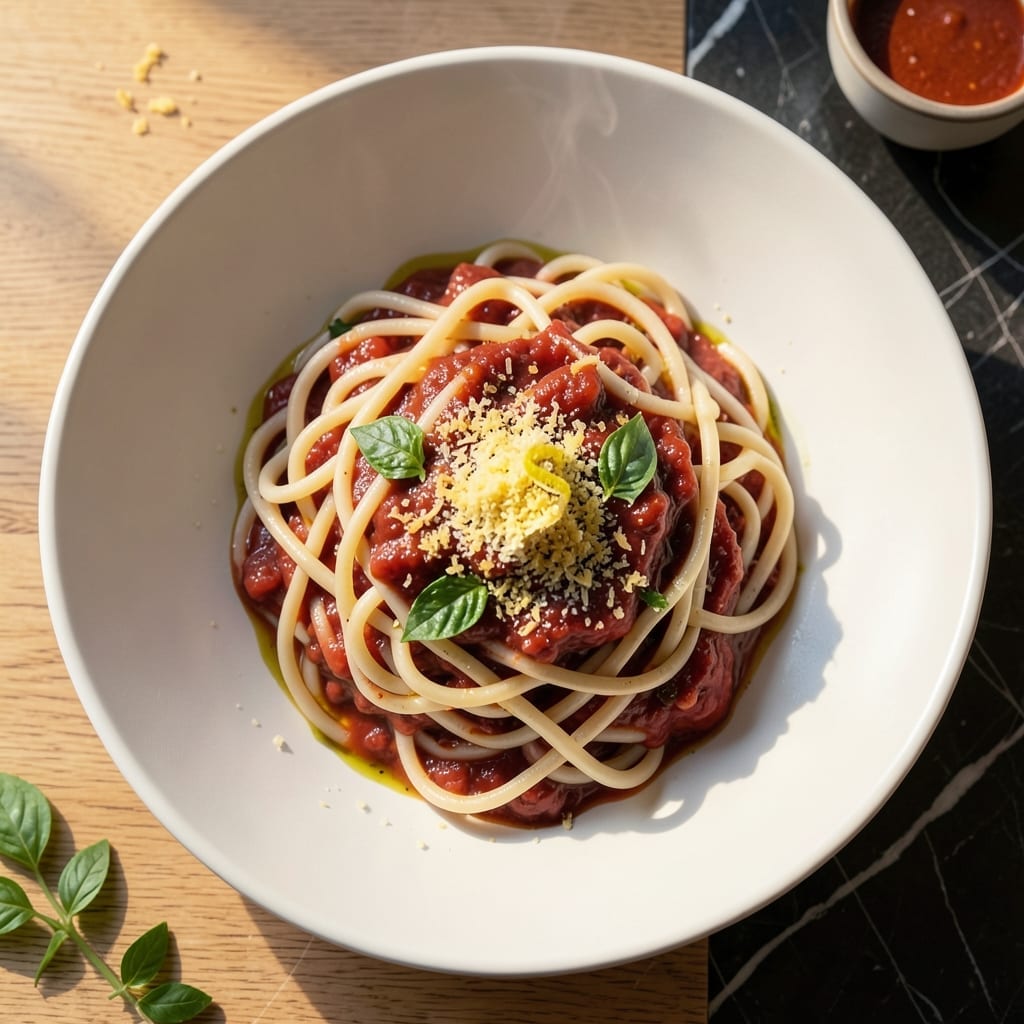
Mastering gluten free pasta with rice flour takes precision, but the results are worth every effort. This recipe delivers al dente texture without traditional wheat, using simple techniques to achieve pasta that holds its shape and bite.
With just a few pantry staples and careful mixing, you’ll create strands that cook up perfectly tender. The process requires patience during resting and rolling, but the final product rivals any conventional pasta.
Ingredients for Gluten Free Pasta Recipe Rice Flour
Just a few pantry staples and careful mixing create this gluten-free pasta.
| Ingredient | Amount | Notes |
|---|---|---|
| White Rice Flour 🌾 | 2 cups | Fine grind for smooth texture |
| Brown Rice Flour 🌾 | ½ cup | Adds nuttiness and structure |
| Tapioca Starch 🌾 | ½ cup | Binds and adds elasticity |
| Xanthan Gum 🧪 | ½ tsp | Essential for stretchiness |
| Salt 🧂 | ½ tsp | Fine sea salt preferred |
| Water 💧 | ¾ cup | Warm for better mixing |
| Olive Oil 🫒 | 1 tbsp | Extra-virgin for richness |
| Garlic Powder 🧄 | ¼ tsp | Optional for flavor depth |
| Dried Oregano 🍃 | ¼ tsp | Optional for Italian flair |
| Turmeric 🌿 | 0.125 tsp | For color, optional |
[recipe_ingredient_scaler]
White rice flour is the base here—Bob’s Red Mill is a reliable brand with consistent fine grind. Brown rice flour adds depth, but don’t skip the tapioca starch; it’s non-negotiable for elasticity. Xanthan gum is the game-changer for that chewy bite (find it in the gluten-free aisle at Whole Foods or Sprouts). Measure precisely—this isn’t the time for eyeballing.
No xanthan gum? Psyllium husk powder at half the amount works, but texture varies. Swap tapioca starch for arrowroot if needed. The flours must be fine—coarse rice flour makes gritty pasta. For color, turmeric is subtle; skip it if you prefer neutral strands. The olive oil isn’t just for flavor—it helps the dough come together.
Store flours in airtight containers in a cool, dark place for up to 3 months. Mixed dough rests best covered at room temp for 30 minutes before rolling. Fresh pasta cooks fast—2-3 minutes in boiling water. Freeze uncooked strands on a tray, then transfer to bags for 1 month.
Why You’ll Love This Recipe
- One Bowl Wonder: I just dump the white and brown rice flours, tapioca starch, xanthan gum, and salt in a bowl—no fancy equipment, no fuss.
- Nutty Comfort: The brown rice flour adds this warm, toasty depth that makes me forget it’s gluten free.
- Meal Prep Magic: I make a double batch on Sunday and it reheats beautifully for quick lunches all week.
- Pantry Friendly: All the ingredients keep forever in my cupboard, so I can whip this up anytime without a last-minute store run.
Step-by-Step Instructions for Gluten Free Pasta with Rice Flour
This method delivers perfectly textured pasta every time with a simple, reliable process.
Step 1: Combine Dry Ingredients Thoroughly
In a large mixing bowl, whisk together the 2 cups White Rice Flour, 0.5 cup Brown Rice Flour, 0.5 cup Tapioca Starch, 0.5 tsp Xanthan Gum, and 0.5 tsp Salt until fully incorporated. The fine grind of the white rice flour ensures a smooth texture, while the brown rice flour adds structure.
I always sift these dry ingredients first to prevent lumps in the final dough. The xanthan gum is critical—it provides the elasticity that gluten normally would. Make sure it’s evenly distributed to avoid chewy or gummy spots in your pasta.
Step 2: Incorporate Wet Ingredients Gradually
Create a well in the center of your dry mixture. Add the 0.75 cup Water (warm works best) and 1 tbsp Olive Oil to the well. Using a fork, gradually incorporate the dry ingredients into the wet, mixing from the center outward.
If you’re using the optional flavorings, add the 0.25 tsp Garlic Powder, 0.25 tsp Dried Oregano, and 0.125 tsp Turmeric at this stage. The dough will start to come together but may appear crumbly at first—this is normal.
Step 3: Knead Until Smooth and Elastic
Turn the dough onto a clean surface dusted lightly with additional white rice flour. Knead the dough for 8-10 minutes until it becomes smooth and slightly elastic. The tapioca starch helps bind everything together, while the xanthan gum develops that crucial stretch.
If the dough feels too dry, add water 1 teaspoon at a time. If it’s too sticky, sprinkle in a bit more white rice flour. You’re aiming for a dough that’s firm but pliable, similar to traditional pasta dough. The warmth from your hands will help activate the xanthan gum.
Step 4: Rest the Dough Before Rolling
Wrap the kneaded dough in plastic wrap and let it rest at room temperature for 30 minutes. This resting period allows the flours to fully hydrate and the xanthan gum to work its magic, preventing the dough from cracking when you roll it out.
During this time, the dough will relax, making it much easier to work with. Don’t skip this step—it’s the difference between brittle pasta and noodles that hold together beautifully when cooked.
Step 5: Roll and Cut Your Pasta
Divide the rested dough into 4 equal portions. Working with one portion at a time (keep the others covered), roll the dough through a pasta machine or by hand until it reaches your desired thickness. For most shapes, 1/8-inch thickness works well.
Cut the sheets into your preferred shape—fettuccine, tagliatelle, or squares for ravioli. Dust the cut pasta lightly with white rice flour to prevent sticking. Cook immediately in boiling salted water for 2-3 minutes or until the pasta floats to the surface and is tender but still slightly firm to the bite.
Pro Tips For Making Gluten Free Pasta Recipe Rice Flour
- Knead Longer: I learned this the hard way—rice flour dough needs a solid 8-10 minutes of kneading to develop the right elasticity, otherwise your pasta will crumble when boiling. The xanthan gum won’t activate properly if you rush it.
- Weigh Your Flours: Brown rice flour is denser than white, so volume measurements throw off the texture. Use a kitchen scale—120g total flour blend per serving keeps the ratio spot-on.
- Rest the Dough: After mixing, let the dough sit covered for 20 minutes—this lets the tapioca starch absorb moisture fully and prevents that gummy, undercooked center in your pasta.
- Salt the Water Well: Gluten-free pasta needs more seasoning to stand out. Use 2 tablespoons of salt per gallon of boiling water, or it’ll taste bland no matter how good your dough is.
Wine and Beer Pairings for This gluten free pasta recipe rice flour
Italian White Wines
Crisp Italian whites like Pinot Grigio from Alto Adige cut through the subtle nuttiness of brown rice flour. The bright acidity refreshes your palate between each al dente bite. I always chill mine to 45-50°F for maximum crispness. 🍷
Light-Bodied Reds
For red wine lovers, try a light Sangiovese from Chianti. Its moderate tannins won’t overpower the delicate rice flour base. Serve slightly chilled at 60°F to enhance its food-friendliness. The earthy notes complement the pasta beautifully.
Craft Beer Options
An American wheat beer like Allagash White offers citrusy coriander notes that pair wonderfully. The effervescence cleanses your palate after each forkful. I find 12 oz is the perfect serving size with this dish. 🍺
Gluten-Free Beer
For strict gluten avoidance, Glutenberg Blonde Ale is an excellent choice. Its light body and subtle fruitiness won’t compete with your pasta. Always check labels to ensure less than 20ppm gluten content.
Non-Alcoholic Pairings
Sparkling water with lemon or lime provides a refreshing contrast. The bubbles mimic the palate-cleansing effect of wine. I squeeze in fresh citrus just before serving for maximum brightness.
Nutrition Facts
Frequently Asked Questions
Can I make this without a pasta machine?
Roll the dough thin between two sheets of parchment using a rolling pin. Aim for 1/8-inch thickness for even cooking. Cut shapes with a sharp knife.
Why did my pasta turn out gummy?
Over-kneading or insufficient resting causes this. Stick to 8-10 minutes of kneading and let it rest for 30 minutes before rolling. Undercooking can also create gumminess—test for doneness at 2-3 minutes.
What sauces pair best with this pasta?
Light, simple sauces work best. Try olive oil with garlic and herbs, or a fresh tomato sauce. Avoid heavy cream sauces as they can overpower the delicate flavor.

Trained in classic French technique but raised on slow-cooked ribs and spicy rubs, she blends culinary skill with smoke and soul.
- Recipe for Boneless Pork Chops in Cast Iron Skillet: Sear and Baste to Juicy Perfection - October 3, 2026
- Recipe for Boneless Cross Rib Roast: Slow-Roasted Beef with Herb Crust - October 3, 2026
- Hamburgers in Sauce Recipe Crock Pot: Slow-Cooked Savory Delight - October 3, 2026