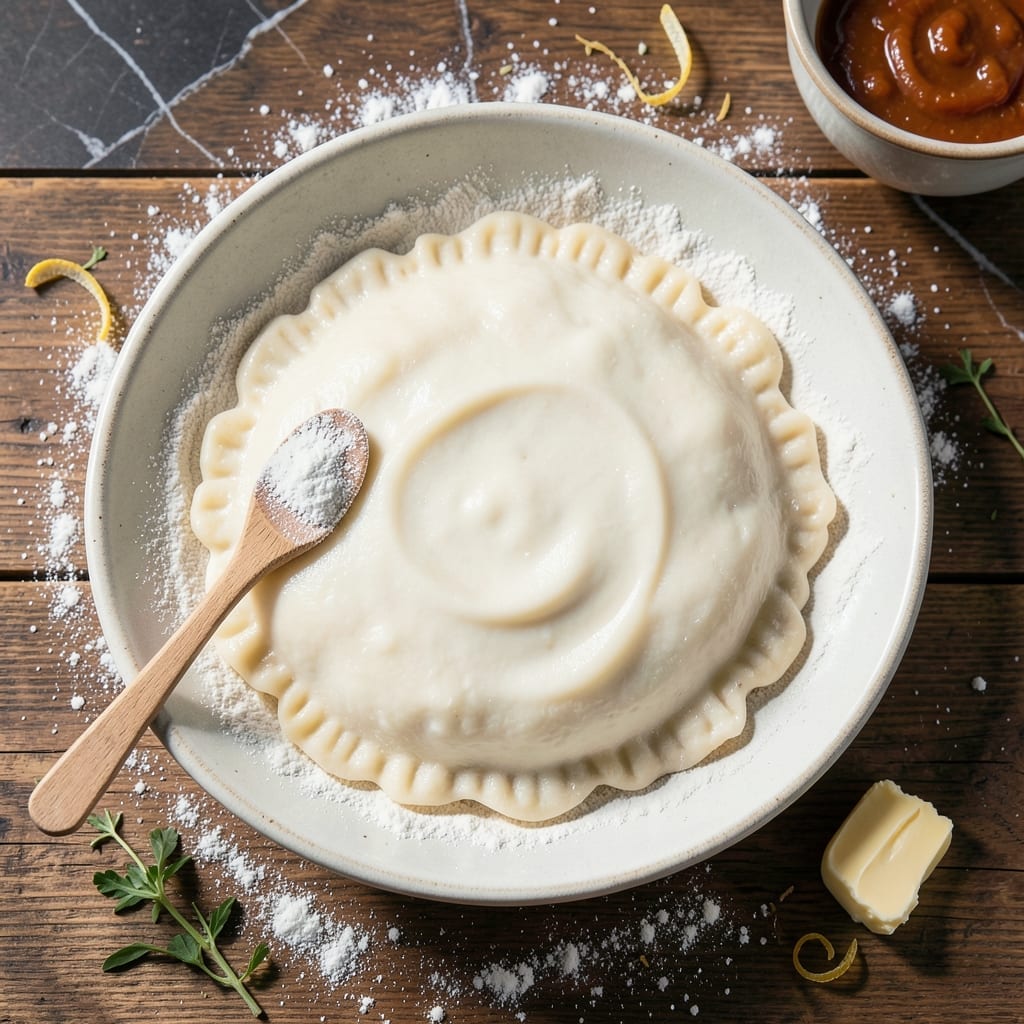
Achieving elastic pierogi dough without gluten requires precision and the right blend of alternative flours. This recipe delivers a texture that holds up to boiling and frying.
With simple ingredients and careful mixing, you’ll create a dough that rolls out smoothly and wraps fillings beautifully. The result is tender, chewy pierogi that rival traditional versions.
Ingredients for Gluten Free Pierogi Dough
Precision in alternative flours and careful mixing yields elastic, chewy gluten-free pierogi dough.
| Ingredient | Amount | Notes |
|---|---|---|
| Gluten-Free All-Purpose Flour Blend 🌾 | 2 cups | With xanthan gum included |
| Tapioca Starch 🌾 | ½ cup | For elasticity and chew |
| Sour Cream 🥛 | ¾ cup | Full-fat for best texture |
| Large Eggs 🥚 | 2 whole | Room temperature preferred |
| Unsalted Butter 🧈 | 4 tbsp | Melted and cooled slightly |
| White Vinegar 💧 | 1 tbsp | Helps tenderize dough |
| Salt 🧂 | 1 tsp | Fine sea salt preferred |
| Water 💧 | ¼ cup | Warm, as needed for consistency |
| Potato Starch 🥔 | ¼ cup | For lightness and structure |
| Psyllium Husk Powder 🌿 | 2 tsp | Key for elasticity in gluten-free baking |
[recipe_ingredient_scaler]
The flour blend is critical here. King Arthur’s Measure for Measure or Bob’s Red Mill 1-to-1 work exceptionally well—they include xanthan gum, which mimics gluten’s elasticity. Tapioca starch is non-negotiable for that signature chew, and psyllium husk powder binds everything together. Avoid brands without added gums, as the dough may crumble. Sour cream should be full-fat for richness and structure.
No psyllium husk? Substitute 1 additional tbsp of tapioca starch, though the texture won’t be as elastic. For a dairy-free version, swap sour cream for full-fat coconut yogurt (ensure it’s unsweetened). If your blend lacks xanthan gum, add 1 tsp per cup of flour. The vinegar can be apple cider if that’s what’s on hand, but white vinegar’s neutral flavor is ideal.
The dough is best used immediately but can rest in the fridge for 24 hours if wrapped tightly in plastic. Freeze uncooked dough for up to 1 month—thaw overnight before rolling. Cooked pierogi freeze beautifully for 3 months; boil from frozen for best results. Always keep ingredients at room temperature before mixing.
Why You’ll Love This Recipe
- I’ll be real: I always double the batch to freeze half for lazy-day pierogi later.
- One Bowl Wonder: I mix the flour, tapioca starch, sour cream, and butter right in one bowl—no fancy equipment, no mess.
- Rich and Tender: Honestly, the sour cream and butter make the dough so soft it’s like biting into a cloud.
- Freezer Friendly: I’ll be real: I always double the batch to freeze half for lazy-day pierogi later.
Step-by-Step Instructions for Gluten Free Pierogi Dough
This method yields a supple, workable dough that mimics traditional pierogi texture without gluten.
Step 1: Combine Dry Ingredients and Activate Psyllium
In a large mixing bowl, whisk together the 2 cups Gluten-Free All-Purpose Flour Blend, 0.5 cup Tapioca Starch, 0.25 cup Potato Starch, 1 tsp Salt, and 2 tsp Psyllium Husk Powder until evenly distributed. The psyllium husk powder is critical here—it creates the elastic structure that gluten would normally provide.
Add the 1 tbsp White Vinegar to the 0.25 cup Water and let it sit for 1 minute to activate slightly. This vinegar-water mixture helps tenderize the dough and improves its stretchiness. Pour this into the dry ingredients and mix briefly—you should see the mixture start to gel slightly from the psyllium.
Step 2: Incorporate Wet Ingredients for Cohesion
Create a well in the center of the dry mixture. Add the 2 whole Large Eggs, 0.75 cup Sour Cream, and 4 tbsp Unsalted Butter (melted and cooled). The full-fat sour cream adds richness and moisture, while the butter provides tenderness. Use a silicone spatula to fold everything together until no dry pockets remain.
The dough will be slightly sticky and shaggy at this stage, but resist the urge to add more flour. Let the mixture rest at room temperature for 5 minutes—this allows the psyllium husk powder to fully hydrate and the starches to begin binding, which dramatically improves the texture.
Step 3: Knead and Adjust Consistency
After resting, the dough should be more cohesive but may still stick slightly to your hands. Dust your work surface lightly with additional gluten-free flour blend and turn out the dough. Knead gently for 2-3 minutes until smooth and elastic. If it’s too sticky, add flour 1 tablespoon at a time; if too dry, add warm water 1 teaspoon at a time.
You’re aiming for a dough that holds its shape when pressed but still has some give. It should spring back slightly when poked—a sign that the psyllium is doing its job. Avoid over-kneading, as this can make the dough tough rather than tender.
Step 4: Rest and Prepare for Rolling
Shape the dough into a ball, wrap it tightly in plastic wrap, and let it rest at room temperature for 30 minutes. This resting period allows the starches to fully hydrate and the psyllium fibers to develop maximum elasticity, which is crucial for rolling and shaping without cracking.
After resting, divide the dough into 4 equal portions for easier handling. Roll each portion on a lightly floured surface to ⅛-inch thickness for traditional pierogi. The dough should roll out smoothly without tearing—if it resists, let it rest for another 5-10 minutes before continuing.
Pro Tips For Making Gluten Free Pierogi Dough
- Chill the Dough: After mixing, wrap the dough and refrigerate for at least 30 minutes—gluten-free blends need this rest to hydrate fully and prevent cracking when rolling.
- Use Room-Temp Ingredients: Take the sour cream, eggs, and butter out of the fridge 1 hour before starting; cold ingredients make the dough stiff and harder to work with.
- Skip Extra Flour: Resist dusting the surface with more flour blend when rolling—tapioca starch already adds stretch, and too much extra flour makes pierogi dense and dry.
- Roll Thin but Even: Aim for 1/8-inch thickness when rolling; any thicker and the pierogi won’t cook through, any thinner and they’ll burst—use a ruler if you’re unsure.
Flavor Customization for gluten free pierogi dough
Herb-Infused Dough
Add 2 tbsp finely chopped fresh dill or 1 tbsp dried chives to the dry ingredients for a subtle herbaceous note. I often forage wild chives along my coastal rides, which add a gentle oniony brightness that pairs beautifully with potato or cheese fillings. 🌿
Spiced Sweet Dough
For dessert pierogi, mix in 1 tsp cinnamon and ¼ tsp nutmeg with the dry ingredients. This works wonderfully with fruit fillings like blueberry or plum. The warmth of the spices complements the sweetness without overpowering it.
Savory Umami Boost
Enhance the depth by adding 1 tsp onion powder and ½ tsp garlic powder to the flour blend. This savory base elevates fillings like mushrooms or sauerkraut, giving them a rich, aromatic foundation.
Cheesy Dough Twist
Incorporate ½ cup finely grated Parmesan cheese into the dough for a sharp, salty note. This pairs especially well with fillings like mashed potatoes or spinach. The cheese also adds a subtle golden hue to the finished pierogi.
Citrus Zest Brightness
Mix in 1 tbsp lemon or orange zest for a fresh, zesty kick. This works surprisingly well with both sweet and savory fillings, adding a bright contrast that cuts through the richness of the dough. 🍊
Smoky Flavor Infusion
For a bold twist, add ½ tsp smoked paprika to the dry ingredients. This lends a subtle smokiness that complements hearty fillings like sausage or caramelized onions, reminding me of the smoky flavors from my BBQ competitions.
Nutrition Facts
Frequently Asked Questions
Why is psyllium husk powder important?
It mimics gluten’s elasticity, binding the dough and preventing crumbling. Without it, the texture won’t hold up to rolling or boiling.
Can I make this dough ahead of time?
Yes, wrap it tightly and refrigerate for up to 24 hours. For longer storage, freeze uncooked dough for 1 month. Thaw overnight before using.
What if my dough cracks while rolling?
Let it rest for 5-10 minutes longer. If still problematic, knead in 1 tsp warm water at a time until pliable.
Can I use this for sweet fillings?
Add 1 tsp cinnamon or 1 tbsp citrus zest to the dry ingredients for dessert pierogi.

Trained in classic French technique but raised on slow-cooked ribs and spicy rubs, she blends culinary skill with smoke and soul.
- Recipe for Oven Roasted: Golden Crisp Perfection Without the Fryer - October 3, 2026
- Recipe for Fried Pork Chops With Flour: Crispy Crust and Juicy Centers - October 3, 2026
- Octopus Recipe Pan Fried: Crispy Edges With Tender Bites - October 3, 2026