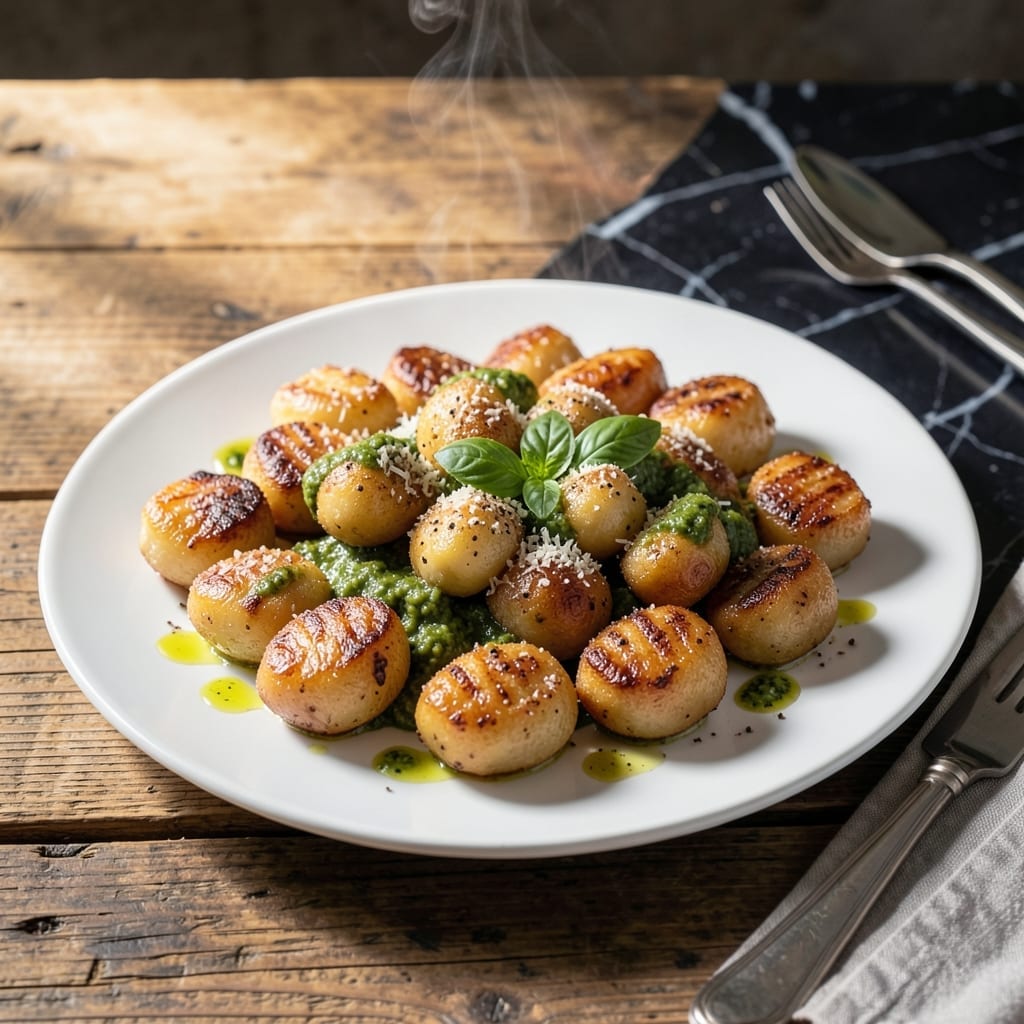
There’s a simple magic in making gnocchi from a single potato. Standing in my grandmother’s Sicilian kitchen, I learned that the best dumplings require patience and a gentle touch.
This method delivers pillar-soft results with minimal effort, using basic ingredients you likely have on hand. No special tools—just a potato, flour, and your hands to shape them.
The key is in the texture: light, airy, and tender, with a delicate bite. Once boiled, they’re ready to soak up your favorite sauce or simply melt in your mouth.
Whether for Sunday dinner or a quiet weeknight, this dish brings a taste of tradition to your table. Here’s how to make it.
Ingredients for Gnocchi Recipe One Potato
Pantry staples plus one potato. Nothing exotic, just good ingredients for perfect dumplings.
| Ingredient | Amount | Notes |
|---|---|---|
| Russet Potato 🥔 | 1 whole | Large, about 12 oz |
| All-Purpose Flour 🌾 | 1 ½ cups | Plus extra for dusting |
| Large Egg 🥚 | 1 whole | Room temperature preferred |
| Fine Sea Salt 🧂 | 1 tsp | Adjust to taste |
| Ground Nutmeg 🌰 | ¼ tsp | Freshly grated best |
| Black Pepper 🌶️ | ¼ tsp | Freshly ground preferred |
| Olive Oil 🫒 | 1 tbsp | For cooking and serving |
| Parmesan Cheese 🧀 | ½ cup | Freshly grated for garnish |
| Fresh Sage Leaves 🍃 | 10 pieces | Optional for flavor |
| Garlic Cloves 🧄 | 2 cloves | Minced for serving |
[recipe_ingredient_scaler]
The potato is everything here. Russets are the gold standard—they’re starchy and dry, which means fluffier gnocchi. Grab one that’s firm and heavy for its size (about 12 oz) from your regular supermarket. I’ve had luck with Idaho potatoes from Whole Foods, but any well-stocked grocery store will do. Avoid waxy potatoes like red or Yukon Gold—they’ll give you dense, gluey dumplings.
No russet? Sweet potatoes work in a pinch (swap 1:1), but the texture’s slightly different. Out of flour? Bread flour at the same amount adds a bit more chew. The egg can be skipped entirely if you’re vegan—just add 1 extra tablespoon of flour. For the cheese, Pecorino Romano adds a sharper kick if you prefer it over Parm.
Fresh gnocchi don’t keep long. Cook them within 2 hours of making, or freeze on a tray first (so they don’t stick), then transfer to a bag. They’ll last 2 months frozen. Once boiled, toss with a little oil to prevent sticking if not serving immediately.
Why You’ll Love This Recipe
- One Potato Magic: I love that this uses just one russet potato—no fancy ingredients, just what’s already in my pantry.
- Warm Nutmeg Kiss: The hint of ground nutmeg gives these gnocchi a cozy, aromatic depth that’s subtly irresistible.
- Freezer Friendly: I double the batch and freeze half for lazy nights when I need comfort food fast.
- Pocket Change Meal: Russet potatoes and basic flour mean I can make this for pennies, but it tastes like a restaurant dish.
Step-by-Step Instructions for Gnocchi One Potato
Here’s my tested method for achieving those tender, pillowy dumplings you’ve always wanted.
Step 1: Prepare and Cook the Russet Potato
Start by scrubbing the russet potato clean under cold water. I leave the skin on for extra flavor and texture, but make sure to remove any eyes or blemishes. Pierce the potato several times with a fork—this prevents it from bursting in the oven.
Bake the potato at 400°F for 45-60 minutes until it’s fork-tender all the way through. You want it soft enough that a knife slides in with zero resistance. Let it cool just enough to handle, then peel while still warm. The warmth helps create that perfect dough consistency.
Step 2: Make the Gnocchi Dough
Once the peeled potato is still warm, press it through a ricer onto a clean surface. If you don’t have a ricer, a fine-mesh sieve works in a pinch. Let the potato cool slightly, then form it into a mound. Sprinkle the all-purpose flour, fine sea salt, ground nutmeg, and black pepper evenly over the potato.
Make a well in the center and add the large egg. Using your hands, gradually incorporate the flour mixture into the potato, working from the center outward. Knead gently just until the dough comes together—overworking it makes tough gnocchi. You want a soft, slightly sticky dough that holds its shape.
Step 3: Shape and Cut the Gnocchi
Divide the dough into four equal pieces. Roll each piece into a rope about ½-inch thick on a lightly floured surface. Cut each rope into 1-inch pieces. For that classic gnocchi look, press each piece lightly with your thumb or roll it over a fork to create ridges—this helps them hold sauce better.
As you work, dust the cut gnocchi lightly with extra all-purpose flour to prevent sticking. Don’t go overboard with the flour, or you’ll end up with dense, floury dumplings instead of light, pillowy ones.
Step 4: Cook the Gnocchi to Perfection
Bring a large pot of salted water to a gentle boil. Drop in the gnocchi—you’ll need to work in batches to avoid crowding. They’re done when they float to the surface, which takes about 2-3 minutes. Let them cook for 30 seconds after floating to ensure they’re fully cooked through.
Remove them with a slotted spoon and transfer to a plate. If you’re not serving immediately, toss them with a tiny bit of olive oil to prevent sticking.
Step 5: Serve with Simple Sage and Garlic Garnish
Heat the olive oil in a large skillet over medium heat. Add the fresh sage leaves and cook for 1-2 minutes until crisp and aromatic. Add the minced garlic cloves and cook for 30 seconds until fragrant—don’t let it brown or it’ll turn bitter.
Add the cooked gnocchi to the skillet and toss gently to coat in the oil. Cook for 1-2 minutes until lightly golden. Transfer to serving plates and top with freshly grated parmesan cheese. Serve immediately while hot—they’re best fresh out of the pan.
Pro Tips For Making Gnocchi Recipe One Potato
- Bake the Potato: Roast the russet whole at 400°F until fork-tender—about 45 minutes—rather than boiling. I learned this the hard way: boiling adds moisture, and wet potatoes mean gummy gnocchi.
- Rice While Hot: Push the baked potato through a ricer immediately while it’s still hot. After burning three batches of doughy lumps, I finally figured out that cooled potatoes turn gluey and resist absorbing flour evenly.
- Skip the Extra Flour: Use just enough flour to bring the dough together—usually around 1/2 to 3/4 cup. My grandmother swore by this, and she was right: too much flour makes dense, tough gnocchi.
- Test One First: Drop a single gnocchi into boiling water before shaping the whole batch. If it falls apart, add a tablespoon more flour—I was skeptical until I tried it, but it saves a ruined pot of pasta every time.
Make-Ahead Tips for This gnocchi recipe one potato
Prep Ahead Strategy
You can make the dough up to 2 hours before shaping. Keep it covered with a damp towel at room temperature. This gives you flexibility for busy Sunday dinners without sacrificing texture. 💡
Freezing Uncooked Gnocchi
Shape the gnocchi completely, then freeze on a floured baking sheet for 1 hour before transferring to a freezer bag. This prevents sticking. They’ll keep for 2 months at 0°F. Just boil from frozen—no need to thaw.
Refrigerator Storage
Cooked gnocchi keep in the fridge for 2 days in an airtight container. Toss with 1 tsp olive oil before storing to prevent sticking. Reheat by sautéing in a pan with a splash of water.
Reheating Tips
For best results, avoid microwaving cooked gnocchi—they’ll turn mushy. Instead, heat 1 tbsp olive oil in a skillet over medium heat and fry for 2-3 minutes until crispy. Add a sprinkle of water and cover for 1 minute to restore softness.
Sauce Pairing Prep
If making sauce ahead, store it separately and combine just before serving. I love pairing these with a simple sage-brown butter sauce—melt 4 tbsp butter with 8 fresh sage leaves and a pinch of salt. 🌟
Nutrition Facts
Frequently Asked Questions
Can I use a different potato type?
Stick with russets for best results. Waxy potatoes like red or Yukon Gold will make dense, gluey dumplings.
Why did my gnocchi fall apart in water?
This usually means too much flour or not enough kneading. The dough should be soft but hold its shape. Handle gently when boiling.
How do I know when they’re cooked?
They’re done when they float to the surface after 2-3 minutes. Let them cook 30 seconds more before removing.
Can I bake instead of boil?
Yes, bake at 400°F for 15-20 minutes until golden. They’ll be crispier but less traditional in texture.

Trained in classic French technique but raised on slow-cooked ribs and spicy rubs, she blends culinary skill with smoke and soul.
- Recipe for Boneless Pork Chops in Cast Iron Skillet: Sear and Baste to Juicy Perfection - October 3, 2026
- Recipe for Boneless Cross Rib Roast: Slow-Roasted Beef with Herb Crust - October 3, 2026
- Hamburgers in Sauce Recipe Crock Pot: Slow-Cooked Savory Delight - October 3, 2026