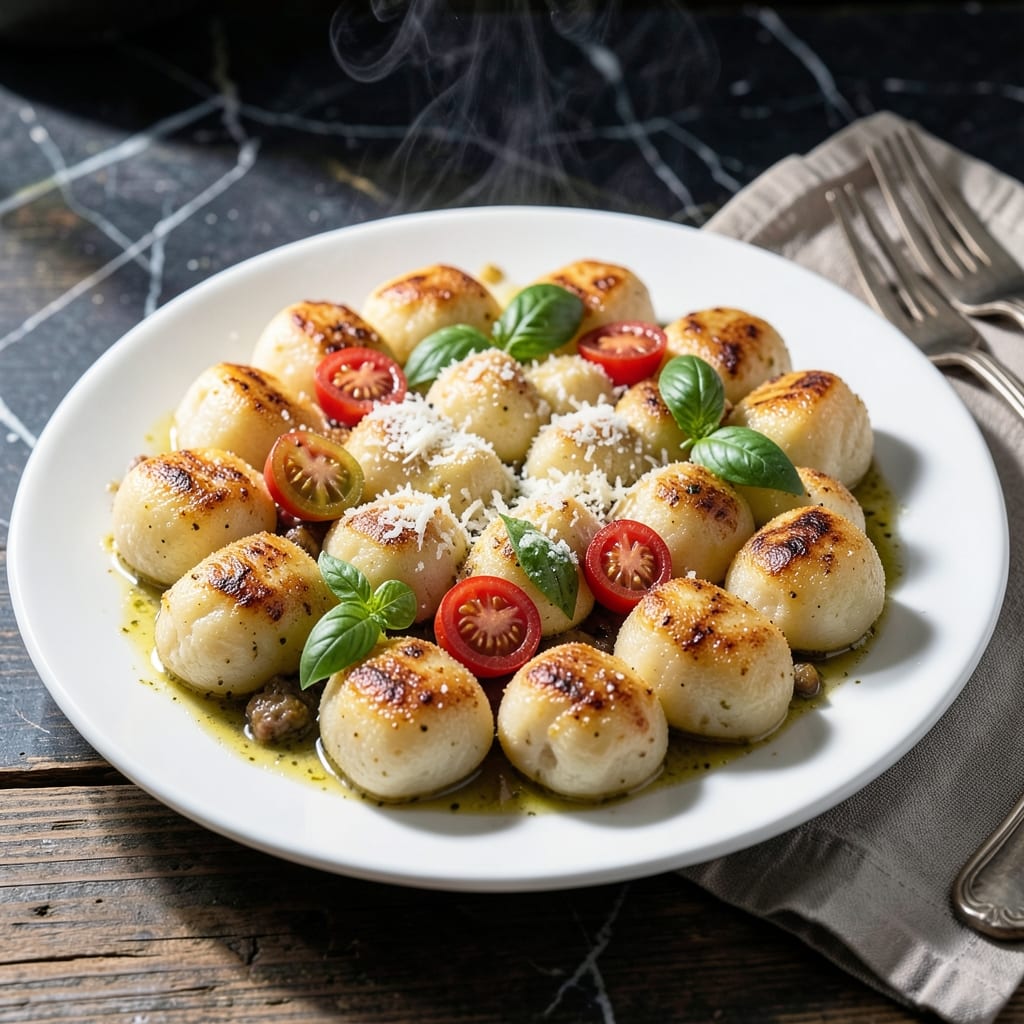
Standing beside my grandmother in her Sicilian kitchen, I learned that great gnocchi begin with the right starch. This method delivers that pillowy softness she insisted on, using simple techniques and potato starch for perfect texture.
Potato starch creates a lighter, more delicate dumpling than traditional flour-based versions. The key is working quickly while the potatoes are warm, as cooling makes them gummy. Shape them gently to maintain air pockets for that melt-in-your-mouth quality.
You’ll achieve restaurant-quality results with just a few ingredients and about 30 minutes of hands-on time. The gnocchi hold their shape beautifully when boiled and develop a tender exterior with a fluffy interior.
Serve these with your favorite sauce or simply with browned butter and sage. This recipe brings authentic Italian tradition to your kitchen with foolproof results.
Ingredients for Gnocchi Recipe with Potato Starch
Just a handful of simple, high-quality ingredients for melt-in-your-mouth texture and authentic flavor.
| Ingredient | Amount | Notes |
|---|---|---|
| Russet Potatoes 🥔 | 2 lb | Peeled, boiled until fork-tender |
| Potato Starch 🌾 | 1 ½ cups | Plus extra for dusting surface |
| All-Purpose Flour 🌾 | 1 cup | Plus extra for rolling dough |
| Large Egg 🥚 | 1 whole | Lightly beaten, binds dough |
| Kosher Salt 🧂 | 1 ½ tsp | Diamond Crystal preferred for texture |
| Freshly Ground Black Pepper 🌶️ | ½ tsp | Coarse grind for best flavor |
| Nutmeg 🌰 | ¼ tsp | Freshly grated for warmth |
| Unsalted Butter 🧈 | 4 tbsp | For browning (optional topping) |
| Fresh Sage Leaves 🌿 | 8 whole | For butter sauce pairing |
| Parmesan Cheese 🧀 | ½ cup | Freshly grated, for serving |
[recipe_ingredient_scaler]
The potatoes are everything here. Russets give that perfect fluffy interior—avoid waxy red or Yukon Golds. Whole Foods or Trader Joe’s usually have good ones. Potato starch is non-negotiable for that Sicilian lightness; Bob’s Red Mill is reliable. Work fast while potatoes are warm, or they’ll turn gluey. A ricer or food mill makes quick work of mashing without lumps.
No potato starch? Cornstarch at one-to-one ratio works in a pinch (texture won’t be quite as delicate). Egg-free? Skip it—the dough might be slightly stickier but still holds. For the flour, 00 pasta flour adds extra authenticity. Fresh nutmeg makes a surprising difference; pre-ground loses potency fast. The Parmesan? Use the good stuff—Parmigiano-Reggiano if you can swing it.
Shape gnocchi on a floured board, then rest them on a parchment-lined tray. Cook within 2 hours or freeze for up to 3 months. Boil from frozen—no thawing needed. Leftovers keep 3-4 days in the fridge, but they’re best fresh.
Why You’ll Love This Recipe
- One-Bowl Wonder: I mix everything right in the same bowl I baked the potatoes in—no extra dishes, just Russets, starch, and flour coming together fast.
- Pillowy Bite: That first forkful of soft gnocchi with the slight chew from the potato starch? Honestly, it’s the little things that make this taste so good.
- Freezer Friendly: I double the batch, freeze half on a tray, and toss them straight into boiling water later for a 3-minute meal.
- Budget Stretcher: Russet potatoes and a handful of pantry staples feed my family of four for less than a takeout appetizer.
Step-by-Step Instructions for Gnocchi With Potato Starch
Here’s my tested method for achieving that perfect pillowy texture with every bite.
Step 1: Prepare and Mash the Russet Potatoes
Start by peeling the 2 lb Russet Potatoes and boiling them in salted water until they’re fork-tender, about 20-25 minutes. You want them to slide off the fork with no resistance. Drain them well and let them sit in the colander for 2-3 minutes to evaporate excess moisture.
While still warm, pass the potatoes through a ricer or food mill onto a clean surface. This creates a light, fluffy texture without the gumminess that comes from mashing. Let the riced potatoes cool completely—warm potatoes can make the dough sticky and difficult to handle.
Step 2: Create the Gnocchi Dough
On your work surface, spread out the riced potatoes and sprinkle with the 1.5 cups Potato Starch, 1 cup All-Purpose Flour, 1.5 tsp Kosher Salt, 0.5 tsp Freshly Ground Black Pepper, and 0.25 tsp Nutmeg. Make a well in the center and add the 1 whole Large Egg.
Using your hands, gently mix everything together until just combined. Be careful not to overwork the dough—this develops gluten, which makes gnocchi tough. The dough should be soft and slightly sticky but hold together when pressed. If it’s too sticky, add a bit more flour, but don’t exceed the amounts given.
Step 3: Shape and Cut the Gnocchi
Divide the dough into 4 equal portions and roll each into a ¾-inch thick rope on a surface lightly dusted with extra all-purpose flour. Cut each rope into 1-inch pieces. For that classic ridged texture, press each piece against the tines of a fork or a gnocchi board.
As you shape them, place the finished gnocchi on a baking sheet lined with parchment paper and dusted with extra potato starch. This prevents sticking. Work quickly but gently—you want to maintain that light, airy texture you worked so hard to achieve.
Step 4: Cook the Gnocchi to Perfection
Bring a large pot of salted water to a gentle boil. Add the gnocchi in batches, being careful not to overcrowd the pot. They’re done when they float to the surface, which should happen in about 2-3 minutes. Let them cook for an additional 30-60 seconds after floating.
Remove the gnocchi with a slotted spoon and transfer to a serving dish. If you’re not serving immediately, toss them with a small amount of oil to prevent sticking, but be aware this can affect the texture slightly.
Step 5: Finish with Sage Butter and Parmesan
In a large skillet, melt the 4 tbsp Unsalted Butter over medium heat. Add the 8 whole Fresh Sage Leaves and cook for 1-2 minutes until the butter turns golden and the sage becomes crisp. This infuses the butter with a wonderful aromatic flavor.
Pour this sage butter over the cooked gnocchi and toss gently to coat. Finish by sprinkling with the 0.5 cup Parmesan Cheese and serve immediately. The gnocchi should be tender with a slight bite, perfectly complementing the rich, nutty butter sauce.
Pro Tips For Making Gnocchi Recipe With Potato Starch
- Bake the Potatoes: Roast your russets at 400°F until fork-tender—boiling makes them waterlogged, and I learned this the hard way after my first batch turned to gummy paste.
- Weigh Your Starch: Potato starch absorbs moisture differently every time, so use a kitchen scale for the 1:1 ratio with flour—eyeballing it led to my dense, doughy gnocchi disaster.
- Skip the Overworking: Knead the dough just until it comes together, about 30 seconds—any longer and the gnocchi turn tough, a mistake I made until my nonna smacked my hands away.
- Test One First: Drop a single gnocchi in boiling water before shaping the whole batch—if it falls apart, add a teaspoon more flour, a trick that saved me from ruining an entire pot of water.
Pro Cooking Tips for gnocchi recipe with potato starch
Potato Prep Perfection
Always use Russet Potatoes—their high starch content is key to that pillowy texture Nonna taught me. Boil them whole with skins on to prevent water absorption, then peel immediately after draining. This keeps them dry for the perfect dough consistency. 🌟
Temperature Control
Work with the riced potatoes while still warm, but let them cool slightly before adding Potato Starch. Too hot and the egg will cook; too cold and the starch won’t bind properly. I aim for about 110°F—warm to touch but not burning.
Gentle Handling
Mix the dough just until combined—overworking develops gluten, turning your gnocchi into little rubber balls. Use a light touch, like you’re handling a cloud. If the dough feels sticky, add All-Purpose Flour a 1 tbsp at a time, but no more than ¼ cup extra.
Shaping Secrets
Roll each rope to exactly ¾-inch thick for even cooking. For ridges, press each piece against a fork or gnocchi board with your thumb. This creates grooves that hold sauce beautifully, just like we did in Sicily.
Cooking Technique
Boil gnocchi in batches to avoid crowding—this prevents sticking and ensures even cooking. They’re done when they float, but let them cook an extra 30-60 seconds for that perfect tenderness. I learned this timing trick from my first kitchen job. 💡
Testing Doneness
Cut one open to check—the center should look slightly translucent with no raw flour taste. If they fall apart in the water, your dough needed more starch. If they’re dense, you may have overworked it. Practice makes perfect, as Nonna always said.
Nutrition Facts
Frequently Asked Questions
Can I use regular flour instead of potato starch?
No, potato starch gives the signature lightness. Regular flour makes them dense and heavy. For best results, stick with potato starch as the recipe states.
How do I know when they’re done cooking?
They’re ready when they float to the surface after 2-3 minutes. Cook them an extra 30-60 seconds after floating for perfect tenderness.
Why did my gnocchi fall apart in the water?
This usually means the dough was too wet or needed more starch. Ensure potatoes are fully drained and riced while warm, then add 1.5 cups Potato Starch as directed.
Can I make these ahead of time?
Yes! Shape and freeze on a tray for up to 3 months. Boil from frozen—no thawing needed. Fresh ones are best within 2 hours of shaping.

Trained in classic French technique but raised on slow-cooked ribs and spicy rubs, she blends culinary skill with smoke and soul.
- Recipe for Boneless Pork Chops in Cast Iron Skillet: Sear and Baste to Juicy Perfection - October 3, 2026
- Recipe for Boneless Cross Rib Roast: Slow-Roasted Beef with Herb Crust - October 3, 2026
- Hamburgers in Sauce Recipe Crock Pot: Slow-Cooked Savory Delight - October 3, 2026