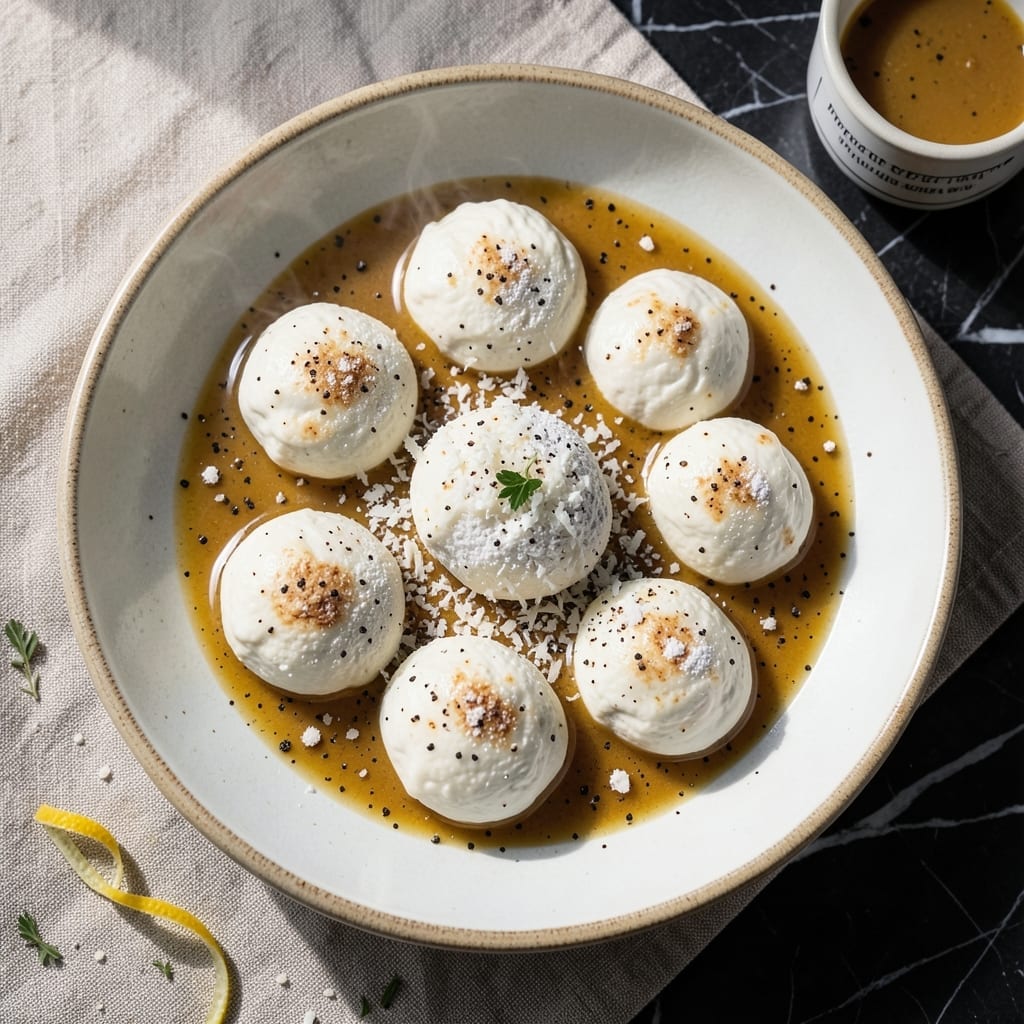
These delicate ricotta dumplings deliver restaurant-quality results with a tested method for perfect texture. The key is proper ricotta draining and gentle handling to maintain their pillowy structure.
Sage brown butter adds rich, nutty depth that complements the mild cheese flavor. This dish proves that simple ingredients, when handled with care, can create something extraordinary.
Ingredients for Gnudi Recipe America’s Test Kitchen
Quality ricotta, precise measurements, and fresh herbs transform humble ingredients into restaurant-worthy gnudi.
| Ingredient | Amount | Notes |
|---|---|---|
| Whole Milk Ricotta Cheese 🧀 | 16 oz | Well-drained overnight in cheesecloth |
| All-Purpose Flour 🌾 | 1 ½ cups | Plus extra for dusting work surface |
| Large Eggs 🥚 | 2 whole | Lightly beaten for binding |
| Parmesan Cheese 🧀 | 1 cup | Freshly grated from wedge |
| Salt 🧂 | 1 tsp | Diamond Crystal kosher preferred |
| Freshly Ground Black Pepper 🌶️ | ¼ tsp | To taste for seasoning |
| Fresh Sage Leaves 🍃 | 20 whole | For brown butter sauce |
| Unsalted Butter 🧈 | ¾ cup | For sage brown butter |
| Nutmeg 🌰 | 0.125 tsp | Freshly grated preferred |
| Lemon Zest 🍋 | 1 tsp | From 1 medium lemon |
| Semolina Flour 🌾 | ½ cup | For coating dumplings |
| Pecorino Romano Cheese 🧀 | ½ cup | Freshly grated as alternative |
[recipe_ingredient_scaler]
The ricotta quality cannot be overstated. Whole milk ricotta from BelGioioso or Calabro provides the right fat content and texture. Drain it overnight in cheesecloth (don’t skip this—excess moisture ruins the structure). For the Parmesan, Parmigiano-Reggiano wedge grated fresh is non-negotiable for authentic flavor. Most supermarkets carry decent options, but Whole Foods has the best selection.
No ricotta? Cottage cheese blended smooth works in a pinch, though texture differs. Substitute Pecorino Romano at one-to-one ratio for Parmesan. For the sage, dried rubbed sage at one-third the amount can substitute, but fresh delivers superior aroma. The nutmeg is subtle but essential—pre-ground works, though freshly grated offers more complexity.
Drained ricotta keeps 3-4 days refrigerated in a sealed container. The brown butter sauce is best fresh but reheats gently. Assemble dumplings up to 2 hours ahead—dust with semolina, cover, and refrigerate until cooking. Leftover cooked gnudi freeze beautifully for 1 month.
Why You’ll Love This Recipe
- No-Fuss Mixing: Honestly, it’s just ricotta, flour, eggs, and Parmesan—no fancy techniques, just stir and shape.
- Pillowy Richness: The whole milk ricotta and Parmesan give them that melt-in-your-mouth, cheesy depth.
- Crowd-Pleasing Appetizer: I serve these at dinner parties, but they’re just as good for a quiet weeknight.
- Budget-Friendly Luxury: Five simple ingredients, and I get restaurant-quality gnudi for a fraction of the price.
Step-by-Step Instructions for Pillowy Ricotta Dumplings with Sage Brown Butter
Master the technique for light, tender gnudi with rich brown butter sauce.
Step 1: Prepare and Drain the Ricotta Mixture
Begin by ensuring the 16 oz Whole Milk Ricotta Cheese is thoroughly drained. If not pre-drained overnight, place it in a cheesecloth-lined strainer over a bowl and let it sit for 1 hour to remove excess moisture. Excess liquid will make your dumplings dense rather than pillowy.
In a large bowl, combine the drained ricotta with 1 cup Parmesan Cheese, 2 whole Large Eggs, 1 tsp Salt, 0.25 tsp Freshly Ground Black Pepper, 0.125 tsp Nutmeg, and 1 tsp Lemon Zest. Stir until just combined—the mixture should be smooth but not overworked.
Step 2: Incorporate the Flours for Structure
Gradually add 1.5 cups All-Purpose Flour to the ricotta mixture, folding gently with a spatula until the flour is mostly incorporated. The dough will be soft and slightly sticky. Avoid overmixing to keep the gnudi tender.
Dust your work surface with a bit of extra all-purpose flour and turn out the dough. Lightly knead it for 1-2 minutes until it comes together in a soft, slightly tacky ball. If the dough feels too wet, add a small handful of flour, but remember—less is more for pillowy texture.
Step 3: Shape and Coat the Dumplings
Divide the dough into 4 equal portions. Roll each portion into a 1-inch thick rope, then cut into 1-inch pieces. Gently roll each piece between your palms to form smooth, round dumplings. Handle them lightly to avoid compacting the dough.
Spread 0.5 cup Semolina Flour on a baking sheet and roll the formed gnudi in it until fully coated. The semolina prevents sticking and adds a subtle texture. Place the coated dumplings on a parchment-lined tray and refrigerate for 15-20 minutes to firm up before cooking.
Step 4: Cook the Gnudi in Simmering Water
Bring a large pot of salted water to a gentle simmer—avoid a rolling boil, which can break the dumplings. Drop the gnudi into the water in batches to avoid crowding. Cook for 3-4 minutes until they float to the surface and look slightly puffed.
Using a slotted spoon, transfer the cooked gnudi to a plate. They should be tender but hold their shape. If testing one, it should be light and airy inside with no raw flour taste.
Step 5: Prepare the Sage Brown Butter Sauce
In a large skillet, melt 0.75 cup Unsalted Butter over medium heat. Once foaming subsides, add 20 whole Fresh Sage Leaves and cook for 2-3 minutes until the butter turns a rich golden brown and smells nutty. Watch closely—it burns quickly.
Add the cooked gnudi to the brown butter and gently toss to coat. For extra richness, sprinkle with 0.5 cup Pecorino Romano Cheese and toss again. Serve immediately, garnished with additional sage leaves if desired. The sauce should cling lightly to each dumpling, enhancing their delicate flavor.
Pro Tips For Making Gnudi Recipe America’S Test Kitchen
- Drain the Ricotta: Spread the whole milk ricotta on paper towels for 10 minutes to remove excess moisture—I learned this the hard way after my first batch fell apart in the water.
- Chill Before Rolling: Let the ricotta-flour-egg mixture rest in the fridge for 30 minutes before shaping; it holds together way better when cold.
- Light Flour Dusting: Use just enough flour to prevent sticking when rolling, about 1-2 tablespoons total—too much makes the gnudi dense and chewy.
- Salt the Water: Boil the gnudi in well-salted water, about 1 tablespoon per quart, so they don’t taste bland—my grandmother swore by this, and she was right.
Health Benefits of This Recipe
Protein Powerhouse
These dumplings pack a serious protein punch with 16 oz ricotta and 1 cup Parmesan providing about 25g protein per serving. The combination of dairy proteins gives sustained energy without heavy meat. I love how satisfying they are despite being meat-free. 💪
Calcium Rich
Ricotta and Parmesan make these a calcium powerhouse, with one serving delivering about 40% of your daily needs. The Pecorino Romano alternative boosts this even further, as aged sheep’s milk cheeses contain more calcium than cow’s milk varieties.
Low Carb Option
With only 1.5 cups all-purpose flour spread across 4 servings, the carb count stays reasonable. Swap in almond flour for a lower-carb version—I’ve done this with success, though the texture changes slightly.
Vitamin Boost
The 20 fresh sage leaves and 1 tsp lemon zest add more than flavor. Sage provides vitamin K, while lemon zest contributes vitamin C. I always use fresh herbs for maximum nutritional benefit.
Easily Digestible
Unlike heavy pasta, these ricotta dumplings are gentle on digestion. The semolina coating adds fiber that aids digestion. My French training taught me that properly drained ricotta makes all the difference for lightness.
Serve with a side salad for a complete, balanced meal. 🥗
Nutrition Facts
Frequently Asked Questions
Can I make gnudi ahead of time?
Yes, shape and coat them in semolina flour, then refrigerate for up to 2 hours before cooking. For longer storage, freeze uncooked gnudi on a tray first, then transfer to a bag for up to 1 month.
Why did my gnudi fall apart in water?
This usually happens if the ricotta wasn’t drained well or the dough was overworked. Ensure you drain ricotta for at least 1 hour and handle the dough gently. Under-mixing is better than over-mixing for stability.
What’s the best way to reheat cooked gnudi?
Gently warm in a skillet with a splash of water or broth over low heat for 2-3 minutes. Avoid microwaving, as it can make them rubbery. Adding fresh brown butter sauce restores their richness.
Can I substitute cottage cheese for ricotta?
Yes, blend cottage cheese until smooth first. The texture will be slightly different but still delicious. Use the same 16 oz measurement and drain well to remove excess moisture.

Trained in classic French technique but raised on slow-cooked ribs and spicy rubs, she blends culinary skill with smoke and soul.
- Recipe for Boneless Pork Chops in Cast Iron Skillet: Sear and Baste to Juicy Perfection - October 3, 2026
- Recipe for Boneless Cross Rib Roast: Slow-Roasted Beef with Herb Crust - October 3, 2026
- Hamburgers in Sauce Recipe Crock Pot: Slow-Cooked Savory Delight - October 3, 2026