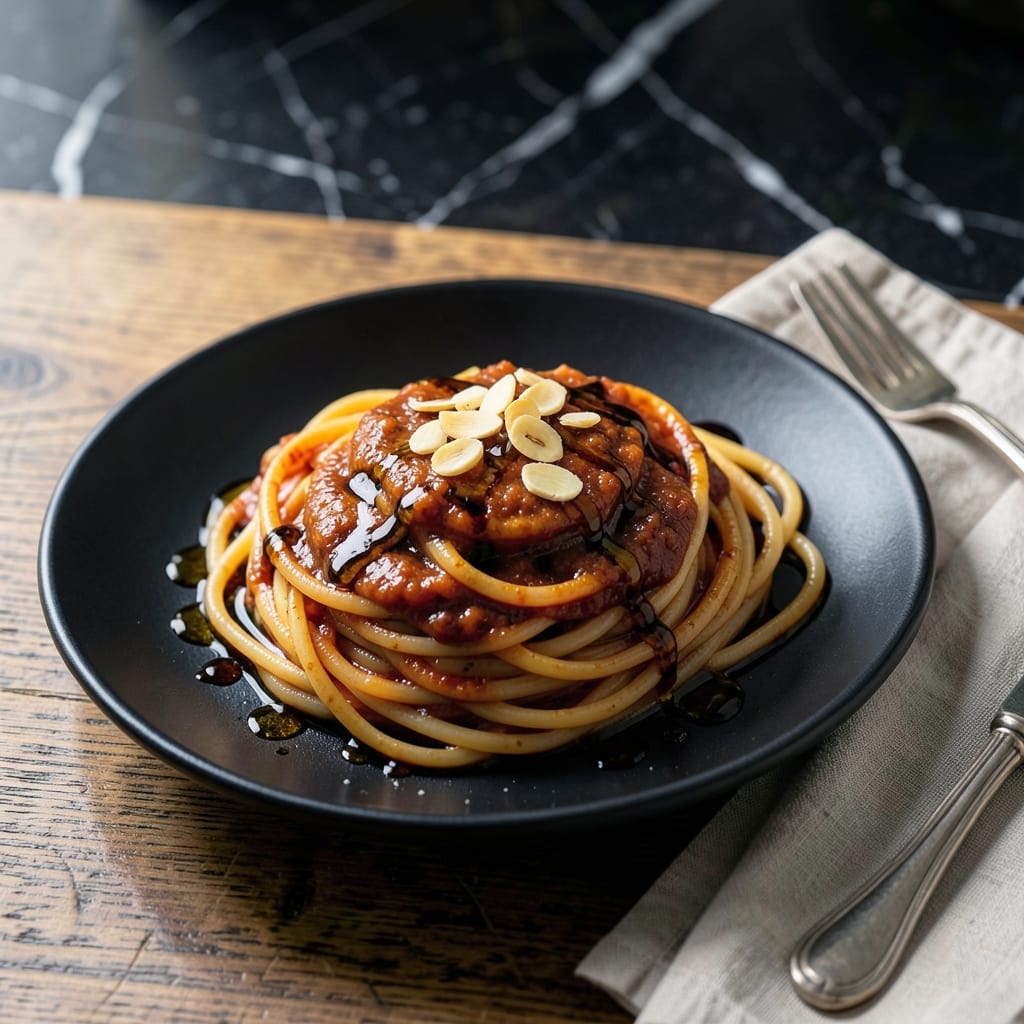
This gochujang pasta delivers bold Korean flavors without a drop of cream. I developed this recipe after realizing how umami-rich and deeply satisfying spicy noodles could be using just pantry staples.
The sauce comes together in minutes with gochujang, garlic, and a touch of sweetness to balance the heat. No heavy dairy needed—just simple ingredients creating complex flavors. The pasta absorbs every bit of that spicy, savory sauce.
What you get is a dish that’s quick, packed with flavor, and impossible to resist. The noodles carry that signature gochujang punch, with a glossy coating that clings perfectly.
Ready in the time it takes to boil pasta. This is weeknight cooking at its best.
Ingredients for Gochujang Pasta Recipe No Cream
Bold Korean flavors come from pantry staples and a handful of fresh additions. Nothing complicated here.
| Ingredient | Amount | Notes |
|---|---|---|
| Spaghetti 🍝 | 12 oz | Dried, regular or whole wheat |
| Gochujang 🌶️ | 3 tbsp | Korean red pepper paste |
| Garlic Cloves 🧄 | 4 cloves | Minced for sauce |
| Soy Sauce 🫒 | 2 tbsp | Low-sodium preferred |
| Honey 🍯 | 1 tbsp | Or maple syrup for vegan |
| Rice Vinegar 💧 | 1 tbsp | Balances sweetness and heat |
| Sesame Oil 🫒 | 1 tsp | Toasted variety preferred |
| Vegetable Oil 🫒 | 1 tbsp | Neutral flavor for cooking |
| Green Onions 🧅 | 3 whole | Thinly sliced for garnish |
| Toasted Sesame Seeds 🌿 | 1 tbsp | For finishing garnish |
| Reserved Pasta Water 💧 | ½ cup | Starchy water for sauce |
| Red Pepper Flakes 🌶️ | ½ tsp | Optional for extra heat |
[recipe_ingredient_scaler]
The gochujang is non-negotiable—look for Sempio or Mother-in-Law’s brands at Asian markets or the international aisle. It should be deep red, thick, and slightly sweet. The soy sauce matters too: Kikkoman low-sodium keeps the flavor balanced without overwhelming saltiness. Fresh garlic is essential here (pre-minced loses that sharp, aromatic punch). For the pasta, spaghetti is classic, but linguine or fettuccine work just as well.
No gochujang? Sriracha mixed with miso paste gets you close—use 2 tbsp sriracha plus 1 tbsp white miso. Out of honey? Brown sugar or agave at a 1:1 ratio. The sesame oil adds depth, but if you’re in a pinch, a little extra vegetable oil won’t ruin it (just less aromatic). For heat lovers, doubling the red pepper flakes or adding a dash of chili oil works wonders.
The sauce clings best when served immediately, but leftovers keep 3-4 days in the fridge. Store in an airtight container—the flavors actually deepen overnight. Freezing isn’t ideal (the texture changes), but if you must, 1 month max. Garnish with extra sesame seeds right before serving (they lose crunch if added too early).
Why You’ll Love This Recipe
- 20-Minute Meal: I can get this from pot to plate faster than my kids decide what to watch on TV.
- Sweet-Spicy Kick: Honestly, the gochujang and honey balance is that addictive mix of heat and caramelized garlic depth.
- Weeknight Hero: Between us, it’s my Tuesday night lifesaver—no cream to curdle, no fancy techniques.
- Budget Stretcher: One batch feeds four, and the pantry staples mean I’m never scrambling for special ingredients.
Step-by-Step Instructions for Gochujang Pasta
Master this technique to create bold, spicy, umami-packed noodles with perfect sauce adhesion.
Step 1: Cook the Spaghetti to Al Dente
Bring a large pot of salted water to a rolling boil. Add the 12 oz Spaghetti and cook according to package directions until 1 minute shy of al dente. The pasta will finish cooking in the sauce, so this timing ensures perfect texture.
Before draining, reserve exactly 0.5 cup Reserved Pasta Water—this starchy liquid is essential for creating a silky sauce that clings to the noodles. Drain the spaghetti but do not rinse, as the surface starch helps the sauce adhere properly.
Step 2: Create the Gochujang Sauce Base
While the pasta cooks, heat the 1 tbsp Vegetable Oil in a large skillet over medium heat. Add the 4 cloves Garlic Cloves and sauté for 30 seconds until fragrant but not browned. Immediately add the 3 tbsp Gochujang, 2 tbsp Soy Sauce, 1 tbsp Honey, and 1 tbsp Rice Vinegar.
Stir constantly for 1-2 minutes until the mixture becomes glossy and slightly thickened. The gochujang will darken in color and develop a deeper aroma. This step builds the foundation of your sauce’s complex flavor profile.
Step 3: Combine Pasta and Sauce with Precision
Add the drained spaghetti to the skillet with the sauce. Pour in ¼ cup of the Reserved Pasta Water and toss vigorously with tongs for 1-2 minutes until the noodles are well coated. The pasta water helps emulsify the sauce, creating that signature silky texture.
If the sauce appears too thick, add the remaining reserved pasta water 1 tablespoon at a time until you achieve the desired consistency. The sauce should cling to the noodles without pooling at the bottom of the skillet. Taste and adjust seasoning if needed.
Step 4: Finish with Aromatic Garnishes
Remove the skillet from heat and drizzle the 1 tsp Sesame Oil over the pasta. Toss once more to distribute the oil evenly. This final addition enhances the dish with a nutty aroma that complements the spicy, umami flavors.
Transfer to serving plates and immediately top with thinly sliced 3 whole Green Onions, 1 tbsp Toasted Sesame Seeds, and a pinch of 0.5 tsp Red Pepper Flakes for those who want extra heat. Serve while hot, as the flavors intensify as the dish cools slightly.
Pro Tips For Making Gochujang Pasta Recipe No Cream
- Bloom the Gochujang: Heat the gochujang in the pan for 1-2 minutes before adding liquids—I learned this the hard way after my first few batches tasted raw and harsh.
- Reserve Pasta Water: Save at least 1/2 cup of starchy pasta water to loosen the sauce; it’s the only thing that makes the gochujang cling to the noodles without cream.
- Mince Garlic Fine: Smaller pieces mean better distribution and no unpleasant bites of raw garlic, which can overpower the dish if left too chunky.
- Balance the Heat: Taste before serving and adjust with honey or soy sauce—gochujang varies in spice and salt, and I’ve ruined a batch by assuming it was already balanced.
Flavor Customization for This Recipe
Extra Heat Boost
For those who love fire, add 1 tsp extra gochujang to the sauce base. I also stir in ½ tsp Korean chili flakes (different from regular crushed red pepper) for layered heat. Honestly, this is my guilty pleasure version. 🔥
Sweetness Adjustment
Balance the heat with more sweetness—add an extra 1 tbsp honey or swap in brown sugar for deeper caramel notes. My grandmother always said sweetness tames the fire, and she was never wrong.
Umami Depth
Stir 1 tbsp miso paste into the sauce for richer umami. I discovered this trick after trying a Japanese fusion version. It adds complexity without overpowering the gochujang’s natural funk.
Nutty Crunch
Top with 2 tbsp crushed peanuts or toasted cashews instead of sesame seeds. This adds a satisfying crunch that contrasts beautifully with the silky noodles. I keep roasted nuts on hand just for this.
Fresh Herbs
Swap green onions for ¼ cup chopped cilantro or Thai basil. The bright, citrusy notes cut through the richness. Confession: I sometimes use both for maximum freshness. 💫
Citrus Zing
Finish with 1 tsp lime zest or a squeeze of juice right before serving. This adds a bright lift that makes every bite sing. A little goes a long way—trust me on this one.
Nutrition Facts
Frequently Asked Questions
Can I use a different pasta shape?
Any long noodle like linguine or fettuccine works perfectly. For shorter shapes, try fusilli or penne—they grab the sauce well. Just adjust cooking time to package directions.
How do I make it less spicy?
Reduce gochujang to 2 tbsp and add 1 tbsp extra honey. The sweetness balances the heat naturally. You can also stir in 1 tbsp Greek yogurt at the end for creaminess without dairy.
What if my sauce is too thick?
Add reserved pasta water 1 tbsp at a time until silky. The starch in the water helps the sauce cling to noodles. Never use plain water—it dilutes the flavor.

Trained in classic French technique but raised on slow-cooked ribs and spicy rubs, she blends culinary skill with smoke and soul.
- Recipe for Boneless Pork Chops in Cast Iron Skillet: Sear and Baste to Juicy Perfection - October 3, 2026
- Recipe for Boneless Cross Rib Roast: Slow-Roasted Beef with Herb Crust - October 3, 2026
- Hamburgers in Sauce Recipe Crock Pot: Slow-Cooked Savory Delight - October 3, 2026