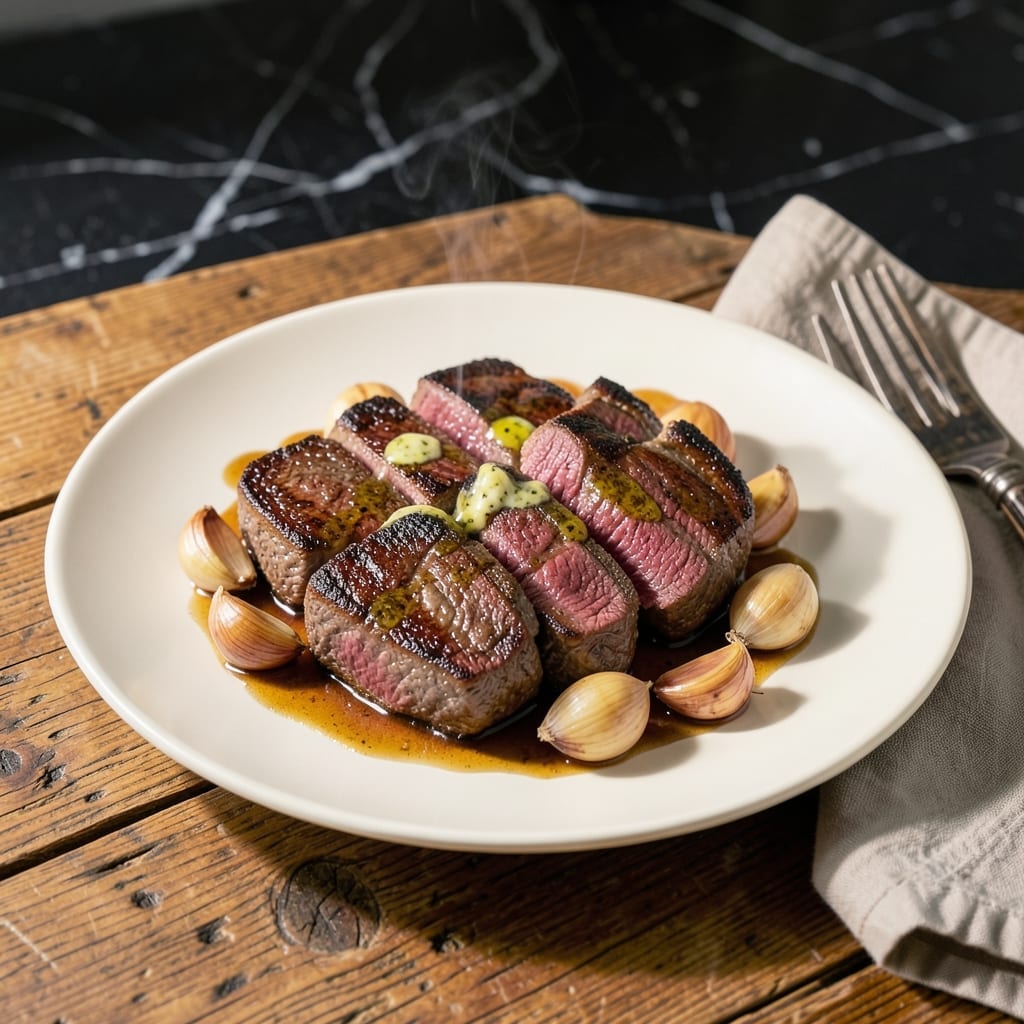
Achieving perfectly seared filet mignon at home requires precision and confidence. This proven technique delivers restaurant-quality results every time.
With a hot pan, quality beef, and careful timing, you’ll create a steak with a caramelized crust and tender, juicy center that rivals any steakhouse.
Ingredients for Gordon Ramsay Filet Mignon
Premium beef and bold aromatics create this steakhouse-worthy dish at home.
| Ingredient | Amount | Notes |
|---|---|---|
| Filet Mignon Steaks 🥩 | 4 whole | 1.5 inches thick, center-cut |
| Kosher Salt 🧂 | 2 tsp | Diamond Crystal preferred for texture |
| Freshly Ground Black Pepper 🌶️ | 1 ½ tsp | Coarse grind for crust |
| Extra-Virgin Olive Oil 🫒 | 3 tbsp | High smoke point variety |
| Unsalted Butter 🧈 | 4 tbsp | European-style for richness |
| Garlic Cloves 🧄 | 4 cloves | Lightly crushed, not minced |
| Fresh Thyme Sprigs 🌿 | 4 sprigs | Plus extra for garnish |
| Fresh Rosemary Sprigs 🌿 | 2 sprigs | Woody stems removed |
| Shallot 🧅 | 1 whole | Finely minced for pan sauce |
| Dry Red Wine 🍷 | ¼ cup | Cabernet Sauvignon recommended |
| Beef Stock 💧 | ½ cup | Low-sodium preferred |
| Dijon Mustard 🟡 | 1 tsp | Smooth, not whole grain |
[recipe_ingredient_scaler]
The filet mignon must be USDA Prime or Choice grade—look for deep red color with abundant marbling. ButcherBox or Snake River Farms deliver exceptional quality if your local market falls short. Center-cut steaks ensure even cooking, and thickness matters: aim for 1.5 inches. Bring the meat to room temperature before cooking—this ensures a consistent sear. The butter should be European-style for its higher fat content and richer flavor profile.
No red wine? Substitute with additional beef stock and a splash of balsamic vinegar for acidity. Fresh herbs are ideal, but dried herbs at one-third the quantity work in a pinch. If thyme isn’t available, tarragon offers a complementary anise note. For the pan sauce, white wine can replace red, though the flavor will be milder. Always use low-sodium beef stock to control seasoning precisely.
Cook immediately after seasoning to prevent the salt from drawing out moisture. Leftovers (if any exist) keep for 3-4 days in the fridge, though filet is best served fresh. For longer storage, vacuum-seal and freeze for up to 6 months. Reheat gently in a warm oven to preserve tenderness.
Why You’ll Love This Recipe
- I’ll be real: cleanup is just a skillet and a spoon. That’s it.
- 20-Minute Luxury: That buttery sear on the filet mignon happens faster than takeout arrives.Honestly, it’s my cheat for a restaurant-quality meal at home.
- Date Night Ready: I’ve served this for anniversaries and random Tuesdays—it feels special either way.
- One Pan, Zero Stress: I’ll be real: cleanup is just a skillet and a spoon. That’s it.
Step-by-Step Instructions for Seared Filet Mignon
Master the technique for restaurant-quality results with this proven method.
Step 1: Season and Prepare the Steaks
Pat the 4 whole Filet Mignon Steaks completely dry with paper towels—this ensures a perfect sear. Season generously on all sides with the 2 tsp Kosher Salt and 1.5 tsp Freshly Ground Black Pepper, pressing the seasoning into the meat so it adheres. Let the steaks sit at room temperature for 30-40 minutes to take the chill off, which promotes even cooking.
This step is non-negotiable for achieving that signature crust. The coarse grind of pepper and Diamond Crystal salt create the ideal texture contrast against the tender meat.
Step 2: Sear the Steaks to Perfection
Heat a heavy skillet (cast iron preferred) over high heat until smoking hot. Add the 3 tbsp Extra-Virgin Olive Oil and swirl to coat the pan. Carefully place the filets in the pan, leaving space between them to avoid steaming. Sear undisturbed for 2-3 minutes per side until a deep, dark brown crust forms.
For even cooking, sear the edges of each steak by holding them with tongs for 20-30 seconds per side. The steaks should release easily from the pan when properly seared—if they stick, they’re not ready to flip.
Step 3: Baste with Aromatics
Reduce heat to medium and add the 4 tbsp Unsalted Butter, 4 cloves Garlic Cloves (lightly crushed), 4 sprigs Fresh Thyme Sprigs, and 2 sprigs Fresh Rosemary Sprigs to the pan. Tilt the skillet slightly and use a spoon to baste the steaks with the foaming butter continuously for 1-2 minutes.
This basting process infuses the steaks with the flavors of garlic and herbs while adding a glossy finish. The butter should turn a light golden color but not burn—if it starts to brown too quickly, reduce the heat slightly.
Step 4: Rest and Prepare the Pan Sauce
Transfer the steaks to a cutting board, tent loosely with foil, and let rest for 8-10 minutes. This allows the juices to redistribute for maximum tenderness. Meanwhile, pour off all but 1 tablespoon of fat from the skillet, leaving the browned bits (fond) intact.
Return the pan to medium heat and add the finely minced 1 whole Shallot. Sauté for 1-2 minutes until softened and translucent. This builds the flavor base for your sauce.
Step 5: Deglaze and Finish the Sauce
Pour in the 0.25 cup Dry Red Wine and scrape up all the browned bits from the bottom of the pan with a wooden spoon. Simmer for 2-3 minutes until the liquid reduces by half. Add the 0.5 cup Beef Stock and 1 tsp Dijon Mustard, then simmer for another 3-4 minutes until slightly thickened.
Remove from heat and pour the sauce through a fine-mesh strainer into a bowl to remove solids. Slice the steaks against the grain and serve immediately with the sauce drizzled over the top or on the side. The sauce should coat the back of a spoon with a velvety texture.
Pro Tips For Making Gordon Ramsay Filet Mignon
- Dry the Steaks: Pat the filets bone-dry with paper towels before seasoning—I learned this the hard way after my first batch steamed instead of seared.
- Sear in Batches: If cooking multiple filets, resist the urge to crowd the pan; two at a time max or the temperature drops and you’ll lose that perfect crust.
- Use Room-Temp Butter: Let the unsalted butter sit out for 20 minutes before basting, so it melts evenly instead of turning into a greasy mess in the hot pan.
- Rest Under Foil: After cooking, tent the steaks with foil and give them a solid 5-10 minutes to rest—this keeps all those juices inside where they belong.
Health Benefits of This Dish
Rich in Protein
This cut delivers a powerful protein punch with about 25 grams per 3-ounce serving, supporting muscle repair and growth. As a pitmaster, I appreciate how filet mignon’s lean profile makes it easier to digest compared to fattier cuts. 💪
Heart-Healthy Fats
While leaner than ribeye, filet mignon still provides beneficial monounsaturated fats that support heart health. The marbling in USDA Prime or Choice grades contains these good fats, which help reduce bad cholesterol levels when consumed in moderation.
Iron and Zinc Boost
Beef is one of the best sources of heme iron, with a 6-ounce serving providing about 20% of your daily needs. This highly absorbable form of iron helps prevent anemia. The zinc content also supports immune function and wound healing.
B Vitamin Complex
Filet mignon is packed with B vitamins, particularly B12, which is essential for nerve function and red blood cell production. A single serving covers about 40% of your daily B12 requirements. I notice better energy levels when I include quality beef in my diet.
Low in Saturated Fat
Compared to other premium cuts, filet mignon contains relatively low saturated fat—about 2 grams per ounce. This makes it a smarter choice for those watching their fat intake while still wanting that luxurious steakhouse experience. 🥗
Selenium Source
This mineral acts as a powerful antioxidant, and filet mignon provides about 35% of your daily selenium needs in a 6-ounce portion. Selenium supports thyroid function and helps protect cells from damage, which I’ve found particularly beneficial during long cooking sessions.
Nutrition Facts
Frequently Asked Questions
What’s the best pan for searing?
Use a heavy cast iron skillet for even heat distribution and retention. It gets screaming hot and creates that perfect crust. Avoid nonstick pans as they can’t reach the necessary high heat for a proper sear.
How do I know when it’s done?
Use a meat thermometer for accuracy. 125°F for rare, 130°F for medium-rare, or 135°F for medium. The steak will continue cooking while resting, so pull it off the heat 5°F below your target temp.
Can I use a different cut of beef?
Yes, but adjust cooking times. Ribeye works well but has more fat. For leaner options, try sirloin—just reduce searing time to 1-2 minutes per side to avoid toughness. Filet’s tenderness is hard to match though.
Why rest the steak before slicing?
Resting for 8-10 minutes lets juices redistribute throughout the meat. Skipping this step means those precious juices will end up on your cutting board instead of in your steak. Patience pays off!

Trained in classic French technique but raised on slow-cooked ribs and spicy rubs, she blends culinary skill with smoke and soul.
- Recipe for Boneless Pork Chops in Cast Iron Skillet: Sear and Baste to Juicy Perfection - October 3, 2026
- Recipe for Boneless Cross Rib Roast: Slow-Roasted Beef with Herb Crust - October 3, 2026
- Hamburgers in Sauce Recipe Crock Pot: Slow-Cooked Savory Delight - October 3, 2026