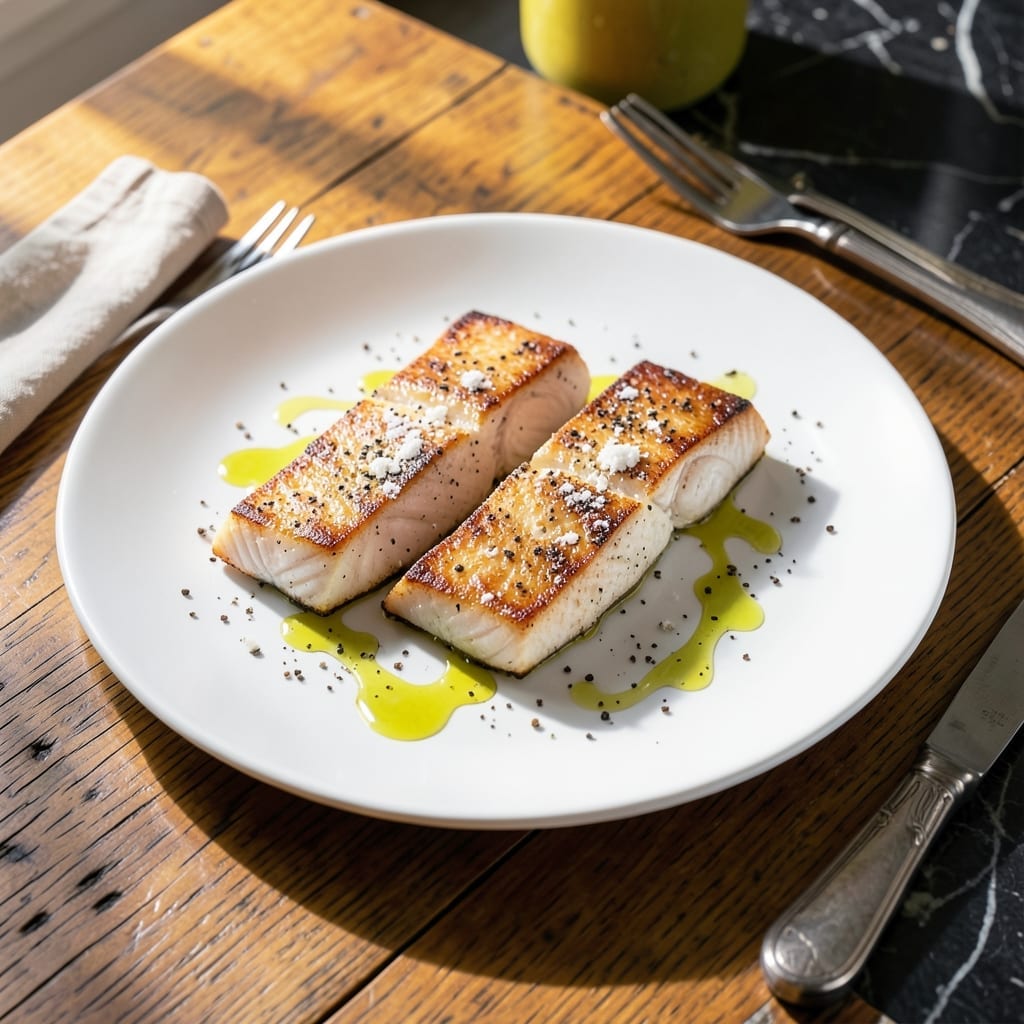
Mastering pan-seared halibut is about precision and confidence. This method delivers restaurant-quality results with crisp skin and tender flesh.
I rely on high heat and a hot pan to achieve that perfect sear. The lemon caper butter adds a bright finish that complements the fish beautifully.
Ingredients for Gordon Ramsay Halibut
Precision meets simplicity with these carefully selected ingredients for restaurant-quality results at home.
| Ingredient | Amount | Notes |
|---|---|---|
| Halibut Fillets 🐟 | 4 pieces | Skin-on, 6-8 oz each, patted dry |
| Kosher Salt 🧂 | 1 ½ tsp | Diamond Crystal preferred for even seasoning |
| Freshly Ground Black Pepper 🌶️ | ½ tsp | Coarse grind for texture |
| All-Purpose Flour 🌾 | ¼ cup | For light dusting before searing |
| Extra-Virgin Olive Oil 🫒 | 3 tbsp | High smoke point variety for searing |
| Unsalted Butter 🧈 | 6 tbsp | Divided for cooking and finishing |
| Fresh Lemon Juice 🍋 | 3 tbsp | From 1-2 large lemons |
| Capers 🫒 | 2 tbsp | Drained and rinsed for balanced saltiness |
| Fresh Flat-Leaf Parsley 🌿 | ¼ cup | Finely chopped for garnish |
| Garlic Cloves 🧄 | 2 cloves | Minced for aromatic base |
| Shallot 🧅 | 1 whole | Finely diced for subtle flavor |
| White Wine 🍷 | ¼ cup | Dry variety like Sauvignon Blanc |
[recipe_ingredient_scaler]
The halibut quality is non-negotiable. Wild-caught Pacific halibut from Whole Foods or a trusted fishmonger ensures the best texture and flavor. Look for fillets with firm, translucent flesh and a mild ocean scent—never fishy. The skin should be intact and slightly moist. For the butter, Plugrá or Kerrygold unsalted provides the rich base needed for the lemon caper sauce.
No white wine? Dry vermouth works beautifully as a substitute. If capers are unavailable, chopped green olives at half the quantity can provide a similar briny note. Shallots can be replaced with half a small onion, though the flavor will be slightly more pungent. For a dairy-free version, coconut oil can replace butter, though the flavor profile will differ slightly.
Halibut is best cooked the day of purchase. If storing, keep it on ice in the fridge for no more than 24 hours. The lemon caper butter can be made ahead and reheated gently—it keeps for 3 days refrigerated. Never refreeze halibut after thawing.
Why You’ll Love This Recipe
- One Pan Wonder: I love that this comes together in a single skillet—just flour, olive oil, and a hot pan.
- Crispy Perfection: The flour crust fries up golden while the halibut stays tender inside, and honestly, that contrast is everything.
- Weeknight MVP: It’s ready faster than takeout, and I’ve served it for date night and casual Fridays.
- Budget Luxe: Halibut feels fancy, but the short ingredient list keeps it practical for when I want to splurge a little.
Step-by-Step Instructions for Pan-Seared Halibut With Lemon Caper Butter
Master the technique for perfectly seared halibut with a bright, buttery pan sauce.
Step 1: Season and Dredge the Halibut Fillets
Pat the 4 pieces Halibut Fillets completely dry with paper towels—this ensures a perfect sear. Season both sides evenly with the 1.5 tsp Kosher Salt and 0.5 tsp Freshly Ground Black Pepper. The salt should adhere well to the surface of the fish.
Lightly dredge the seasoned fillets in the 0.25 cup All-Purpose Flour, shaking off any excess. This creates a delicate crust that enhances browning while keeping the fish tender. Set the dredged fillets aside on a clean plate while you prepare the pan.
Step 2: Sear the Halibut to Golden Perfection
Heat the 3 tbsp Extra-Virgin Olive Oil in a large non-stick or cast-iron skillet over medium-high heat until it shimmers but does not smoke. Add the fillets skin-side down first and press gently with a fish spatula for 10 seconds to ensure full contact with the pan.
Cook undisturbed for 4-5 minutes until the edges appear opaque and the skin is golden brown and crisp. Flip carefully and cook for another 3-4 minutes until the fish flakes easily with a fork and reaches an internal temperature of 145°F. Transfer the fillets to a warm plate, leaving the rendered oil in the pan.
Step 3: Build the Aromatic Base for the Sauce
Reduce the heat to medium and add 2 tbsp Unsalted Butter to the skillet. Once melted, add the finely diced 1 whole Shallot and cook for 2 minutes until softened and translucent, stirring occasionally to prevent browning.
Add the minced 2 cloves Garlic Cloves and cook for an additional 30 seconds until fragrant but not browned. Deglaze the pan with the 0.25 cup White Wine, scraping up any browned bits from the bottom with a wooden spoon. Simmer for 2-3 minutes until the liquid reduces by half.
Step 4: Finish with Lemon Caper Butter Sauce
Reduce heat to low and stir in the 3 tbsp Fresh Lemon Juice, 2 tbsp Capers, and the remaining 4 tbsp Unsalted Butter, one tablespoon at a time, swirling the pan until the butter melts and the sauce emulsifies into a glossy, velvety consistency.
Taste and adjust seasoning with a pinch of Kosher Salt if needed, though the capers add significant saltiness. Remove the skillet from heat and stir in the 0.25 cup Fresh Flat-Leaf Parsley just before serving to preserve its vibrant color and fresh flavor.
Step 5: Plate and Serve Immediately
Spoon the lemon caper butter sauce over the seared halibut fillets, ensuring each portion is generously coated. Garnish with additional chopped Fresh Flat-Leaf Parsley if desired. Serve immediately while the fish is hot and the sauce is at its silky best.
The halibut should be moist and flaky, with a crisp, golden exterior, and the sauce should pool slightly around the base of each fillet. Pair with steamed asparagus or a light arugula salad to complement the rich, tangy flavors.
Pro Tips For Making Gordon Ramsay Halibut
- Dry the Fillets: Pat the halibut completely dry with paper towels before seasoning—moisture is the enemy of a good sear, and I learned this the hard way after my first few attempts stuck to the pan.
- Heat the Oil First: Get the olive oil shimmering hot in the pan before adding the halibut; it should ripple like water when you tilt the pan, or the crust won’t form properly.
- Skip the Overcrowding: Cook the fillets in batches if needed—crowding the pan drops the temperature and turns your crispy halibut into steamed fish.
- Rest Before Serving: Give the halibut 3-4 minutes to rest on a warm plate after cooking; it keeps the juices inside where they belong instead of all over your cutting board.
Wine and Beer Pairings for This Recipe
White Wine Pairings
A crisp Sauvignon Blanc from New Zealand mirrors the lemon in the sauce with its bright citrus notes. I love how the acidity cuts through the butter, cleaning your palate between each bite of halibut. 🍷
Chardonnay Options
For richer pairings, try an unoaked Chardonnay from Burgundy. Its subtle apple and pear flavors complement the fish without overpowering the capers. Avoid heavily oaked versions—they clash with the delicate halibut.
Light Beer Choices
A Belgian witbier like Hoegaarden offers citrus and spice notes that echo the dish. The effervescence lifts the richness of the butter sauce beautifully. Serve well-chilled at 45°F for best results. 🍺
Sparkling Alternatives
Prosecco’s light bubbles and green apple notes provide a refreshing contrast. I find the slight sweetness balances the briny capers perfectly. Look for dry or extra-dry styles to avoid clashing with the dish’s acidity.
Red Wine Caution
While I generally avoid reds with fish, a very light Pinot Noir from Oregon can work. It must be low in tannins—anything bold will overwhelm the halibut. Serve slightly chilled at 55°F.
Nutrition Facts
Frequently Asked Questions
Can I use another type of fish instead?
Yes! Firm white fish like cod or haddock work well. Just adjust cooking time for thickness.
Why do I need to pat the fish dry first?
Moisture prevents proper browning. Dry fillets ensure a crisp, golden crust forms in the pan.
What if my sauce breaks or separates?
Remove from heat and whisk vigorously. If needed, add a splash of cold water to re-emulsify.
How do I know when the halibut is done?
Look for opaque flesh that flakes easily. Internal temperature should reach 145°F.

Trained in classic French technique but raised on slow-cooked ribs and spicy rubs, she blends culinary skill with smoke and soul.
- Recipe for Boneless Pork Chops in Cast Iron Skillet: Sear and Baste to Juicy Perfection - October 3, 2026
- Recipe for Boneless Cross Rib Roast: Slow-Roasted Beef with Herb Crust - October 3, 2026
- Hamburgers in Sauce Recipe Crock Pot: Slow-Cooked Savory Delight - October 3, 2026