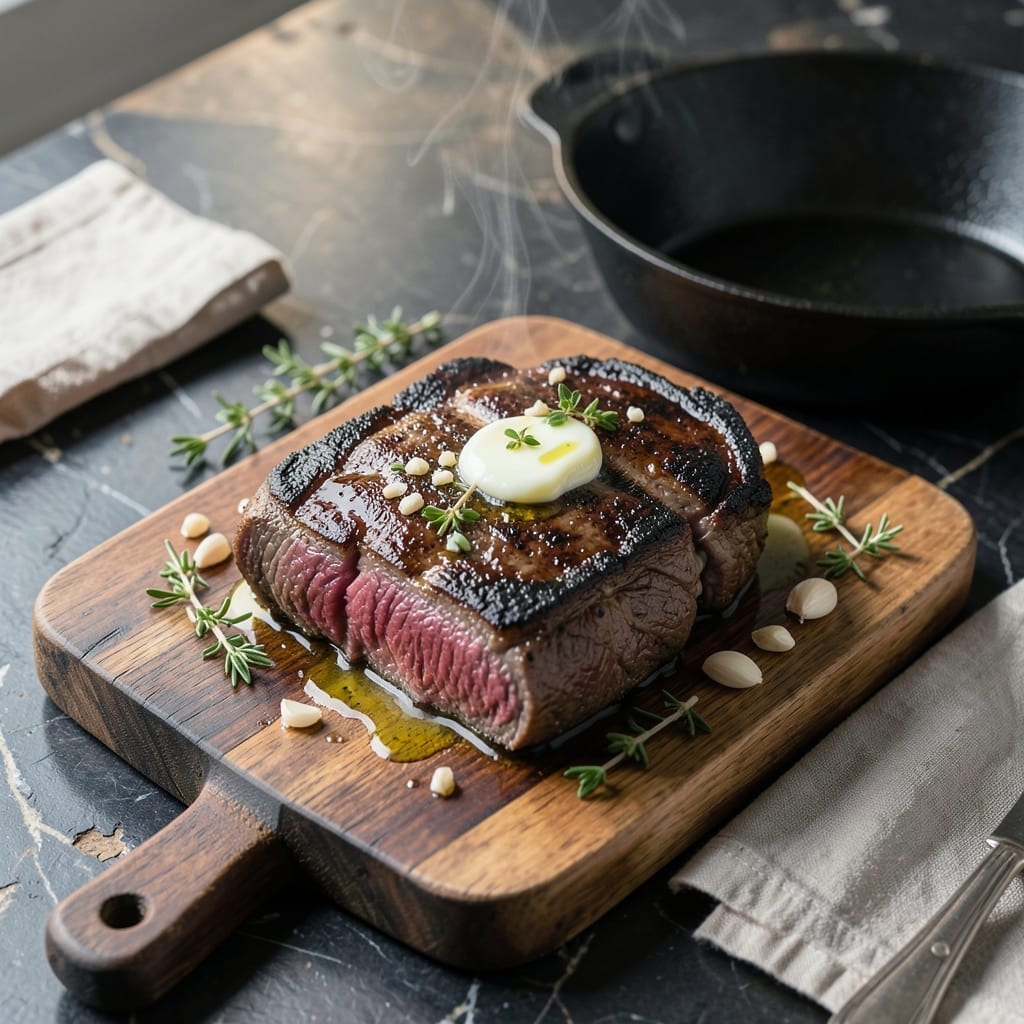
Mastering steak in a cast iron skillet is a game-changer for home cooks. This proven method delivers juicy results with a perfectly seared crust, rivaling any steakhouse.
I’ve refined this technique over years, learning that high heat and precise timing are everything. A screaming hot pan creates that coveted Maillard reaction, while proper resting ensures the interior stays tender.
The secret lies in the details—patting the steak dry, seasoning generously, and using a simple yet effective oil. These steps transform a good cut into an extraordinary one.
What you’ll achieve is a steak with a deep, caramelized exterior and a center so tender it nearly melts. Pair it with your favorite sides for a restaurant-worthy meal at home.
Ingredients for Gordon Ramsay Steak Recipe Cast Iron
High-quality beef and a few pantry staples create this restaurant-worthy steak at home.
| Ingredient | Amount | Notes |
|---|---|---|
| Ribeye Steaks 🥩 | 2 whole | 1.5 inches thick, bone-in preferred |
| Kosher Salt 🧂 | 2 tbsps | Diamond Crystal preferred for even coating |
| Freshly Ground Black Pepper 🌶️ | 1 tbsp | Coarse grind for texture |
| High-Smoke-Point Oil 🫒 | 2 tbsp | Avocado or grapeseed oil recommended |
| Unsalted Butter 🧈 | 4 tbsp | European-style for richness |
| Garlic Cloves 🧄 | 4 cloves | Lightly crushed, peeled |
| Fresh Rosemary Sprigs 🌿 | 2 whole | Woody stems removed |
| Fresh Thyme Sprigs 🍃 | 4 whole | Optional for aromatic depth |
| Olive Oil 🫒 | 1 tbsp | For finishing, extra-virgin |
| Flaky Sea Salt 🧂 | ½ tsp | Maldon or Jacobsen preferred |
[recipe_ingredient_scaler]
The ribeye is non-negotiable here—marbling equals flavor. Costco or Whole Foods carry excellent pre-cut options, but ask your butcher for a bone-in ribeye cut 1.5 inches thick. Pat them bone-dry before seasoning (this isn’t optional). For the salt, Diamond Crystal kosher salt is the pro move—its large flakes cling perfectly to the meat’s surface.
No ribeye? A well-marbled New York strip works too, but avoid lean cuts like filet—they won’t deliver the same juiciness. Out of avocado oil? Vegetable or canola oil can sub in, but avoid olive oil (smoke point too low). For the herbs, dried won’t work here—fresh rosemary and thyme are key for that aromatic finish. The butter must be unsalted; salted throws off the seasoning balance.
Seasoned steaks can rest uncovered in the fridge for 1-2 hours before cooking. Leftovers (if any) keep 3-4 days in an airtight container, though they’re best eaten immediately. Reheat gently in a skillet to avoid overcooking—microwaving ruins the texture (don’t do it).
Why You’ll Love This Recipe
- I’ll be real: this feels fancy enough for company but takes 15 minutes start to finish.
- One Pan Magic: I love that it only needs a cast iron skillet and five ingredients—no fancy prep, just heat and timing.
- Crispy Crust Perfection: That buttery, salt-pepper crust on the ribeye? Honestly, it’s the reason I make this every other week.
- Date Night Ready: I’ll be real: this feels fancy enough for company but takes 15 minutes start to finish.
Step-by-Step Instructions for Cast Iron Steak
This method guarantees a perfect sear with a juicy interior every time.
Step 1: Season and Rest the Ribeye Steaks
Pat the ribeye steaks completely dry with paper towels—moisture prevents a good sear. Season generously with the 2 tbsps kosher salt and 1 tbsp freshly ground black pepper, pressing the seasoning into all surfaces of the meat. This creates a flavorful crust.
Let the steaks rest at room temperature for 45-60 minutes. This allows the salt to penetrate and the meat to cook more evenly. I always place them on a wire rack to ensure air circulates around the entire steak, not just the top and bottom.
Step 2: Preheat the Cast Iron and Sear the Steaks
Place a cast iron skillet over medium-high heat for 5 minutes until it’s screaming hot. Add the 2 tbsp high-smoke-point oil and swirl to coat the pan. The oil should shimmer but not smoke—if it smokes, the pan is too hot.
Carefully lay the ribeye steaks in the pan. Sear undisturbed for 3-4 minutes until a deep, golden-brown crust forms. Use tongs to flip the steaks and sear the other side for another 3-4 minutes. Press down gently with the tongs during the first minute to ensure full contact with the pan.
Step 3: Baste with Aromatics and Butter
Reduce heat to medium and add the 4 tbsp unsalted butter, 4 cloves garlic cloves, 2 whole fresh rosemary sprigs, and 4 whole fresh thyme sprigs to the pan. Tilt the skillet slightly and use a spoon to baste the steaks with the melted butter continuously for 1-2 minutes.
The butter should foam and turn a light golden brown, and the garlic should become fragrant but not burn. This basting step adds incredible flavor and helps cook the steaks evenly. For thicker steaks, use tongs to hold them on their sides for 30 seconds per side to render the fat cap.
Step 4: Rest and Finish with Olive Oil and Flaky Salt
Transfer the steaks to a cutting board and let them rest for 5-10 minutes. This resting period allows the juices to redistribute throughout the meat. If you cut into the steaks too soon, all those beautiful juices will end up on your cutting board instead of in the meat.
Drizzle the steaks with the 1 tbsp olive oil and sprinkle with the 0.5 tsp flaky sea salt. Slice against the grain and serve immediately. The interior should be perfectly juicy with a rich, caramelized crust that cracks slightly when you cut into it.
Pro Tips For Making Gordon Ramsay Steak Recipe Cast Iron
- Dry the Steaks: Pat the ribeyes bone-dry with paper towels before seasoning—any moisture will steam them instead of searing, and I learned this the hard way after ruining a perfect cut.
- Sear with Avocado Oil: Use avocado or grapeseed oil, not olive oil, since it has a higher smoke point and won’t burn when the cast iron gets screaming hot.
- Don’t Move the Steak: Resist the urge to poke or flip too soon; let it develop a deep crust for 2-3 minutes per side before touching it.
- Bast with Butter: Tilt the pan and spoon melted butter, garlic, and thyme over the steak for the last minute—it adds flavor faster than any marinade.
Common Mistakes When Making Perfect Results
Skipping the Dry Pat
Never skip patting the ribeye completely dry with paper towels. Even a little moisture creates steam instead of a sear, giving you a gray, boiled-looking exterior rather than that coveted golden-brown crust. I learned this the hard way early on—Nonna would shake her head at my soggy attempts. 💪
Uneven Seasoning
Don’t just sprinkle salt and pepper on top. Press the 2 tbsps kosher salt and 1 tbsp black pepper into every surface, including the fat cap and sides. Uneven seasoning leads to bland bites, and nobody wants that in a restaurant-worthy steak.
Cold Steak in the Pan
Always let the ribeye rest at room temperature for 45-60 minutes before cooking. A cold steak cooks unevenly, with a burnt exterior and raw center. This step ensures the interior reaches the perfect doneness while the crust develops.
Overcrowding the Pan
Cook one steak at a time if your pan isn’t large enough. Overcrowding lowers the pan’s temperature, causing the steaks to steam instead of sear. I use a 12-inch Lodge cast iron for two steaks—any more and you risk a disappointing, pale crust.
Ignoring the Rest
Cutting into the steak too soon sends all those 5-10 minutes of built-up juices onto your cutting board. Resting allows the fibers to relax and reabsorb the moisture, keeping every bite tender and flavorful.
Burning the Butter
When basting, reduce heat to medium and keep the butter moving with a spoon. If it burns, it’ll taste bitter and ruin your steak’s flavor. The garlic should sizzle but not brown—remove it if it starts to darken too quickly.
Nutrition Facts
Frequently Asked Questions
What’s the ideal doneness temperature?
For medium-rare, aim for an internal temp of 130-135°F. Use a meat thermometer for accuracy. The temperature will rise 5-10°F during resting, so pull it early.
Can I use a different type of pan?
Stainless steel works, but cast iron retains heat better for a consistent sear. Avoid nonstick—it can’t handle the high heat needed for a proper crust.
How do I prevent smoke in my kitchen?
Open windows and turn on the vent hood before heating the pan. Use an oil with a high smoke point, like avocado or grapeseed, to minimize smoke.
Should I season the steak overnight?
Dry-brining overnight works well, but salting 45-60 minutes before cooking is sufficient for flavor penetration and moisture retention.

Trained in classic French technique but raised on slow-cooked ribs and spicy rubs, she blends culinary skill with smoke and soul.
- Recipe for Oven Baked Halibut: Buttery White Fish with Zesty Lemon Topping - October 3, 2026
- Meatball Curry Recipe Kerala Style: Coconut-Spiced Gravy With Tender Bites - October 3, 2026
- Recipe for Curried Tofu: Aromatic Spices With Crispy Edges - October 3, 2026