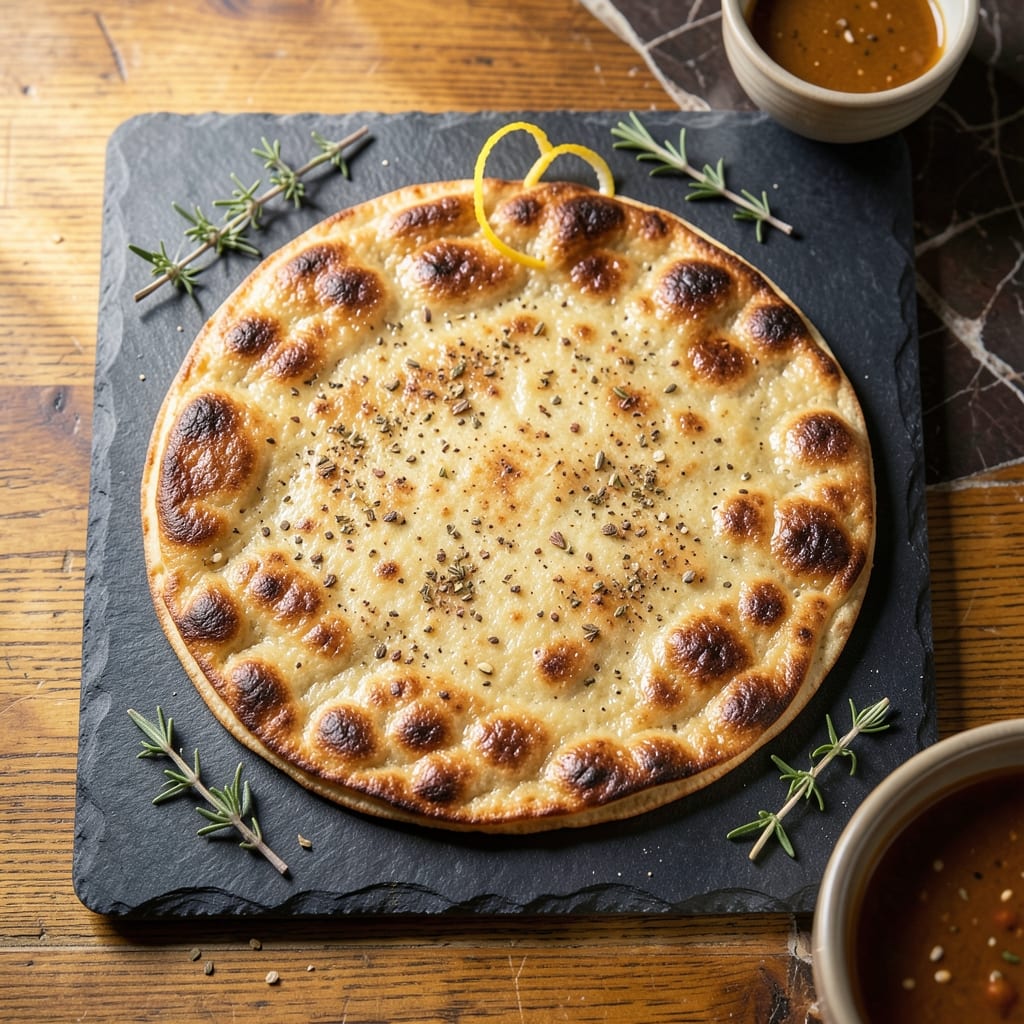
This grain free flatbread delivers the chewy texture you miss from traditional bread, without any gluten or grains. The secret lies in a simple blend of almond and coconut flours that creates a dough with perfect elasticity and structure.
Unlike many grain free alternatives that crumble apart, this recipe holds together beautifully. It bakes to a golden finish with a slightly crisp exterior and soft, bendable center. The process takes less than 30 minutes from start to finish.
What sets this apart is the addition of psyllium husk, which mimics gluten’s binding properties. This creates a bread-like experience that’s satisfying and familiar, even for those new to grain free baking.
The result is a versatile flatbread ready for sandwiches, dips, or serving alongside your favorite main courses. It’s proof that grain free doesn’t mean giving up texture or taste.
Ingredients for Grain Free Flatbread
Almond and coconut flours team up with psyllium husk for that perfect chewy bite.
| Ingredient | Amount | Notes |
|---|---|---|
| Almond Flour 🌰 | 1 ½ cups | Fine, blanched variety preferred |
| Coconut Flour 🥥 | ½ cup | Sifted for even texture |
| Psyllium Husk Powder 🌾 | 2 tbsp | Essential for binding and elasticity |
| Flaxseed Meal 🌿 | 2 tbsp | Golden or brown variety |
| Warm Water 💧 | ¾ cup | Approximately 110°F for activation |
| Apple Cider Vinegar 🍏 | 1 tbsp | Balances flavor and aids rise |
| Extra-Virgin Olive Oil 🫒 | 2 tbsp | Plus extra for greasing |
| Sea Salt 🧂 | ½ tsp | Fine grain for even distribution |
| Baking Soda 🧪 | ½ tsp | Ensures proper rise |
| Garlic Powder 🧄 | ½ tsp | Optional, for savory flavor |
| Dried Oregano 🍃 | ½ tsp | Optional, for herbaceous notes |
[recipe_ingredient_scaler]
The psyllium husk is non-negotiable here—Whole Foods or Thrive Market carry it if your regular store doesn’t. Bob’s Red Mill is a reliable brand (the powder, not the whole husks). Almond flour should be fine and blanched; Costco sells big bags that are cost-effective. Coconut flour can clump, so sift it first. For the flaxseed meal, golden or brown both work, but freshness matters (old flax loses its binding power).
No psyllium husk? Ground chia seeds at a 1:1 ratio can work in a pinch, though the texture won’t be identical. Swap apple cider vinegar for lemon juice or white vinegar if that’s what you’ve got. For oil, avocado or melted coconut oil both hold up well. Skip the garlic and oregano if you prefer a neutral base for sweet toppings (like jam or nut butter).
Store the flatbread in an airtight container for up to 5 days. Reheat in a dry skillet to restore chewiness. The dough itself can sit at room temp for 1 hour before baking, but don’t let it dry out. Freeze baked flatbreads for up to 1 month (separate with parchment).
Why You’ll Love This Recipe
- I’ll be real: leftovers stay soft for days, so I can prep a batch and grab one whenever.
- One Bowl Wonder: I just mix the almond flour, coconut flour, psyllium husk, and flaxseed meal with warm water—no fancy steps, no extra bowls.
- Nutty & Toasty: The almond and coconut flours give it this rich, warm flavor that’s way more interesting than regular bread.
- Endless Pairings: Honestly, I’ve used these for wraps, dips, even as a pizza base—so versatile for any meal.
Step-by-Step Instructions for Grain Free Flatbread
Here’s my tried-and-true method for achieving that perfect chewy texture without any gluten.
Step 1: Combine Dry Ingredients for Structure
In a large mixing bowl, whisk together the 1.5 cups Almond Flour, 0.5 cup Coconut Flour, 2 tbsp Psyllium Husk Powder, 2 tbsp Flaxseed Meal, 0.5 tsp Sea Salt, 0.5 tsp Baking Soda, 0.5 tsp Garlic Powder, and 0.5 tsp Dried Oregano. I like to sift the coconut flour first to prevent any clumps in the final dough.
The psyllium husk powder is your binding hero here—it creates that elastic texture you’d expect from gluten. Make sure these dry ingredients are fully combined before adding the wet components to ensure even distribution throughout the dough.
Step 2: Add Wet Ingredients to Form the Dough
In a separate bowl, mix the 0.75 cup Warm Water, 1 tbsp Apple Cider Vinegar, and 2 tbsp Extra-Virgin Olive Oil. The vinegar reacts with the baking soda to help the flatbread rise slightly, while the olive oil keeps the texture tender.
Pour the wet mixture into the dry ingredients and stir with a wooden spoon until a thick, shaggy dough forms. Let it sit for 5 minutes to allow the psyllium husk powder to absorb the liquid and develop its binding properties. You’ll notice the dough becomes more cohesive and slightly sticky.
Step 3: Shape and Rest the Dough
Divide the dough into 4 equal portions (since this recipe serves four). Lightly grease your hands with extra olive oil to prevent sticking, then shape each portion into a smooth ball. Place the balls on a plate or tray and let them rest for 10 minutes.
This resting period is crucial. It allows the flours to fully hydrate and the psyllium husk to work its magic, ensuring your flatbread won’t crumble when you roll it out. The dough should feel slightly tacky but manageable after resting.
Step 4: Roll Out and Cook the Flatbread
Preheat a skillet over medium heat. Place one dough ball between two sheets of parchment paper and roll it out into a thin circle, about ⅛-inch thick. The parchment prevents sticking and makes it easy to transfer the dough to the skillet.
Carefully transfer the rolled dough (parchment still attached) to the preheated skillet. Peel off the top sheet of parchment and cook for 3-4 minutes until the bottom is golden brown with some darker spots. Flip the flatbread, remove the second sheet of parchment, and cook for another 2-3 minutes on the other side. Repeat with the remaining dough.
The flatbread is done when both sides are golden and slightly blistered in spots. The psyllium husk gives it a satisfying chew, while the almond and coconut flours provide a nutty, slightly sweet flavor. Serve warm for the best texture.
Pro Tips For Making Grain Free Flatbread
- Hydrate Psyllium First: Mix the psyllium husk powder with warm water first and let it sit for 3-4 minutes—it thickens fast, and adding it dry to the flours makes the dough impossible to work with.
- Weigh Your Flours: Almond and coconut flours absorb moisture so differently that volume measurements can ruin the texture. I learned this the hard way after a few gummy batches.
- Don’t Overbake: These flatbreads cook faster than you think. Pull them when they’re just golden, or they’ll turn brittle—about 3-4 minutes per side on medium heat.
- Use Parchment Paper: Press the dough between two sheets of parchment to roll it out cleanly—no sticking, no mess, and you can slide it right into the pan.
Common Mistakes When Making grain free flatbread
Skipping the Rest
I know it’s tempting to jump right to cooking, but resting the dough for 10 minutes is non-negotiable. Skipping this step means the psyllium husk won’t fully hydrate, resulting in flatbread that crumbles when you try to roll it out. 💡
Thickness Matters
Rolling the dough too thick (over ⅛-inch) prevents proper cooking. You’ll end up with a dense, gummy center. Use a rolling pin for even thickness, and don’t forget the parchment paper—it prevents sticking and tearing.
Water Temperature
Your water needs to be 110°F to activate the psyllium husk properly. Too cold, and it won’t gel; too hot, and it can kill the binding properties. I use a kitchen thermometer to check—Bob’s Red Mill recommends this exact temperature.
Overworking the Dough
Once the wet and dry ingredients combine, resist the urge to knead it like traditional bread. Overworking develops too much structure, making the flatbread tough. Just stir until combined, then let the psyllium do its work during the rest period.
Skillet Heat Control
Cooking over medium heat is key. Too high, and the outside burns before the inside cooks. Too low, and you’ll get dry, bland flatbread. Watch for those golden-brown spots—they’re your signal to flip. 🔥
Storage Missteps
Never store warm flatbread in an airtight container—the steam will make it soggy. Always cool completely first, then store with parchment between layers. Reheat in a dry skillet to restore that perfect chewy texture.
Nutrition Facts
Frequently Asked Questions
Can I use a different flour instead of almond?
You can swap almond flour for cashew flour or tigernut flour at a 1:1 ratio. Avoid coconut flour alone as it absorbs too much liquid.
Why did my flatbread turn out crumbly?
This usually means the psyllium husk didn’t hydrate enough. Ensure you use 110°F water and let the dough rest for the full 10 minutes before shaping.
Can I make this ahead of time?
Yes! Prepare the dough up to a day ahead and refrigerate. Let it come to room temperature before rolling. Baked flatbreads keep for 5 days in an airtight container.
How do I get a crispier texture?
Roll the dough thinner (1/16-inch) and cook for an extra 1-2 minutes per side. Press down lightly with a spatula while cooking.

Trained in classic French technique but raised on slow-cooked ribs and spicy rubs, she blends culinary skill with smoke and soul.
- Recipe for Boneless Pork Chops in Cast Iron Skillet: Sear and Baste to Juicy Perfection - October 3, 2026
- Recipe for Boneless Cross Rib Roast: Slow-Roasted Beef with Herb Crust - October 3, 2026
- Hamburgers in Sauce Recipe Crock Pot: Slow-Cooked Savory Delight - October 3, 2026