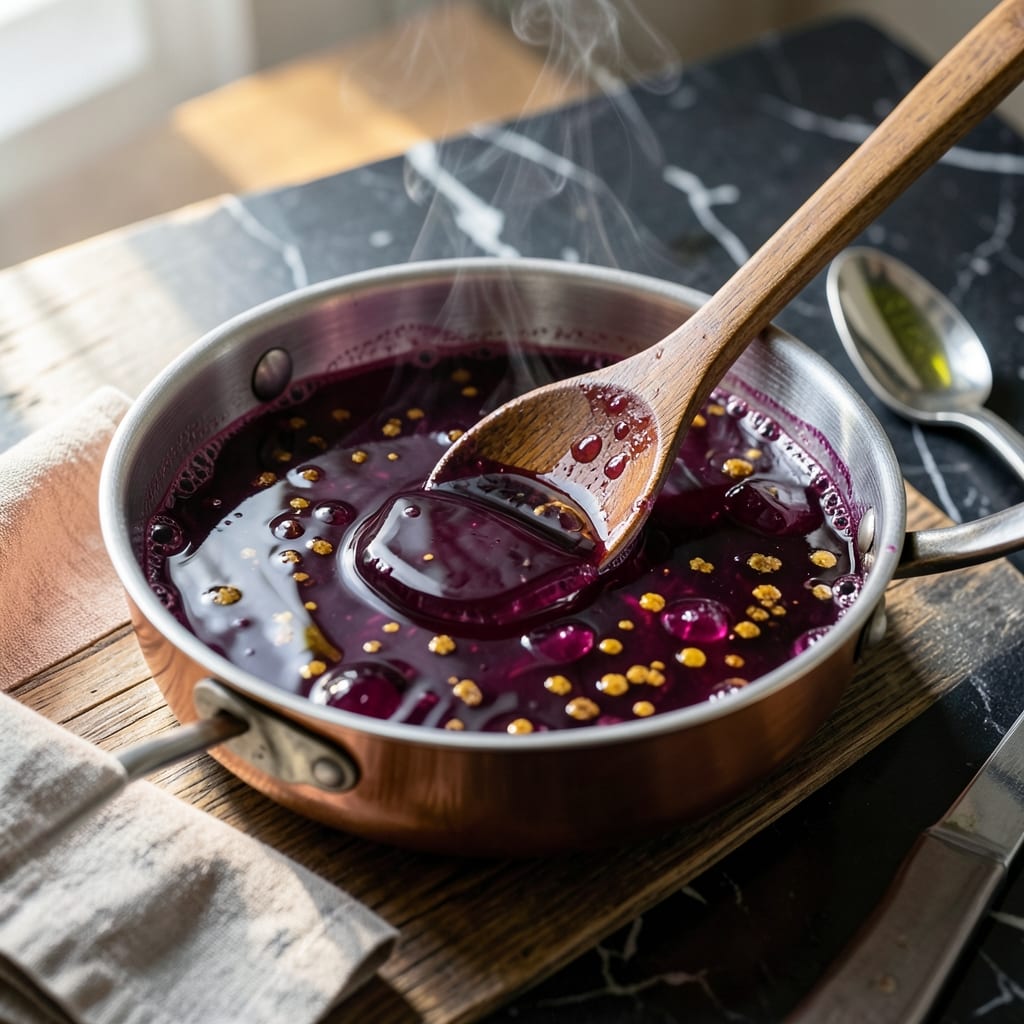
This simple grape jelly glaze transforms ordinary meats into restaurant-quality dishes with minimal effort. The secret lies in balanced sweetness and a glossy finish that enhances both appearance and flavor.
By combining grape jelly with a few basic ingredients, you create a versatile sauce that works beautifully with ham, chicken, or pork. The process takes just 5 minutes on the stovetop, making it perfect for busy cooks.
The glaze develops a beautiful sheen when brushed on meats during the last few minutes of cooking. Its sticky texture helps it cling perfectly while adding layers of fruity depth to every bite.
Store leftovers in an airtight container in the refrigerator for up to two weeks. This keeps well and reheats easily for quick meal enhancements.
Ingredients for Grape Jelly Glaze
A few pantry staples create this glossy, sweet glaze perfect for meats.
| Ingredient | Amount | Notes |
|---|---|---|
| Grape Jelly 🍇 | 1 cup | Smooth, seedless variety preferred |
| Apple Cider Vinegar 🍏 | 2 tbsp | Balances sweetness with acidity |
| Dijon Mustard 🟡 | 1 tbsp | Adds depth and tang |
| Soy Sauce 🥢 | 1 tbsp | Low-sodium for controlled seasoning |
| Garlic Powder 🧄 | 1 tsp | Uniform flavor distribution |
| Onion Powder 🧅 | 1 tsp | Complements the garlic |
| Ground Black Pepper 🌶️ | ½ tsp | Freshly ground for best aroma |
| Worcestershire Sauce 🍶 | 1 tsp | Use vegetarian variety |
| Honey 🍯 | 1 tbsp | Optional for extra sweetness |
[recipe_ingredient_scaler]
The grape jelly is the foundation—Smucker’s or Bonne Maman deliver consistent quality and smooth texture. Avoid jams with visible fruit pieces, as they disrupt the glaze’s uniformity. For the vinegar, apple cider adds the right fruit-forward acidity. Most supermarkets stock all necessary items in the condiment aisle, making this a one-stop shopping recipe.
No apple cider vinegar? White vinegar at half the amount works, though the flavor profile shifts slightly. Balsamic vinegar adds depth but darkens the glaze. For a vegetarian Worcestershire, Annie’s is widely available. The honey can be omitted or replaced with maple syrup for vegan adaptation. The mustard is flexible—yellow mustard lightens the color but keeps the tang.
This glaze keeps beautifully in an airtight container in the refrigerator for up to 2 weeks. The flavors meld and deepen over time. For longer storage, freeze in ice cube trays for 3 months—perfect for quick weeknight meals.
Why You’ll Love This Recipe
- 5-Minute Mix: I just stir together grape jelly, vinegar, mustard, soy sauce, and garlic powder—no cooking required.
- Sweet-Savory Magic: The grape jelly’s fruitiness balances the tang of vinegar and the punch of mustard and garlic.
- Pairs with Everything: I’ve brushed it on chicken, pork chops, and even roasted veggies—it works every time.
- Pantry Staples Only: Honestly, I always have these ingredients on hand, so I can make it without a grocery run.
Step-by-Step Instructions for Grape Jelly Glaze
This straightforward process transforms simple ingredients into a glossy, flavorful finish for any meat.
Step 1: Combine Jelly and Vinegar Base
In a medium saucepan over medium heat, add the 1 cup Grape Jelly and 2 tbsp Apple Cider Vinegar. The vinegar will immediately begin to thin the jelly’s thick consistency, creating a smooth foundation for your glaze.
Stir constantly with a silicone spatula or wooden spoon for 2-3 minutes until the mixture becomes completely liquid and begins to gently bubble at the edges. Watch for the jelly to lose its opaque appearance and become translucent—this indicates the sugars are activating.
Step 2: Incorporate Savory and Aromatic Elements
Reduce heat to medium-low and add the 1 tbsp Dijon Mustard, 1 tbsp Soy Sauce, 1 tsp Garlic Powder, 1 tsp Onion Powder, and 0.5 tsp Ground Black Pepper. The mustard and soy sauce will create a subtle emulsion with the jelly mixture.
Whisk vigorously for 1-2 minutes until all ingredients are fully integrated and the mixture thickens slightly. The glaze should coat the back of your spoon with a glossy sheen. Here’s the thing—this is where the depth of flavor develops, so don’t rush the process.
Step 3: Add Complex Seasonings
Stir in the 1 tsp Worcestershire Sauce and 1 tbsp Honey. The Worcestershire adds umami complexity that balances the sweetness, while the honey enhances the natural fruit flavors and contributes to the final gloss.
Continue cooking for 3-4 minutes at a gentle simmer, stirring occasionally. You’ll notice the glaze darkening slightly and developing a more pronounced aroma. The volume should reduce by about 15-20%, concentrating the flavors without becoming syrupy.
Step 4: Test and Adjust Consistency
Remove the saucepan from heat and let the glaze rest for 1 minute. The mixture should have the consistency of thin maple syrup when hot. Dip a spoon in the glaze and let it drip back into the pan—it should ribbon off the spoon rather than drop in individual beads.
If the glaze seems too thick, return it to low heat and whisk in 1-2 teaspoons of water until it reaches the desired consistency. Conversely, if it’s too thin, simmer for an additional 2-3 minutes. This glaze will thicken slightly as it cools, so aim for a slightly thinner consistency than your final goal.
Step 5: Finish and Apply to Meats
Transfer the glaze to a heatproof bowl or jar to cool slightly. The finished product should have a deep, glossy appearance with a balance of sweet, tangy, and savory notes. As it cools, it will develop a thicker, brushable consistency perfect for application.
For best results, brush the glaze onto meats during the last 5-10 minutes of cooking. The sugars in the glaze can burn if exposed to high heat for too long, so apply it late in the cooking process. Use a pastry brush for even coverage, and allow the glaze to caramelize slightly for maximum flavor and visual appeal.
Pro Tips For Making Grape Jelly Glaze
- Simmer Low and Slow: I learned this the hard way—boiling the glaze too hot makes the jelly separate and turn dull. Keep it at a gentle simmer for 3-5 minutes to blend the flavors without breaking the sauce.
- Whisk the Lumps Out: Sounds weird, but it works: mix the Dijon mustard with the vinegar first before adding the jelly. This prevents stubborn clumps and gives you a smooth, glossy finish.
- Skip the Sweet Overload: Resist the urge to add extra jelly for more flavor—it’ll make the glaze cloying and thicken too much. The balance of sweet, tangy, and savory is already spot-on with the original measurements.
- Bloom the Garlic: Toast the garlic powder in the saucepan for 10-15 seconds before adding liquids. It wakes up the flavor and keeps it from tasting raw or bitter in the final glaze.
Pro Cooking Tips for This Recipe
Perfect Consistency Control
I always use a medium saucepan with a heavy bottom to prevent hot spots that can scorch the sugars in the jelly. A silicone spatula is my go-to tool for stirring—it scrapes the bottom thoroughly without scratching your cookware. 🔥
Timing the Reduction
Watch for the glaze to reach the ribbon stage—when it coats the back of a spoon and holds its shape briefly. This usually happens after 8-10 minutes of total cooking time. If it reduces too quickly, lower the heat immediately to prevent burning.
Flavor Layering
Add the Dijon mustard and soy sauce after the jelly has fully liquefied. This ensures they emulsify properly rather than sitting as separate layers. I whisk vigorously at this stage to create a uniform, glossy mixture.
Final Texture Check
Before removing from heat, test the glaze on a cold plate. It should spread smoothly but not run excessively. If it’s too thick, a splash of apple cider vinegar thins it perfectly while maintaining flavor balance.
Application Pro Tip
Brush the glaze on meats only during the last 5-10 minutes of cooking. The sugars caramelize quickly, and longer exposure can lead to burning. Use a pastry brush for even coverage and that perfect glossy finish. ✨
Storage Insight
Let the glaze cool completely before transferring to an airtight container. This prevents condensation, which can dilute the flavor. In the fridge, it keeps for up to 2 weeks and reheats beautifully in 30-second microwave bursts.
Nutrition Facts
Frequently Asked Questions
Can I use a different type of jelly?
Yes, apricot or raspberry jelly work well as substitutes. They’ll change the flavor profile but maintain the glossy texture. Adjust sweetness to taste with a pinch of salt if needed.
How do I prevent the glaze from burning?
Cook over medium-low heat and stir frequently. Apply to meats only during the last 5-10 minutes of cooking. The sugars caramelize quickly at high temperatures.
What meats pair best with this glaze?
Ham, chicken, and pork are classic choices. The sweetness complements smoked meats particularly well. For poultry, brush on during the final minutes to avoid burning.
Can I make this ahead of time?
Store in an airtight container in the fridge for up to 2 weeks. Reheat gently in the microwave or on the stovetop before using.

Trained in classic French technique but raised on slow-cooked ribs and spicy rubs, she blends culinary skill with smoke and soul.
- Recipe for Boneless Pork Chops in Cast Iron Skillet: Sear and Baste to Juicy Perfection - October 3, 2026
- Recipe for Boneless Cross Rib Roast: Slow-Roasted Beef with Herb Crust - October 3, 2026
- Hamburgers in Sauce Recipe Crock Pot: Slow-Cooked Savory Delight - October 3, 2026