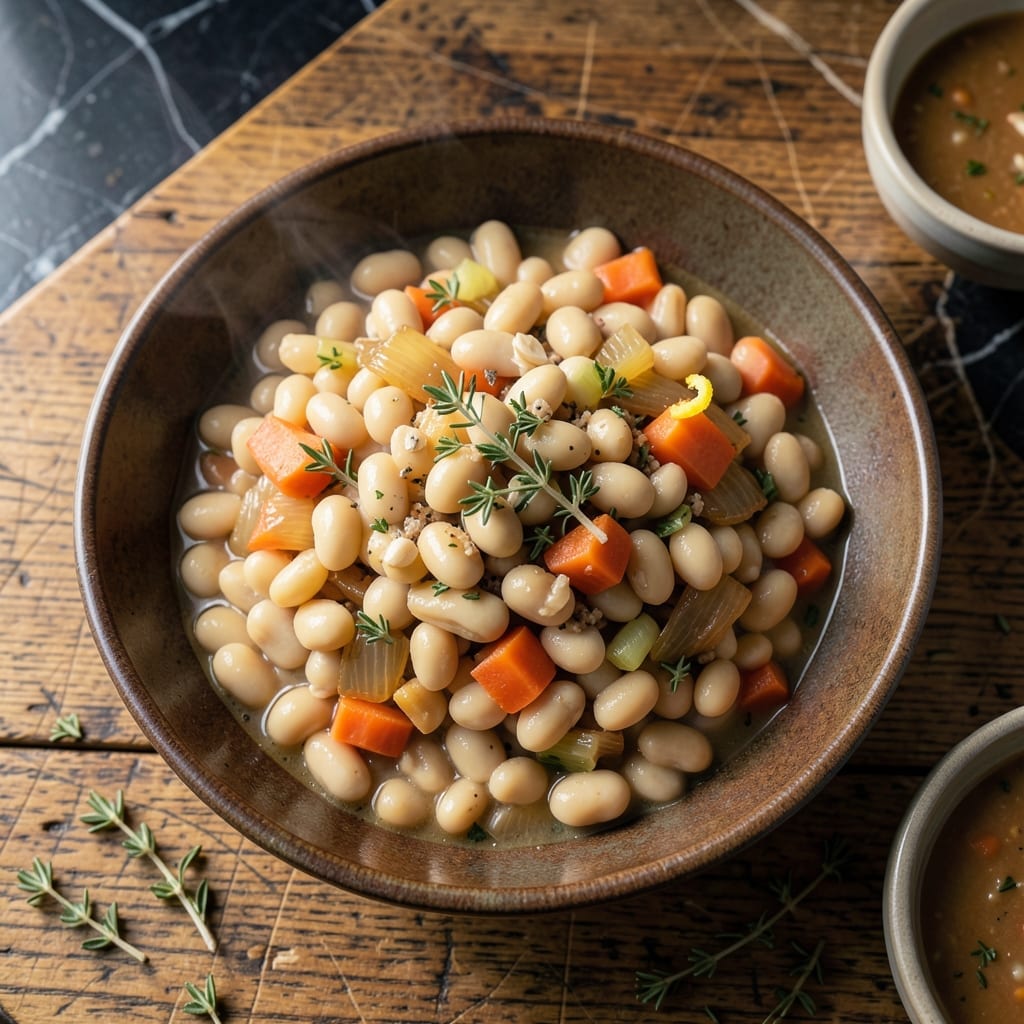
I developed this stovetop method after too many dry, bland beans ruined perfectly good meals. The secret lies in a slow simmer with aromatic vegetables and fresh herbs, transforming humble Great Northern beans into something creamy and deeply flavorful.
This isn’t just another bean recipe—it’s a foolproof technique that coaxes maximum flavor from simple ingredients. A bay leaf, garlic, and thyme work quietly in the background while the beans soften to creamy perfection.
The result is a dish that’s rich and satisfying without a single animal product. The beans absorb the herbal broth, becoming tender and luxurious, with just enough texture to hold their shape.
Serve as a hearty side or main dish with crusty bread. The leftovers only taste better the next day.
Ingredients for Great Northern Beans Recipe Stovetop
Simple ingredients transform into creamy, herb-infused beans with this stovetop method.
| Ingredient | Amount | Notes |
|---|---|---|
| Dried Great Northern Beans 🌱 | 1 lb | Rinsed and picked over |
| Yellow Onion 🧅 | 1 whole | Medium, finely diced |
| Carrots 🥕 | 2 whole | Medium, finely diced |
| Celery Stalks 🌿 | 2 whole | Finely diced |
| Garlic Cloves 🧄 | 4 cloves | Minced |
| Fresh Thyme Sprigs 🌿 | 4 pieces | Plus extra for garnish |
| Bay Leaf 🍃 | 2 pieces | Dried |
| Vegetable Broth 💧 | 6 cups | Low-sodium preferred |
| Extra-Virgin Olive Oil 🫒 | 2 tbsp | For sautéing aromatics |
| Salt 🧂 | 1 ½ tsp | Kosher or sea salt, divided |
| Black Pepper 🌶️ | ½ tsp | Freshly ground |
| Fresh Parsley 🌿 | ¼ cup | Chopped, for garnish |
[recipe_ingredient_scaler]
The dried Great Northern beans are non-negotiable for texture—Goya or Bob’s Red Mill brands are reliable for consistent quality. Look for beans that are uniform in size and color with no signs of moisture. The aromatic base (onion, carrot, celery) should be fresh and firm. For the best herbal impact, fresh thyme from a local farmers market or well-stocked Whole Foods produces superior results over dried.
No fresh thyme? Dried thyme at one-third the amount works in a pinch. Out of celery? Fennel bulb adds a similar aromatic depth. For a richer broth, substitute mushroom broth for vegetable. The beans must be soaked overnight—this isn’t negotiable for achieving that promised creamy texture. If you’re short on time, the quick-soak method (boiling for 2 minutes then resting for 1 hour) is acceptable.
Cooked beans keep beautifully in their liquid for up to 5 days refrigerated. They also freeze perfectly for 3 months in airtight containers. The flavor deepens over time, making leftovers even more delicious. Always store with some of the cooking liquid to maintain moisture.
Why You’ll Love This Recipe
- Set It and Forget: I toss everything in one pot, let it simmer, and the dried beans plump up perfectly on their own.
- Rich, Earthy Depth: The garlic and celery bloom in the broth, turning those humble beans into something crave-worthy.
- Meal Prep MVP: I make a double batch—it reheats beautifully for lunches all week.
- Pennywise Comfort: A pound of dried beans costs less than a coffee and feeds my family for days.
Step-by-Step Instructions for Creamy White Beans With Herbs
Here’s the method. Straightforward, tested, works every time.
Step 1: Soak and Prepare the Dried Great Northern Beans
Place the 1 lb Dried Great Northern Beans in a large bowl and cover with cold water by 2 inches. I always pick through the beans first to remove any small stones or debris. Let them soak overnight, or for at least 8 hours. This rehydration step is crucial for even cooking and achieving that creamy texture.
Drain and rinse the beans thoroughly before cooking. You’ll notice they’ve plumped up significantly—this means they’re ready to absorb the flavors of the broth and aromatics. Skipping this step results in uneven cooking and can lead to some beans remaining tough while others turn to mush.
Step 2: Sauté the Aromatics to Build Flavor
Heat the 2 tbsp Extra-Virgin Olive Oil in a large pot or Dutch oven over medium heat. Add the finely diced Yellow Onion, Carrots, and Celery Stalks. Cook for 8-10 minutes, stirring occasionally, until the vegetables soften and the onion becomes translucent.
Add the 4 cloves minced Garlic Cloves and cook for 1 minute until fragrant. I stir constantly during this time to prevent the garlic from burning, which would add a bitter note to the dish. The aroma at this stage should be rich and inviting, signaling that the flavor base is developing properly.
Step 3: Simmer the Beans with Broth and Herbs
Add the soaked and drained Dried Great Northern Beans to the pot along with the 4 pieces Fresh Thyme Sprigs and 2 pieces Bay Leaf. Pour in the 6 cups Vegetable Broth and bring to a boil. Once boiling, reduce the heat to low, cover, and let it simmer gently for 45-60 minutes.
Check the beans periodically and stir gently. You’ll know they’re done when they’re tender and creamy throughout, not just soft on the outside. If the liquid level drops too much, add a bit of hot water to maintain the simmer. The beans should be submerged throughout the cooking process for even doneness.
Step 4: Season and Finish the Dish
Once the beans are tender, stir in 1.5 tsp Salt and 0.5 tsp Black Pepper. I add the salt toward the end because salting early can toughen the beans. Taste and adjust the seasoning if needed—the low-sodium broth allows you to control the saltiness precisely.
Remove the Bay Leaf and Thyme Sprigs before serving. The herbs have infused their flavors into the beans and broth, so they’re no longer needed. Let the beans sit off the heat for 5-10 minutes to allow the flavors to meld together beautifully.
Step 5: Garnish and Serve
Ladle the creamy beans into bowls and garnish with the 0.25 cup Fresh Parsley. The bright green parsley adds a fresh contrast to the rich, earthy beans. I like to drizzle a little extra Extra-Virgin Olive Oil on top just before serving for a touch of silkiness.
Serve warm, with crusty bread for dipping if desired. The beans should be velvety smooth with a flavorful broth that’s been enriched by the slow simmering process. Each bite should deliver the comforting, creamy texture that makes this dish so satisfying.
Pro Tips For Making Great Northern Beans Recipe Stovetop
- Soak Overnight: Cover dried Great Northern beans in 3 inches of water and let them soak for at least 8 hours—I learned this the hard way after ending up with tough beans that never softened.
- Sauté the Aromatics: Cook the onion, carrots, celery, and garlic in the pot first until soft, about 5-7 minutes; it builds a flavor base that plain boiled beans just can’t match.
- Skip the Salt Early: Resist the urge to salt the water at the start—it toughens the skins. Wait until the beans are tender, then season to taste.
- Simmer Low and Slow: Keep the heat gentle enough that the water barely bubbles; a rolling boil splits the skins and turns your beans to mush.
Storing and Reheating great northern beans recipe stovetop
Refrigerator Storage
Let your beans cool for no more than 2 hours before transferring to airtight containers. I use glass Pyrex with snap-on lids for this. Store at 40°F or below for up to 5 days. The flavors deepen as they rest. ❄️
Freezer Storage
These beans freeze beautifully for up to 3 months without quality loss. I recommend quart-size freezer bags—they stack efficiently and thaw faster. Leave 1 inch of headspace and squeeze out excess air to prevent freezer burn.
Stovetop Reheating
This is my preferred method for best texture. Pour beans and liquid into a heavy pot, add ¼ cup water to prevent sticking, and heat over medium-low heat for 10-15 minutes. Stir occasionally and taste for seasoning. 🔥
Microwave Reheating
For quick meals, microwave individual portions covered with a damp paper towel. Heat on 70% power for 2-3 minutes, stir, then continue in 1-minute intervals until reaching 165°F. Add water if needed.
Thawing Frozen Beans
Transfer frozen beans to the fridge 24 hours before reheating. For faster thawing, submerge the sealed bag in cold water, changing the water every 30 minutes. Never thaw at room temperature.
Nutrition Facts
Frequently Asked Questions
Do I need to soak the beans first?
Yes, soaking overnight is ideal for even cooking and creamy texture. In a pinch, use the quick-soak method: boil for 2 minutes, then rest for 1 hour.
Can I use canned beans instead?
You can, but dried beans give the best texture and flavor. If using canned, reduce broth to 2 cups and simmer for just 15-20 minutes to meld flavors.
Why did my beans turn out tough?
Old beans or insufficient soaking time are common culprits. Always check the expiration date and soak for at least 8 hours. Hard water can also toughen beans—use filtered if possible.
How can I make them creamier?
Mash a few beans against the pot side near the end of cooking. This releases starch, thickening the broth naturally for a velvety texture.

Trained in classic French technique but raised on slow-cooked ribs and spicy rubs, she blends culinary skill with smoke and soul.
- Recipe for Boneless Pork Chops in Cast Iron Skillet: Sear and Baste to Juicy Perfection - October 3, 2026
- Recipe for Boneless Cross Rib Roast: Slow-Roasted Beef with Herb Crust - October 3, 2026
- Hamburgers in Sauce Recipe Crock Pot: Slow-Cooked Savory Delight - October 3, 2026