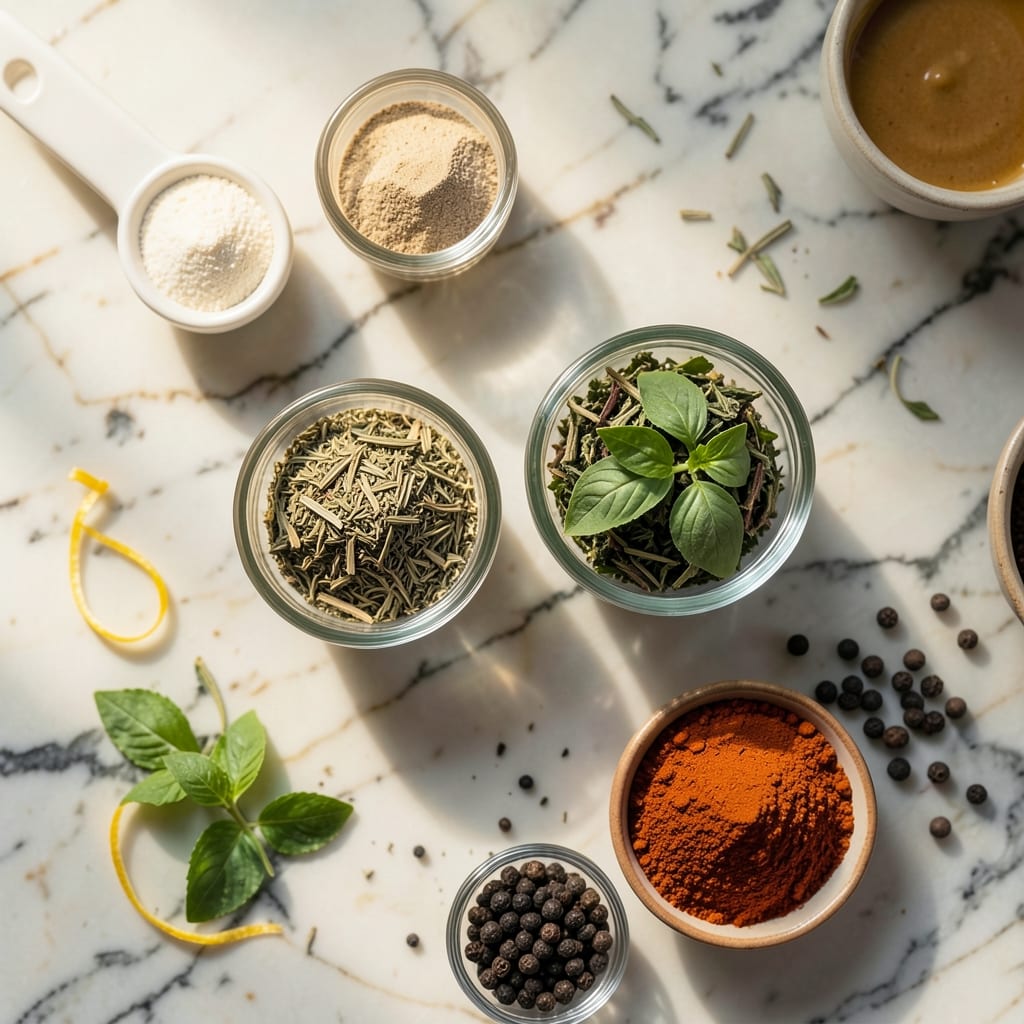
This recipe delivers perfectly charred chicken infused with bright lemon and earthy oregano, a classic Greek combination. The marinade tenderizes while building layers of Mediterranean flavor.
High heat on the grill creates those signature char marks while keeping the meat juicy. I learned early that proper marinating time transforms good chicken into something extraordinary.
Ingredients for Greek Chicken Grill
Bright lemon, earthy oregano, and juicy chicken come together for Mediterranean perfection on the grill.
| Ingredient | Amount | Notes |
|---|---|---|
| Boneless, Skinless Chicken Thighs 🍗 | 2 lb | Patted dry, trimmed of excess fat |
| Extra-Virgin Olive Oil 🫒 | ½ cup | Divided for marinade and grilling |
| Fresh Lemon Juice 🍋 | ⅓ cup | From 2-3 medium lemons |
| Lemon Zest 🍋 | 2 tbsp | From 1-2 lemons, finely grated |
| Dried Oregano 🌿 | 2 tbsp | Mediterranean variety preferred |
| Garlic Cloves 🧄 | 6 cloves | Minced or pressed |
| Dijon Mustard 🟡 | 2 tbsp | Smooth, not whole grain |
| Sea Salt 🧂 | 2 tsp | Fine grain, or Diamond Crystal kosher |
| Freshly Ground Black Pepper 🌶️ | 1 tsp | Coarse grind preferred |
| Fresh Rosemary 🌿 | 2 tbsp | Finely chopped, optional but recommended |
| Red Onion 🧅 | ½ whole | Thinly sliced for serving |
| Fresh Flat-Leaf Parsley 🌿 | ¼ cup | Chopped, for garnish |
[recipe_ingredient_scaler]
The chicken matters most here. Boneless, skinless thighs stay juicier than breasts on the grill—look for even sizing (about 6-8 pieces per pound) at Whole Foods or your local butcher. The oregano should be Mediterranean variety (more robust than Italian), and Penzeys carries it if your regular store doesn’t. Fresh lemons are non-negotiable; bottled juice lacks the brightness needed to cut through the richness.
No fresh rosemary? Dried at one-third the amount works, or swap in thyme. Missing Dijon? Whole grain mustard adds texture but slightly different flavor. For a citrus boost, add a splash of orange juice to the marinade. The red onion can be substituted with shallots (more delicate) or omitted entirely if you prefer a simpler presentation.
Marinate the chicken for at least 4 hours, but overnight yields maximum flavor. Cooked chicken keeps 3-4 days refrigerated or freezes for 3 months. Bring to room temperature before grilling for even cooking and better char development.
Why You’ll Love This Recipe
- Minimal Effort: I toss the chicken with olive oil, lemon, and oregano—no fancy prep, just flavor.
- Bright & Zesty: That lemon zest and juice give it a fresh pop that tastes like summer on a plate.
- Meal Prep Hero: I make a big batch on Sunday and it’s still delicious by Wednesday in salads or wraps.
- Budget Friendly: Chicken thighs stay juicy and cost way less than breasts, but still feel special.
Step-by-Step Instructions for Greek Chicken Grill
Master these precise techniques for charred, aromatic chicken with authentic Mediterranean flavor.
Step 1: Prepare the Marinade with Bold Aromatics
In a large bowl, whisk together 0.5 cup extra-virgin olive oil, 0.33 cup fresh lemon juice, 2 tbsp lemon zest, 2 tbsp dried oregano, 6 cloves minced garlic, 2 tbsp Dijon mustard, 2 tsp sea salt, and 1 tsp freshly ground black pepper. The emulsion will thicken slightly as the mustard binds with the liquids.
Add 2 lb boneless, skinless chicken thighs to the marinade, ensuring each piece is thoroughly coated. I always use my hands for this—you can feel when every surface is saturated. Cover and refrigerate for at least 4 hours, though overnight yields the most pronounced flavor penetration and tenderizing effect.
Step 2: Preheat and Prepare the Grill for High Heat
Remove the chicken from the refrigerator 30 minutes before grilling to bring it to room temperature. This ensures even cooking throughout. Preheat your grill to medium-high heat (about 400°F). Clean the grates thoroughly with a brush, then oil them lightly using a folded paper towel dipped in some of the reserved marinade oil.
While the grill heats, finely chop the 2 tbsp fresh rosemary and thinly slice the 0.5 whole red onion. These will be used for garnishing later, adding fresh, complementary flavors to the finished dish.
Step 3: Grill the Chicken to Charred Perfection
Remove the chicken from the marinade, shaking off excess liquid. Place the thighs on the grill, skin-side down if they have any remaining skin. Cook undisturbed for 5-6 minutes until you see distinct grill marks and the edges begin to char.
Flip the chicken and cook for another 4-5 minutes until the internal temperature reaches 165°F and the meat is no longer pink inside. Avoid pressing the chicken with your spatula—this squeezes out precious juices. The oregano and lemon in the marinade will create a fragrant smoke as they caramelize on the grates.
Step 4: Rest and Garnish for Maximum Flavor
Transfer the grilled chicken to a clean platter and let it rest for 5-10 minutes. This allows the juices to redistribute, ensuring each bite remains moist and flavorful. Tent loosely with foil to keep warm.
Garnish the chicken with the sliced red onion, chopped 0.25 cup fresh flat-leaf parsley, and any remaining chopped rosemary. The fresh herbs add a bright contrast to the rich, charred flavors. Serve immediately with lemon wedges for an extra burst of acidity.
Pro Tips For Making Greek Chicken Grill
- Pound the Thighs: Use the flat side of a knife or a rolling pin to pound the chicken thighs to an even ½-inch thickness. I learned this the hard way—uneven pieces mean some bits burn while others stay raw. —
- Bloom the Oregano: Heat the dried oregano in the olive oil for 30 seconds before mixing it with the lemon and chicken. Sounds weird, but it wakes up the flavor in a way raw oregano just can’t. —
- Skip the High Heat: Grill over medium heat, not high, to avoid charring the lemon zest and oregano before the chicken cooks through. After burning three batches, I finally figured out patience is the thing that matters most here. —
- Rest Before Serving: Let the chicken rest under foil for 5-10 minutes after grilling. My grandmother swore by this, and she was right: it keeps the juices from running all over the plate.
Dietary Considerations for These Flavors
Gluten-Free Friendly
This dish is naturally gluten-free as written, with no wheat-based ingredients. The marinade relies on olive oil, lemon juice, and Dijon mustard—all safe choices. Just verify your mustard brand is certified gluten-free, as some contain trace amounts. 💪
Dairy-Free by Design
The recipe contains no dairy products, making it suitable for lactose-intolerant diners. All flavor comes from the Mediterranean herbs, citrus, and olive oil. I often serve it with dairy-free sides like grilled vegetables or a simple arugula salad.
Low-Carb Option
For a keto-friendly version, simply omit the red onion garnish or serve it on the side. Each serving contains only 3g net carbs from the marinade ingredients. The chicken itself is virtually carb-free, making this a great choice for low-carb diets.
Nut-Free Safety
There are no nuts or nut-derived ingredients in this recipe, and the preparation process doesn’t require any cross-contamination risks. The olive oil and lemon juice base keeps it allergen-friendly. Always check your spice blends for potential nut processing, though.
Pescatarian Adaptation
While this is a chicken recipe, the marinade works beautifully with firm white fish like halibut or cod. Use 1.5 lb fish fillets and reduce grilling time to 3-4 minutes per side. The lemon-oregano profile complements seafood perfectly. 🌊
Soy-Free Assurance
The recipe contains no soy products, and the Dijon mustard is typically soy-free. For absolute certainty, choose a mustard labeled soy-free. The rest of the ingredients—olive oil, herbs, and citrus—are naturally soy-free and safe for those with allergies.
Nutrition Facts

Trained in classic French technique but raised on slow-cooked ribs and spicy rubs, she blends culinary skill with smoke and soul.
- Recipe for Boneless Pork Chops in Cast Iron Skillet: Sear and Baste to Juicy Perfection - October 3, 2026
- Recipe for Boneless Cross Rib Roast: Slow-Roasted Beef with Herb Crust - October 3, 2026
- Hamburgers in Sauce Recipe Crock Pot: Slow-Cooked Savory Delight - October 3, 2026