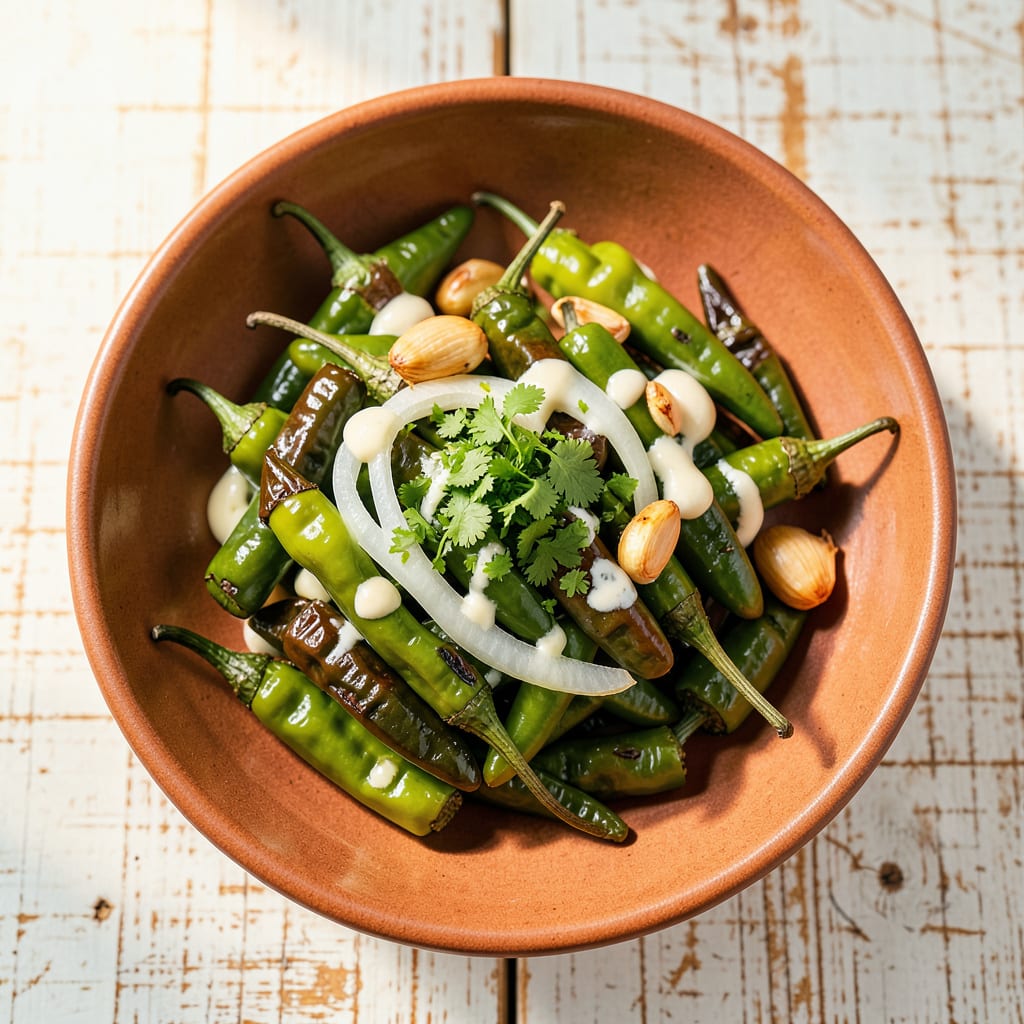
Start by roasting fresh green chilies until blistered, then peel and chop. Sauté with onions, garlic, tomatoes, and spices like cumin and coriander for a simple, flavorful side dish ready in under 30 minutes.
This method unlocks the chilies’ hidden depths by transforming their raw sharpness into something richer and more complex. 🔥 The roasting process caramelizes natural sugars while the skin’s removal eliminates any lingering bitterness, creating a base that’s both smoky and vibrant. I love how the combination of aromatic spices and fresh tomatoes builds layers of flavor—perfect for balancing the chilies’ natural heat without overpowering their fresh, vegetal notes.
What makes this dish particularly versatile is its ability to adapt to different spice preferences. You can control the heat level by adjusting the chili-to-tomato ratio or adding cooling elements like yogurt when serving. The 30-minute prep time makes it ideal for weeknight meals, yet it’s impressive enough for weekend gatherings too. ✨
💡 In This Article
- Why Roasting Green Chilies Enhances Their Flavor
- Variations and Serving Ideas for Green Chilies
Why Roasting Green Chilies Enhances Their Flavor
The magic happens when green chilies hit high heat—around 400-450°F—triggering two key reactions. First, the natural sugars in the chilies begin to caramelize, creating complex flavor compounds like furans and pyrazines that add depth. Second, the skin blisters and chars, which might seem destructive but actually develops smoky, almost meaty notes through the Maillard reaction.
🔥 This transformation is why roasted chilies taste so different from their raw counterparts.
Raw green chilies contain capsaicin concentrated in their ribs and seeds, giving them a sharp, grassy heat. Roasting redistributes these compounds while breaking down cell walls, softening the texture and mellowing the bite. The skin, which contains bitter-tasting alkaloids, becomes papery and easy to remove—eliminating harshness.
I’ve found that 3-5 minutes per side over an open flame achieves perfect blistering without burning the flesh underneath. ✨
Different cuisines approach this technique uniquely. In Mexican cooking, chilies are often roasted directly over gas flames until completely blackened, then sweated in a bowl to steam off the skin. Indian methods might use a dry skillet for more controlled charring. The result is always the same: a sweeter, more nuanced base for your dish.
The roasted chilies absorb other flavors better too, making them ideal for sauces and stews.
Here’s what changes during roasting:
- Flavor: Sharp grassiness → smoky sweetness with layered complexity
- Texture: Crisp and firm → silky and pliable (perfect for blending or stuffing)
- Aroma: Fresh vegetal notes → deep, toasty fragrance with caramel undertones
The science behind this is fascinating. When plant cells rupture from heat, they release volatile compounds that react with amino acids. This creates hundreds of new flavor molecules—some of which are identical to those found in coffee and chocolate. That’s why properly roasted chilies can taste almost dessert-like in their richness. 💫
Pro tip: For extra depth, let roasted chilies rest in a covered bowl for 10 minutes after peeling. This allows the flavors to meld and the residual heat to continue developing complexity. The difference is noticeable—like comparing freshly brewed coffee to one that’s sat for a while.
What most home cooks don’t realize is that the roasting method affects the final heat level. Quick high-heat roasting preserves more capsaicin (heat) while slower roasting breaks it down further. This gives you control over spiciness beyond just choosing milder chili varieties. ⚡

Trained in classic French technique but raised on slow-cooked ribs and spicy rubs, she blends culinary skill with smoke and soul.
- Recipe for Boneless Pork Chops in Cast Iron Skillet: Sear and Baste to Juicy Perfection - October 3, 2026
- Recipe for Boneless Cross Rib Roast: Slow-Roasted Beef with Herb Crust - October 3, 2026
- Hamburgers in Sauce Recipe Crock Pot: Slow-Cooked Savory Delight - October 3, 2026