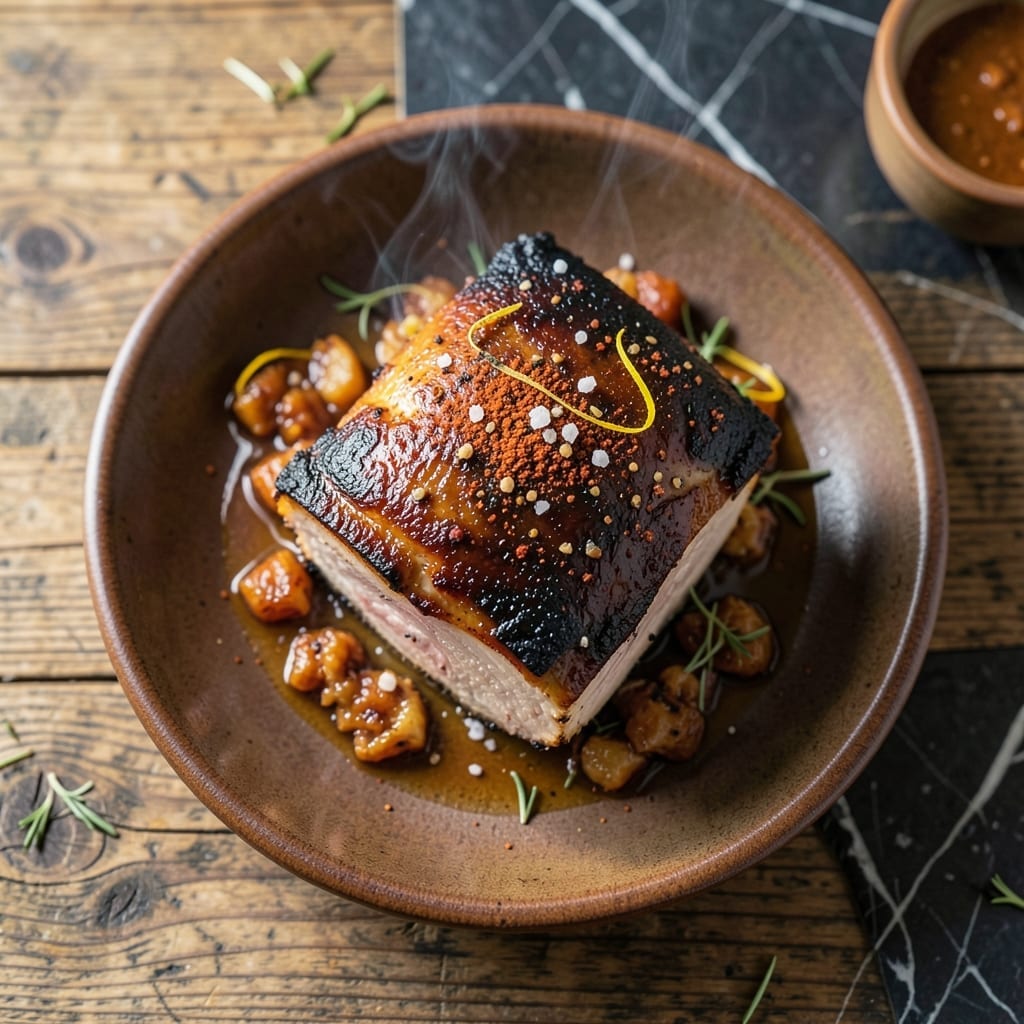
As a pitmaster, I know great pork shoulder starts with patience and the right wood. This method delivers fall-off-the-bone results every time.
Applewood smoke infuses the meat with subtle sweetness, while my seasoning blend enhances the natural pork flavors. The Green Mountain Grill maintains perfect temperature control for consistent tenderness.
Ingredients for Green Mountain Grill Pork Shoulder
Pantry spices, a pork shoulder, and applewood—this is fall-apart tenderness waiting to happen.
| Ingredient | Amount | Notes |
|---|---|---|
| Pork Shoulder 🥩 | 4 lb | Bone-in, skin-on preferred |
| Applewood Pellets 🌳 | 2 cups | For consistent smoke flavor |
| Coarse Kosher Salt 🧂 | 2 tbsp | Diamond Crystal preferred |
| Black Pepper 🌶️ | 2 tbsp | Freshly ground coarse |
| Garlic Powder 🧄 | 1 tbsp | Not garlic salt |
| Onion Powder 🧅 | 1 tbsp | Fresh ground preferred |
| Smoked Paprika 🌶️ | 1 tbsp | Sweet or hot variety |
| Brown Sugar 💰 | ½ cup | Light or dark works |
| Apple Cider Vinegar 🍏 | ¼ cup | For tangy bark formation |
| Yellow Mustard 🟡 | ¼ cup | Binder for dry rub |
| Cayenne Pepper 🔥 | ½ tsp | Adjust for heat preference |
| Dried Thyme 🌿 | 1 tsp | Crushed between fingers |
[recipe_ingredient_scaler]
The pork shoulder is everything here. Bone-in, skin-on gives you that perfect bark and juicy interior. Most butchers sell it as Boston butt—ask for a 4-pound piece with good marbling. I grab mine from Costco or Whole Foods (their pork is consistently high-quality). The applewood pellets? Green Mountain Grill’s own brand is what I use, but any 100% applewood works.
No applewood? Hickory or cherry pellets get you close—just expect a slightly different flavor profile. Out of brown sugar? White sugar plus a teaspoon of molasses mimics it well. If you’re avoiding heat, skip the cayenne. The yellow mustard is just a binder—Dijon or olive oil work too. The vinegar? White vinegar in a pinch, but apple cider adds that subtle fruitiness.
This freezes beautifully for 3 months. Leftovers? Shred and stash in portions for 5 days in the fridge. The rub keeps in a jar for 6 months—just stir before using (the sugar settles).
Why You’ll Love This Recipe
- Set It and Forget: I toss the pork shoulder on the Green Mountain Grill with applewood pellets, season it, and let the smoker do the work—no babysitting required.
- Smoky, Savory Magic: That applewood smoke with just coarse salt, pepper, and garlic powder? It turns the pork into tender, fall-apart perfection every time.
- Feeds My Crew: One shoulder feeds six hungry people, and it’s just as good for Sunday dinner as it is for tailgate parties.
- Leftovers for Days: Honestly, I make this on purpose just to have pulled pork sandwiches, tacos, and nachos all week long.
Step-by-Step Instructions for Applewood-Smoked Pork Shoulder
My tested method ensures tender, smoky results with a perfect bark every single time.
Step 1: Prepare the Dry Rub and Coat the Pork Shoulder
In a medium bowl, combine the 2 tbsp Coarse Kosher Salt, 2 tbsp Black Pepper, 1 tbsp Garlic Powder, 1 tbsp Onion Powder, 1 tbsp Smoked Paprika, 0.5 cup Brown Sugar, 0.5 tsp Cayenne Pepper, and 1 tsp Dried Thyme. Stir thoroughly until the mixture is uniform and the brown sugar is fully incorporated.
Rub the 4 lb Pork Shoulder all over with the 0.25 cup Yellow Mustard—this acts as a binder to help the dry rub adhere. Then generously apply the dry rub mixture, pressing it into the meat so it creates a thick, even crust. The mustard won’t add flavor once cooked, but it’s the secret to a bark that sticks.
Step 2: Set Up the Green Mountain Grill for Low and Slow Cooking
Fill your Green Mountain Grill with the 2 cups Applewood Pellets and preheat to 225°F. I use applewood for its mild, slightly sweet smoke that complements pork beautifully. Once the grill reaches temperature and you see thin, blue smoke (not thick white smoke), you’re ready to cook.
Place a water pan in the grill to maintain moisture during the long cook. This is critical for preventing the pork from drying out. Position the pork shoulder on the grill grates, fat side up, so the rendering fat bastes the meat as it smokes.
Step 3: Smoke the Pork Shoulder to Bark Perfection
Insert a meat probe into the thickest part of the pork shoulder, avoiding the bone. Smoke the pork undisturbed for 6-8 hours until the internal temperature reaches 165-170°F. This is when the infamous “stall” occurs—don’t panic, as this is normal.
Spritz the pork with the 0.25 cup Apple Cider Vinegar every 1-2 hours after the first 4 hours of cooking. The vinegar adds a subtle tang to the bark and helps create a beautiful, dark exterior. You’ll know the bark is ready when it’s dark mahogany and slightly crispy to the touch.
Step 4: Wrap and Finish the Cook
Once the pork hits 170°F internally, remove it from the grill and wrap it tightly in pink butcher paper. This step, known as the “Texas crutch,” helps push through the stall while preserving the bark’s texture. Return the wrapped pork to the grill.
Continue cooking until the internal temperature reaches 200-203°F and the pork is probe-tender (the probe should slide in like butter with no resistance). This usually takes another 2-4 hours, but trust the probe test over the thermometer—tenderness is what matters.
Step 5: Rest and Shred for Maximum Tenderness
Remove the pork from the grill and let it rest, still wrapped, in a cooler or warm oven for at least 1 hour. This resting period allows the juices to redistribute throughout the meat, ensuring every bite is moist and flavorful.
Unwrap the pork and discard any large fat caps. Using two forks or meat claws, shred the pork into bite-sized pieces. The meat should pull apart effortlessly, with a perfect balance of smoky, sweet, and tangy flavors. Serve immediately on buns, in tacos, or as a standalone dish.
Pro Tips For Making Green Mountain Grill Pork Shoulder
- Preheat the Grill: Set your Green Mountain Grill to 225°F with Applewood pellets—this low and slow start is non-negotiable for tender pork shoulder. I learned this the hard way after pulling tough meat off a grill that wasn’t fully up to temp.
- Dry the Meat: Pat the pork shoulder completely dry before seasoning—even a little moisture prevents the salt and spices from sticking. Sounds tedious, but it actually changes the outcome of your bark.
- Skip the Overcrowding: Leave at least 2 inches between pork shoulders on the grill. After burning the edges on my first attempt, I finally figured out the pellets need room to circulate smoke properly.
- Rest Before Pulling: Let the pork shoulder rest wrapped in foil for 30-45 minutes after hitting 203°F—it reabsorbs juices and stays moist. My grandmother swore by this, and she was right.
Pro Cooking Tips for This Recipe
Pellet Selection Matters
I always use 100% applewood pellets for pork shoulder—their mild sweetness complements the meat perfectly. Green Mountain Grill’s brand is my go-to, but any premium applewood works. Avoid blends with strong woods like mesquite that can overpower the pork. 🌳
The Stall Strategy
When your pork hits 165-170°F internally, don’t rush it. The stall is normal as moisture evaporates. I spritz with apple cider vinegar every 1-2 hours after 4 hours of cooking to build that beautiful bark.
Paper vs Foil
For wrapping at 170°F, I prefer pink butcher paper over foil. It breathes just enough to keep the bark slightly crisp while pushing through the stall. Foil works but can make the bark soggy.
Probe Test Perfection
Temperature is just a guide—200-203°F is the target range. The real test is probe tenderness. When the probe slides in like warm butter with no resistance, it’s done. I use a ThermoWorks Smoke for accuracy.
Rest Like a Pro
Resting is non-negotiable. I wrap the pork in towels and let it rest in a cooler for at least 1 hour. This lets juices redistribute. Skipping this step means dry meat, and nobody wants that. 💪
Fat Side Up
Always position the pork fat side up on the grill. As it renders, that fat bastes the meat naturally, adding moisture and flavor. This simple step makes a noticeable difference in tenderness.
Nutrition Facts
Frequently Asked Questions
What if I don’t have applewood pellets?
Hickory or cherry pellets work as great substitutes. They’ll give a slightly different flavor profile but still deliver excellent results. Avoid mesquite—it can overpower the pork’s natural taste.
How do I know when the pork is done?
Use the probe test: it’s done when a meat thermometer slides in like butter with no resistance. Target 200-203°F internally, but tenderness is the true indicator.
Can I skip the resting period?
Never skip resting! Letting it rest for at least 1 hour allows juices to redistribute. Cutting too soon causes dry meat and wasted effort.
What’s the best way to store leftovers?
Shredded pork keeps in the fridge for 5 days or freezes well for 3 months. Store in airtight containers with some juices to maintain moisture.

Trained in classic French technique but raised on slow-cooked ribs and spicy rubs, she blends culinary skill with smoke and soul.
- Recipe for Boneless Pork Chops in Cast Iron Skillet: Sear and Baste to Juicy Perfection - October 3, 2026
- Recipe for Boneless Cross Rib Roast: Slow-Roasted Beef with Herb Crust - October 3, 2026
- Hamburgers in Sauce Recipe Crock Pot: Slow-Cooked Savory Delight - October 3, 2026