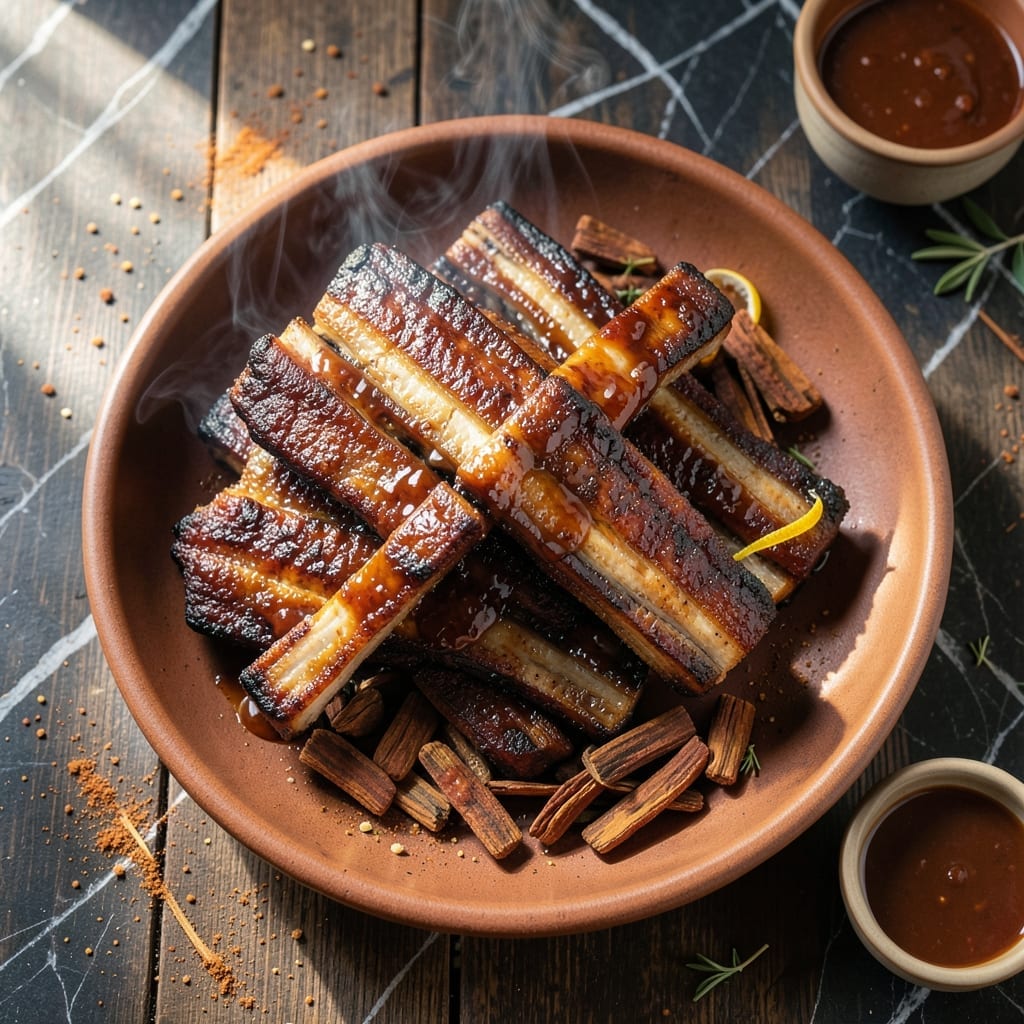
There’s nothing like the aroma of hickory smoke mingling with a dry rub on pork spare ribs. This method delivers fall-off-the-bone tenderness with a caramelized glaze that clings to every bite.
I’ve refined this technique over years of backyard cookouts, blending classic BBQ tradition with precise grilling control. The result is ribs with charred edges and a sticky, finger-licking finish.
Ingredients for Grilled Bbq Pork Spare Ribs
Full rack of spare ribs and a bold dry rub set the stage for charred perfection.
| Ingredient | Amount | Notes |
|---|---|---|
| Pork Spare Ribs 🥩 | 3 lb | Full rack, membrane removed |
| Hickory Wood Chips 🪵 | 2 cups | Soaked in water 30 minutes |
| Brown Sugar 🧈 | ½ cup | Light or dark variety |
| Paprika 🌶️ | 2 tbsp | Sweet or smoked preferred |
| Garlic Powder 🧄 | 1 tbsp | Freshly ground if possible |
| Onion Powder 🧅 | 1 tbsp | Fine grain for even coating |
| Ground Black Pepper 🌶️ | 1 tbsp | Coarsely ground for texture |
| Kosher Salt 🧂 | 1 tbsp | Diamond Crystal preferred |
| Cayenne Pepper 🔥 | ½ tsp | Adjust for heat preference |
| Barbecue Sauce 🍯 | 1 ½ cups | High-quality store-bought or homemade |
| Apple Cider Vinegar 🍏 | ¼ cup | For tangy balance in glaze |
| Olive Oil 🫒 | 2 tbsp | For rubbing dry mix |
| Mustard Powder 🟡 | 1 tsp | Optional for depth in rub |
[recipe_ingredient_scaler]
The ribs are everything. Pork spare ribs (not baby backs) have the fat and connective tissue needed for that fall-off-the-bone texture. Look for racks with even marbling and avoid any with a strong odor. Most butchers will remove the membrane for you if you ask. Costco and Whole Foods have reliable options—just ensure they’re fresh, not pre-frozen.
No hickory chips? Apple or cherry wood gives a milder, sweeter smoke. Swap brown sugar for turbinado or coconut sugar if you prefer deeper caramel notes. For the dry rub, freshly ground spices from Penzeys or a bulk bin make a difference. The barbecue sauce can be store-bought (I like Stubb’s), but homemade lets you control the sweetness.
Dry rub can be mixed 2 days ahead and stored in an airtight container. The ribs benefit from a 1-hour rest after seasoning before hitting the grill. Leftovers? They’ll keep 4 days in the fridge, but honestly, they’re best eaten fresh off the grill.
Why You’ll Love This Recipe
- I’ll be real: they taste even better the next day, and reheating is just a quick zap in the microwave.
- Set It & Forget: I rub the ribs with brown sugar and spices in the morning, then let the grill do the work while I relax.
- Smoky Sweet Crust: The hickory chips create this deep, rich smoke flavor that pairs perfectly with the caramelized brown sugar and paprika.
- Crowd Pleaser: Honestly, these ribs disappear faster than I can serve them at summer cookouts.
Step-by-Step Instructions for Grilled BBQ Pork Spare Ribs
Master indirect heat and timing to achieve tender meat with that signature sticky, charred exterior.
Step 1: Prepare the Ribs and Dry Rub
Pat the 3 lb Pork Spare Ribs completely dry with paper towels to ensure the rub adheres properly. In a bowl, combine the 0.5 cup Brown Sugar, 2 tbsp Paprika, 1 tbsp Garlic Powder, 1 tbsp Onion Powder, 1 tbsp Ground Black Pepper, 1 tbsp Kosher Salt, 0.5 tsp Cayenne Pepper, and 1 tsp Mustard Powder.
Drizzle the 2 tbsp Olive Oil over the ribs and rub it evenly across the surface. Generously apply the dry rub, pressing it into the meat so it forms a crust. Let the seasoned ribs sit at room temperature for 30 minutes while you prepare the grill.
Step 2: Set Up the Grill for Indirect Heat
Soak the 2 cups Hickory Wood Chips in water for 30 minutes, then drain. Prepare your grill for indirect cooking by banking the coals to one side (or turning off one set of burners on a gas grill). Place the wood chips directly on the coals or in a smoker box.
Preheat the grill to 275°F. The goal is consistent, low heat that allows the ribs to cook slowly without burning. Once the wood chips begin to smoke, you’re ready to start. Maintain this temperature throughout the cooking process for even results.
Step 3: Slow-Cook the Ribs
Place the ribs bone-side down on the cooler side of the grill, away from direct heat. Cover the grill and cook for 2.5 to 3 hours. Resist the urge to peek—each time you lift the lid, you lose heat and smoke, extending the cook time.
After 2 hours, check the ribs. They should be tender but not falling apart. The meat will have pulled back from the bones slightly, and the surface will be a deep mahogany color. If the ribs are browning too quickly, move them to an even cooler spot on the grill.
Step 4: Glaze and Char the Ribs
In a bowl, mix the 1.5 cups Barbecue Sauce with the 0.25 cup Apple Cider Vinegar. This adds a tangy depth to balance the sweetness of the sauce. Brush a generous layer of this glaze over the ribs, then move them to the hotter side of the grill.
Cook for an additional 5-10 minutes, turning and basting frequently, until the glaze caramelizes and the edges are charred. Watch closely—the sugar in the sauce can burn easily. The ribs are done when the meat is fork-tender and the glaze has thickened into a sticky coating.
Pro Tips For Making Grilled Bbq Pork Spare Ribs
- Pre-Cook the Ribs: I learned this the hard way—parboil the ribs for 10 minutes before grilling to render fat and jumpstart tenderness, or they’ll stay chewy no matter how long they smoke.
- Soak the Wood: Hickory chips need a good 30-minute soak in water, otherwise they’ll burn up in minutes and leave your ribs tasting bitter instead of smoky.
- Skip the Over-Sauce: Brush on the brown sugar rub only in the last 15 minutes, or the sugar will char and turn your ribs into a blackened mess before they’re done.
- Rest Before Slicing: Pull the ribs off the grill, tent with foil, and give them a solid 10 minutes—this keeps the juices from running all over your cutting board instead of staying in the meat.
Health Benefits of This Recipe
Protein Powerhouse
Pork spare ribs are an excellent source of high-quality protein, with a 3-ounce serving providing about 20 grams. This supports muscle repair and growth, making it a satisfying meal that keeps you full for hours. I always feel energized after a good rib dinner. 💪
Essential Vitamins
This dish delivers key B vitamins, including B12 for nerve function and B6 for metabolism. A serving covers about 30% of your daily B12 needs and 15% of B6, helping your body convert food into energy efficiently.
Mineral Rich
Spare ribs provide important minerals like zinc and iron. A 3-ounce portion offers roughly 2.5mg of iron and 6mg of zinc, supporting immune function and wound healing. These nutrients are especially important for active lifestyles.
Healthy Fats
While ribs contain some saturated fat, they also provide monounsaturated fats that support heart health. The marbling in pork spare ribs contributes to its rich flavor while offering energy-sustaining fats. Balance is key—I pair mine with plenty of veggies.
Low-Carb Friendly
Without the sauce, spare ribs are naturally low in carbohydrates. The protein and fat content make them ideal for keto or low-carb diets. Just watch the sugar in your BBQ sauce—I often make a sugar-free version with apple cider vinegar and spices. 🌟
Collagen Benefits
The connective tissue in spare ribs breaks down during slow cooking into gelatin, which supports joint and skin health. This is why properly cooked ribs feel so satisfying—they’re literally nourishing your body from the inside out.
Nutrition Facts

Trained in classic French technique but raised on slow-cooked ribs and spicy rubs, she blends culinary skill with smoke and soul.
- Recipe for Boneless Pork Chops in Cast Iron Skillet: Sear and Baste to Juicy Perfection - October 3, 2026
- Recipe for Boneless Cross Rib Roast: Slow-Roasted Beef with Herb Crust - October 3, 2026
- Hamburgers in Sauce Recipe Crock Pot: Slow-Cooked Savory Delight - October 3, 2026