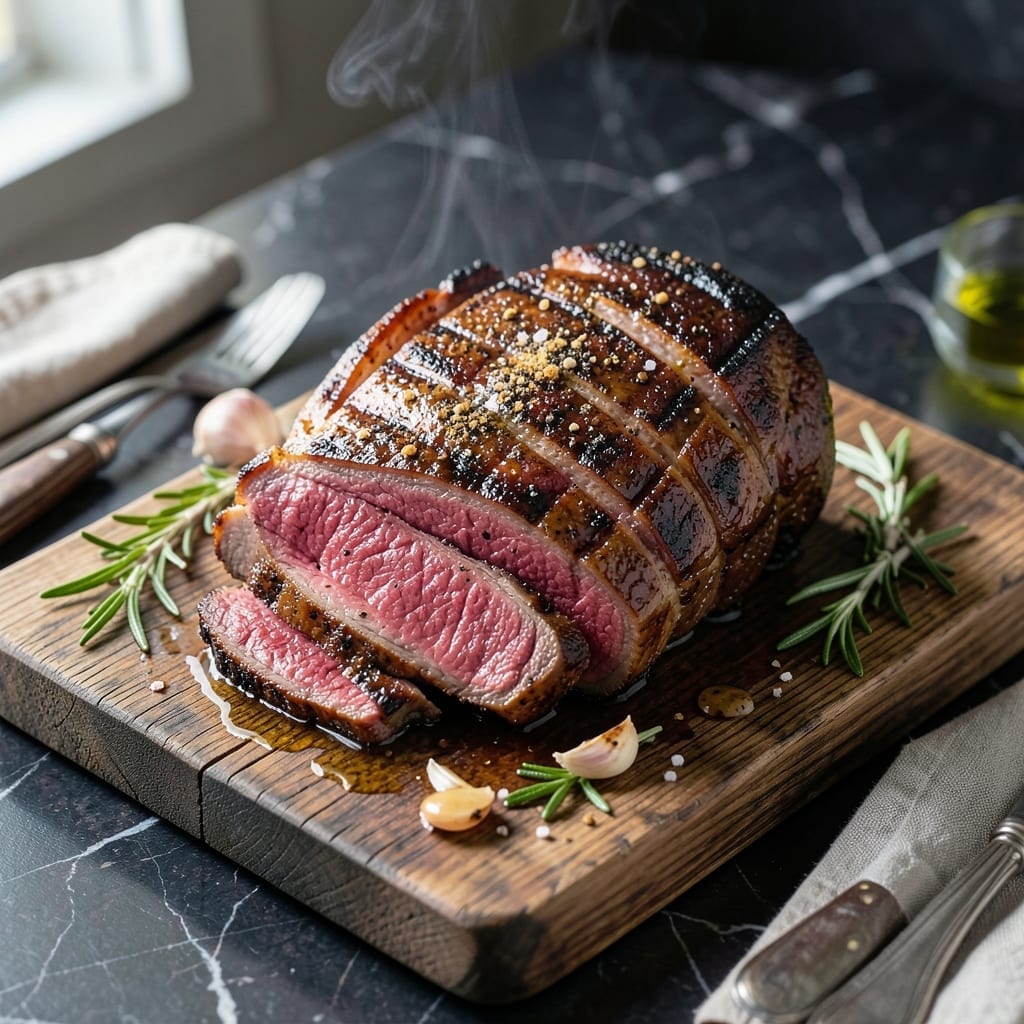
Reverse-searing transforms a humble rump roast into a showstopping main course with perfectly even doneness from edge to edge. This method combines indirect heat for gentle cooking with a final sear over direct flames for a deeply flavorful crust.
I developed this approach during years of competition BBQ, where precision separates good meat from great. The slow rise in temperature ensures the roast cooks through without overcooking the outer layers, while the final sear creates that essential caramelized bark.
What emerges is tender, juicy beef with a rich crust that locks in every bit of flavor. The reverse-sear method works especially well with rump roast, a cut that benefits from this careful temperature control.
Serve sliced against the grain for maximum tenderness. Here’s how to achieve professional results at home.
Ingredients for Grilled Beef Rump Roast
Transform a humble cut with these precisely selected ingredients for competition-level results at home.
| Ingredient | Amount | Notes |
|---|---|---|
| Beef Rump Roast 🥩 | 3 lb | Well-marbled, trimmed of excess fat |
| Kosher Salt 🧂 | 2 tbsp | Diamond Crystal preferred for even distribution |
| Coarsely Ground Black Pepper 🌶️ | 1 tbsp | Freshly ground for maximum aroma |
| Garlic Powder 🧄 | 1 tbsp | Not garlic salt, for dry rub |
| Onion Powder 🧅 | 1 tbsp | Balances the rub with savory depth |
| Smoked Paprika 🌶️ | 1 tsp | Adds subtle smokiness to crust |
| Dried Rosemary 🌿 | 1 tsp | Crushed to release essential oils |
| Dried Thyme 🍃 | 1 tsp | Earthy complement to beef |
| Olive Oil 🫒 | 2 tbsp | For binding dry rub to meat |
| Yellow Mustard 🟡 | 2 tbsp | Creates adhesive base for seasoning |
| Beef Broth 💧 | 1 cup | For occasional basting during cook |
| Unsalted Butter 🧈 | 4 tbsp | For final basting before sear |
[recipe_ingredient_scaler]
The beef is non-negotiable here. Rump roast from a trusted butcher like Whole Foods or Local Farm Markets ensures quality marbling essential for even cooking. Look for cuts with visible fat streaking—this translates to juiciness. The Diamond Crystal kosher salt is critical; its larger flakes adhere better and season more evenly than fine table salt.
No beef broth? Water with a bouillon cube works in a pinch. Swap fresh garlic for powder at three times the volume—but dry rub adheres better with powder. The smoked paprika can be replaced with regular, though you’ll lose some depth. Mustard powder mixed with water can stand in for prepared mustard if that’s all you have on hand.
Store the seasoned roast uncovered in the fridge for up to 24 hours before cooking for enhanced crust development. Leftover cooked beef keeps 4-5 days refrigerated or 3 months frozen. Always slice against the grain when serving for maximum tenderness.
Why You’ll Love This Recipe
- Set It and Forget: I rub the roast with salt, pepper, garlic and onion powder, pop it on the grill, and let the heat do the work.
- Smoky, Deep Flavor: The high heat caramelizes the spices into a crust that’s ridiculedously good with every bite.
- Feeds a Hungry Table: One roast serves six without breaking the bank, and the leftovers make killer sandwiches.
- Weeknight Hero: Honestly, it’s ready faster than my old oven method, and cleanup is just the grill grate.
Step-by-Step Instructions for Grilled Beef Rump Roast
Master the reverse-sear technique for perfectly even doneness from edge to edge every time.
Step 1: Prepare and Season the Beef Rump Roast
Begin by patting the 3 lb Beef Rump Roast completely dry with paper towels. This ensures the seasoning adheres properly and promotes a good sear. I always trim any remaining excess fat to prevent flare-ups on the grill.
In a small bowl, combine the 2 tbsp Kosher Salt, 1 tbsp Coarsely Ground Black Pepper, 1 tbsp Garlic Powder, 1 tbsp Onion Powder, 1 tsp Smoked Paprika, 1 tsp Dried Rosemary, and 1 tsp Dried Thyme. Rub the 2 tbsp Yellow Mustard over the entire surface of the roast—this acts as a flavorful adhesive for the dry rub.
Coat the roast evenly with the olive oil, then press the spice mixture firmly onto all sides. Let it sit at room temperature for 30-45 minutes while you prepare the grill.
Step 2: Slow-Cook on the Grill for Even Doneness
Set up your grill for indirect cooking by lighting only one side or using a cooler zone. Maintain a consistent temperature of 250-275°F. Place the seasoned roast on the cooler side of the grill, fat-side up.
Cover and cook, using the 1 cup Beef Broth to baste the roast every 45 minutes to maintain moisture and build layers of flavor. This slow cooking phase should take 2-2.5 hours until the internal temperature reaches 110-115°F for medium-rare.
Resist the urge to peek too often—every time you lift the lid, you lose heat and extend the cooking time.
Step 3: Sear for a Flavorful Crust
Once the roast reaches the target internal temperature, move it to the hot side of the grill. Add the 4 tbsp Unsalted Butter directly to the roast, letting it melt and baste the surface as it sears.
Sear for 2-3 minutes per side until a deep, rich crust forms. Watch for flare-ups and move the roast to a cooler spot if needed. The crust should be deep brown and slightly crisp when done.
Transfer the roast to a cutting board and tent loosely with foil.
Step 4: Rest and Slice Against the Grain
Let the roast rest for 15-20 minutes before slicing. This resting period allows the juices to redistribute throughout the meat, ensuring every slice is moist and flavorful.
Identify the grain direction—the muscle fibers should be clearly visible. Using a sharp knife, slice against the grain into ½-inch thick slices. This shortens the muscle fibers, making the beef more tender.
Serve immediately while the crust is still crisp. The roast should have a perfect pink center from edge to edge, with a robust, smoky crust that gives way to juicy, tender meat.
Pro Tips For Making Grilled Beef Rump Roast
- Preheat the Grill: I learned this the hard way—crank the grill to high heat first, then reduce to medium for even searing without a burnt exterior.
- Dry the Roast: Pat the beef completely dry before seasoning; any moisture steams the meat instead of letting that crust form.
- Skip the Cold Meat: Take the roast out of the fridge 30-40 minutes before grilling so it cooks evenly—no more dry edges and raw center.
- Double Season: After the initial salt and pepper rub, hit it with another light dusting of garlic and onion powder right before grilling for deeper flavor.
Essential Equipment for Perfect Results
Grill Setup
For reverse-searing, you need a grill with precise temperature control. I swear by my Weber Genesis EX-335 for its even heat distribution and reliable thermometer. A dual-zone setup is essential—one side for indirect cooking at 250-275°F, the other for direct searing.
Temperature Monitoring
Invest in a high-quality meat thermometer. I use the ThermoWorks Smoke—its dual probes let me track both grill and meat temps simultaneously. Accurate readings prevent overcooking and ensure that perfect 110-115°F internal temp for medium-rare. 🌡️
Basting Tools
A long-handled basting brush is a game-changer for applying beef broth or melted butter during the cook. I prefer silicone brushes—they withstand high heat and don’t shed bristles. Keep a small bowl of broth nearby for easy access.
Resting Equipment
After searing, transfer the roast to a cutting board and tent it loosely with heavy-duty foil. This keeps it warm while resting for 15-20 minutes. A wire cooling rack placed over the board allows airflow to maintain crust crispness.
Slicing Essentials
A sharp 12-inch slicing knife is crucial for clean cuts against the grain. I use a Wüsthof Ikon—it glides through the beef with minimal resistance. Always slice on a stable surface to ensure even, ½-inch thick portions.
For that final touch, I keep a small bowl of flaky sea salt nearby for finishing. 💪
Nutrition Facts
Frequently Asked Questions
What’s the best way to check doneness?
Use an instant-read thermometer inserted into the thickest part. For medium-rare, look for 110-115°F before searing, which will rise to 130-135°F after resting. Avoid cutting into the meat to check.
Can I use a different cut of beef?
Yes! Try this method with tri-tip or bottom round roast. These lean cuts benefit from the reverse-sear’s even cooking. Avoid very fatty cuts like brisket, as they need longer cooking times.
Why does the meat need to rest before slicing?
Resting allows juices to redistribute throughout the roast. Skipping this step can cause juices to spill out, resulting in dry meat. Tent loosely with foil and rest for 15-20 minutes.
How can I prevent flare-ups while searing?
Trim excess fat before grilling and keep a spray bottle of water nearby. If flames flare, move the roast to a cooler part of the grill until they subside. Always sear with the lid open.

Trained in classic French technique but raised on slow-cooked ribs and spicy rubs, she blends culinary skill with smoke and soul.
- Recipe for Boneless Pork Chops in Cast Iron Skillet: Sear and Baste to Juicy Perfection - October 3, 2026
- Recipe for Boneless Cross Rib Roast: Slow-Roasted Beef with Herb Crust - October 3, 2026
- Hamburgers in Sauce Recipe Crock Pot: Slow-Cooked Savory Delight - October 3, 2026