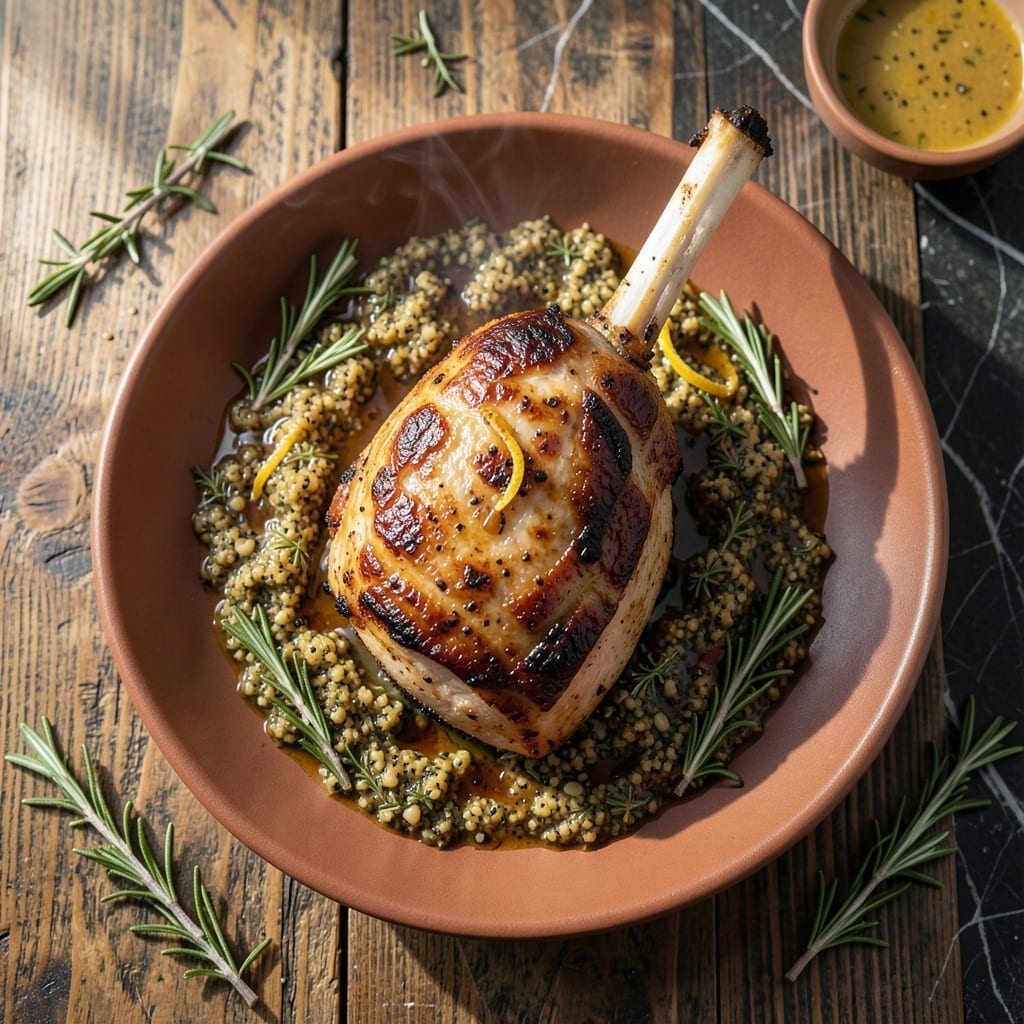
There’s nothing like the aroma of a bone-in pork loin roast hitting the grill, releasing smoky, herbaceous notes that signal a meal worth savoring. This method delivers tender, juicy results with a crispy herb crust that locks in flavor.
I developed this technique after years of perfecting my grill game, blending classic French herb combinations with traditional smoke cooking. The bone-in cut ensures maximum moisture and depth of flavor, while the grill adds that signature char.
What you’ll achieve is a centerpiece-worthy roast with a perfectly caramelized exterior and succulent meat inside. The herb crust forms a flavorful bark that complements the natural richness of the pork.
This recipe transforms a simple cut into a restaurant-quality dish that will impress at any gathering. The process is straightforward but yields exceptional results every time.
Ingredients for Grilled Bone in Pork Loin Roast
A few premium ingredients create a restaurant-quality centerpiece with smoky, herbaceous depth.
| Ingredient | Amount | Notes |
|---|---|---|
| Bone-In Pork Loin Roast 🥩 | 3 lb | Center-cut with fat cap intact |
| Fresh Rosemary 🌿 | 2 tbsp | Finely chopped, stems discarded |
| Fresh Thyme 🍃 | 2 tbsp | Leaves stripped from stems |
| Garlic Cloves 🧄 | 6 cloves | Minced to fine paste |
| Dijon Mustard 🟡 | ¼ cup | Whole-grain preferred for texture |
| Extra-Virgin Olive Oil 🫒 | ¼ cup | Divided for crust and grilling |
| Kosher Salt 🧂 | 1 ½ tbsp | Diamond Crystal brand recommended |
| Black Pepper 🌶️ | 1 tbsp | Freshly cracked coarse grind |
| Smoked Paprika 🌶️ | 1 tsp | Sweet or hot variety |
| Light Brown Sugar 🟤 | 1 tbsp | For caramelization in crust |
| Hickory Wood Chips 🪵 | 2 cups | Soaked in water 30 minutes |
| Dry White Wine 🍷 | ½ cup | For deglazing grill grates |
[recipe_ingredient_scaler]
The pork quality is non-negotiable. Source bone-in loin roast from a trusted butcher—look for even marbling and a thick fat cap (this renders down beautifully). Whole Foods or Local specialty markets typically carry excellent options. The herbs must be fresh; dried won’t deliver the same aromatic punch. I prefer organic rosemary and thyme from Trader Joe’s when my garden’s between harvests.
No fresh herbs? Dried at one-third the quantity works in a pinch, but rehydrate in warm water first. Substitute fresh sage for thyme if needed—its earthy notes complement pork well. For mustard, whole-grain Dijon adds texture, but smooth works too. The wine can be any dry white (Sauvignon Blanc, Pinot Grigio). Skip the wood chips? Charcoal grill with added hickory chunks gives similar smoke.
The roast benefits from resting 15-20 minutes post-grill—juices redistribute for maximum tenderness. Store leftovers wrapped tightly; they keep 4-5 days refrigerated or freeze for 3 months. Reheat gently in a 250°F oven to preserve moisture.
Why You’ll Love This Recipe
- Minimal Prep: I just rub the pork loin with Dijon, fresh herbs, and garlic, then let the grill do the work.
- Herb-Crusted Perfection: The rosemary and thyme form this insane crust with the mustard that’s crispy outside, juicy inside.
- Feeds a Sunday Crowd: One roast serves six easily, and it’s just as good for a weeknight dinner as it is for guests.
- Leftovers for Days: The meat slices beautifully for sandwiches, and honestly, it tastes even better the next day.
Step-by-Step Instructions for Grilled Bone In Pork Loin Roast
Master the technique for a perfectly charred exterior with a juicy, herb-infused center every time.
Step 1: Prepare the Herb Crust
In a small bowl, combine the 2 tbsp fresh rosemary, 2 tbsp fresh thyme, 6 cloves garlic cloves, 0.25 cup Dijon mustard, 2 tbsp extra-virgin olive oil, 1.5 tbsp kosher salt, 1 tbsp black pepper, 1 tsp smoked paprika, and 1 tbsp light brown sugar. Stir until it forms a thick, aromatic paste.
The paste should cling to the back of a spoon and smell intensely fragrant. I always let this mixture sit for 5 minutes to allow the flavors to meld before applying it to the pork. This step is non-negotiable for developing the deep, complex flavor profile that defines this dish.
Step 2: Apply the Crust and Prep the Grill
Pat the 3 lb bone-in pork loin roast completely dry with paper towels. Rub the herb paste evenly over the entire surface of the roast, pressing firmly to create a thick, even coating. The paste should fully encase the pork, with no bare spots visible. Place the roast on a plate and let it sit at room temperature for 30 minutes while you prepare the grill.
Soak the 2 cups hickory wood chips in water for 30 minutes to prevent them from burning too quickly. Set up your grill for indirect heat: bank the coals to one side for charcoal or turn off one burner on a gas grill. You want a consistent temperature of 325-350°F on the cooler side where the pork will cook.
Step 3: Smoke and Sear the Roast
Drain the wood chips and add them directly to the hot coals or place them in a smoker box for gas grills. When the grill reaches 325-350°F and you see thin, blue smoke, place the pork loin roast on the cooler side of the grill, bone-side down. Close the lid and maintain the temperature as consistently as possible.
Cook the roast with the lid closed for 1.5 to 2 hours, or until the internal temperature reaches 145°F in the thickest part. Resist the urge to flip or move the roast—the crust will develop a deep, mahogany color and the smoke will infuse throughout the meat.
Step 4: Rest and Deglaze for Serving
Transfer the pork loin roast to a cutting board and tent loosely with foil. Let it rest for 15 minutes—this allows the juices to redistribute, ensuring every slice is moist and flavorful. The internal temperature will rise to 150-155°F during this time, which is perfect for pork.
While the pork rests, pour the 0.5 cup dry white wine over the hot grill grates and scrub them with a grill brush. This deglazing step not only cleans the grates but also creates a fragrant steam that enhances the pork’s aroma when you return it to the grill for a final sear if desired.
Slice the roast between the bones into thick chops and serve immediately. The exterior should have a crisp, caramelized crust, while the interior remains tender and juicy with a subtle smoky essence.
Pro Tips For Making Grilled Bone In Pork Loin Roast
- Sear Over Direct Heat: Start with the bone-in pork loin over direct high heat for 2-3 minutes per side to get a deep crust—I learned this the hard way after my first attempt came out pale and sad.
- Score the Fat Cap: Cut 1/4-inch slits in the fat cap before grilling so the rosemary, thyme, and garlic penetrate deeper, and the fat renders evenly.
- Skip the Cold Meat: Let the roast sit at room temperature for 30-45 minutes before grilling; I used to rush this and ended up with dry edges and a lukewarm center.
- Rest Before Slicing: Tent it with foil and give it a solid 10-15 minute rest after grilling—this keeps the juices from running all over your cutting board instead of staying in the meat.
Common Mistakes When Making grilled bone in pork loin roast
Skipping the Rest
I can’t stress this enough: 15 minutes of rest is non-negotiable. Slicing too soon causes all those beautiful juices to spill onto your cutting board instead of staying in the meat. The internal temperature will climb to 150-155°F during rest, which is ideal for pork tenderness.
Inconsistent Heat
Fluctuating grill temperatures are the enemy of even cooking. If your grill runs hotter than 350°F, the crust may burn before the inside cooks. Use a thermometer to monitor—ThermoPro makes affordable, reliable ones. Bank your coals properly for charcoal or adjust burners for gas.
Overcrowding the Grill
This roast needs space for smoke to circulate. Crowding with other foods creates steamed pork instead of that prized smoky flavor. Keep it solo on the cooler side of your grill. 🌡️
Neglecting the Fat Cap
That beautiful fat cap renders down during cooking, basting the meat from within. If you trim it, you lose moisture and flavor. Leave at least ¼ inch intact. I always position the roast bone-side down so the fat cap faces the heat.
Using Dry Wood Chips
Unsoaked hickory wood chips burn too quickly, producing bitter smoke. Soak them for the full 30 minutes in water. I also use a cast-iron smoker box to contain them on my gas grill for better control.
Skipping the Deglaze
Those browned bits on your grill grates are pure flavor. Pouring ½ cup dry white wine over them while hot creates a fragrant steam that enhances the pork’s aroma. Don’t skip this step—it’s like free seasoning for your roast. 💡
Nutrition Facts
Frequently Asked Questions
How do I know when it’s done?
Use a meat thermometer to check the thickest part. It’s done at 145°F internally, which will rise to 150-155°F while resting. The crust should be deep brown and crisp.
Can I use a different wood for smoking?
Apple or cherry wood adds a sweeter smoke, while mesquite gives a stronger flavor. Hickory is classic, but experiment to find your favorite. Soak any wood for 30 minutes first.
What if I don’t have fresh herbs?
Dried herbs work in a pinch—use 1/3 the amount and rehydrate in warm water for 10 minutes. The flavor won’t be as bright, but it’ll still be delicious.
How should I store leftovers?
Wrap tightly and refrigerate for up to 4-5 days or freeze for 3 months. Reheat in a 250°F oven to maintain moisture. Never microwave—it dries out the meat.

Trained in classic French technique but raised on slow-cooked ribs and spicy rubs, she blends culinary skill with smoke and soul.
- Recipe for Boneless Pork Chops in Cast Iron Skillet: Sear and Baste to Juicy Perfection - October 3, 2026
- Recipe for Boneless Cross Rib Roast: Slow-Roasted Beef with Herb Crust - October 3, 2026
- Hamburgers in Sauce Recipe Crock Pot: Slow-Cooked Savory Delight - October 3, 2026