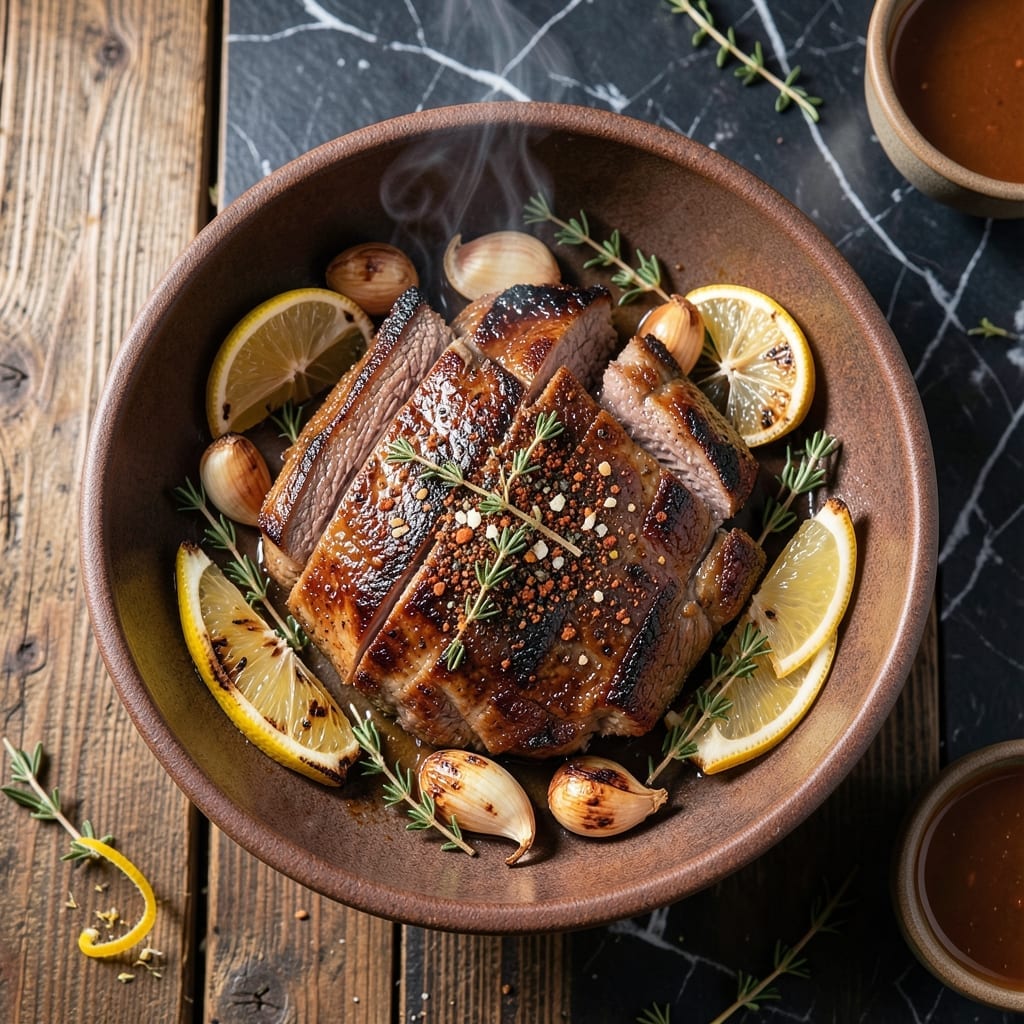
There’s an art to grilling boneless chuck roast that most backyard cooks overlook. This cut thrives with slow, indirect heat and a simple dry rub to build deep, smoky layers.
I learned early that patience transforms this affordable cut into something tender and richly flavored. The key is maintaining a steady temperature and letting the smoke work its magic.
What emerges is a roast with a crusty bark outside and juicy, pull-apart meat inside. No bone means even cooking and easier slicing.
Serve it thinly sliced with grilled vegetables or on crusty rolls for sandwiches that steal the show.
Ingredients for Grilled Boneless Chuck Roast
A few bold spices and a patient grill turn this affordable cut into something extraordinary.
| Ingredient | Amount | Notes |
|---|---|---|
| Boneless Chuck Roast 🥩 | 3 lb | Well-marbled, trimmed of excess fat |
| Kosher Salt 🧂 | 2 tbsp | Diamond Crystal preferred for texture |
| Coarse Black Pepper 🌶️ | 2 tbsp | Freshly cracked for bold flavor |
| Smoked Paprika 🌶️ | 1 tbsp | Sweet or hot variety |
| Garlic Powder 🧄 | 1 tbsp | Not garlic salt substitute |
| Onion Powder 🧅 | 1 tbsp | Fresh ground preferred |
| Dried Thyme 🌿 | 1 tsp | Crushed between fingers to release oils |
| Cayenne Pepper 🔥 | ½ tsp | Adjust to heat preference |
| Olive Oil 🫒 | 2 tbsp | For binding dry rub to meat |
| Hickory Wood Chips 🪵 | 2 cups | Soaked in water for 30 minutes |
| Apple Cider Vinegar 🍏 | ¼ cup | For spritzing during cooking |
| Beef Broth 🥘 | 1 cup | Low-sodium preferred for control |
[recipe_ingredient_scaler]
The chuck roast is everything here. Look for heavy marbling—that fat renders down during the long cook, keeping the meat juicy. Most butchers will cube it for you if you ask, but Costco and Whole Foods have great pre-packaged options. The fat cap should be about a quarter-inch thick; trim anything thicker. Don’t skimp on the wood chips—hickory or oak gives that classic smoke profile.
No smoked paprika? Regular paprika plus a pinch of liquid smoke gets you close. Swap the apple cider vinegar for lemon juice if that’s what’s in your pantry. The dry rub can sit on the meat for up to 12 hours before grilling, but even 30 minutes makes a difference. If you’re out of beef broth, water with a bouillon cube works in a pinch (just reduce the salt in the rub).
Leftover roast keeps in the fridge for 4-5 days and freezes beautifully for 3 months. Slice against the grain before storing for easier reheating. The dry rub mix? Make extra and keep it in a jar—stays potent for 6 months.
Why You’ll Love This Recipe
- Five-Minute Prep: I literally just rub the chuck roast with salt, pepper, smoked paprika, and garlic powder—no marinade, no fuss.
- Smoky, Deep Flavor: That smoked paprika and garlic powder crust gives every bite a rich, almost steakhouse-quality taste.
- Feeds a Crowd: One roast turns into tacos, sandwiches, or rice bowls for the whole family without breaking the bank.
- Leftovers for Days: I grill it once and we’re set for meals all week—shreds perfectly for reheating.
Step-by-Step Instructions for Grilled Boneless Chuck Roast
Here’s how I achieve tender, smoky perfection every single time.
Step 1: Create the Dry Rub and Coat the Roast
In a small bowl, combine the 2 tbsp Kosher Salt, 2 tbsp Coarse Black Pepper, 1 tbsp Smoked Paprika, 1 tbsp Garlic Powder, 1 tbsp Onion Powder, 1 tsp Dried Thyme, and 0.5 tsp Cayenne Pepper. I crush the dried thyme between my fingers to release its oils and ensure even distribution.
Pat the 3 lb Boneless Chuck Roast dry with paper towels, then brush it all over with the 2 tbsp Olive Oil. This helps the rub adhere. Massage the spice mixture onto every surface of the roast, pressing it in firmly so it forms a thick, even crust. This step builds the foundation for that deep, smoky flavor we’re after.
Step 2: Prepare Your Grill for Indirect Heat
Soak the 2 cups Hickory Wood Chips in water for at least 30 minutes before grilling. While they’re soaking, set up your grill for indirect heat. For a charcoal grill, bank the coals to one side. For gas, preheat all burners, then turn off one side and reduce the others to medium.
Drain the wood chips and place them directly on the coals or in a smoker box for gas grills. Aim for a grill temperature of 275-300°F. The hickory smoke will infuse the roast with that classic BBQ aroma. Close the lid and let the chips start producing clean, thin blue smoke before adding the meat.
Step 3: Smoke the Roast to Ideal Internal Temperature
Place the roast on the cool side of the grill, fat-side up. Insert a meat thermometer into the thickest part. Close the lid and maintain the temperature between 275-300°F. Every 45 minutes, spritz the roast with the 0.25 cup Apple Cider Vinegar to keep the surface moist and enhance the bark formation.
Cook until the internal temperature reaches 195-203°F—this is the sweet spot for chuck roast to become probe-tender. The meat should feel like butter when you insert the thermometer probe. This usually takes 3-4 hours, depending on your grill’s heat consistency and the roast’s thickness.
Step 4: Rest and Slice for Maximum Juiciness
Once the roast hits temperature, transfer it to a cutting board and tent loosely with foil. Let it rest for 30 minutes—this allows the juices to redistribute throughout the meat. I know it’s tempting to dive in, but resting is non-negotiable for juicy, flavorful results.
After resting, slice the roast against the grain into ½-inch thick slices. If you’re serving immediately, pour the 1 cup Beef Broth into a small saucepan, heat it gently, and serve it alongside the sliced roast for dipping or drizzling. The broth enhances the meat’s natural juices without overpowering the smoky flavor.
Pro Tips For Making Grilled Boneless Chuck Roast
- Dry the Roast: Pat the chuck roast completely dry with paper towels before seasoning—moisture is the enemy of a good sear, and I learned this the hard way with a steaming, pale first attempt.
- Rest Before Slicing: Let the roast rest under foil for at least 10 minutes after grilling, or the juices will end up on your cutting board instead of in the meat.
- Skip the Cold Meat: Take the chuck roast out of the fridge 30-45 minutes before grilling to let it come to room temperature—cold meat grills unevenly, and the center stays raw while the outside burns.
- Double the Spice: Don’t be shy with the smoked paprika and garlic powder; chuck roast can handle bold flavors, and a light dusting just disappears. I use about 1 tablespoon of each for a 3-pound roast.
Creative Variations of These Flavors
Asian-Inspired Glaze
Swap the dry rub for a sticky glaze by simmering ½ cup soy sauce, ¼ cup brown sugar, 2 tbsp rice vinegar, and 1 tbsp grated ginger. Brush it on during the last 30 minutes of cooking. I love this with sesame seeds sprinkled on top right before serving. 🌟
Coffee-Enhanced Rub
Add 2 tbsp finely ground coffee to your dry rub mix for a deep, earthy complexity. The coffee doesn’t taste like a morning brew but rather adds a rich undertone that pairs beautifully with the hickory smoke. I learned this trick at a local BBQ competition in Texas.
Herb-Crusted Version
Press a mixture of ¼ cup chopped fresh rosemary and ¼ cup chopped fresh parsley into the roast after applying the dry rub. The herbs create a fragrant crust that brightens the smoky flavors. I forage wild rosemary along my coastal rides for an extra-special touch.
Beer-Braised Finish
After smoking for 2 hours, wrap the roast in foil with 1 cup dark beer (I prefer Guinness) and continue cooking until tender. The beer adds malty depth and keeps the meat incredibly moist. Unwrap for the last 30 minutes to let the bark crisp back up.
Spicy Chipotle Twist
Mix 1 tbsp chipotle powder and 1 tsp cocoa powder into your dry rub. The combination adds smoky heat with a subtle chocolate note. This variation always gets rave reviews at my family cookouts. The cocoa is the secret—don’t skip it!
Mediterranean Style
Replace the apple cider vinegar spritz with a mixture of ¼ cup olive oil and juice of 1 lemon. Toss the sliced meat with crumbled feta and chopped kalamata olives before serving. This bright, tangy approach feels like a coastal vacation on a plate. 💛
Nutrition Facts
Frequently Asked Questions
What’s the ideal internal temperature for this roast?
Cook until it reaches 195-203°F internally. This range ensures the connective tissue breaks down, resulting in tender, pull-apart meat. Use a reliable meat thermometer for accuracy.
Can I use a different type of wood for smoking?
While hickory adds classic BBQ flavor, oak, pecan, or cherry work beautifully. Avoid softwoods like pine—they create bitter smoke.
How do I prevent the roast from drying out?
Spritz with apple cider vinegar every 45 minutes and maintain steady 275-300°F heat. The fat cap and marbling also help retain moisture during the long cook.
Is resting really necessary after grilling?
Yes! Let it rest for 30 minutes before slicing. This allows juices to redistribute, ensuring every bite stays moist and flavorful. Skipping this step risks dry meat.

Trained in classic French technique but raised on slow-cooked ribs and spicy rubs, she blends culinary skill with smoke and soul.
- Recipe for Boneless Pork Chops in Cast Iron Skillet: Sear and Baste to Juicy Perfection - October 3, 2026
- Recipe for Boneless Cross Rib Roast: Slow-Roasted Beef with Herb Crust - October 3, 2026
- Hamburgers in Sauce Recipe Crock Pot: Slow-Cooked Savory Delight - October 3, 2026