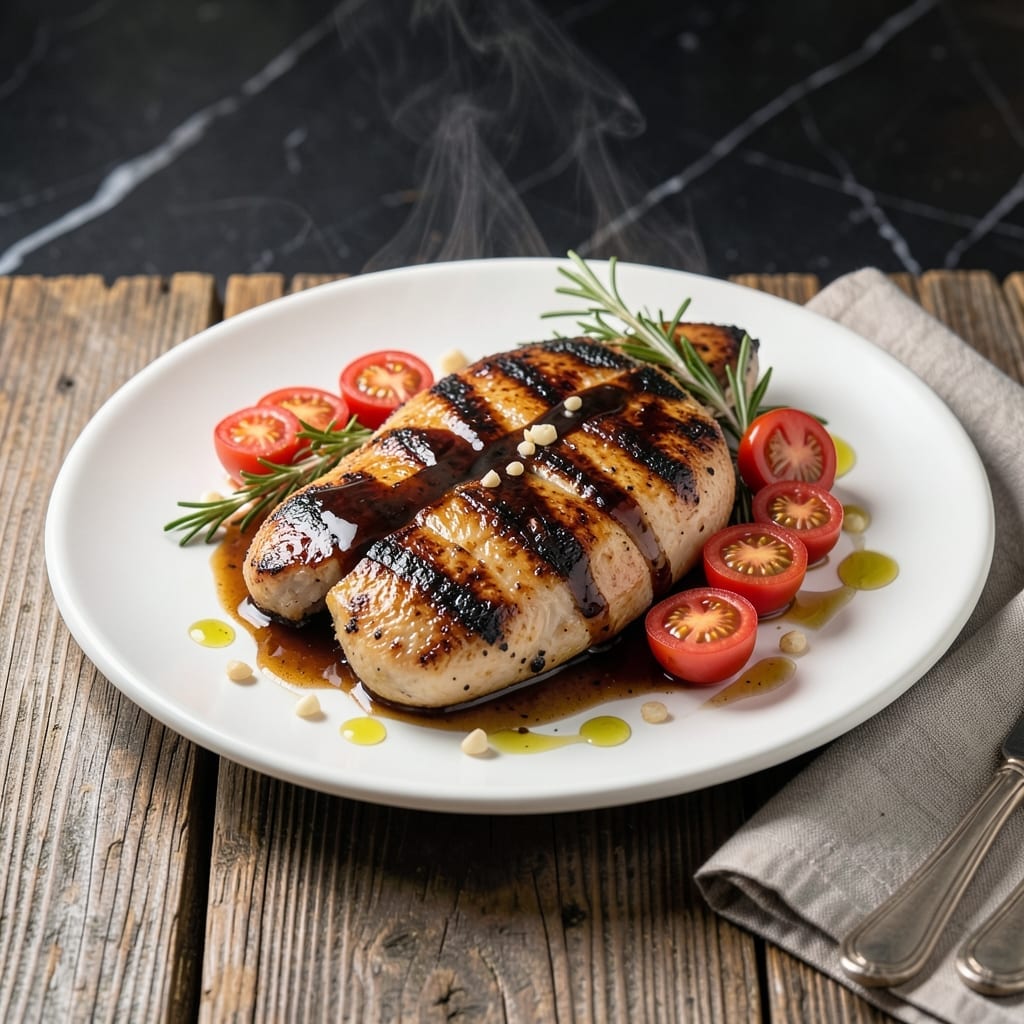
This grilled chicken delivers smoky char and a glossy balsamic glaze that balances sweet and tangy perfectly. The vinegar caramelizes on the grill, creating a sticky, flavorful crust that clings to every bite of juicy chicken.
I developed this method after years of backyard cooking, blending simple ingredients with precise grill technique. The result is restaurant-quality chicken with minimal effort and maximum flavor impact.
Ingredients for Grilled Chicken Recipe with Balsamic Vinegar
Simple ingredients deliver restaurant-quality results with smoky depth and tangy brightness.
| Ingredient | Amount | Notes |
|---|---|---|
| Chicken Breast 🍗 | 1 ½ lb | Boneless, skinless, pounded to even thickness |
| Balsamic Vinegar 🍷 | ½ cup | Aged for depth of flavor |
| Honey 🍯 | 2 tbsp | For sweetness in glaze |
| Olive Oil 🫒 | 3 tbsp | Extra-virgin for richness |
| Garlic Cloves 🧄 | 3 cloves | Minced for marinade |
| Dijon Mustard 🟡 | 1 tbsp | Smooth, not grainy |
| Dried Rosemary 🌿 | 1 tsp | Crushed to release aroma |
| Dried Thyme 🍃 | 1 tsp | Complements balsamic perfectly |
| Salt 🧂 | 1 tsp | Kosher or sea salt preferred |
| Black Pepper 🌶️ | ½ tsp | Freshly ground for best flavor |
| Red Pepper Flakes 🔥 | ¼ tsp | Optional for heat |
| Soy Sauce 🥢 | 1 tbsp | Low-sodium recommended |
[recipe_ingredient_scaler]
The chicken quality is non-negotiable here. Boneless, skinless breasts from a trusted butcher or Whole Foods ensure even cooking and juiciness. Pound them to uniform thickness—half-inch is ideal—to prevent dry edges. For the balsamic, aged varieties (12+ years) from Eataly or specialty stores develop the caramelized depth that makes this glaze exceptional.
No aged balsamic? Regular balsamic plus 1 tsp brown sugar mimics the sweetness. Honey can be swapped for maple syrup or agave. Out of Dijon? Whole-grain mustard works (strain seeds if you prefer smooth). For herbs, fresh rosemary and thyme at double the amount add brightness. Soy sauce-free? Coconut aminos offer similar umami without the sodium.
The glaze keeps in a sealed jar for 1 week refrigerated. Chicken marries best with the flavors after 2-4 hours in the fridge, but even 30 minutes works. Leftovers reheat beautifully—just drizzle extra glaze to revive the stickiness. Freezes for 3 months if needed.
Why You’ll Love This Recipe
- 5-Minute Marinade: I mix the balsamic, honey, and crushed garlic in a bowl while the grill heats up—no fancy prep.
- Sweet-Tangy Magic: The honey caramelizes on the chicken while the balsamic cuts through with that sharp, rich tang.
- Meal Prep MVP: I make a double batch on Sunday and it stays juicy in salads or wraps all week.
- One Bowl, No Mess: Honestly, the whole marinade comes together in one bowl I can reuse for serving.
Step-by-Step Instructions for Grilled Chicken With Balsamic Glaze
Master the technique for juicy, charred chicken with a glossy, tangy-sweet finish.
Step 1: Marinate the Chicken for Maximum Flavor
In a bowl, whisk together the 0.5 cup balsamic vinegar, 2 tbsp honey, 3 tbsp olive oil, minced 3 cloves garlic cloves, 1 tbsp Dijon mustard, 1 tsp dried rosemary, 1 tsp dried thyme, 1 tsp salt, 0.5 tsp black pepper, 0.25 tsp red pepper flakes, and 1 tbsp soy sauce until fully combined. The emulsion should look glossy and well incorporated.
Place the 1.5 lb chicken breast in a resealable plastic bag or shallow dish and pour the marinade over it. Massage the marinade into the chicken, ensuring every piece is thoroughly coated. Seal and refrigerate for at least 30 minutes or up to 4 hours for optimal flavor penetration.
Step 2: Preheat and Prepare the Grill
Remove the chicken from the refrigerator 20 minutes before grilling to bring it to room temperature. This ensures even cooking throughout. Meanwhile, preheat your grill to medium-high heat (about 400-450°F).
Clean the grates thoroughly with a grill brush to prevent sticking. Then, oil the grates by dipping a folded paper towel in olive oil and using long tongs to rub it over the hot grates. This creates a non-stick surface and helps achieve those coveted grill marks.
Step 3: Grill the Chicken to Perfection
Remove the chicken from the marinade, shaking off any excess, and discard the remaining marinade. Place the chicken on the preheated grill, smooth side down first. Cook for 6-7 minutes without moving it to allow a deep sear and distinct grill marks to form.
Flip the chicken and cook for another 5-6 minutes or until the internal temperature reaches 165°F on an instant-read thermometer. The chicken should release easily from the grates when it’s ready to flip, and the juices should run clear when pierced.
Step 4: Rest and Serve with Reduced Glaze
Transfer the grilled chicken to a clean plate and tent loosely with aluminum foil. Let it rest for 5-10 minutes to allow the juices to redistribute, ensuring moist, tender meat.
While the chicken rests, pour the reserved marinade into a small saucepan and bring to a boil. Reduce the heat to medium and simmer for 3-4 minutes until the liquid thickens slightly into a glossy glaze. Drizzle this reduced glaze over the chicken just before serving to add an extra layer of flavor and shine.
Pro Tips For Making Grilled Chicken Recipe With Balsamic Vinegar
- Pound the Chicken: I learned this the hard way—uneven chicken breasts dry out fast. Pound them to an even ½-inch thickness so they cook through without burning the glaze.
- Reduce the Glaze: Simmer the balsamic, honey, and garlic for 3-4 minutes first to thicken it slightly—this keeps it from dripping off the chicken and burning on the grill.
- Skip the Cold Chicken: After burning three batches, I finally figured out that room-temperature chicken cooks more evenly. Pull it from the fridge 20-30 minutes before grilling.
- Use a Two-Zone Fire: Start hot, finish low. Sear the chicken over direct heat for 2-3 minutes per side, then move to indirect heat to finish cooking without charring the balsamic glaze.
Common Mistakes When Making This Recipe
Over-Marinating the Chicken
Marinating too long can turn your chicken mushy. The balsamic vinegar and soy sauce start breaking down proteins after 4 hours. I learned this the hard way at a local BBQ competition—2-4 hours max preserves texture while infusing flavor. 💡
Starting with Cold Chicken
Putting cold chicken directly on the grill causes uneven cooking. Always let it sit at room temperature for 20 minutes after marinating. This ensures the center cooks through by the time the exterior develops that perfect char you’re after.
Skipping the Grill Prep
Dirty or dry grates lead to sticking and uneven grill marks. I always clean with a brush, then oil the grates with a paper towel dipped in olive oil. This simple step makes flipping easier and enhances those beautiful sear lines.
Peeking Too Soon
Lifting the chicken before it’s ready to flip tears the skin and ruins the crust. Wait until it releases easily—usually after 6-7 minutes. Patience here is key to getting that restaurant-quality sear.
Ignoring Internal Temperature
Guessing doneness leads to dry or undercooked chicken. Use an instant-read thermometer to hit 165°F in the thickest part. I keep a ThermoWorks in my apron pocket for every cook. 🌡️
Not Resting the Meat
Slicing immediately causes all the juices to escape. Tent with foil and rest for 5-10 minutes. This lets the juices redistribute, keeping every bite moist and flavorful.
Nutrition Facts

Trained in classic French technique but raised on slow-cooked ribs and spicy rubs, she blends culinary skill with smoke and soul.
- Recipe for Boneless Pork Chops in Cast Iron Skillet: Sear and Baste to Juicy Perfection - October 3, 2026
- Recipe for Boneless Cross Rib Roast: Slow-Roasted Beef with Herb Crust - October 3, 2026
- Hamburgers in Sauce Recipe Crock Pot: Slow-Cooked Savory Delight - October 3, 2026