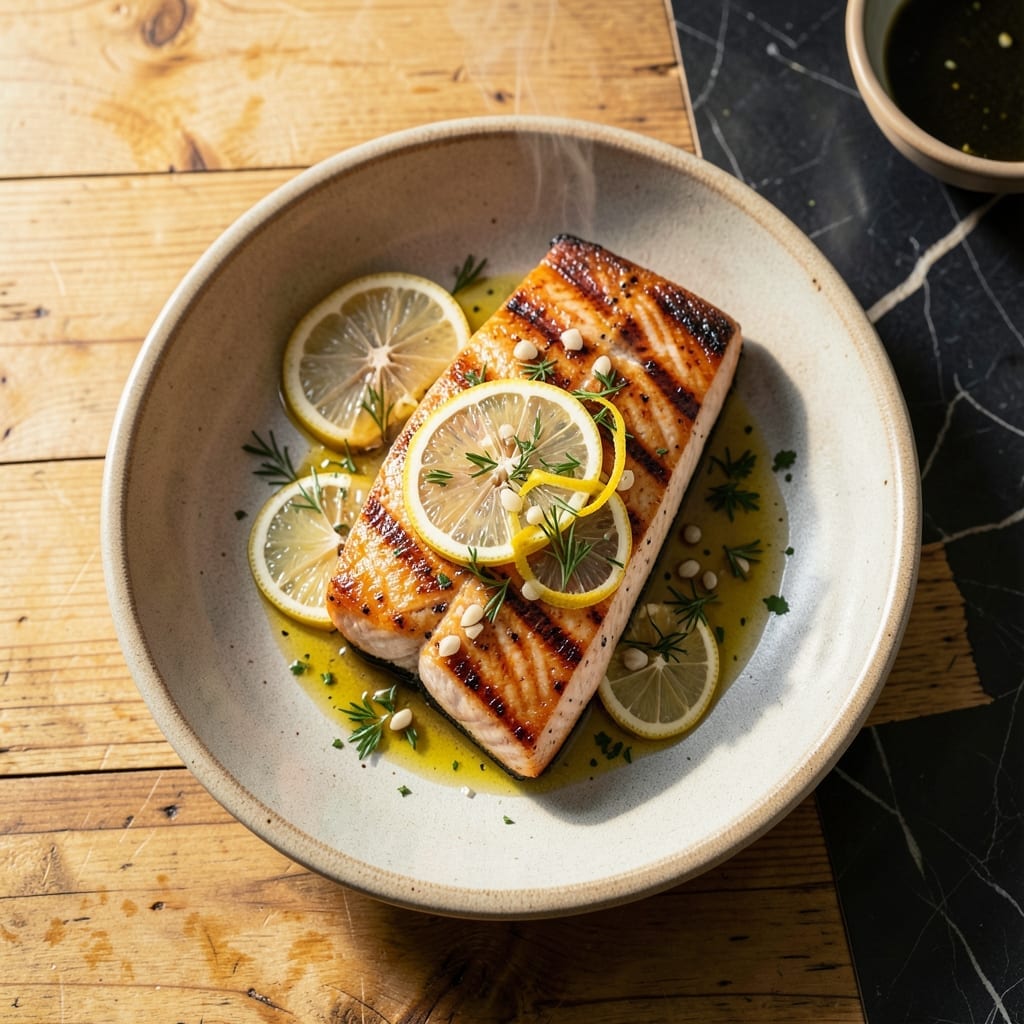
Nothing beats the aroma of salmon hitting a hot grill, the sizzle promising perfectly charred edges and tender flakes. This dish brings coastal flavors to your backyard with minimal effort and maximum impact.
I’ve refined this technique through years of pitmaster experience, blending classic French precision with open-flame cooking. The lemon and garlic create a bright, aromatic crust that seals in moisture while adding depth.
You’ll achieve restaurant-quality results with just 15 minutes of grilling time. The salmon stays juicy inside with a slightly crisp exterior, each bite delivering that signature citrus zing.
The charred lemon slices add visual appeal and an extra layer of smoky acidity. Serve this immediately for the best texture and flavor.
Ingredients for Grilled Lemon Garlic Salmon
Fresh salmon, bright citrus, and herbs come together for this coastal-inspired dish.
| Ingredient | Amount | Notes |
|---|---|---|
| Salmon Fillets 🐟 | 1 ½ lb | Skin-on, wild-caught preferred |
| Lemon 🍋 | 2 whole | 1 for juicing, 1 sliced for grilling |
| Garlic Cloves 🧄 | 6 cloves | Minced for marinade |
| Extra-Virgin Olive Oil 🫒 | ¼ cup | High quality, fruity |
| Fresh Dill 🌿 | ¼ cup | Chopped, stems removed |
| Fresh Parsley 🌿 | ¼ cup | Chopped, for garnish |
| Dijon Mustard 🟡 | 1 tbsp | Smooth, not whole grain |
| Honey 🍯 | 1 tbsp | Or sub maple syrup |
| Kosher Salt 🧂 | 1 ½ tsp | Diamond Crystal preferred |
| Black Pepper 🌶️ | 1 tsp | Freshly ground |
| Red Pepper Flakes 🔥 | ½ tsp | Optional, for heat |
| White Wine 🍷 | ¼ cup | Dry variety like Sauvignon Blanc |
[recipe_ingredient_scaler]
The salmon quality is non-negotiable here. Wild-caught sockeye or king have the best flavor and texture for grilling. Whole Foods or Costco are my go-tos for consistent quality. Look for fillets with vibrant color and no brown spots. If buying a whole side, ask the fishmonger to skin it for you (or do it yourself—it’s easier than you think).
White wine can be swapped with extra lemon juice and a splash of broth. No fresh herbs? Dried at one-third the amount works, but fresh really makes the difference. For a sweeter glaze, maple syrup replaces honey beautifully. The Dijon mustard adds tang—regular yellow mustard is fine in a pinch, just use a little less.
Marinate the salmon for up to 2 hours in the fridge. Leftovers keep for 2-3 days but are best eaten fresh. Freeze uncooked fillets for up to 2 months—thaw overnight before grilling.
Why You’ll Love This Recipe
- 20-Minute Grill: I toss the salmon with olive oil, garlic, and dill, then it’s on the grill—no fuss, no long prep.
- Zesty Lemon Punch: The fresh lemon and garlic make every bite bright and savory, never boring.
- Weeknight MVP: Honestly, it’s my go-to for quick dinners, fancy enough for guests but easy for a Tuesday.
- Leftovers? Yes Please: Cold salmon on salad the next day tastes even better, and it reheats like a dream.
Step-by-Step Instructions for Grilled Lemon Garlic Salmon
Here’s the method I’ve perfected for restaurant-quality salmon with bright, charred citrus flavor.
Step 1: Prepare the Lemon Garlic Marinade
In a bowl, whisk together the 0.25 cup extra-virgin olive oil, juice from 1 lemon, the 6 cloves minced garlic, 1 tbsp Dijon mustard, 1 tbsp honey, 0.25 cup chopped fresh dill, 1.5 tsp kosher salt, 1 tsp black pepper, and 0.5 tsp red pepper flakes. The honey balances the acidity while the mustard helps the marinade cling to the fish.
Pour the marinade over the 1.5 lb salmon fillets in a shallow dish, turning to coat evenly. Let it sit for 15-20 minutes at room temperature. I’ve found this timing allows the flavors to penetrate without over-softening the fish texture.
Step 2: Preheat and Prepare the Grill
Heat your grill to medium-high heat (about 400°F). Clean the grates thoroughly and oil them lightly with a paper towel dipped in olive oil. This prevents sticking and creates beautiful grill marks. Meanwhile, slice the remaining 1 lemon into ¼-inch thick rounds for grilling.
Real talk: salmon skin sticks easily to dirty grates. Take the extra minute to ensure they’re spotless. I also keep the 0.25 cup white wine nearby for deglazing any bits that might stick later.
Step 3: Grill the Salmon and Lemon Slices
Place the salmon fillets skin-side down on the oiled grates. Grill undisturbed for 4-5 minutes until the edges begin to turn opaque and the skin develops a golden crust. Use a thin metal spatula to carefully flip them—fish is delicate at this stage.
Add the lemon slices to the grill during the last 2 minutes of cooking. They should develop light char marks and soften slightly. The salmon is done when it flakes easily with a fork and reaches 145°F internally, usually another 3-4 minutes after flipping.
Step 4: Finish with Wine and Herbs
Transfer the salmon to a serving platter and immediately pour the 0.25 cup white wine over the hot fillets. The alcohol will cook off while the liquid helps distribute the charred lemon flavors. Top with the grilled lemon slices and any remaining marinade from the dish.
Sprinkle with the 0.25 cup chopped fresh parsley for a pop of color and freshness. The wine addition is the professional touch that elevates this from good to extraordinary—it cuts through the richness while adding depth.
Pro Tips For Making Grilled Lemon Garlic Salmon
- Skin Side Down First: Start grilling the salmon skin-side down on medium-high heat for 4-5 minutes before flipping. I learned this the hard way—flipping too soon causes the skin to stick and the fish to fall apart.
- Slice Lemon Thin: Cut your lemon into paper-thin slices rather than wedges so they char slightly on the grill without overpowering the salmon. Sounds weird, but it works: the thin slices infuse more flavor as they cook.
- Don’t Overcrowd the Grill: Leave at least an inch between fillets so the heat circulates evenly. After burning three batches, I finally figured out that crowding steams the salmon instead of grilling it.
- Use a Fish Basket: If you’re nervous about flipping, invest in a grill basket—it keeps the salmon intact and makes turning effortless. My grandmother swore by this, and she was right: no more lost fish in the coals.
Troubleshooting Perfect Results
Salmon Sticks to Grates
The most common issue is salmon sticking to the grill. Always start with clean, well-oiled grates at 400°F. I use tongs and a paper towel dipped in olive oil to prep the surface. If it still sticks, your grill may not be hot enough or the fish wasn’t properly oiled before placing.
Uneven Cooking
Hot spots cause uneven cooking. For gas grills, preheat all burners for 10 minutes before cooking. On charcoal, spread coals evenly and use a two-zone fire setup. The salmon should take 4-5 minutes per side for perfect doneness.
Dry or Overcooked Fish
Salmon continues cooking off the heat. Pull it when it reaches 140°F internally—it’ll coast to 145°F while resting. The flesh should flake easily with a fork. I always use an instant-read thermometer for precision. 🌡️
Weak Lemon Garlic Flavor
If the flavor seems muted, try marinating for the full 2 hours instead of 15-20 minutes. Also, use fresh garlic and lemon juice—the bottled stuff lacks the same punch. I forage wild garlic when in season for extra intensity.
Burnt Marinade
Sugars in the marinade can burn. Keep the heat at medium-high and avoid flare-ups. If using wood chips, soak them first and add just before cooking. A spray bottle of water helps tame any unexpected flames.
Lemon Slices Not Charred
For those perfect char marks on your lemon slices, add them to the grill only during the last 2 minutes of cooking. Place them directly over the heat source and press down lightly with tongs to ensure contact with the grates. 🔥
Nutrition Facts
Frequently Asked Questions
Can I use frozen salmon instead of fresh?
Yes, but thaw it overnight in the fridge first. Pat it completely dry before marinating to prevent steaming. Frozen wild-caught works well if fresh isn’t available.
How do I know when the salmon is done?
Use an instant-read thermometer—it’s done at 145°F internally. The flesh should flake easily and turn opaque. Pull it at 140°F as it will keep cooking off the grill.
Can I make this indoors without a grill?
Use a grill pan on medium-high heat for 4-5 minutes per side. A cast-iron skillet works too, though you’ll miss the smoky flavor.
What’s the best way to store leftovers?
Keep in an airtight container for up to 2 days. Reheat gently in a skillet over low heat to maintain moisture. Avoid microwaving as it can dry out the fish.

Trained in classic French technique but raised on slow-cooked ribs and spicy rubs, she blends culinary skill with smoke and soul.
- Recipe for Boneless Pork Chops in Cast Iron Skillet: Sear and Baste to Juicy Perfection - October 3, 2026
- Recipe for Boneless Cross Rib Roast: Slow-Roasted Beef with Herb Crust - October 3, 2026
- Hamburgers in Sauce Recipe Crock Pot: Slow-Cooked Savory Delight - October 3, 2026