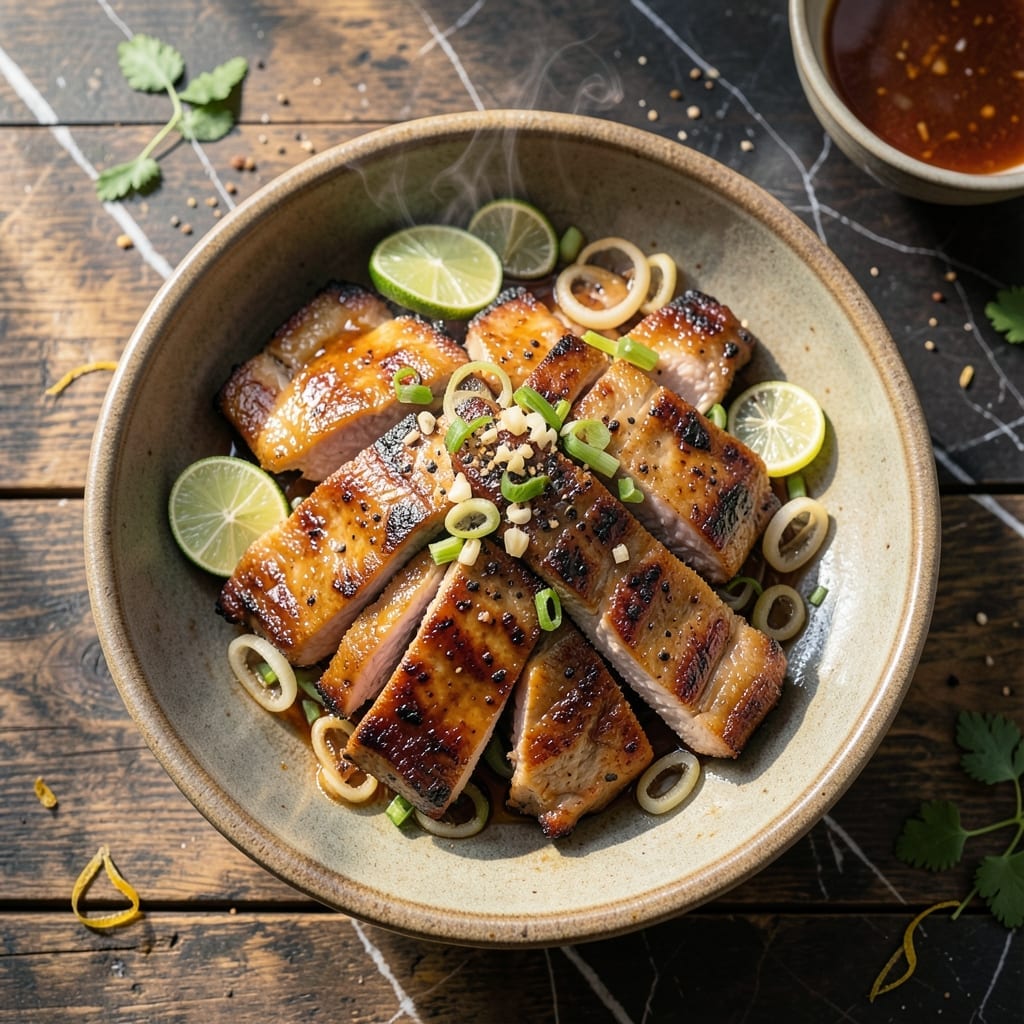
This grilled pork recipe transforms ordinary cuts into something extraordinary with the bright, citrusy aroma of lemongrass. I’ve spent years perfecting the balance between sweet, charred edges and the herb’s fragrant depth.
The marinade is simple but powerful, allowing the pork to absorb layers of flavor before hitting the grill. High heat ensures a beautiful sear while keeping the inside juicy and tender. It’s a method that works every time.
What you get is meat with a caramelized crust and a tender, aromatic center that pairs perfectly with rice or fresh herbs. The lemongrass doesn’t overpower—it enhances.
Serve it at your next cookout and watch it disappear. This dish proves that great flavor doesn’t require complicated techniques.
Ingredients for Grilled Lemongrass Pork
Pantry staples meet bold Asian flavors. Nothing exotic, just incredible taste waiting to happen.
| Ingredient | Amount | Notes |
|---|---|---|
| Pork Shoulder 🥩 | 2 lb | Cut into 1-inch thick strips |
| Fresh Lemongrass Stalks 🌿 | 4 whole | Tender inner parts only, finely minced |
| Garlic Cloves 🧄 | 6 cloves | Minced for marinade depth |
| Fish Sauce 🐟 | 3 tbsp | Quality Thai brand preferred |
| Brown Sugar 🍚 | ¼ cup | Light or dark variety |
| Soy Sauce 🥜 | 3 tbsp | Low-sodium recommended |
| Lime Juice 🍈 | 2 tbsp | Freshly squeezed for brightness |
| Shallot 🧅 | 1 whole | Finely minced for aroma |
| Black Pepper 🌶️ | 1 tsp | Freshly ground for best flavor |
| Vegetable Oil 🫒 | 2 tbsp | For marinade and grilling |
| Jasmine Rice 🍚 | 2 cups | Uncooked, for serving |
| Fresh Cilantro 🌿 | ½ cup | Chopped, for garnish |
| Serrano Pepper 🌶️ | 1 whole | Finely chopped, seeds removed |
[recipe_ingredient_scaler]
The pork shoulder is key here—boneless works best for even cooking and maximum flavor absorption. Asian markets often have pre-trimmed cuts, but any grocery store pork shoulder will do. Look for good marbling (those white fat streaks) for juicy results. Lemongrass can be tricky to find fresh, but H-Mart or Whole Foods usually stock it. If buying pre-packaged, check the skin isn’t too woody.
No fish sauce? Soy sauce plus a pinch of salt gets you 80% there (though not quite the same depth). Brown sugar can be swapped for coconut sugar if that’s your thing. Out of shallots? Red onion at half the amount works in a pinch. The serrano pepper is optional, but it adds a nice kick—remove seeds for milder heat. Fresh lime juice is non-negotiable though.
Marinated pork keeps 2 days in the fridge before cooking. Leftovers? They reheat surprisingly well—3-4 days in the fridge, 3 months frozen. I always make extra for sandwiches the next day. Just slice thin against the grain.
Why You’ll Love This Recipe
- Minimal Chopping Required: I just throw the lemongrass, garlic, and pork shoulder into a bowl with the marinade—no fancy knife skills needed.
- That Sweet-Savory Kick: The brown sugar caramelizes while the fish sauce and lemongrass give it that deep, tangy umami I crave.
- Feeds a Hungry Crowd: I made this for a weekend BBQ and it disappeared faster than the burgers—always a hit.
- Leftovers for Days: The flavor actually gets better overnight, so I double the batch for easy lunches. Honestly, it tastes even more delicious the next day.
Step-by-Step Instructions for Grilled Lemongrass Pork
Here’s the method. Straightforward, tested, works every time.
Step 1: Prepare the Marinade with Aromatic Depth
In a bowl, combine the 3 tbsp fish sauce, 0.25 cup brown sugar, 3 tbsp soy sauce, 2 tbsp lime juice, minced 1 whole shallot, 1 tsp black pepper, and 2 tbsp vegetable oil. Whisk until the sugar dissolves completely—this ensures even distribution in the marinade.
Add the minced 4 whole fresh lemongrass stalks, 6 cloves garlic cloves, and finely chopped 1 whole serrano pepper. The serrano should be seedless to balance heat with the bright, citrusy lemongrass. Stir well and let the flavors meld for 5 minutes before adding the pork.
Step 2: Marinate the Pork for Maximum Flavor
Place the 2 lb pork shoulder, cut into 1-inch thick strips, into a resealable bag or shallow dish. Pour the marinade over the pork, ensuring every piece is fully coated. Massage the marinade into the meat for 1-2 minutes to help it penetrate deeply.
Seal or cover and refrigerate for at least 4 hours, but overnight is ideal. I’ve found that the longer it marinates, the more pronounced the lemongrass and garlic flavors become. Turn the pork occasionally to ensure even marinating.
Step 3: Grill to Charred, Caramelized Perfection
Preheat your grill to medium-high heat (about 400°F). Remove the pork from the marinade, shaking off any excess, and discard the remaining marinade. Grill the pork strips for 4-5 minutes per side, resisting the urge to move them too soon.
You’ll know they’re ready to flip when the edges start to caramelize and release easily from the grates. The sugar in the marinade will create a beautiful char—watch for deep golden-brown color and slight blackening in spots. The internal temperature should reach 145°F for perfect doneness.
Step 4: Rest and Serve with Jasmine Rice
Transfer the grilled pork to a cutting board and let it rest for 5-10 minutes. This allows the juices to redistribute, keeping the meat moist and tender. Slice the pork against the grain into thin strips for serving.
Serve immediately over 2 cups jasmine rice, cooked according to package instructions. Garnish with 0.5 cup fresh cilantro for a pop of color and freshness. The cilantro’s brightness cuts through the richness of the pork, balancing every bite.
Pro Tips For Making Grilled Lemongrass Pork
- Pound the Lemongrass: I learned this the hard way—bruising the lemongrass stalks with the flat side of your knife before mincing releases way more of that citrusy oil into the marinade.
- Score the Pork: Make shallow cuts in a crosshatch pattern on the pork shoulder before marinating so the flavors penetrate deeper and the meat cooks more evenly.
- Watch the Sugar: Brown sugar burns fast over direct heat, so grill the pork over medium-high heat and move it to indirect heat if the edges start blackening too quickly.
- Marinate Overnight: After rushing a few batches, I finally figured out that 12+ hours in the fridge with the fish sauce, garlic, and lemongrass makes the pork noticeably more tender and flavorful.
Regional Styles of This Dish
Vietnamese Tradition
In Vietnam, this dish is called Thịt Nướng Xả and is a street food staple. The lemongrass is often pounded into a paste rather than minced, creating a more intense aromatic base. I learned this technique from a Hanoi chef during my travels—it adds incredible depth. 🗺️
Thai Adaptation
Thai versions incorporate coconut milk into the marinade for richness and kaffir lime leaves for extra citrusy brightness. The pork is often skewered and grilled over charcoal for that smoky edge. I love adding 1 can coconut milk to my marinade when I want this variation.
Cambodian Influence
Cambodian cooks often add galangal and turmeric to the marinade, giving the pork a golden hue and earthy undertones. The pork is typically cut into smaller, bite-sized pieces for quick grilling. I source my galangal from local Asian markets.
Laotian Style
In Laos, they use padek (fermented fish sauce) instead of regular fish sauce for a funkier, more complex flavor. The marinating time is often extended to 24-48 hours for maximum flavor penetration. I’ve found this creates an incredibly tender texture.
Filipino Approach
Filipino versions often include banana ketchup in the marinade for a sweet-tangy twist. The pork is sometimes glazed with additional banana ketchup while grilling for a sticky, caramelized coating. I’ll admit this was a surprising but delicious discovery for me. 💛
Nutrition Facts
Frequently Asked Questions
How long should I marinate the pork?
For best results, marinate for at least 4 hours, but overnight yields maximum flavor. The longer it sits, the more the lemongrass and garlic infuse the meat.
Can I use dried lemongrass instead?
Fresh is strongly preferred, but dried works in a pinch. Use 1 tbsp dried for every 4 fresh stalks. Soak it in warm water for 10 minutes first.
What if my pork burns on the grill?
Lower the heat to medium and move pieces to indirect heat if they char too quickly. The sugar in the marinade caramelizes fast, so watch closely after flipping.
Can I cook this indoors?
Use a grill pan or cast-iron skillet over medium-high heat. Ventilate well—the marinade can smoke. Cook 5-6 minutes per side.

Trained in classic French technique but raised on slow-cooked ribs and spicy rubs, she blends culinary skill with smoke and soul.
- Recipe for Boneless Pork Chops in Cast Iron Skillet: Sear and Baste to Juicy Perfection - October 3, 2026
- Recipe for Boneless Cross Rib Roast: Slow-Roasted Beef with Herb Crust - October 3, 2026
- Hamburgers in Sauce Recipe Crock Pot: Slow-Cooked Savory Delight - October 3, 2026