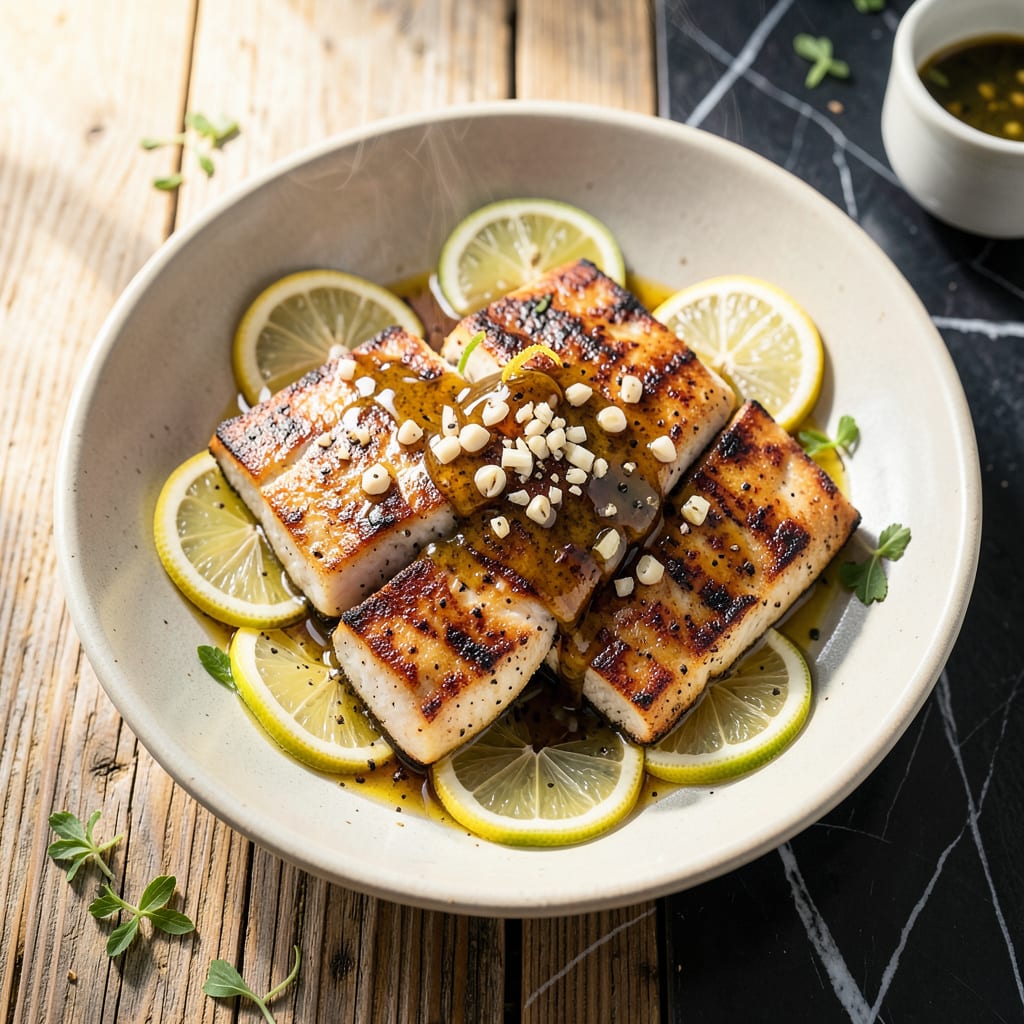
This grilled mahi mahi delivers flaky, moist fish with a citrus-kissed char that highlights its natural sweetness. The key is high heat and precise timing to achieve that perfect texture without drying it out.
I’ve refined this method through countless coastal cookouts, ensuring the fish stays tender while developing a lightly caramelized crust. A simple marinade enhances the flavor without overpowering the delicate white flesh.
Ingredients for Grilled Mahi Mahi
Fresh, bright ingredients create that citrus-kissed char on perfectly flaky fish.
| Ingredient | Amount | Notes |
|---|---|---|
| Mahi Mahi Fillets 🐟 | 1 ½ lb | Skin-on, about 1-inch thick |
| Extra-Virgin Olive Oil 🫒 | ¼ cup | Divided for marinade and grilling |
| Fresh Lime Juice 🍈 | 3 tbsp | About 2-3 limes, freshly squeezed |
| Fresh Lemon Juice 🍋 | 2 tbsp | About 1 large lemon |
| Garlic Cloves 🧄 | 3 cloves | Minced for marinade |
| Honey 🍯 | 1 tbsp | Local or raw preferred |
| Dijon Mustard 🟡 | 1 tbsp | Smooth variety for emulsion |
| Kosher Salt 🧂 | 1 ½ tsp | Diamond Crystal preferred |
| Freshly Ground Black Pepper 🌶️ | 1 tsp | Coarse grind recommended |
| Zest of Lime 🍈 | 1 tsp | From 1 lime, finely grated |
| Zest of Lemon 🍋 | 1 tsp | From 1 lemon, finely grated |
| Fresh Cilantro 🌿 | ¼ cup | Chopped, for garnish |
| Red Pepper Flakes 🌶️ | ¼ tsp | Optional for heat |
[recipeingredientscaler]
The mahi mahi quality is paramount. Wild-caught from a reputable fishmonger ensures optimal texture and flavor. Look for fillets with vibrant color and no fishy odor—indicators of freshness. Thickness matters: aim for 1-inch to prevent drying. I source mine from Whole Foods or local seafood markets, where turnover is high and staff can advise on the day’s best catch.
No fresh citrus? Bottled juice at half the quantity works, though fresh is superior. Honey can be swapped with agave or maple syrup for vegan adaptation. The Dijon mustard stabilizes the marinade—whole-grain mustard adds texture. Cilantro haters can use flat-leaf parsley instead. For extra depth, add a dash of fish sauce (ensure it’s pescatarian-friendly).
Marinate the fish no longer than 30 minutes—acid starts to cook it. Grill immediately for best texture. Leftovers keep 1-2 days refrigerated, though mahi mahi is best fresh. The marinade can be made 24 hours ahead—just whisk before using.
Why You’ll Love This Recipe
- 20-Minute Meal: I can get this on the table faster than takeout arrives. Just marinate the mahi mahi in olive oil, lime, lemon, and garlic while the grill heats up.
- Bright and Zesty: The combo of lime and lemon juice with garlic makes every bite pop. It’s fresh, not heavy—exactly what I crave when I want something light but flavorful.
- Weeknight Hero: It’s my go-to for busy evenings, but fancy enough for company. Honestly, I’ve served it to guests who asked for the recipe.
- Leftovers? Yes Please: The fillets hold up beautifully in the fridge. I toss the leftovers into tacos the next day—no extra cooking, just assemble and eat.
Step-by-Step Instructions for Grilled Mahi Mahi
Master these techniques to create perfectly flaky, citrus-kissed fish with ideal grill marks.
Step 1: Prepare the Citrus Marinade
In a medium bowl, whisk together 0.25 cup extra-virgin olive oil, 3 tbsp fresh lime juice, 2 tbsp fresh lemon juice, 1 tbsp honey, 1 tbsp Dijon mustard, 1.5 tsp kosher salt, and 1 tsp freshly ground black pepper until fully emulsified. The mixture should appear slightly thickened and uniformly combined.
Add 3 cloves minced garlic cloves, 1 tsp zest of lime, and 1 tsp zest of lemon. Stir well to incorporate. This marinade delivers both acidity to tenderize the fish and sweetness to caramelize beautifully on the grill. I always let it sit for 5 minutes before using to allow the flavors to meld.
Step 2: Marinate the Mahi Mahi Fillets
Place the 1.5 lb mahi mahi fillets in a shallow dish or resealable plastic bag. Pour the marinade over the fillets, ensuring all surfaces are coated. Turn the fillets several times to guarantee even coverage.
Marinate at room temperature for 15-20 minutes, no longer. Mahi mahi’s delicate texture can break down with excessive acid exposure. The fillets should appear slightly translucent at the edges when ready. Discard any remaining marinade after use to prevent cross-contamination.
Step 3: Preheat and Oil the Grill
Preheat your grill to medium-high heat (about 400°F). Clean the grates thoroughly with a grill brush to remove any debris. This prevents the fish from sticking and ensures those beautiful grill marks.
Using tongs and a folded paper towel dipped in some of the reserved extra-virgin olive oil, oil the grates just before adding the fish. The grates are ready when you can hold your hand about 5 inches above them for only 3-4 seconds.
Step 4: Grill to Flaky Perfection
Place the marinated mahi mahi fillets skin-side up on the oiled grates. Close the lid and cook undisturbed for 4-5 minutes until the edges appear opaque and the fish releases easily from the grates.
Carefully flip the fillets using a thin, flexible spatula. Cook for an additional 3-4 minutes with the lid closed until the fish reaches an internal temperature of 145°F and flakes easily when tested with a fork. The flesh should appear white and opaque throughout with a slight sheen.
Step 5: Rest and Garnish
Transfer the grilled mahi mahi to a serving platter and tent loosely with foil. Let rest for 5 minutes to allow the juices to redistribute. This resting period is crucial for maintaining moisture and ensuring the fish remains intact when served.
Garnish with 0.25 cup chopped fresh cilantro and a sprinkle of 0.25 tsp red pepper flakes if desired. The cilantro adds a fresh, herbal note that complements the citrus marinade beautifully. Serve immediately while hot for the best texture and flavor.
Pro Tips For Making Grilled Mahi Mahi
- Preheat the Grill: I learned this the hard way—start with a screaming hot grill to get those perfect sear marks and prevent the mahi mahi from sticking.
- Pat Fillets Dry: Sounds weird, but it works: always blot the fillets with a paper towel before oiling them, so the marinade clings better instead of pooling.
- Skip the Overcrowding: Resist the urge to cook all fillets at once; give each piece at least 2 inches of space so they sear instead of steam.
- Use Fresh Citrus: My grandmother swore by this, and she was right: fresh lime and lemon juice make a real difference in brightness compared to bottled.
Storing and Reheating This grilled mahi mahi
Refrigerator Storage
Let your grilled fish cool for no more than 2 hours before transferring to airtight containers. I use glass containers with locking lids to preserve freshness. Store at 40°F or below for up to 2 days—mahi mahi is best enjoyed fresh. ❄️
Freezer Storage
For longer storage, wrap each fillet individually in plastic wrap, then place in a freezer-safe bag with all air squeezed out. Label with the date and freeze for up to 3 months. Thaw overnight in the fridge before reheating.
Stovetop Reheating
My preferred method: Heat 1 tbsp extra-virgin olive oil in a skillet over medium-low heat. Add fillets and warm for 2-3 minutes per side, covered. Spritz with a little water to add moisture if needed. 🔥
Oven Reheating
Preheat oven to 300°F. Place fillets on a baking sheet, brush with olive oil, and cover with foil. Heat for 10-12 minutes until warmed through. This method keeps the fish moist and prevents drying.
Microwave Reheating
For quick meals, place a fillet on a microwave-safe plate, cover with a damp paper towel, and heat on 50% power for 1-2 minutes. Check and repeat in 30-second intervals until reaching 145°F.
Serving Tip
Reheated mahi mahi pairs perfectly with a fresh squeeze of lime juice or a drizzle of the original marinade to revive those bright, citrusy flavors. Always check internal temperature to ensure safety.

Trained in classic French technique but raised on slow-cooked ribs and spicy rubs, she blends culinary skill with smoke and soul.
- Recipe for Boneless Pork Chops in Cast Iron Skillet: Sear and Baste to Juicy Perfection - October 3, 2026
- Recipe for Boneless Cross Rib Roast: Slow-Roasted Beef with Herb Crust - October 3, 2026
- Hamburgers in Sauce Recipe Crock Pot: Slow-Cooked Savory Delight - October 3, 2026