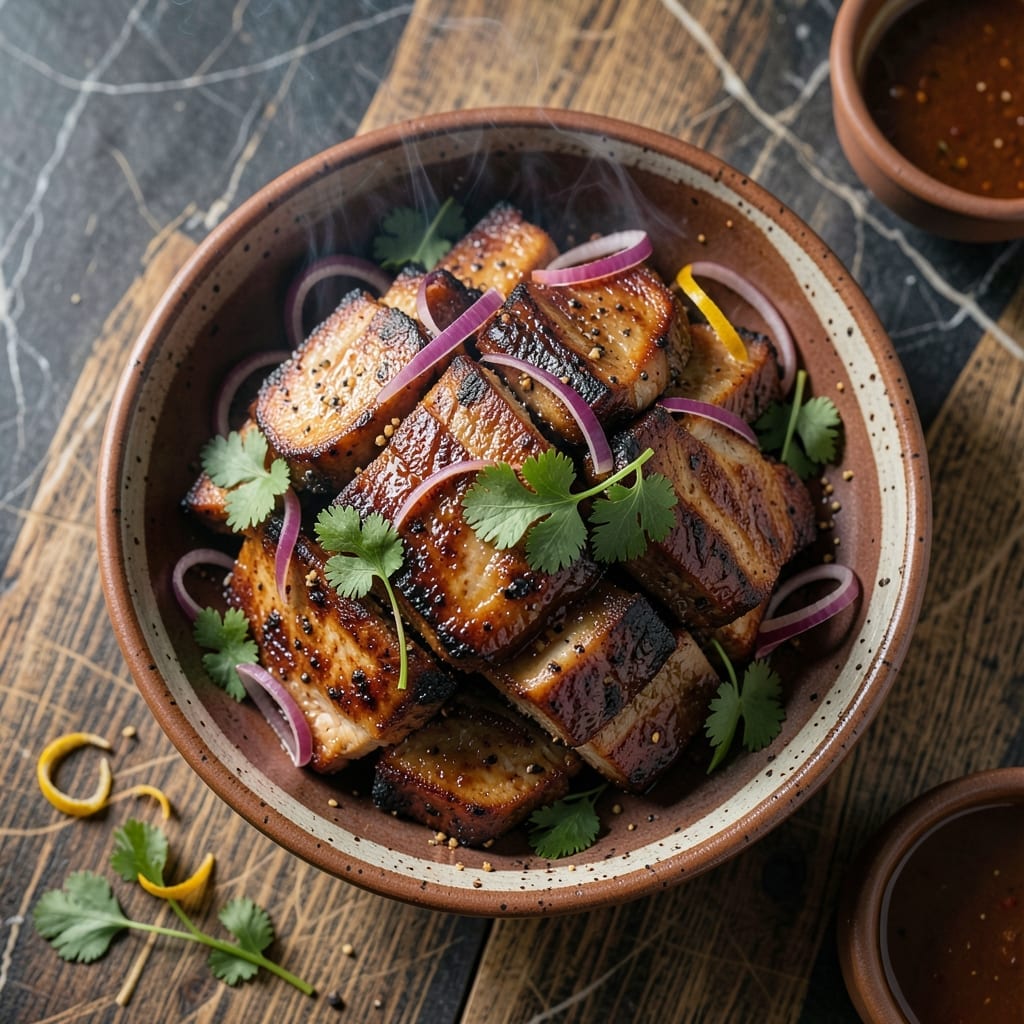
This open-flame method delivers a caramelized crust that locks in juices while creating smoky depth. The key is patience—low and slow over direct heat builds layers of flavor that can’t be rushed.
I developed this technique after years of competition cooking, blending classic French precision with traditional pitmaster instincts. The result is tender pork with a perfectly charred exterior that falls apart at the touch of a fork.
Ingredients for Grilled Pork Barbecue
A short list of bold ingredients transforms pork into something extraordinary over open flame.
| Ingredient | Amount | Notes |
|---|---|---|
| Pork Shoulder 🥩 | 4 lb | Bone-in for maximum flavor |
| Kosher Salt 🧂 | 2 tbsp | Diamond Crystal preferred |
| Coarse Black Pepper 🌶️ | 2 tbsp | Freshly cracked for best texture |
| Smoked Paprika 🌶️ | 1 tbsp | Sweet or hot variety |
| Garlic Powder 🧄 | 1 tbsp | Not garlic salt |
| Onion Powder 🧅 | 1 tbsp | Freshly ground preferred |
| Brown Sugar 🍚 | ½ cup | Light or dark works |
| Apple Cider Vinegar 🍏 | ¼ cup | Balances sweetness in rub |
| Olive Oil 🫒 | ¼ cup | For binding dry rub |
| Hickory Wood Chunks 🪵 | 4 pieces | For authentic smoke flavor |
| Barbecue Sauce 🍯 | 2 cups | Low-sugar preferred for balance |
| Yellow Mustard 🟡 | ¼ cup | Binder for dry rub adhesion |
[recipe_ingredient_scaler]
The pork shoulder is non-negotiable for this method. Bone-in pieces from Costco or Whole Foods deliver the best marbling and moisture retention. Look for 4-5 lb roasts with good fat cap—this renders down to create that caramelized crust. Avoid pre-cut pieces; you want the whole muscle for even cooking. Professional pitmasters swear by Diamond Crystal kosher salt for its clean flavor and texture.
No hickory chunks? Apple or cherry wood provides a milder, sweeter smoke. Out of brown sugar? Coconut sugar or turbino works in a pinch. The vinegar can be swapped for rice wine vinegar if that’s what’s in your pantry. For the barbecue sauce, Stubb’s Original or Sweet Baby Ray’s are reliable store-bought options. Don’t skip the mustard binder—it’s what makes the rub stick through long cooking times.
The dry rub can be made 2 days ahead and stored in an airtight container. Pork shoulder keeps well in the fridge for 3-4 days before cooking, or freeze for up to 6 months. Leftover pulled pork freezes beautifully for 3 months—portion it before storing for easy meals.
Why You’ll Love This Recipe
- One Pan Wonder: I just rub the pork shoulder with salt, pepper, smoked paprika, and garlic powder, then let the grill do the rest.
- Smoky Depth: The smoked paprika gives it that deep, campfire-like flavor without needing a smoker.
- Feeds a Crowd: Pork shoulder stretches far—great for summer cookouts or meal prepping lunches for the week.
- Leftovers Win: Honestly, the flavors taste even better the next day in sandwiches or tacos.
Step-by-Step Instructions for Grilled Pork Barbecue
Master the technique for achieving that perfect caramelized crust over open flame.
Step 1: Prepare the Dry Rub and Season the Pork Shoulder
In a bowl, combine the 2 tbsp Kosher Salt, 2 tbsp Coarse Black Pepper, 1 tbsp Smoked Paprika, 1 tbsp Garlic Powder, 1 tbsp Onion Powder, and 0.5 cup Brown Sugar. Stir until evenly mixed—the sugar should be fully integrated with the spices.
Pat the 4 lb Pork Shoulder dry with paper towels to ensure the rub adheres properly. Apply the 0.25 cup Yellow Mustard all over the pork as a binder, then coat the meat generously with the dry rub, pressing it into every crevice. The surface should be completely covered with no dry spots.
Step 2: Set Up the Grill for Indirect Heat with Smoke
Prepare a charcoal grill for indirect heat by banking the coals to one side of the grill, leaving the other side empty. Soak the 4 pieces Hickory Wood Chunks in water for 30 minutes before adding them directly to the hot coals. This ensures a steady, aromatic smoke without flare-ups.
Once the grill reaches 275-300°F, place the pork shoulder on the cool side of the grill, fat-side up. The temperature should stay consistent—adjust the vents as needed to maintain this range. The hickory smoke will infuse the meat with a deep, authentic flavor as it cooks.
Step 3: Slow-Cook and Baste with Vinegar Spritz
Cook the pork shoulder with the lid closed for 4-5 hours, or until the internal temperature reaches 165°F. Every 45-60 minutes, spritz the pork with a mix of the 0.25 cup Apple Cider Vinegar and 0.25 cup Olive Oil to keep the surface moist and enhance the bark formation.
Resist the urge to peek too often—each time you open the lid, you lose heat and smoke. The pork should develop a dark, crusty exterior by the time it reaches temperature. If the coals begin to die down, add more as needed to maintain the heat.
Step 4: Glaze with Barbecue Sauce and Finish
Once the pork reaches 165°F, move it directly over the coals for 5-10 minutes to sear the exterior. Brush the 2 cups Barbecue Sauce generously over all sides, allowing it to caramelize into a sticky, glossy glaze. Flip the pork occasionally to ensure even coating.
The sauce should bubble and thicken slightly as it cooks onto the meat. Continue this process until the internal temperature reaches 195-203°F and the pork is probe-tender. This final step locks in moisture while creating that signature barbecue crust.
Step 5: Rest and Serve
Remove the pork from the grill and tent it loosely with foil. Let it rest for 30-45 minutes to allow the juices to redistribute. This step is non-negotiable—slicing too soon will cause the juices to spill out, leaving the meat dry.
Once rested, shred or slice the pork shoulder against the grain. The interior should be tender and juicy, with a smoky, caramelized crust on the outside. Serve immediately with additional barbecue sauce on the side for those who want extra flavor.
Pro Tips For Making Grilled Pork Barbecue
- Dry the Pork: Pat the pork shoulder thoroughly dry with paper towels before seasoning—this guarantees the rub sticks and the skin crisps properly.
- Low and Slow: Keep your grill temperature between 225-250°F and resist the urge to rush it; pork shoulder needs 6-8 hours to become tender without drying out.
- Double the Rub: Sounds like overkill, but I learned this the hard way—use twice as much smoked paprika and garlic powder as you think you need for that deep, bark-like crust.
- Rest Under Foil: After grilling, tent the pork with foil and let it rest for at least 20 minutes—this keeps the juices inside instead of all over your cutting board.
Creative Variations of This grilled pork barbecue
Memphis Dry Rub
Skip the sauce entirely and go all-in on the dry rub. I add 1 tbsp cayenne and 1 tbsp coriander to the base mix, then dust the cooked pork with extra rub before serving. This Tennessee style lets the smoky meat shine. 🔥
Carolina Vinegar Style
Replace the barbecue sauce with a tangy mop of equal parts apple cider vinegar and water with 1 tbsp red pepper flakes. Baste the pork every 30 minutes during the final hour for that Eastern NC kick.
Kansas City Sweet
Double the brown sugar in your rub and use a sweeter sauce like KC Masterpiece. I also add 1 tsp molasses to the glaze for extra depth. The caramelization here is next-level.
Texas Twist
Incorporate 1 tbsp chili powder and 1 tsp cumin into your rub for a Lone Star touch. Use post oak instead of hickory for the smoke—it’s what the pros use in Central Texas.
Alabama White Sauce
Serve your pork with Alabama’s famous white sauce: mix 1 cup mayo, ¼ cup vinegar, 1 tbsp horseradish, and 1 tsp black pepper. It’s creamy, tangy, and completely unexpected. 💫
Asian Fusion
Swap the barbecue sauce for a glaze of ½ cup hoisin, 2 tbsp soy sauce, and 1 tbsp ginger. Add 1 tsp five-spice powder to your rub for an umami-packed twist.
Nutrition Facts
Frequently Asked Questions
What’s the ideal internal temperature for tenderness?
Cook until the pork reaches 195-203°F internally. This range ensures the collagen breaks down completely, making the meat probe-tender and juicy.
Can I use a gas grill instead of charcoal?
Yes! Use the indirect heat method by turning off one burner. Add wood chips in a smoke box for that authentic flavor. Maintain 275-300°F for best results.
How long should I let the pork rest?
Rest for 30-45 minutes after grilling. This allows juices to redistribute, preventing dry meat when sliced. Skipping this step risks losing all that flavor.
What if my bark isn’t forming?
Ensure you’re spritzing with vinegar every 45-60 minutes. Also, avoid opening the lid too often, as this disrupts the smoke and heat circulation needed for crust development.

Trained in classic French technique but raised on slow-cooked ribs and spicy rubs, she blends culinary skill with smoke and soul.
- Recipe for Boneless Pork Chops in Cast Iron Skillet: Sear and Baste to Juicy Perfection - October 3, 2026
- Recipe for Boneless Cross Rib Roast: Slow-Roasted Beef with Herb Crust - October 3, 2026
- Hamburgers in Sauce Recipe Crock Pot: Slow-Cooked Savory Delight - October 3, 2026