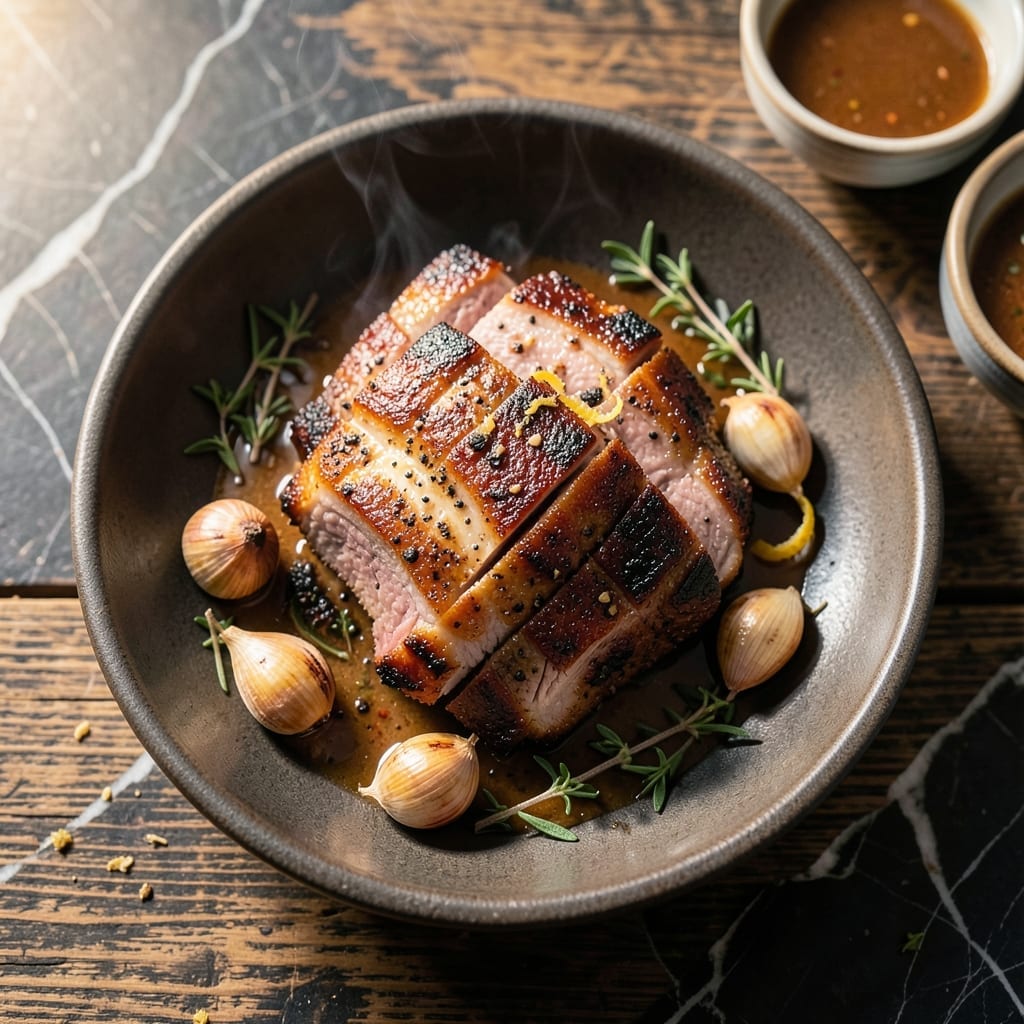
Grilled pork collar delivers smoky char and marbled richness that elevates any backyard cookout. This cut, often overlooked, offers incredible flavor and tenderness when handled correctly.
Getting my first whiff of hickory smoke at a family cookout taught me the value of patience with pork. The marbling in pork collar renders down beautifully over direct heat, creating juicy, flavorful results.
Unlike leaner cuts, this maintains moisture throughout grilling. A simple dry rub enhances without overpowering the meat’s natural taste.
Serve sliced against the grain for maximum tenderness. The smoky exterior and juicy interior make this a standout dish.
Ingredients for Grilled Pork Collar
A few pantry spices plus quality pork collar transform into backyard cookout magic.
| Ingredient | Amount | Notes |
|---|---|---|
| Pork Collar 🥩 | 2 lb | Bone-in, skin-on preferred |
| Kosher Salt 🧂 | 1 ½ tbsp | Diamond Crystal preferred |
| Black Pepper 🌶️ | 1 ½ tsp | Freshly ground coarse |
| Smoked Paprika 🌶️ | 1 tbsp | Sweet or hot variety |
| Garlic Powder 🧄 | 1 tbsp | Not garlic salt |
| Onion Powder 🧅 | 1 tbsp | Fresh ground preferred |
| Brown Sugar 🍚 | 2 tbsp | Light or dark both work |
| Olive Oil 🫒 | 2 tbsp | For rub application |
| Hickory Wood Chips 🪵 | 1 cup | Soaked in water 30 min |
| Yellow Mustard 🟡 | 2 tbsp | For binder in rub |
| Lemon Juice 🍋 | 1 tbsp | Freshly squeezed preferred |
| Cayenne Pepper 🔥 | ½ tsp | Adjust for heat preference |
[recipe_ingredient_scaler]
The pork collar is everything here. Ask your butcher for the full collar—it’s the neck/shoulder cut with the skin still on. Whole Foods or local meat markets usually have it, but you might need to order ahead. Look for good marbling and a thick fat cap (that’s flavor gold). Bone-in gives you more depth, but boneless works if that’s what’s available (just adjust cook time).
No smoked paprika? Regular paprika plus a pinch of liquid smoke gets you close. Swap brown sugar for honey or maple syrup if that’s what you’ve got. The mustard is just a binder—Dijon works too (just cut the amount by half). For the wood chips, apple or cherry give a sweeter smoke than hickory. Skip the wood entirely and use a gas grill with smoker box if needed.
Pork collar keeps in the fridge 3-4 days before cooking, or freeze for up to 6 months. The rub can be mixed ahead—store in an airtight container for 2 weeks. Leftovers? Slice thin and crisp in a pan for next-day tacos.
Why You’ll Love This Recipe
- Five-Minute Prep: I just rub the pork collar with salt, pepper, smoked paprika, and garlic powder—no marinade, no waiting.
- Smoky Depth: That smoked paprika gives it a rich, almost barbecue-like flavor without any sauce.
- Feeds a Crowd: One big cut serves six easily, and it’s always the first thing to disappear at gatherings.
- Leftovers Win: Honestly, the next-day sandwiches with the sliced pork collar might be even better than the original meal.
Step-by-Step Instructions for Grilled Pork Collar
Here’s my tested method for achieving that perfect smoky char on this rich, marbled cut.
Step 1: Prepare the Dry Rub and Pork Collar
In a small bowl, combine 1.5 tbsp Kosher Salt, 1.5 tsp Black Pepper, 1 tbsp Smoked Paprika, 1 tbsp Garlic Powder, 1 tbsp Onion Powder, 2 tbsp Brown Sugar, and 0.5 tsp Cayenne Pepper. This blend creates a balanced sweet-spicy crust that complements the pork’s natural richness.
Pat the 2 lb Pork Collar dry with paper towels. I like to score the fat cap in a crosshatch pattern—this helps render the fat and allows the rub to penetrate deeper. Brush the pork all over with 2 tbsp Yellow Mustard and 1 tbsp Lemon Juice; the mustard acts as a binder for the rub while adding subtle tang.
Step 2: Apply the Rub and Rest
Rub the spice mixture all over the pork collar, pressing firmly to ensure it adheres to every surface. Don’t be shy—you want a visible crust. Drizzle 2 tbsp Olive Oil over the pork and rub it in, which helps create a beautiful caramelized exterior during grilling.
Let the seasoned pork collar rest at room temperature for 30-45 minutes. This step is crucial—it allows the salt to begin penetrating the meat and the rub to form a paste-like consistency. Meanwhile, soak 1 cup Hickory Wood Chips in water for at least 30 minutes to prepare for smoking.
Step 3: Set Up the Grill for Indirect Heat
Prepare your grill for indirect heat. If using a charcoal grill, bank the coals to one side. For a gas grill, turn on half the burners to medium-high heat (about 375°F). Drain the soaked hickory wood chips and add them directly to the coals or place them in a smoker box over the lit burners.
Wait until you see thin blue smoke (not thick white smoke) before adding the pork. Place the pork collar on the cool side of the grill, fat cap up. Close the lid and maintain a consistent temperature between 275-300°F. This low-and-slow approach ensures the connective tissue breaks down without drying out the meat.
Step 4: Smoke and Grill to Perfection
Cook the pork collar for 2.5-3 hours, or until the internal temperature reaches 195-203°F. I check the temperature in the thickest part, avoiding the bone. During the last 30 minutes, move the pork directly over the heat to develop a deep, caramelized crust on the exterior.
You’ll know it’s ready when the meat is probe-tender—your thermometer should slide in like butter with no resistance. The bark should be dark mahogany and slightly crisp, while the interior remains juicy and tender. If the surface starts to darken too quickly, tent the pork loosely with foil.
Step 5: Rest and Slice
Transfer the pork collar to a cutting board and tent it loosely with foil. Let it rest for 15-20 minutes—this allows the juices to redistribute throughout the meat. Skipping this step will leave you with a dry cut, as all the moisture will spill out onto the cutting board.
Slice against the grain into ½-inch thick pieces. The grain in pork collar runs in one direction, so look for the lines in the meat and cut perpendicular to them. This shortens the muscle fibers, ensuring each bite is tender. Serve immediately while still warm, with the renderings from the resting juices spooned over the top.
Pro Tips For Making Grilled Pork Collar
- Score the Fat: Use a sharp knife to make shallow cuts in the fat cap—about ¼-inch apart—so the seasoning penetrates and the fat renders evenly without curling.
- Rest Before Grilling: Let the pork collar sit salted at room temp for 30 minutes before grilling; I learned this the hard way when my first few cuts came out tough from the temperature shock.
- Avoid Over-Flipping: Resist the urge to flip more than once per side—pork collar needs 4-5 minutes undisturbed to develop that smoky crust from the paprika and garlic.
- Start Hot, Finish Low: Sear over direct high heat for 2 minutes per side, then move to indirect medium-low to finish cooking through without drying out the meat.
Perfect Pairings for grilled pork collar
Wine Pairings
A bold Zinfandel from California stands up to the smoky richness with its jammy fruit and peppery finish. I love how the wine’s acidity cuts through the pork’s fat cap. Look for bottles from Dry Creek Valley for that perfect balance. 🍷
Beer Options
An amber ale with caramel notes complements the brown sugar in the rub. Try Fat Tire Amber Ale or a local craft option. The malt sweetness mirrors the crust while the hops cleanse your palate between bites.
Side Dishes
My go-to is tangy vinegar-based coleslaw using 1/4 cup apple cider vinegar and 1 tbsp mustard seeds. The acidity balances the meat’s richness beautifully. Serve it chilled after letting it sit for 1 hour. 🥗
Fresh Accompaniments
Grilled peaches with a touch of honey glaze add a sweet contrast. Halve 2 ripe peaches, brush with 1 tbsp olive oil, and grill cut-side down for 3-4 minutes. The caramelization echoes the pork’s crust.
Bread Choices
Warm cornbread made with 1 cup stone-ground cornmeal soaks up the juices perfectly. I bake mine in a cast iron skillet for that crispy edge. Alternatively, try garlic naan from your local Indian market.
Sauce Pairing
A simple white BBQ sauce with 1 cup mayonnaise, 1/4 cup apple cider vinegar, and 1 tbsp horseradish adds Alabama-style tang. Drizzle lightly over slices or serve on the side for dipping.
Nutrition Facts
Frequently Asked Questions
What’s the best wood for smoking pork collar?
Hickory is my top choice for its strong, classic smoke flavor that pairs perfectly with pork. Apple or cherry wood offer a sweeter, milder alternative if you prefer a lighter touch.
Can I cook this in the oven instead?
Yes! Use 275-300°F and cook on a rack in a roasting pan for 2.5-3 hours. Add a small pan of water in the oven for moisture. The texture will differ slightly but remain flavorful.
How do I know when it’s done?
Use a meat thermometer—it’s ready at 195-203°F internally. The probe should slide in like butter. The bark will be dark mahogany and the meat will pull apart easily.
Can I skip the resting time?
I don’t recommend it. Resting for 15-20 minutes lets juices redistribute, preventing a dry result. Skipping this step means those delicious juices will end up on your cutting board instead of in the meat.

Trained in classic French technique but raised on slow-cooked ribs and spicy rubs, she blends culinary skill with smoke and soul.
- Recipe for Boneless Pork Chops in Cast Iron Skillet: Sear and Baste to Juicy Perfection - October 3, 2026
- Recipe for Boneless Cross Rib Roast: Slow-Roasted Beef with Herb Crust - October 3, 2026
- Hamburgers in Sauce Recipe Crock Pot: Slow-Cooked Savory Delight - October 3, 2026