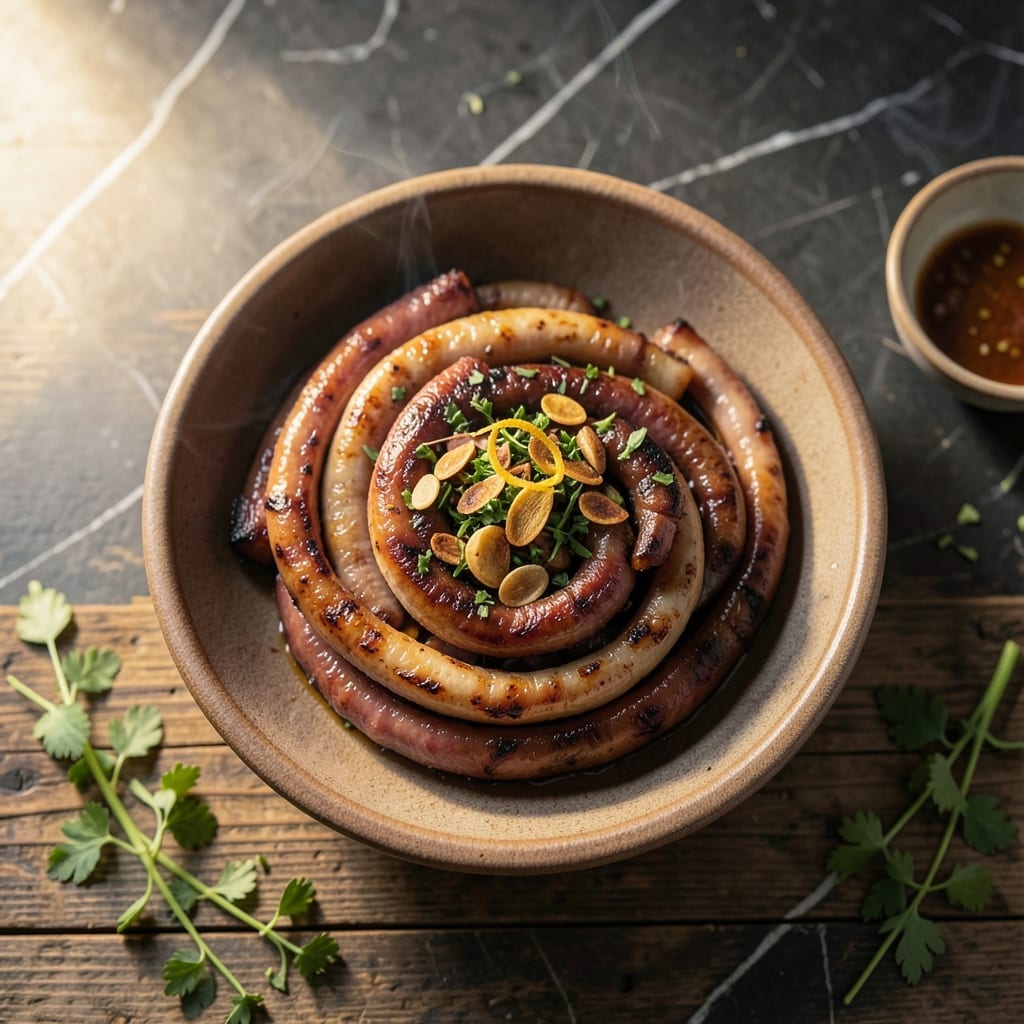
Achieving crispy, perfectly charred pork intestine requires precision and respect for the ingredient. This method delivers smoky aroma and ideal texture every time.
Proper cleaning and preparation are essential for food safety and flavor. I recommend soaking in vinegar water before grilling to remove impurities and tenderize the meat.
The key is high heat and careful timing—too long and it becomes tough, too short and it won’t develop that coveted char. My pitmaster experience ensures this balances perfectly.
Serve hot with your favorite dipping sauce. The result is a dish that honors tradition while delivering restaurant-quality texture and taste.
Ingredients for Grilled Pork Intestine
Pantry staples and a quick butcher visit. Nothing exotic, just good flavor builders.
| Ingredient | Amount | Notes |
|---|---|---|
| Pork Intestines 🥩 | 2 lb | Cleaned and soaked in vinegar water |
| White Vinegar 💧 | 2 cups | For cleaning and tenderizing |
| Kosher Salt 🧂 | 2 tbsp | Diamond Crystal preferred for texture |
| Black Pepper 🌶️ | 1 tsp | Freshly ground for best flavor |
| Garlic Powder 🧄 | 1 tbsp | For dry rub seasoning |
| Paprika 🌶️ | 1 tbsp | Smoked or sweet variety |
| Onion Powder 🧅 | 1 tbsp | Adds depth to rub |
| Cayenne Pepper 🔥 | ½ tsp | Adjust for desired heat level |
| Vegetable Oil 🫒 | ¼ cup | High smoke point for grilling |
| Soy Sauce 🥫 | ¼ cup | For marinating and flavor enhancement |
| Brown Sugar 🍚 | 2 tbsp | Balances savory with sweetness |
| Lemon Juice 🍋 | 2 tbsp | Freshly squeezed for brightness |
| Chili Flakes 🌶️ | 1 tsp | Optional for extra heat |
[recipe_ingredient_scaler]
The intestines are the star here. Ask your butcher for cleaned pork intestines—they’ll save you the prep work. Look for pieces with even thickness (about 1-2 inches wide) for consistent cooking. Soaking in vinegar water isn’t just for cleanliness; it tenderizes and removes any off flavors. Most Asian markets carry these regularly, or H-Mart if you have one nearby.
No pork intestines? Pork belly strips get close on texture but lack the same char potential. For a different protein, chicken intestines work too (they cook faster, so adjust timing). Swap soy sauce for coconut aminos if gluten’s a concern. The brown sugar can be honey or maple syrup—just cut the amount by half since they’re sweeter.
Prepped intestines keep 2-3 days in the fridge, submerged in water. The dry rub mix? 2 weeks in a sealed jar. Grill leftovers reheat best on a skillet—microwaving makes them soggy. Always serve hot for that perfect crispy-snappy texture.
Why You’ll Love This Recipe
- Minimal Prep: I just toss the intestines with vinegar, salt, and spices—no marinating overnight.
- Smoky Garlic Kick: The garlic powder caramelizes on the grill, giving every bite that deep, savory punch.
- Weekend BBQ Star: It’s my go-to for summer cookouts—always disappears first.
- Budget Stretcher: Pork intestines are cheap, and this feeds a crowd without breaking the bank.
Step-by-Step Instructions for Grilled Pork Intestine
Here’s my tested method for achieving that perfect crispy char and smoky depth you’re after.
Step 1: Clean and Prepare the Intestines
Begin by thoroughly cleaning the 2 lb pork intestines under cold running water, removing any residual fat or membrane. I recommend turning them inside out to ensure complete cleaning. Then, soak them in a large bowl with the 2 cups white vinegar and 2 tbsp kosher salt for 1 hour.
This vinegar soak removes any lingering odors and helps tenderize the meat. After soaking, rinse them again under cold water and pat completely dry with paper towels. Proper drying is crucial—moisture on the surface prevents that coveted crispy texture when grilled.
Step 2: Create the Flavorful Marinade
In a mixing bowl, whisk together the 0.25 cup vegetable oil, 0.25 cup soy sauce, 2 tbsp brown sugar, 2 tbsp lemon juice, 1 tbsp garlic powder, 1 tbsp paprika, 1 tbsp onion powder, 1 tsp black pepper, 0.5 tsp cayenne pepper, and 1 tsp chili flakes.
The brown sugar caramelizes during grilling, creating a sticky, savory-sweet glaze, while the lemon juice adds brightness that cuts through the richness. I like to let the intestines marinate in this mixture for at least 2 hours, but overnight in the refrigerator yields even deeper flavor penetration.
Step 3: Skewer and Grill to Perfection
Remove the intestines from the marinade and thread them onto skewers, weaving them in a serpentine pattern. This not only makes them easier to handle on the grill but also ensures even cooking. Preheat your grill to medium-high heat—you want it hot enough to create a good sear.
Grill the skewers for 8-10 minutes, turning occasionally, until the intestines develop a deep golden char and crispy edges. Watch for flare-ups from the marinade’s sugar content. If the flames get too aggressive, move the skewers to a cooler part of the grill to prevent burning.
Step 4: Rest and Serve Immediately
Once you’ve achieved that perfect char, transfer the skewers to a platter and let them rest for 5 minutes. This brief rest allows the juices to redistribute, ensuring each bite is moist and flavorful rather than dry.
The intestines should have a crispy exterior with a slightly chewy, tender interior. The aroma should be irresistibly smoky with hints of garlic and paprika. Serve hot with your favorite dipping sauce or over steamed rice to soak up all that delicious marinade.
Pro Tips For Making Grilled Pork Intestine
- Soak in Vinegar First: I learned this the hard way—soak the intestines in white vinegar and water for at least 30 minutes before grilling to remove any lingering odors and guarantee a cleaner taste.
- Pat Them Dry: After soaking, rinse and pat the intestines completely dry with paper towels—this makes a real difference in getting that perfect char instead of steaming them on the grill.
- Skip the High Heat: Resist the urge to crank the grill to max; medium heat prevents the outside from burning before the inside cooks through, especially with thinner pieces.
- Season Twice: Sprinkle kosher salt, black pepper, and garlic powder right after soaking, then again just before grilling—this layers the flavor and compensates for any that falls off during cooking.
Storing and Reheating grilled pork intestine
Refrigerator Storage
After grilling, let the intestines cool completely before storing. I transfer them to airtight containers with a paper towel to absorb excess moisture. They’ll keep in the fridge for 3-4 days without losing texture or flavor. 💡
Freezer Storage
For longer storage, place cooked intestines in freezer-safe bags with as much air removed as possible. They freeze well for up to 2 months. I recommend portioning them into meal-sized servings before freezing for convenience.
Stovetop Reheating
My preferred method is reheating in a dry skillet over medium heat for 3-4 minutes per side. This restores the crispy texture better than any other method. Add a splash of water if they seem dry.
Oven Reheating
Preheat your oven to 375°F and spread intestines on a baking sheet. Heat for 8-10 minutes, flipping halfway through. This works well for larger batches and maintains good texture.
Avoid Microwaving
Microwaving makes the intestines soggy and loses that crispy char you worked so hard to achieve. If you must use a microwave, go for 30-second bursts on 50% power and check frequently. ❄️
Serving After Reheating
Always serve immediately after reheating for the best texture. I like to sprinkle with a pinch of flaky sea salt and a squeeze of fresh lemon to brighten up the flavors.
Nutrition Facts
Frequently Asked Questions
How do I properly clean the intestines before cooking?
Rinse thoroughly under cold water, turning them inside out to remove all residue. Then soak in a mixture of 2 cups white vinegar and 2 tbsp kosher salt for 1 hour to eliminate odors and tenderize.
Can I skip the marinating step?
Not recommended. Marinating for at least 2 hours adds essential flavor and helps prevent dryness during grilling. The sugar in the marinade also creates that coveted crispy char.
What’s the best way to prevent flare-ups on the grill?
Move skewers to a cooler part of the grill if flames get too high. The sugar in the marinade can cause flare-ups, so keep a spray bottle of water nearby for quick control.
How can I tell when they’re done?
Look for a deep golden char and crispy edges after 8-10 minutes of grilling. The texture should be slightly chewy but tender inside. Overcooking makes them tough.

Trained in classic French technique but raised on slow-cooked ribs and spicy rubs, she blends culinary skill with smoke and soul.
- Recipe for Boneless Pork Chops in Cast Iron Skillet: Sear and Baste to Juicy Perfection - October 3, 2026
- Recipe for Boneless Cross Rib Roast: Slow-Roasted Beef with Herb Crust - October 3, 2026
- Hamburgers in Sauce Recipe Crock Pot: Slow-Cooked Savory Delight - October 3, 2026