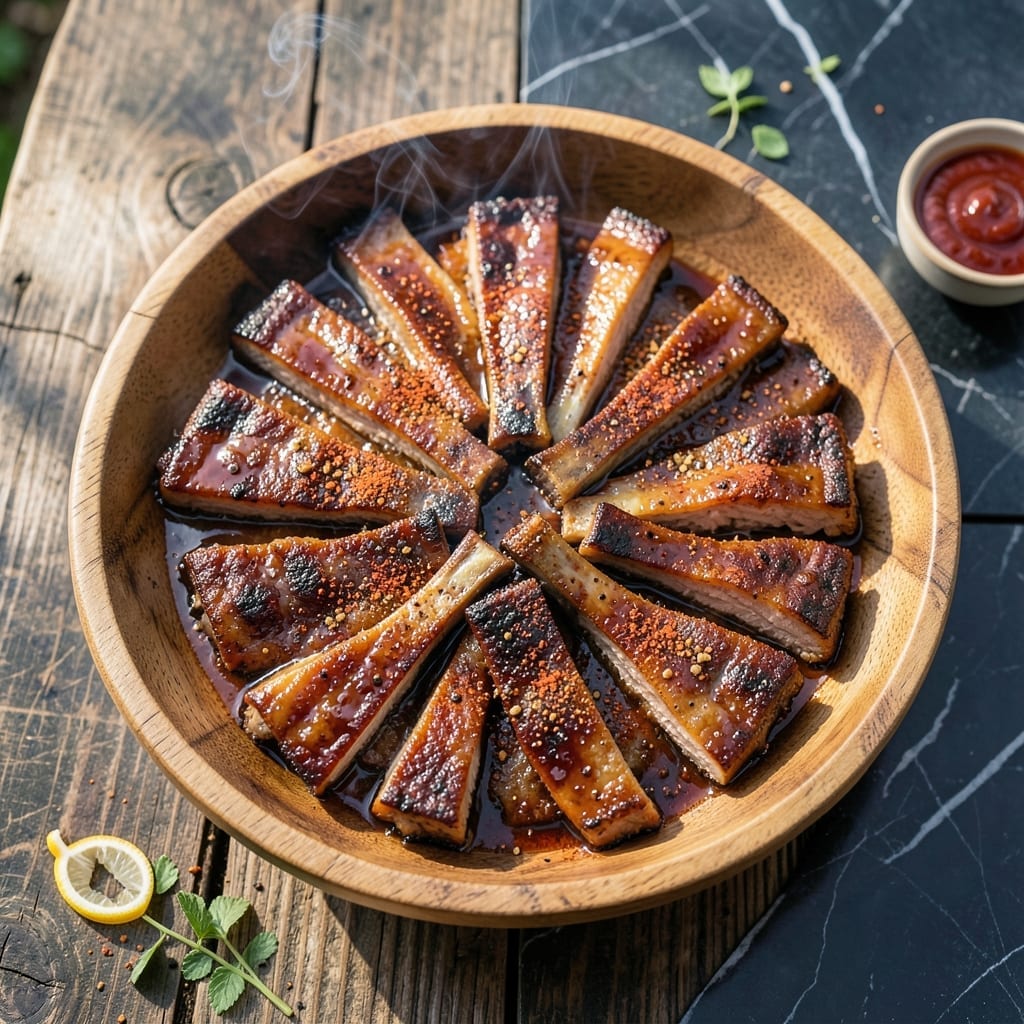
Getting my first whiff of hickory smoke at a family cookout taught me that great ribs begin with patience and fire. This method delivers fall-off-the-bone tenderness with a smoky char that defines perfect grilled spareribs.
I blend classic pitmaster techniques with a simple dry rub that enhances the pork’s natural flavor. The ribs cook low and slow over indirect heat, allowing the collagen to break down while the exterior develops a deep mahogany crust.
The secret is in the timing—wrapping the ribs midway through cooking locks in moisture. What emerges is meat so tender it pulls clean from the bone with just a gentle tug.
Serve these with a tangy vinegar-based mop sauce for the complete experience. The results speak for themselves.
Ingredients for Grilled Pork Spareribs
Pantry staples meet classic barbecue flavors for these tender ribs.
| Ingredient | Amount | Notes |
|---|---|---|
| Pork Spareribs 🥩 | 4 lb | Full rack, membrane removed |
| Brown Sugar 🍚 | ½ cup | Light or dark variety |
| Paprika 🌶️ | 2 tbsp | Sweet or smoked preferred |
| Garlic Powder 🧄 | 2 tsp | Not garlic salt |
| Onion Powder 🧅 | 2 tsp | Freshly ground preferred |
| Black Pepper 🌶️ | 2 tsp | Freshly ground preferred |
| Kosher Salt 🧂 | 2 tbsp | Diamond Crystal preferred |
| Chili Powder 🌶️ | 1 tbsp | Adjust for heat preference |
| Ground Cumin 🌿 | 1 tbsp | Toasted for deeper flavor |
| Apple Cider Vinegar 🍏 | ½ cup | For mop sauce base |
| Hickory Wood Chips 🌳 | 2 cups | Soaked in water 1 hour |
| Olive Oil 🫒 | 2 tbsp | For rubbing on ribs |
[recipe_ingredient_scaler]
The ribs are everything—look for meaty racks with good marbling at your butcher or Costco. Ask them to remove the membrane if you’re not comfortable doing it yourself (takes 30 seconds with a paper towel). The wood chips? Hickory is classic, but apple or cherry work too. Soak them for at least an hour so they smoke, not burn.
No brown sugar? Honey or maple syrup at the same amount gets you close (though the texture will differ slightly). Out of paprika? Double the chili powder for color and heat. The vinegar in the mop sauce can be swapped for white vinegar if needed, but cider vinegar adds a touch of sweetness that balances the smoke.
Ribs taste even better the next day—reheat wrapped in foil at 300°F for 20 minutes. The dry rub keeps in a jar for 6 months. Soaked wood chips can sit in water for 8 hours before using (any longer and they get waterlogged).
Why You’ll Love This Recipe
- Minimal Effort: I just mix the brown sugar, paprika, and spices, rub it on the ribs, and let the grill do the rest.
- Sweet & Smoky: That brown sugar caramelizes while the paprika and garlic powder give it a deep, smoky kick I can’t resist.
- Crowd Pleaser: I’ve served these at backyard BBQs and random weeknight dinners—always disappears first.
- Budget Winner: Pork spareribs are cheap, and this recipe stretches to feed a group without breaking the bank.
Step-by-Step Instructions for Grilled Pork Spareribs
Here’s my method for achieving that perfect balance of smoky char and tender meat.
Step 1: Prepare the Rib Rub
In a small bowl, combine the 2 tbsp paprika, 2 tbsp kosher salt, 0.5 cup brown sugar, 2 tsp garlic powder, 2 tsp onion powder, 2 tsp black pepper, 1 tbsp chili powder, and 1 tbsp ground cumin. I like to mix this with my fingers to break up any lumps in the brown sugar.
This blend creates a sweet and smoky crust that forms a beautiful bark during grilling. The sugar will caramelize while the spices develop deep, complex flavors. Don’t be tempted to skip toasting the cumin first—it’s already included in the ground form here.
Step 2: Season and Rest the Ribs
Pat the 4 lb pork spareribs completely dry with paper towels. This is crucial for the rub to adhere properly. Apply the spice mixture generously to all sides, pressing it into the meat so it sticks. I use about three-quarters of the rub on the meaty side and the rest on the bone side.
Drizzle the 2 tbsp olive oil over the ribs and rub it in to help the seasoning form a paste. Let the ribs sit at room temperature for 30 minutes while you prepare the grill—this allows the salt to begin penetrating the meat and the flavors to meld.
Step 3: Set Up the Grill for Indirect Heat
Soak the 2 cups hickory wood chips in water for 1 hour, then drain. Prepare your grill for indirect cooking: for a charcoal grill, bank the coals to one side; for a gas grill, turn off the burners on one side. Add the wood chips directly to the coals or in a smoker box for gas grills.
Preheat the grill to 275-300°F. You want a steady, moderate heat that allows the ribs to cook low and slow. The hickory will produce a steady stream of smoke that infuses the meat with that classic barbecue flavor we’re after.
Step 4: Smoke the Ribs to Tenderness
Place the ribs bone-side down on the cooler side of the grill, away from direct heat. Cover and cook for 2.5-3 hours. After the first hour, start checking the ribs every 30 minutes—you want the meat to pull back from the bones by about ¼ inch when they’re getting close.
During the last 30 minutes of cooking, mix the 0.5 cup apple cider vinegar with any remaining rub to create a mop sauce. Brush this onto the ribs every 10 minutes to build layers of flavor and keep the surface moist. The ribs are done when they bend easily and the internal temperature reaches 195-203°F.
Step 5: Rest and Serve
Remove the ribs from the grill and let them rest for 10-15 minutes before slicing. This resting period allows the juices to redistribute throughout the meat, ensuring every bite is moist and tender.
To serve, slice the ribs between the bones and arrange on a platter. The meat should be so tender that it nearly falls off the bone with just a gentle tug. The exterior should have a beautiful mahogany crust from the rub, while the inside stays juicy and smoky.
Pro Tips For Making Grilled Pork Spareribs
- Pre-Boil the Ribs: Parboil the spareribs for 15-20 minutes before grilling to render fat and ensure they cook through without burning—sounds like extra work, but it actually changes the outcome.
- Dry Rub Overnight: Mix the brown sugar, paprika, garlic powder, and onion powder into a dry rub and coat the ribs the night before; I learned this the hard way after my first attempt tasted bland.
- Skip High Heat: Resist the urge to crank the grill to maximum—medium-low heat (around 275°F) keeps the sugar in the rub from burning while the meat gets tender.
- Rest Before Serving: Give the ribs a solid 10 minutes under foil after grilling, even if you’re starving—my grandmother swore by this, and she was right.
Flavor Customization for This grilled pork spareribs
Sweet and Spicy
For a sweeter profile, increase the brown sugar to ¾ cup and add 1 tbsp honey to the dry rub. This creates a glossy, caramelized crust that balances the smoke. I sometimes sprinkle a bit of cinnamon for warmth.
Extra Smoky
Swap the hickory wood chips for mesquite for a more intense smoke flavor. Soak the chips for 2 hours to ensure a slow, steady burn. Mesquite pairs beautifully with the bold spices in the rub.
Herb-Infused
Add 1 tbsp dried rosemary or thyme to the dry rub for an earthy, aromatic twist. I often forage wild herbs from coastal spots to mix in. This variation adds a subtle freshness that complements the pork.
Spicy Kick
Boost the heat by adding 1 tsp cayenne pepper or ½ tsp chipotle powder to the rub. For extra fire, brush the ribs with a mix of hot sauce and apple cider vinegar during the last 30 minutes of cooking. 🌶️
Coffee Rub
Replace 1 tbsp of brown sugar with finely ground coffee in the rub. The coffee enhances the smoky notes and adds depth. I like using a dark roast for a robust flavor.
Asian-Inspired
Add 1 tbsp grated ginger and 1 tsp five-spice powder to the rub for an Asian twist. Finish the ribs with a glaze of soy sauce, honey, and rice vinegar for a sticky, tangy coating. 💛
Nutrition Facts
Frequently Asked Questions
Should I remove the membrane before grilling?
The tough membrane prevents seasoning from penetrating and can make ribs chewy. Use a butter knife to lift it, then pull it off with a paper towel for better grip.
Can I use baby back ribs instead?
Yes, but reduce cooking time by 30-45 minutes since they’re smaller. Baby backs cook faster due to their size, so start checking for doneness at 2 hours.
How do I know when they’re done?
The ribs should bend easily when lifted with tongs, and the meat should pull back from the bones by about ¼ inch. Internal temp should reach 195-203°F.
What if my grill runs too hot?
If temperature exceeds 300°F, move ribs to the coolest side or reduce heat. Too much direct heat can dry them out before the collagen breaks down.

Trained in classic French technique but raised on slow-cooked ribs and spicy rubs, she blends culinary skill with smoke and soul.
- Recipe for Boneless Pork Chops in Cast Iron Skillet: Sear and Baste to Juicy Perfection - October 3, 2026
- Recipe for Boneless Cross Rib Roast: Slow-Roasted Beef with Herb Crust - October 3, 2026
- Hamburgers in Sauce Recipe Crock Pot: Slow-Cooked Savory Delight - October 3, 2026