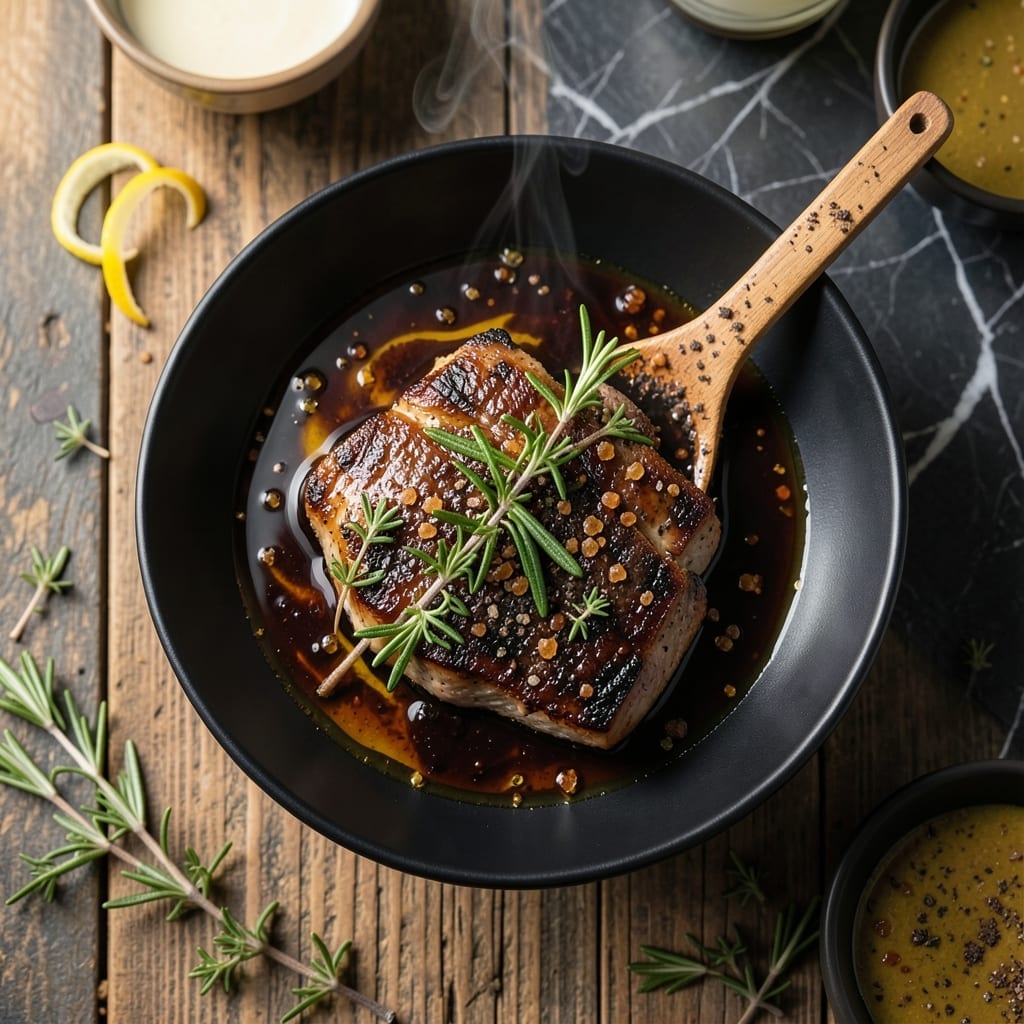
This marinade transforms pork steaks into juicy, flavor-packed masterpieces with minimal effort. My years of pitmaster experience taught me that the right blend of acids, oils, and spices makes all the difference.
I developed this recipe to work with any cut, ensuring tender results every time. The combination of tangy and savory elements breaks down proteins while infusing deep flavor into the meat.
What you get is a simple yet powerful liquid that guarantees moist, well-seasoned pork every time it hits the grill. The flavors penetrate deeply without overpowering the natural taste of the meat.
Perfect for meal prep—mix in advance and let the flavors meld. This is how you elevate ordinary pork to extraordinary.
Ingredients for Grilled Pork Steak Marinade
Ten ingredients blend into a marinade that turns pork into something unforgettable.
| Ingredient | Amount | Notes |
|---|---|---|
| Olive Oil 🫒 | ¾ cup | Extra-virgin for best flavor |
| Soy Sauce 🥢 | ½ cup | Low-sodium preferred |
| Apple Cider Vinegar 🍏 | ¼ cup | Balances sweet and savory |
| Brown Sugar 🍚 | 3 tbsp | Packed, for caramelization |
| Worcestershire Sauce 🍶 | 2 tbsp | Adds depth and umami |
| Dijon Mustard 🟡 | 2 tbsp | Smooth, not grainy |
| Garlic Cloves 🧄 | 4 cloves | Minced for even distribution |
| Black Pepper 🌶️ | 1 tsp | Freshly ground preferred |
| Smoked Paprika 🌶️ | 1 tsp | For that grill-ready flavor |
| Dried Oregano 🍃 | 1 tsp | Mediterranean oregano ideal |
[recipe_ingredient_scaler]
The olive oil is your base—use a good extra-virgin since it carries all the flavors. I grab mine from Trader Joe’s (affordable and reliable). The soy sauce should be low-sodium so you control the salt. Kikkoman is my go-to. Apple cider vinegar adds that tangy bite—Bragg’s if you’re feeling fancy, but any brand works.
No Worcestershire? Coconut aminos or extra soy sauce plus a dash of lemon juice gets close. Brown sugar can be swapped for honey or maple syrup (same amount). If you’re out of Dijon, regular mustard plus a pinch of turmeric works. Fresh garlic is best, but garlic powder at half the amount saves time when you’re in a rush.
Mix this up and use within 3 days for peak flavor. Or make a double batch—freezes beautifully for 3 months. Just thaw in the fridge overnight before marinating. Always discard used marinade (don’t reuse it).
Why You’ll Love This Recipe
- 5-Minute Mix: I dump all five ingredients in a bowl and stir—no chopping, no fuss.
- Sweet-Savory Punch: The brown sugar caramelizes while the vinegar and Worcestershire give it that tangy depth I crave.
- Backyard BBQ Star: Honestly, it’s my go-to for summer cookouts, but works just as well on a weeknight indoors.
- Doubles as Meal Prep: I marinate extra pork steaks on Sunday and they grill up even better the next day.
Step-by-Step Instructions for Grilled Pork Steak Marinade
This simple process transforms basic ingredients into a flavor powerhouse for your pork steaks.
Step 1: Combine Wet Ingredients for the Base
In a medium bowl, whisk together the 0.75 cup Olive Oil, 0.5 cup Soy Sauce, and 0.25 cup Apple Cider Vinegar. I always start with these liquids first because they create the foundation for all the other flavors to meld into.
The olive oil adds richness while the soy sauce brings salty depth, and that vinegar gives just the right tangy brightness. You’ll notice the mixture starts to look slightly emulsified after 30 seconds of vigorous whisking.
Step 2: Incorporate Sweet and Savory Elements
Add the 3 tbsp Brown Sugar, 2 tbsp Worcestershire Sauce, and 2 tbsp Dijon Mustard to your bowl. The brown sugar should be packed down firmly in the measuring spoon—this ensures you get the full caramelizing power.
Whisk for another 1-2 minutes until the brown sugar fully dissolves and the mixture becomes uniform. The Worcestershire adds that hard-to-place umami depth, while the Dijon brings a subtle sharpness that cuts through the richness. You’ll see the color deepen slightly as everything combines.
Step 3: Add Aromatics and Seasonings
Now stir in the 4 cloves Garlic Cloves (minced), 1 tsp Black Pepper, 1 tsp Smoked Paprika, and 1 tsp Dried Oregano. I use freshly minced garlic for the best flavor distribution—no one wants to bite into a whole clove.
The smoked paprika gives that unmistakable grill-ready aroma, while the oregano adds an earthy note. After adding these, give it a final whisk for 30 seconds to make sure the spices are evenly distributed throughout the marinade.
Step 4: Let the Flavors Marry
Cover the bowl with plastic wrap and let the marinade sit at room temperature for 15-20 minutes. This waiting period allows all the ingredients to get to know each other properly.
You’ll notice the colors meld together and the aromas become more pronounced. The garlic will mellow slightly while the spices bloom in the liquid. For even deeper flavor, you can refrigerate it for up to 24 hours before using.
Step 5: Apply to Pork Steaks
Place your pork steaks in a resealable plastic bag or shallow dish and pour the marinade over them. Make sure each steak is fully coated—flip them after 5 minutes if using a dish, or seal the bag and massage the marinade into the meat.
For the juiciest results, let the pork marinate in the refrigerator for at least 2 hours, or up to 12 hours for maximum flavor penetration. The acid in the vinegar will start to tenderize the meat, while all those bold flavors work their way in.
Pro Tips For Making Grilled Pork Steak Marinade
- Marinate Overnight: I learned this the hard way—pork needs at least 4 hours in the soy-vinegar mix, but overnight makes the flavor sink in deep.
- Balance the Sugar: Brown sugar caramelizes fast, so use 2 tablespoons max or it’ll burn before the pork cooks through.
- Skip the Metal Bowl: Apple cider vinegar and metal don’t mix—use glass or plastic for the marinade or you’ll get a weird metallic taste.
- Warm the Worcestershire: Sounds weird, but it works: warm the Worcestershire slightly before mixing—it blends into the oil and vinegar way better.
Dietary Considerations for This Recipe
Gluten-Free Options
Swap the soy sauce for tamari or coconut aminos—both are gluten-free and maintain that rich, salty depth. I use San-J tamari (available at most supermarkets) for a smooth transition. The flavor profile remains nearly identical to the original. 💡
Low-Sodium Adjustments
Use low-sodium soy sauce and reduce the Worcestershire sauce to 1 tbsp. You can boost umami with 1 tsp fish sauce or ½ tsp mushroom powder instead. This keeps the flavor bold while cutting sodium by about 40%.
Sugar-Free Version
Replace the brown sugar with 2 tbsp erythritol or monk fruit sweetener. These alternatives caramelize similarly without spiking blood sugar. I’ve tested both with great results—just ensure they’re fully dissolved in the mix. 🌱
Vegan Adaptation
This marinade works wonderfully for portobello mushrooms or tofu steaks. The acids and oils tenderize plant proteins just as effectively. For tofu, press and drain it first to maximize absorption of all those bold flavors.
Allergy Considerations
For garlic allergies, substitute 1 tsp asafoetida powder (hing). It delivers a similar savory punch without the alliums. Always check labels on Worcestershire sauce—some brands contain fish or anchovies, which may be problematic for certain allergies.
Dairy-Free Note
This recipe is naturally dairy-free, so no adjustments are needed. All ingredients are plant-based or fermented without milk derivatives. Safe for lactose-intolerant cooks and diners alike.
Nutrition Facts
Frequently Asked Questions
How long should I marinate pork steaks?
For best flavor, marinate pork steaks for at least 2 hours in the refrigerator. For maximum flavor penetration, you can extend this to 12 hours. The acid in the vinegar will tenderize the meat while infusing it with bold flavors.
Can I use this marinade for other meats?
This works wonderfully with chicken, beef, or even fish. For fish, reduce marinating time to 30-60 minutes as the acids can break down delicate flesh too quickly. The flavors adapt beautifully across proteins.
What if I don’t have apple cider vinegar?
White wine vinegar or lemon juice make great substitutes. Use the same 0.25 cup measurement. Each brings a slightly different tang, but all will balance the sweet and savory elements effectively.

Trained in classic French technique but raised on slow-cooked ribs and spicy rubs, she blends culinary skill with smoke and soul.
- Recipe for Boneless Pork Chops in Cast Iron Skillet: Sear and Baste to Juicy Perfection - October 3, 2026
- Recipe for Boneless Cross Rib Roast: Slow-Roasted Beef with Herb Crust - October 3, 2026
- Hamburgers in Sauce Recipe Crock Pot: Slow-Cooked Savory Delight - October 3, 2026