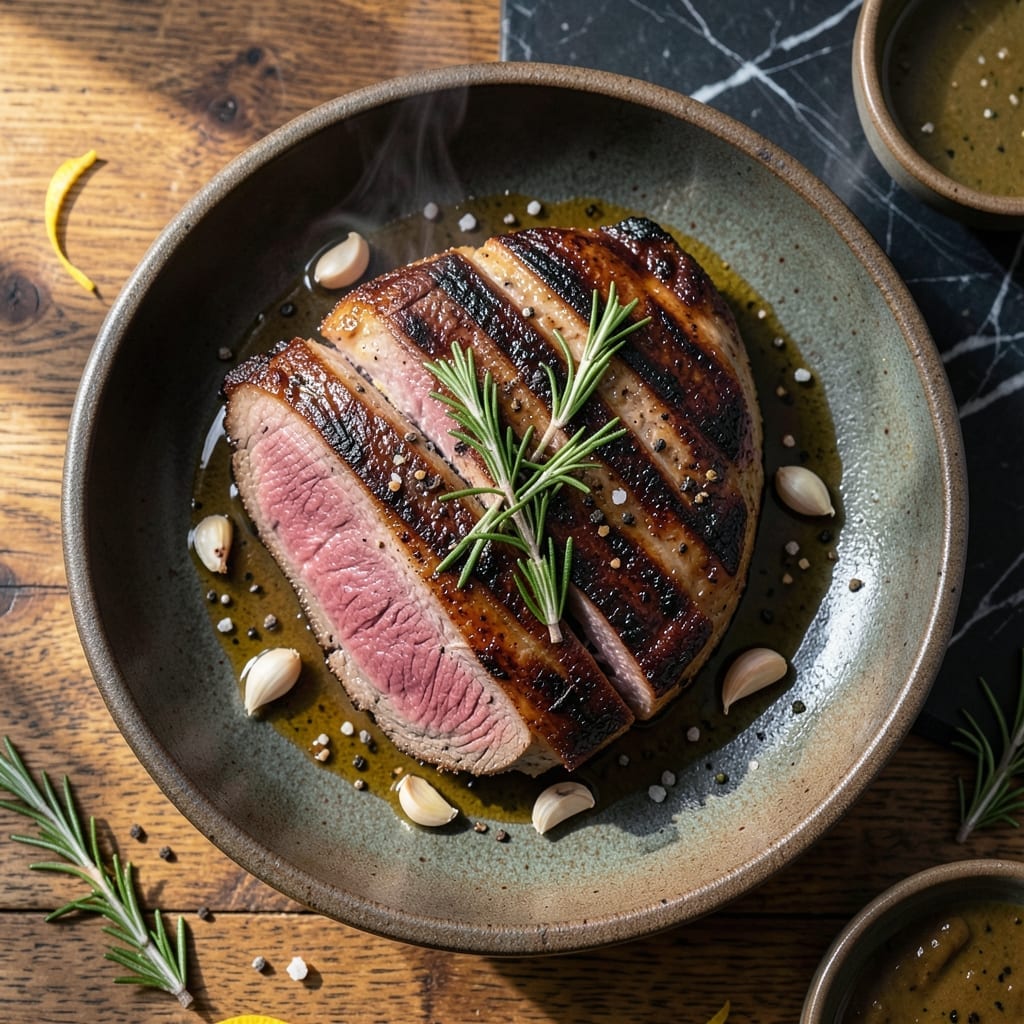
There’s nothing quite like the deep, smoky aroma of a rump roast cooking over open flames. This method transforms a simple cut into something extraordinary with a garlic-rosemary rub that forms a crusty bark.
I developed this technique after years of perfecting my open-fire cooking, blending French herb knowledge with classic pitmaster skills. The key is maintaining consistent heat and letting the rub work its magic.
The result is tender, juicy meat with a charred exterior that locks in all the savory flavors. Each bite delivers the perfect balance of smoky, herbal, and garlicky notes.
Serve with grilled vegetables or a fresh salad to complete the meal. Here’s how to achieve this open-fire masterpiece.
Ingredients for Grilled Rump Roast
A well-marbled rump roast and aromatic herbs create this open-fire masterpiece with a crusty bark.
| Ingredient | Amount | Notes |
|---|---|---|
| Rump Roast 🥩 | 3 lb | Well-marbled, trimmed of excess fat |
| Fresh Rosemary 🌿 | 3 tbsp | Finely chopped, stems discarded |
| Garlic Cloves 🧄 | 6 cloves | Minced to paste consistency |
| Kosher Salt 🧂 | 2 tbsp | Diamond Crystal preferred for even coating |
| Coarse Black Pepper 🌶️ | 1 tbsp | Freshly cracked for robust flavor |
| Olive Oil 🫒 | ¼ cup | Extra-virgin for aromatic depth |
| Dijon Mustard 🟡 | 2 tbsp | Acts as rub binder and flavor enhancer |
| Red Wine Vinegar 🍷 | 1 tbsp | Balances richness of the rub |
| Smoked Paprika 🌶️ | 1 tsp | Adds subtle smokiness to complement fire |
| Dried Thyme 🍃 | 1 tsp | French variety if available for authenticity |
| Hardwood Lump Charcoal 🔥 | 6 lb | For authentic open-fire flavor |
| Hickory Wood Chunks 🌳 | 2 pieces | Optional for additional smoke flavor |
[recipe_ingredient_scaler]
The beef quality is non-negotiable here. Rump roast from a trusted butcher like Whole Foods or Local Butcher Shop ensures proper marbling and tenderness. Look for pieces with a bright red color and visible fat streaks throughout. The rosemary and garlic should be as fresh as possible—wilted herbs won’t deliver the necessary aromatic punch for the rub’s crusty bark.
No fresh rosemary? Dried at one-third the amount works, but rehydrate it first by soaking in warm water. Garlic powder can substitute for fresh at a 1:1 ratio, though the paste-like consistency of fresh minced is ideal for adhesion. For the charcoal, avoid briquettes—they contain additives that can impart unwanted flavors to the meat during the long cook.
The rub can be made 1 day ahead and stored in the refrigerator, allowing flavors to meld. The roast itself is best cooked immediately after seasoning. Leftovers (if any) keep beautifully in the fridge for 4-5 days or can be frozen for up to 3 months.
Why You’ll Love This Recipe
- I’ll be real: the sliced cold leftovers make the best sandwiches, so I always double the portion.
- Set It and Forget: I season the roast with rosemary, garlic, salt, and pepper, then let the grill do the work—no babysitting required.
- Herb-Crusted Heaven: The combo of fresh rosemary and garlic forms this insane crust that makes every bite ridiculously flavorful.
- Sunday or Tuesday: Honestly, this works for a fancy dinner or a random weeknight—just as impressive either way.
Step-by-Step Instructions for Grilled Rump Roast
Master the open-fire technique for perfectly charred, herb-infused beef with this method.
Step 1: Create the Garlic-Rosemary Rub
In a bowl, combine the 3 tbsp fresh rosemary, 6 cloves garlic cloves, 2 tbsp kosher salt, 1 tbsp coarse black pepper, 0.25 cup olive oil, 2 tbsp Dijon mustard, 1 tbsp red wine vinegar, 1 tsp smoked paprika, and 1 tsp dried thyme.
Mix thoroughly until it forms a thick paste. The Dijon mustard acts as a binder while the red wine vinegar balances the richness. I always press the mixture against the bowl sides to ensure the olive oil fully incorporates with the dry ingredients.
Let the rub sit for 10 minutes to allow the flavors to meld. This resting time enhances the aromatic depth of the fresh rosemary and garlic, creating a more cohesive flavor profile for the rump roast.
Step 2: Apply the Rub and Prepare the Roast
Pat the 3 lb rump roast dry with paper towels to ensure maximum rub adhesion. Place it on a clean surface and apply the garlic-rosemary mixture evenly over all surfaces, pressing firmly to create a thick, uniform coating.
Massage the rub into the meat for 2-3 minutes to ensure it penetrates the surface. The olive oil in the mixture helps it cling to the beef while the kosher salt begins to break down the muscle fibers for better tenderness.
Let the seasoned roast rest at room temperature for 30-45 minutes while you prepare the grill. This allows the salt to begin working its magic and brings the meat to an optimal starting temperature for even cooking.
Step 3: Set Up the Grill for Two-Zone Cooking
Arrange the 6 lb hardwood lump charcoal in a two-zone configuration: bank the coals on one side of the grill for direct heat, leaving the other side empty for indirect cooking. Add the 2 pieces hickory wood chunks to the hot coals for smoke flavor.
Light the charcoal and let it burn until covered with white ash, about 15-20 minutes. The grill is ready when the temperature stabilizes at 325-350°F on the indirect side. Maintain this temperature by adjusting the air vents as needed.
Clean the grates thoroughly with a grill brush. The two-zone setup allows you to sear the roast over direct heat first, then move it to the indirect side to finish cooking through without burning the exterior.
Step 4: Grill the Rump Roast to Medium-Rare
Place the rump roast on the direct heat side of the grill. Sear for 4-5 minutes per side until a deep brown crust forms. You’ll hear a satisfying sizzle as the rub caramelizes—this is the Maillard reaction creating complex flavors.
Move the roast to the indirect heat side and cover the grill. Cook for 25-35 minutes, flipping every 10 minutes, until the internal temperature reaches 130-135°F for medium-rare. The hickory wood should be producing a steady stream of thin blue smoke.
If flare-ups occur, move the roast temporarily to the indirect side and close the lid to smother the flames. The internal temperature will continue to rise 5-10°F during resting, so remove it when it’s slightly below your target doneness.
Step 5: Rest and Slice Against the Grain
Transfer the grilled rump roast to a cutting board and tent loosely with foil. Let it rest for 15 minutes to allow the juices to redistribute throughout the meat. This rest period is crucial for maintaining moisture.
Locate the grain direction—the muscle fibers should be clearly visible running through the meat. Using a sharp slicing knife, cut against the grain into ½-inch thick slices. Slicing against the grain shortens the muscle fibers, making each bite more tender.
The finished roast should have a dark, flavorful crust with a beautiful pink center. Serve immediately while still warm, with any accumulated juices spooned over the top for maximum flavor impact.
Pro Tips For Making Grilled Rump Roast
- Reverse Sear First: Start with indirect heat at 275°F until the internal temp hits 110°F, then sear over direct flame for 2-3 minutes per side. I learned this the hard way after serving too many dry roasts that looked perfect but tasted like leather.
- Score the Fat Cap: Cut 1/4-inch deep crosshatches into the fat before seasoning—this lets the rosemary, garlic, and salt penetrate deeper and renders the fat more evenly.
- Skip the Cold Meat: Pull the rump roast out of the fridge 60-90 minutes before grilling. Sounds weird, but it works: cold meat seizes up on the grill and cooks unevenly, no matter how hot your fire is.
- Crush the Garlic: Smash the garlic cloves with the flat of your knife before chopping—they’ll release more oil and stick better to the meat, so every bite actually tastes like garlic.
Perfect Pairings for These Flavors
Grilled Vegetables
I love pairing this with asparagus and bell peppers tossed in olive oil, salt, and pepper. Grill them over direct heat for 3-4 minutes per side until charred. The smoky flavor complements the roast beautifully. 🌱
Wine Pairings
A bold Cabernet Sauvignon stands up to the rich, smoky flavors of the beef. For white wine lovers, a buttery Chardonnay balances the garlic-rosemary rub. Serve both slightly chilled for the best experience.
Creamy Sides
Garlic mashed potatoes with a touch of sour cream soak up the meat juices perfectly. Alternatively, try creamy polenta for a rustic touch. Both add a comforting contrast to the charred exterior.
Fresh Salads
A simple arugula salad with shaved Parmesan and lemon vinaigrette cuts through the richness. I toss 4 cups arugula with 2 tbsp olive oil and 1 tbsp lemon juice. 🥗
Bread Options
Warm crusty bread from my local bakery is perfect for soaking up any remaining juices. Brush slices with garlic butter and grill for 1-2 minutes for extra flavor.
Beer Pairings
A dark porter or stout enhances the charred, smoky notes. For something lighter, a crisp pilsner cleanses the palate between bites. I always keep both on hand for guests. 🍺
Nutrition Facts
Frequently Asked Questions
How long should I let the roast rest before slicing?
Always rest the grilled rump roast for 15 minutes before slicing. This allows juices to redistribute, ensuring each bite stays moist and flavorful. Skipping this step can lead to dry meat.
Can I use a gas grill instead of charcoal?
Yes, a gas grill works fine. Preheat to 325-350°F and use wood chips in a smoker box for that authentic flavor. Just maintain consistent heat throughout cooking.
What if my roast cooks unevenly?
Uneven cooking often means hot spots. Rotate the roast every 10 minutes and check the temperature in multiple spots. A meat thermometer is essential for accuracy.
Is medium-rare safe for rump roast?
Rump roast is safe at 130-135°F internal temperature for medium-rare. The USDA confirms this is well above the safe minimum of 125°F for whole beef cuts.

Trained in classic French technique but raised on slow-cooked ribs and spicy rubs, she blends culinary skill with smoke and soul.
- Recipe for Boneless Pork Chops in Cast Iron Skillet: Sear and Baste to Juicy Perfection - October 3, 2026
- Recipe for Boneless Cross Rib Roast: Slow-Roasted Beef with Herb Crust - October 3, 2026
- Hamburgers in Sauce Recipe Crock Pot: Slow-Cooked Savory Delight - October 3, 2026