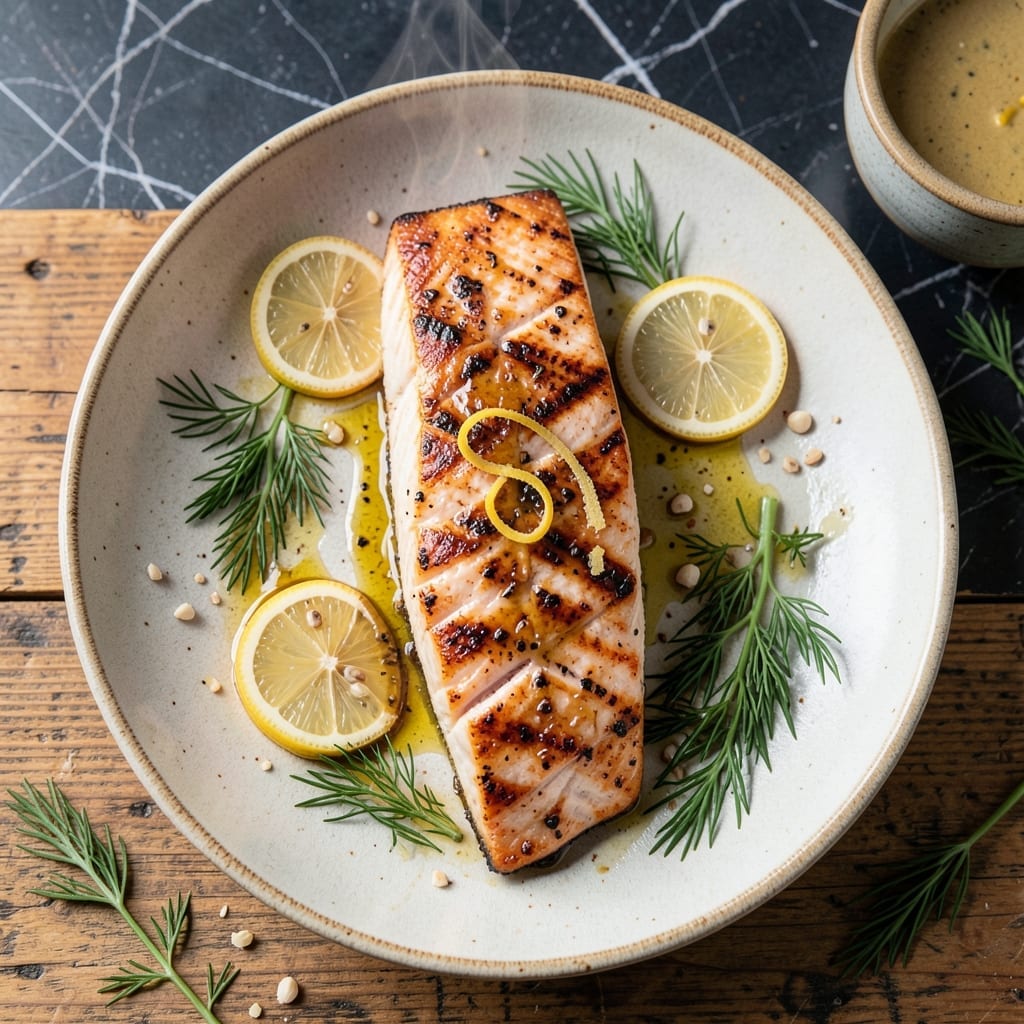
This grilled salmon achieves the flaky texture that makes every bite melt in your mouth. My French training taught me that simplicity often wins with quality ingredients.
The dill and lemon combination enhances the fish’s natural richness without overpowering it. I source fresh herbs from local farmers markets whenever possible.
High heat and precise timing create that perfect sear while keeping the inside tender. The citrus brightens the dish just enough to balance the salmon’s natural oils.
Serve it hot off the grill with an extra lemon wedge. This method works every time.
Ingredients for Grilled Salmon Dill Lemon
Fresh salmon, bright herbs, and zesty citrus make this dish sing with minimal effort.
| Ingredient | Amount | Notes |
|---|---|---|
| Salmon Fillets 🐟 | 1 ½ lb | Skin-on, boneless, center-cut |
| Fresh Dill 🌿 | ¼ cup | Chopped, stems removed |
| Lemon 🍋 | 2 whole | Zest and juice reserved |
| Olive Oil 🫒 | 3 tbsp | Extra-virgin for best flavor |
| Garlic Cloves 🧄 | 3 cloves | Minced or pressed |
| Dijon Mustard 🟡 | 1 tbsp | Smooth, not whole grain |
| Honey 🍯 | 1 tbsp | Or maple syrup for vegan |
| Salt 🧂 | 1 tsp | Kosher or sea salt |
| Black Pepper 🌶️ | ½ tsp | Freshly ground preferred |
| Butter 🧈 | 2 tbsp | Optional for basting |
| Red Onion 🧅 | ¼ whole | Thinly sliced for garnish |
| Capers 🫒 | 1 tbsp | Drained, for garnish |
[recipe_ingredient_scaler]
The salmon should be the freshest you can find—wild-caught from Whole Foods or a trusted fishmonger is ideal. Look for fillets with vibrant color and no fishy odor (that’s a red flag). I always ask for center-cut pieces—they cook more evenly. For the dill, farmers markets have the best bunches, but grocery store works too. Just avoid the sad, wilted stuff at the back of the produce section.
No fresh dill? Dried dill at one-third the amount works in a pinch, though the flavor’s not as bright. Out of lemon? Lime’s a decent swap, but the dish loses that classic pairing. Skip the honey? Maple syrup or agave keeps it pescatarian-friendly. The Dijon can be swapped for regular mustard, but you’ll miss that sharp tang. And if you’re avoiding butter, just use more olive oil for basting.
Leftovers keep 2-3 days in the fridge—gently reheat to avoid drying out. The marinade flavors deepen overnight, so don’t toss it if you’ve got extra. Freezing’s not ideal (salmon gets mealy), but cooked portions freeze for 1 month if wrapped tight. Always bring salmon to room temp before grilling for even cooking.
Why You’ll Love This Recipe
- 5-Minute Prep: I just toss the salmon with olive oil, garlic, dill and lemon slices—no fancy techniques, just straight to the grill.
- Bright & Zesty: That lemon-dill combo hits different with the smoky char from the grill. Honestly, it’s the kind of flavor that makes you pause mid-bite.
- Weeknight Hero: I’ve served this for casual dinners and summer parties, and it always disappears first.
- Stretches Further: Leftovers flake beautifully into salads or wraps the next day—I’ll be real, sometimes I make extra just for that.
Step-by-Step Instructions for Grilled Salmon With Dill and Lemon
Here’s the method I’ve perfected for tender, flaky salmon every time.
Step 1: Prepare the Marinade and Season the Salmon
In a small bowl, whisk together the 3 tbsp olive oil, 1 tbsp Dijon mustard, 1 tbsp honey, zest of 1 lemon, and minced 3 cloves garlic cloves until smooth. This creates a glossy, flavorful base that clings to the fish beautifully.
Pat the 1.5 lb salmon fillets dry with paper towels to ensure a good sear. Season both sides with the 1 tsp salt and 0.5 tsp black pepper, then brush generously with the marinade. Let it sit for 10-15 minutes while you preheat the grill—this allows the flavors to penetrate without over-marinating the delicate fish.
Step 2: Grill the Salmon to Flaky Perfection
Preheat your grill to medium-high heat (about 400°F). Clean the grates thoroughly and oil them lightly to prevent sticking. The salmon is ready to grill when it releases easily from your marinating dish.
Place the salmon fillets skin-side down on the grill. Cook undisturbed for 4-5 minutes until the skin is crisp and releases easily from the grates. Flip once and cook for another 3-4 minutes until the fish is opaque and flakes easily with a fork. Avoid over-flipping—this disturbs the cooking process and can cause the fish to break apart.
Step 3: Add the Finishing Touches
During the last minute of grilling, add the 2 tbsp butter to the fillets and let it melt over the top for extra richness. Transfer the salmon to a serving platter and squeeze the juice of 1 lemon over the top for that bright citrus zing promised in the title.
Sprinkle with the chopped 0.25 cup fresh dill, thinly sliced 0.25 whole red onion, and 1 tbsp capers for a pop of color and briny contrast. The dill adds a fresh herbal note that pairs perfectly with the lemon.
Step 4: Rest and Serve
Let the salmon rest for 5 minutes before serving. This allows the juices to redistribute, ensuring every bite is moist and flavorful. The fish should flake easily with a gentle nudge of your fork—this is how you know it’s perfectly cooked.
Serve immediately while warm, with any remaining lemon wedges on the side for those who want an extra citrus kick. The combination of crispy skin, tender interior, and vibrant toppings makes this dish truly special.
Pro Tips For Making Grilled Salmon Dill Lemon
- Skin Side Down First: Place salmon on the grill skin side down first and resist the urge to flip for at least 4-5 minutes—this guarantees crispy skin and prevents sticking, which I learned the hard way after ruining two fillets.
- Pat Dry Thoroughly: Blot the salmon fillets with a paper towel before seasoning; wet fish steams instead of searing, and you’ll end up with a pale, soggy exterior instead of that beautiful golden crust.
- Zest Before Juicing: Grate the lemon zest first, then juice it—once you’ve cut the lemon in half, it’s nearly impossible to zest, and fresh zest makes a real difference in the dill marinade.
- Preheat the Grill: Crank the grill to medium-high and let it heat for at least 10 minutes before cooking; a screaming-hot grate is non-negotiable for getting those perfect char marks and locking in moisture.
Pro Cooking Tips for This Recipe
Heat Control
Preheat your grill to 400°F for the perfect sear without drying out the fish. I use a Weber Genesis with a built-in thermometer, but an inexpensive grill thermometer works too. Maintain consistent heat by keeping the lid closed as much as possible. 🌡️
Skin-Side First
Always start with the skin-side down on the grates. This creates that crispy texture we all love and prevents sticking. Don’t move the fillets for at least 4 minutes—this gives the skin time to crisp and release naturally from the grill.
Marinade Timing
Limit marinating to 10-15 minutes max. Salmon’s delicate flesh can turn mushy if left too long in acidic mixtures. The lemon and Dijon in our marinade work quickly to flavor the surface without penetrating too deeply.
Basting Technique
During the last minute, add 2 tbsp butter to each fillet and let it melt. I like to tilt the fillets slightly to create little butter pools that I spoon over the top repeatedly. This adds richness and helps keep the fish moist.
Resting Period
Let the salmon rest for exactly 5 minutes after grilling. This is non-negotiable for juicy results. I set a timer—it’s easy to get distracted when the fish smells this good. The juices redistribute beautifully during this time. 💡
Grill Maintenance
Clean your grates thoroughly before and after cooking. Salmon skin can stick to dirty grates, ruining both the presentation and the flavor. I use a Grillaholics brush with brass bristles for safe, effective cleaning.
Nutrition Facts
Frequently Asked Questions
Can I use dried dill instead of fresh?
Yes, substitute 1 tbsp dried dill for every 0.25 cup fresh. The flavor will be more concentrated, so reduce slightly if you’re sensitive to strong herbal notes.
What’s the best way to prevent sticking?
Start with a clean, well-oiled grill at 400°F. Place fillets skin-side down and don’t move them for 4 minutes. This creates a crisp barrier that releases naturally.
How do I know when it’s done?
The salmon is ready when it reaches 145°F internally and flakes easily with a fork. Look for opaque flesh that separates cleanly. Overcooking dries it out.
Can I make this without a grill?
Use a grill pan on medium-high heat or bake at 400°F for 12-15 minutes. The texture won’t be identical, but the flavors will still shine.

Trained in classic French technique but raised on slow-cooked ribs and spicy rubs, she blends culinary skill with smoke and soul.
- Recipe for Boneless Pork Chops in Cast Iron Skillet: Sear and Baste to Juicy Perfection - October 3, 2026
- Recipe for Boneless Cross Rib Roast: Slow-Roasted Beef with Herb Crust - October 3, 2026
- Hamburgers in Sauce Recipe Crock Pot: Slow-Cooked Savory Delight - October 3, 2026