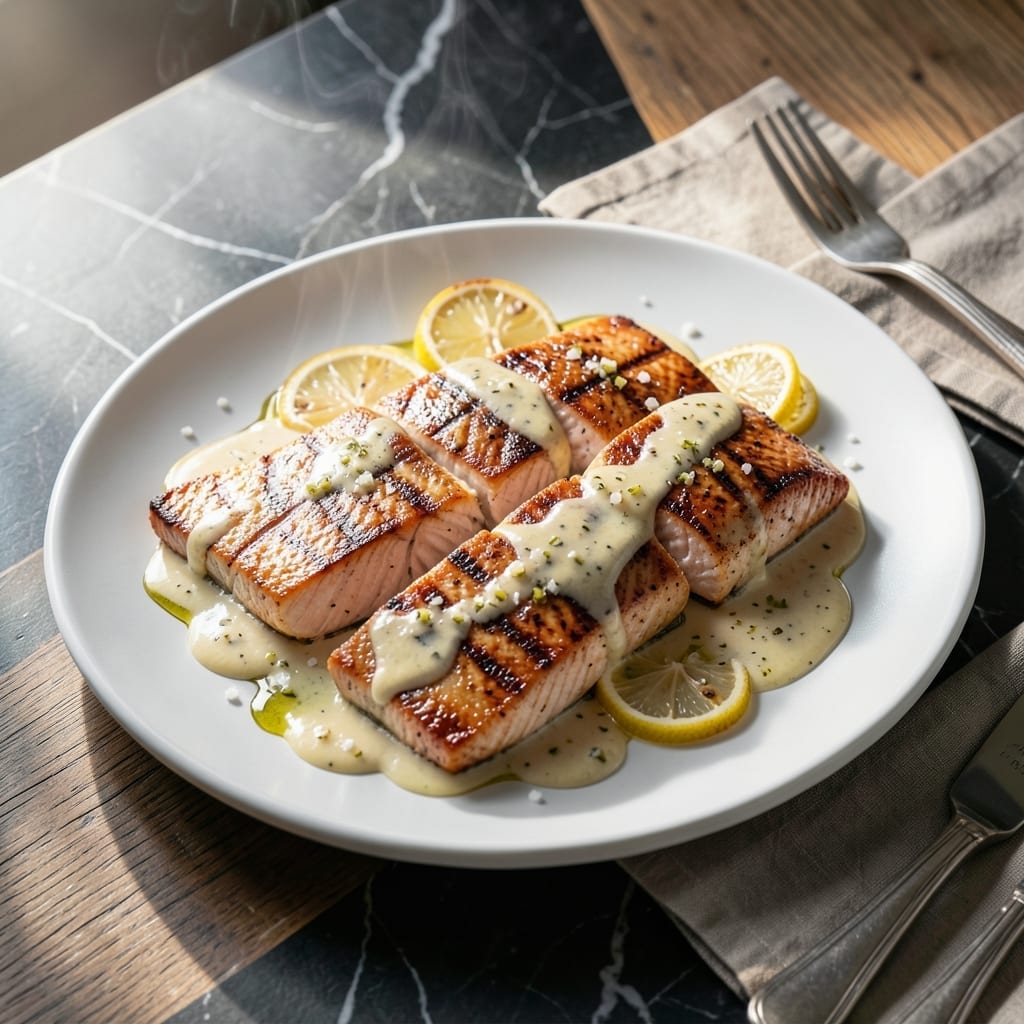
There’s a simple elegance to perfectly grilled salmon that never fails to impress at the dinner table. This method delivers tender, flaky fish with a subtle smokiness that pairs beautifully with bright citrus flavors.
The lemon butter sauce is the star here, created by whisking together melted butter, fresh lemon juice, and a touch of garlic. It transforms the dish from great to extraordinary with minimal effort.
I developed this technique while working at a coastal seafood restaurant, where we served hundreds of salmon dinners weekly. The key is high heat and precise timing to achieve that ideal balance of crispy skin and moist interior.
Serve with seasonal vegetables or over a bed of greens for a complete meal that feels special enough for company but simple enough for any weeknight.
Ingredients for Grilled Salmon Recipe Lemon Butter
Fresh salmon, bright citrus, and creamy butter create this elegant dish with minimal effort.
| Ingredient | Amount | Notes |
|---|---|---|
| Salmon Fillets 🐟 | 4 whole | Skin-on, about 6 oz each |
| Unsalted Butter 🧈 | ½ cup | Melted for sauce |
| Fresh Lemon Juice 🍋 | ¼ cup | About 2-3 lemons |
| Garlic Cloves 🧄 | 3 cloves | Minced finely |
| Olive Oil 🫒 | 2 tbsp | For brushing salmon |
| Kosher Salt 🧂 | 1 tsp | Plus more to taste |
| Freshly Ground Black Pepper 🌶️ | ½ tsp | Plus more to taste |
| Fresh Dill 🌿 | 2 tbsp | Chopped, for garnish |
| Lemon Zest 🍋 | 1 tbsp | Finely grated |
| Dijon Mustard 🟡 | 1 tsp | Optional, for depth |
| Honey 🍯 | 1 tsp | Optional, balances acidity |
| Fresh Parsley 🌿 | 2 tbsp | Chopped, for garnish |
[recipe_ingredient_scaler]
The salmon quality is non-negotiable here. Wild-caught sockeye or king from Whole Foods or your local fishmonger delivers the best flavor and texture. Look for fillets with vibrant color and no fishy odor—this means it’s fresh. Skin should be moist, not dried out. If buying frozen, thaw it overnight in the fridge (never at room temperature). The butter needs to be high-quality—European-style is my preference for its higher fat content.
No fresh dill? Dried dill at one-third the amount works, but fresh has that bright, grassy pop. Out of lemons? Lime juice is an acceptable swap, though the flavor will be slightly different. If you don’t have Dijon, a dash of whole-grain mustard adds a nice texture. The honey can be skipped, but a touch of maple syrup or agave helps balance the acidity if you prefer a sweeter glaze.
The lemon butter sauce can be made ahead and reheated gently—it keeps for 3 days in the fridge. Cooked salmon is best served immediately but holds up for 2 days in the fridge. Store fresh herbs wrapped in damp paper towels in a sealed container for up to 1 week.
Why You’ll Love This Recipe
- 20-Minute Meal: I can get this from fridge to plate faster than takeout arrives. Just season, grill, and drizzle that lemon butter.
- Buttery Garlic Punch: The way the melted butter carries the lemon and garlic into every bite? Ridiculously good.
- Fancy Enough for Guests: I serve this at dinner parties and no one believes how little effort it takes. The golden crust impresses every time.
- Leftovers? Even Better: The flavors deepen overnight. I flake the cold salmon over greens for a next-day lunch that tastes intentional, not like a repeat.
Step-by-Step Instructions for Grilled Salmon with Lemon Butter
This method ensures perfectly flaky salmon with a bright, velvety citrus glaze every time.
Step 1: Prepare the Lemon Butter Sauce
In a small saucepan over low heat, melt the 0.5 cup unsalted butter. Once melted, add the 3 cloves garlic cloves (minced finely) and cook for 1-2 minutes until fragrant but not browned.
Stir in the 0.25 cup fresh lemon juice, 1 tbsp lemon zest, 1 tsp Dijon mustard, and 1 tsp honey. Simmer for 2-3 minutes until slightly thickened. Remove from heat and set aside—this sauce will intensify as it rests.
Step 2: Season and Prep the Salmon
Pat the 4 whole salmon fillets dry with paper towels to ensure crispy skin. Brush both sides lightly with the 2 tbsp olive oil, then season evenly with the 1 tsp kosher salt and 0.5 tsp freshly ground black pepper.
The skin side should glisten slightly from the oil—this prevents sticking. Let the fillets sit at room temperature for 10 minutes before grilling to promote even cooking.
Step 3: Grill the Salmon to Perfection
Preheat your grill to medium-high heat (about 400°F). Place the salmon fillets skin-side down on the grill grates. Close the lid and cook for 4-5 minutes until the skin becomes crispy and releases easily from the grates.
Flip the fillets gently using a wide spatula and grill for another 3-4 minutes until the salmon is opaque and flakes easily with a fork. Avoid overhandling—the fish will continue cooking slightly off the heat.
Step 4: Glaze and Garnish
Transfer the salmon to a serving platter and drizzle generously with the warm lemon butter sauce. Sprinkle with the 2 tbsp fresh dill and 2 tbsp fresh parsley for a pop of color and freshness.
Let the salmon rest for 2-3 minutes before serving. The sauce will soak into the fish slightly, creating a harmonious blend of zesty citrus and rich butter in every bite.
Pro Tips For Making Grilled Salmon Recipe Lemon Butter
- Skin Side Down First: I learned this the hard way—always start grilling the salmon skin-side down for 4-5 minutes before flipping, which keeps it from sticking and gives you that crispy texture without tearing.
- Room Temp Salmon: Pull the fillets out of the fridge 15-20 minutes before grilling, since cold salmon cooks unevenly and tends to dry out at the edges while the center catches up.
- Melt Butter Slowly: After grilling, take the pan off the heat when adding the butter, lemon juice, and garlic to the salmon—this prevents the butter from separating and keeps the sauce silky.
- Pat Dry Fillets: Sounds weird, but it works: thoroughly pat the salmon dry with paper towels before seasoning, so the oil and spices adhere properly instead of sliding off.
Regional Styles of This Recipe
Pacific Northwest Style
In Oregon and Washington, wild-caught king salmon is the star. I love grilling it over alder wood for a delicate, slightly sweet smoke that complements the lemon butter perfectly. The local approach uses freshly foraged wild herbs like salmonberry leaves in the sauce for a unique twist. 🗺️
New England Classic
East Coast chefs often add a splash of local maple syrup to the lemon butter, creating a sweet-tart glaze that pairs beautifully with Atlantic salmon. They also prefer grilling over charcoal for that classic smoky flavor. The sauce is typically finished with chopped chives from backyard gardens.
California Fusion
In SF and LA, you’ll find this dish with avocado slices and microgreens as garnish. The lemon butter often includes a touch of yuzu juice for an exotic citrus note. Grilling over high heat for a shorter time preserves the fish’s delicate texture, which Californians love.
Southern Comfort
Down South, they might add a pinch of Cajun seasoning to the salmon before grilling. The lemon butter gets a kick from hot sauce—I recommend Crystal or Tabasco. Served with dirty rice, it’s a hearty meal that still lets the fish shine.
Alaskan Wilderness
Up in Alaska, they keep it simple with just salt, pepper, and the freshest salmon you can imagine. The lemon butter is often made with wild blueberries for a local twist. Grilled over an open fire, it’s about as close to nature as you can get. 🌲
Mediterranean Touch
For a Greek-inspired version, add oregano and crumbled feta to the finished dish. The lemon butter pairs wonderfully with Kalamata olives on the side. This style reminds me of my days working at that coastal seafood spot, where we’d experiment with Mediterranean flavors.
Nutrition Facts
Frequently Asked Questions
What’s the best grill temperature for this?
Preheat to medium-high heat at 400°F. This delivers crispy skin while keeping the center moist and flaky. Avoid flare-ups by cleaning grates first.
Can I use frozen salmon?
Yes, but thaw it overnight in the fridge first. Pat it completely dry to prevent sticking. Never thaw at room temperature, as this can compromise texture and safety.
How do I keep the sauce from separating?
Whisk constantly over low heat and remove from heat once thickened. If it separates, a splash of cold water while whisking vigorously will bring it back together.
What sides pair well with this dish?
Try roasted asparagus, quinoa, or a fresh arugula salad. The bright acidity of the sauce complements green vegetables and grains beautifully.

Trained in classic French technique but raised on slow-cooked ribs and spicy rubs, she blends culinary skill with smoke and soul.
- Recipe for Boneless Pork Chops in Cast Iron Skillet: Sear and Baste to Juicy Perfection - October 3, 2026
- Recipe for Boneless Cross Rib Roast: Slow-Roasted Beef with Herb Crust - October 3, 2026
- Hamburgers in Sauce Recipe Crock Pot: Slow-Cooked Savory Delight - October 3, 2026