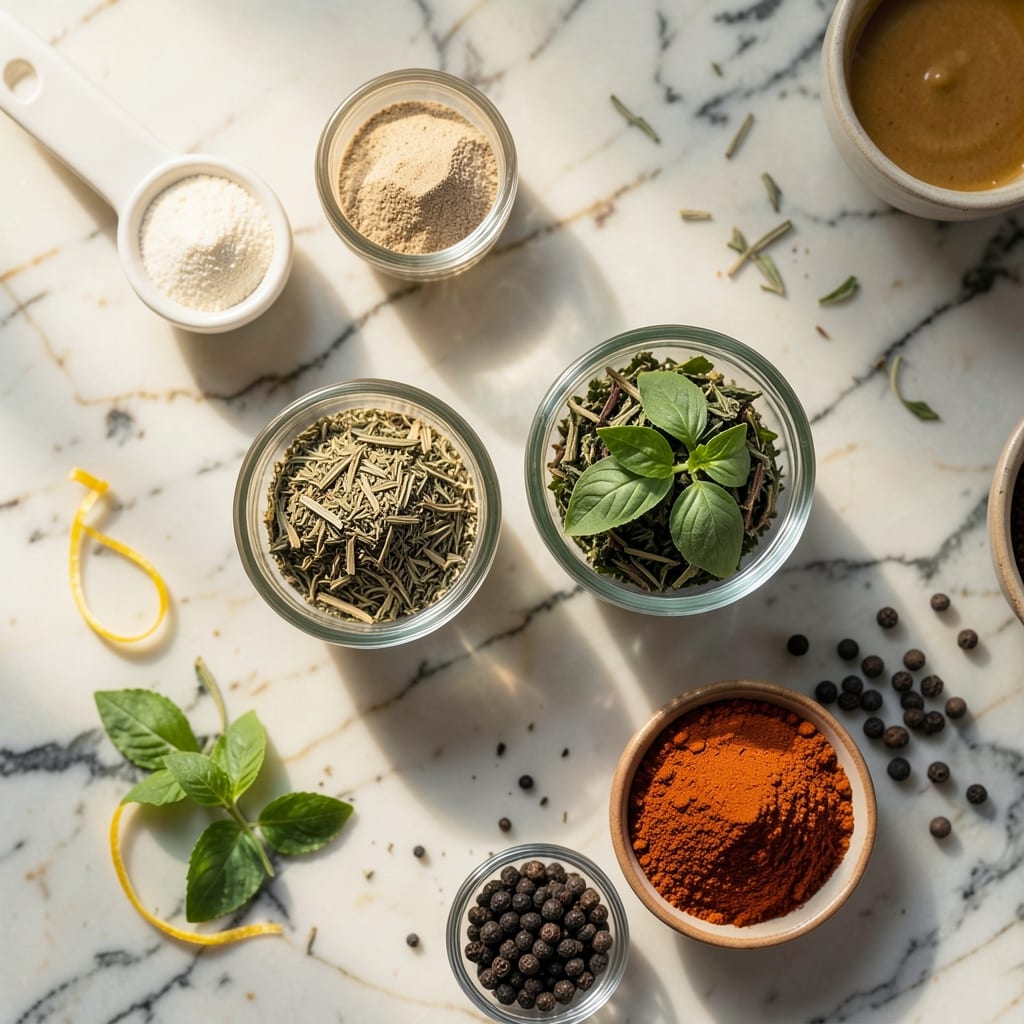
This lemon-dill emulsion transforms grilled salmon into a perfect, restaurant-quality dish with minimal effort. The bright citrus and fresh herbs complement the fish’s natural richness.
What makes this sauce special is its flaky fish-enhancing ability. A simple whisk combines the ingredients into a smooth, silky texture that clings beautifully to every bite.
Ingredients for Grilled Salmon Sauce
Nine ingredients create this silky, bright sauce that elevates grilled salmon beautifully.
| Ingredient | Amount | Notes |
|---|---|---|
| Extra-Virgin Olive Oil 🫒 | ½ cup | High quality, neutral flavor base |
| Fresh Lemon Juice 🍋 | ¼ cup | Newly squeezed for brightness |
| Lemon Zest 🍋 | 1 tbsp | Finely grated from fresh lemon |
| Fresh Dill 🌿 | ¼ cup | Finely chopped, stems removed |
| Dijon Mustard 🟡 | 1 tbsp | Smooth, not whole grain |
| Honey 🍯 | 1 tbsp | Light variety for balance |
| Garlic Clove 🧄 | 1 clove | Minced finely for even distribution |
| Sea Salt 🧂 | ½ tsp | Fine grain for dissolution |
| Freshly Ground Black Pepper 🌶️ | ¼ tsp | Coarse grind preferred |
[recipe_ingredient_scaler]
The olive oil forms the emulsion base, so opt for a high-quality extra-virgin. Freshness matters most with citrus—look for firm, heavy lemons at the market. Dill should be vibrant green with no wilting; Whole Foods and Trader Joe’s typically carry the best bunches. The Dijon mustard acts as the emulsifier, so avoid substitutions here. A microplane makes quick work of the zest and garlic.
No fresh dill? Dried dill at one-third the amount works, though the flavor is less bright. Out of honey? Agave nectar or light maple syrup can substitute 1:1. Lemon juice must be fresh—bottled lacks the necessary acidity. If avoiding honey entirely, skip it rather than using granular sugar, which won’t dissolve properly in the cold emulsion.
This sauce keeps 3-4 days refrigerated in a sealed jar. The flavors meld and mellow over time. Do not freeze—emulsions can separate. Always bring to room temperature and whisk again before serving for the silkiest texture.
Why You’ll Love This Recipe
- 5-Minute Whisk: I just dump everything in a bowl—olive oil, lemon, dill, mustard—and whisk. No cooking, no fuss.
- Bright and Zesty: The lemon zest and fresh dill give it this crisp, herby pop that cuts through the salmon’s richness. Honestly, it’s the reason I make extra.
- Pairs with Everything: I’ve drizzled this on grilled veggies, chicken, even roasted potatoes. Between us, it’s my secret for making weeknight dinners feel special.
- Keeps Like a Dream: Leftovers taste even better the next day. I’ll be real: I’ve kept a jar in the fridge for up to a week and used it on everything.
Step-by-Step Instructions for Lemon-Dill Salmon Sauce
Master this emulsion technique for a velvety sauce that complements flaky fish beautifully.
Step 1: Create the Flavor Base
In a medium bowl, combine the 0.25 cup Fresh Lemon Juice, 1 tbsp Lemon Zest, and 1 tbsp Dijon Mustard. Whisk vigorously for 30 seconds until the mixture is uniform and slightly thickened. The mustard acts as your emulsifier, binding the fat and acid together.
Add the 1 tbsp Honey, 1 clove minced Garlic Clove, 0.5 tsp Sea Salt, and 0.25 tsp Freshly Ground Black Pepper. Whisk again for 20 seconds to fully incorporate. You should see the honey dissolve completely into the liquid.
Step 2: Incorporate the Fresh Herbs
Finely chop the 0.25 cup Fresh Dill if you haven’t already. Add it to your lemon-mustard mixture and stir gently with a spatula. The dill should be evenly distributed throughout the liquid—no clumps.
Let this herb-infused base sit for 5 minutes to allow the flavors to meld. You’ll notice the lemon juice begins to extract the volatile oils from the dill, intensifying its aroma. The mixture should appear vibrant green with tiny flecks of dill throughout.
Step 3: Emulsify with Olive Oil
Here’s the critical technique: while whisking constantly, pour the 0.5 cup Extra-Virgin Olive Oil in a very slow, thin stream. This should take 60-90 seconds. The mixture will transform from a thin liquid to a thick, creamy sauce.
Watch for the emulsion to form—it will lighten in color slightly and coat the back of a spoon. If it begins to separate, stop adding oil and whisk more vigorously until it comes back together. The finished sauce should have the consistency of heavy cream.
Step 4: Adjust and Rest
Taste and adjust seasoning if needed, though the salt should be balanced by the acidity. The sauce will thicken slightly as it rests for 10 minutes at room temperature.
You’ll see the emulsion stabilize during this rest period. The sauce is ready when it holds its shape briefly when drizzled from a spoon, then slowly spreads out. This consistency ensures it will cling perfectly to your grilled salmon without being too heavy.
Pro Tips For Making Grilled Salmon Sauce
- Zest Before Juicing: Always zest your lemon before cutting it open for juice—it’s nearly impossible to do afterward, and the oils in the zest add a bright depth that fresh dill loves.
- Temper the Mustard: Mix the Dijon mustard with the olive oil first to mellow its sharpness before adding the acid from the lemon, otherwise the sauce can turn bitter.
- Skip the Dried Dill: Fresh dill is non-negotiable here; dried just doesn’t have the same delicate, grassy punch that balances the richness of the oil and mustard.
- Rest the Sauce: Let the sauce sit for 10 minutes after mixing—this gives the flavors time to meld, and the dill will infuse the oil beautifully while you finish grilling the salmon.
Perfect Pairings for This grilled salmon sauce
Wine Pairings
A crisp Sauvignon Blanc from New Zealand cuts through the richness with its citrus notes. The acidity mirrors the lemon in your sauce beautifully. I love Kim Crawford for its bright, tropical fruit flavors. 🍷
Beer Options
A light Belgian witbier like Hoegaarden offers citrus and spice that complements the dill. Avoid hop-heavy IPAs—they’ll clash with the delicate sauce. The carbonation cleanses your palate between bites.
Side Dish Ideas
Roasted asparagus with a squeeze of lemon enhances the sauce’s brightness. Toss 1 lb asparagus with 2 tbsp olive oil and roast at 400°F for 12-15 minutes. Simple and elegant. 🌿
Bread Pairing
A crusty baguette or ciabatta from your local bakery soaks up every last drop. Warm it for 5 minutes in the oven before serving. I always keep some on hand for sauce emergencies.
Salad Pairing
A cucumber-dill salad echoes the sauce’s herbs. Thinly slice 2 cucumbers and toss with 1 tbsp white vinegar, 1 tsp sugar, and 1 tbsp fresh dill. The cool crunch is refreshing.
Nutrition Facts

Trained in classic French technique but raised on slow-cooked ribs and spicy rubs, she blends culinary skill with smoke and soul.
- Hamburger Patty Recipe No Egg: Juicy Bind With Breadcrumbs and Milk - October 3, 2026
- Recipe for Oven Baked Halibut: Buttery White Fish with Zesty Lemon Topping - October 3, 2026
- Meatball Curry Recipe Kerala Style: Coconut-Spiced Gravy With Tender Bites - October 3, 2026