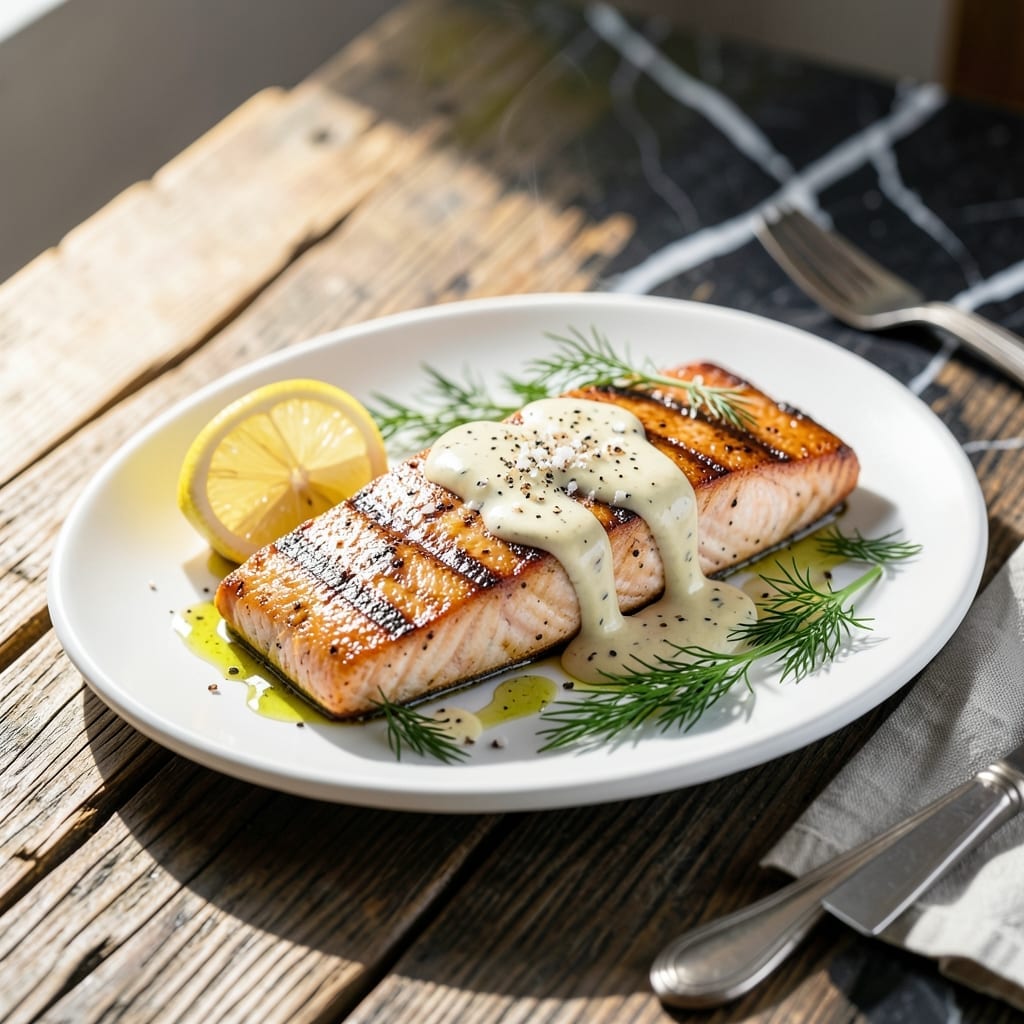
Mastering grilled salmon with that perfect flaky texture is simpler than you think. The key is high heat and precise timing to lock in moisture while creating a lightly charred exterior.
I developed this method after years of trial and error, learning that wild-caught salmon responds best to direct heat. The lemon dill sauce adds a bright, creamy finish that complements the fish without overpowering it.
The sauce comes together in minutes with fresh herbs, tangy yogurt, and a touch of lemon zest. It’s the ideal accompaniment to highlight the salmon’s natural richness.
This dish proves that professional results don’t require complicated techniques—just good ingredients and attention to detail.
Ingredients for Grilled Salmon with Lemon Dill Sauce
Fresh salmon, bright herbs, and a creamy sauce make this dish sing.
| Ingredient | Amount | Notes |
|---|---|---|
| Wild-Caught Salmon Fillets 🐟 | 1 ½ lb | Skin-on, center-cut preferred |
| Olive Oil 🫒 | 2 tbsp | Divided for fish and grill |
| Kosher Salt 🧂 | 1 tsp | Plus more to taste |
| Black Pepper 🌶️ | ½ tsp | Freshly ground preferred |
| Garlic Powder 🧄 | ½ tsp | For salmon seasoning |
| Lemon 🍋 | 1 whole | Zested and juiced |
| Plain Greek Yogurt 🥛 | ¾ cup | Full-fat for creaminess |
| Fresh Dill 🌿 | ¼ cup | Chopped, stems removed |
| Dijon Mustard 🟡 | 1 tbsp | For sauce tang |
| Honey 🍯 | 1 tsp | Balances sauce acidity |
| Mayonnaise 🥫 | 2 tbsp | For rich sauce base |
| Red Onion 🧅 | ¼ cup | Finely diced for garnish |
| Fresh Parsley 🌿 | 2 tbsp | Chopped, for garnish |
[recipe_ingredient_scaler]
The salmon quality is non-negotiable. Wild-caught (sockeye or king) gives superior texture and flavor compared to farmed. Whole Foods and Costco both carry excellent frozen wild salmon—thaw overnight in the fridge. For fresh, look for fillets with vibrant color and no fishy smell. Center-cut pieces cook more evenly and present beautifully on the plate.
No Greek yogurt? Sour cream at half the amount works in a pinch. Dried dill can substitute at one-third the quantity, but fresh really shines here. The honey can be swapped for maple syrup if you prefer. For the salmon, skinless fillets work too—just reduce grilling time by 1-2 minutes per side to prevent drying out.
The sauce keeps 3-4 days in the fridge—great for meal prep. Store salmon separately and assemble just before serving. Leftovers? They reheat surprisingly well, though the salmon is best enjoyed fresh. Always bring fish to room temperature before grilling for even cooking.
Why You’ll Love This Recipe
- Minimal Effort: I just rub the fillets with olive oil, salt, pepper, and garlic powder—no marinating, no fuss.
- Bright & Zesty: The lemon dill sauce cuts through the rich salmon like a dream.
- Weeknight Hero: It’s my go-to for busy evenings when I need something healthy and fast.
- Leftovers Win: Cold salmon on salad the next day? Even better than fresh.
Step-by-Step Instructions for Grilled Salmon With Lemon Dill Sauce
Here’s the method that guarantees moist, flaky fish and a bright, creamy sauce.
Step 1: Season and Prep the Salmon
Pat the 1.5 lb wild-caught salmon fillets completely dry with paper towels to ensure proper browning. Drizzle with 1 tbsp olive oil and rub evenly over all surfaces.
Combine the 1 tsp kosher salt, 0.5 tsp black pepper, and 0.5 tsp garlic powder. Sprinkle this seasoning blend evenly over the fillets, pressing gently to adhere. Let the salmon sit at room temperature for 10-15 minutes while you prepare the grill.
Step 2: Grill the Salmon to Flaky Perfection
Preheat your grill to medium-high heat. Clean the grates thoroughly with a brush, then oil them with the remaining 1 tbsp olive oil using tongs and a folded paper towel.
Place the salmon fillets skin-side down on the grill. Cook undisturbed for 4-5 minutes until the skin releases easily and develops golden-brown grill marks. Flip carefully with a thin spatula and grill for another 3-4 minutes until the fish is just opaque throughout and flakes easily with a fork.
Step 3: Prepare the Lemon Dill Sauce
While the salmon grills, zest the 1 whole lemon to yield about 1 tbsp zest, then juice it to get approximately 3 tbsp juice. In a bowl, combine the 0.75 cup plain Greek yogurt, 2 tbsp mayonnaise, 1 tbsp Dijon mustard, 1 tsp honey, lemon zest, and lemon juice.
Finely chop the 0.25 cup fresh dill and stir it into the sauce mixture. Taste and adjust seasoning with a pinch of kosher salt if needed. The sauce should be creamy with a bright, tangy flavor that balances the richness of the salmon.
Step 4: Finish and Serve Immediately
Finely dice the 0.25 cup red onion and chop the 2 tbsp fresh parsley. Transfer the grilled salmon to a serving platter and let it rest for 2-3 minutes.
Drizzle the lemon dill sauce generously over the salmon and sprinkle with the diced red onion and chopped parsley. Serve immediately while hot—the fish should separate into perfect flakes with the gentle pressure of a fork, and the sauce should pool slightly around each portion.
Pro Tips For Making Grilled Salmon With Lemon Dill Sauce
- Pat It Dry: I learned this the hard way—blot the salmon fillets with paper towels before seasoning. Wet fish steams instead of searing, and you’ll lose that perfect crust.
- High Heat First: Start with a screaming-hot grill (400°F or higher) to get a crispy skin, then move to a cooler spot to finish cooking through without burning.
- Skip the Overcrowding: Resist the urge to cram all the fillets on at once—leave space between them so the heat circulates and they cook evenly, not steam in their own juices.
- Rest Before Saucing: Let the salmon rest off the grill for 3-4 minutes before drizzling the lemon dill sauce. It keeps the juices inside where they belong, not on the plate.
Pro Cooking Tips for This Dish
Grill Temperature Control
Preheating to medium-high heat is crucial for that perfect sear. I use a dual-probe thermometer to monitor grill temp—400-450°F ensures beautiful grill marks without burning the delicate fish. Clean, oiled grates prevent sticking. 🌡️
Timing is Everything
For 1.5 lb wild-caught salmon, cook skin-side down for 4-5 minutes first. The skin will release naturally when ready to flip. Total cook time should be 8-10 minutes—don’t overcook or it’ll dry out.
Sauce Consistency
Whisk the sauce with 0.75 cup Greek yogurt and 2 tbsp mayonnaise until smooth. If it’s too thick, add 1 tsp cold water at a time. The acidity from 1 tbsp lemon juice balances the richness perfectly.
Resting Period
Let the salmon rest for 2-3 minutes off the grill. This allows juices to redistribute, keeping the fish moist. I learned this the hard way—slicing too soon sends all that flavor onto the cutting board.
For extra flair, garnish with fresh parsley right before serving. 💡
Nutrition Facts
Frequently Asked Questions
What’s the best way to prevent the salmon from sticking to the grill?
Clean and oil the grates thoroughly before cooking. Heat the grill to medium-high heat and let it preheat for 10 minutes. The salmon skin will release naturally when it’s ready to flip.
Can I make the lemon dill sauce ahead of time?
Yes, the sauce keeps well in the fridge for 3-4 days. Store it in an airtight container and stir before using. The flavors actually deepen after a few hours.
How do I know when the salmon is done?
The fish is ready when it reaches an internal temperature of 145°F and flakes easily with a fork. Look for opaque flesh that separates cleanly along the muscle lines.
What can I use instead of Greek yogurt in the sauce?
Substitute sour cream at half the amount for a richer texture. For a lighter option, try coconut yogurt, but note it may alter the flavor slightly.

Trained in classic French technique but raised on slow-cooked ribs and spicy rubs, she blends culinary skill with smoke and soul.
- Recipe for Boneless Pork Chops in Cast Iron Skillet: Sear and Baste to Juicy Perfection - October 3, 2026
- Recipe for Boneless Cross Rib Roast: Slow-Roasted Beef with Herb Crust - October 3, 2026
- Hamburgers in Sauce Recipe Crock Pot: Slow-Cooked Savory Delight - October 3, 2026