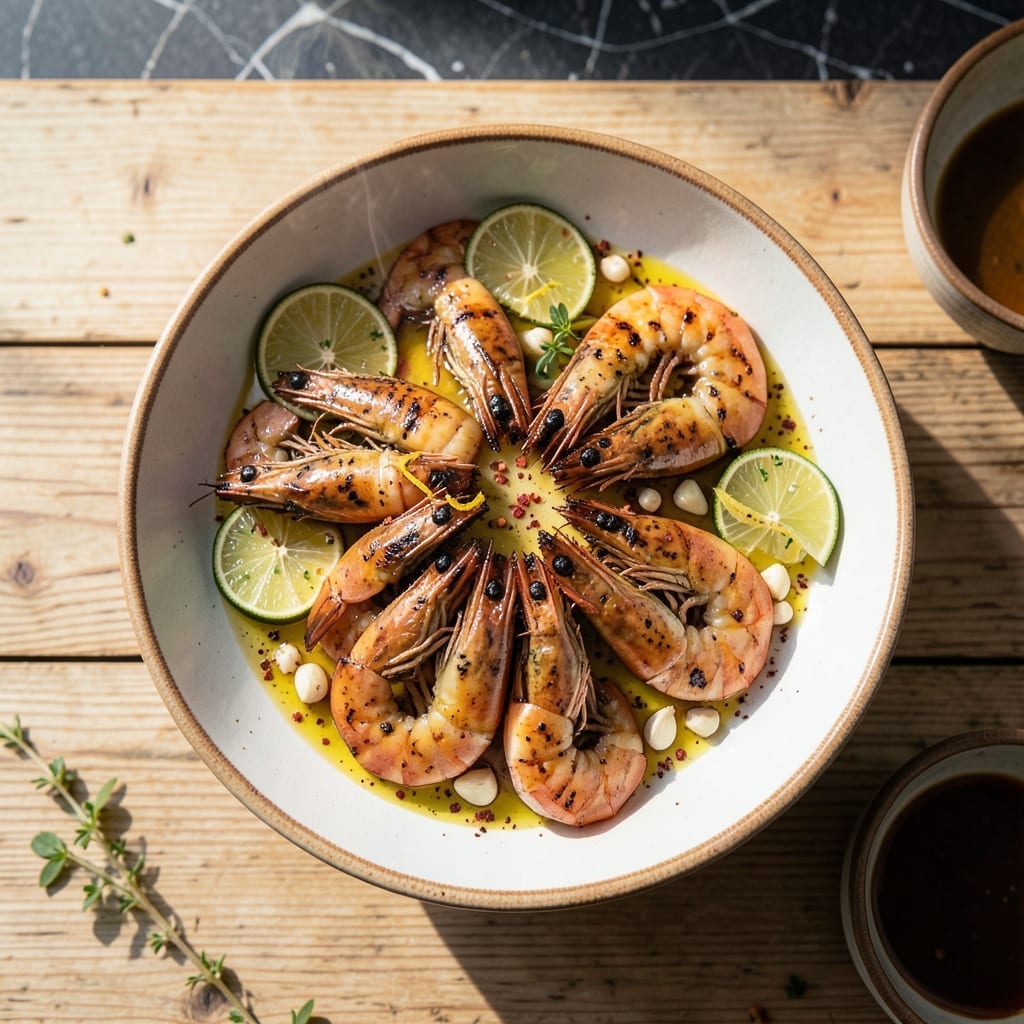
This method delivers restaurant-quality shrimp with minimal effort. I developed this technique blending French precision with my pitmaster roots.
The secret is a lemon-garlic marinade and high heat. The shrimp develop smoky char while staying tender and juicy.
Ingredients for Grilled Shrimp Recipe Ideas
Restaurant-quality shrimp starts with a bold lemon-garlic marinade and fresh, plump seafood.
| Ingredient | Amount | Notes |
|---|---|---|
| Large Shrimp 🍤 | 1 ½ lb | Peeled and deveined, tails on |
| Extra-Virgin Olive Oil 🫒 | ¼ cup | Divided for marinade and grilling |
| Fresh Lemon Juice 🍋 | ¼ cup | About 2-3 large lemons |
| Garlic Cloves 🧄 | 6 cloves | Minced for marinade |
| Fresh Parsley 🌿 | ¼ cup | Chopped, for garnish |
| Dijon Mustard 🟡 | 1 tbsp | For emulsifying marinade |
| Honey 🍯 | 1 tbsp | Balances acidity in marinade |
| Red Pepper Flakes 🌶️ | ½ tsp | Adjust for heat preference |
| Kosher Salt 🧂 | 1 tsp | Plus additional to taste |
| Freshly Ground Black Pepper 🌶️ | ½ tsp | For seasoning shrimp |
| Lemon Zest 🍋 | 1 tbsp | From 1-2 lemons |
| Smoked Paprika 🌶️ | ½ tsp | Adds depth to marinade |
[recipe_ingredient_scaler]
The shrimp quality is non-negotiable. Wild-caught Gulf shrimp (16/20 count) yield the best texture and flavor. Seek out fresh, never-frozen if available, but high-quality frozen (thawed properly) works well. For the garlic, fresh cloves are essential—pre-minced lacks the sharpness needed to cut through the richness. Whole Foods or a trusted fishmonger are ideal sources for both.
No fresh lemons? Bottled lemon juice at half the amount works in a pinch, though fresh is superior. Agave nectar can replace honey for a vegan adaptation. For heat, cayenne pepper offers a different profile than red pepper flakes. If you lack Dijon, whole-grain mustard provides similar emulsifying power with added texture. The parsley garnish can be swapped for cilantro if preferred.
Marinate the shrimp for no more than 30 minutes—the acid will start to cook the seafood. Grill immediately after marinating for best char. Leftovers (if any) keep for 2 days refrigerated, though they’re best served fresh off the grill. The marinade itself holds for 1 week in the fridge.
Why You’ll Love This Recipe
- 20-Minute Meal: I can get these shrimp from fridge to table faster than takeout arrives. Honestly, the marinade takes 5 minutes max.
- Garlicky Zing: The combo of fresh garlic, lemon, and parsley makes every bite pop—no fancy sauces needed.
- Weeknight Hero: Works for tacos, salads, or straight off the skewer. My kids even eat leftovers cold the next day.
- Pocket-Friendly Luxe: Large shrimp feel fancy, but they stretch to feed four without breaking the bank. I’ll be real: it’s my secret to looking like a gourmet on a budget.
Step-by-Step Instructions for Lemon-Garlic Grilled Shrimp
Here’s the method. Straightforward, tested, works every time.
Step 1: Prepare the Lemon-Garlic Marinade
In a large bowl, whisk together the 0.25 cup fresh lemon juice, 0.25 cup extra-virgin olive oil, 1 tablespoon Dijon mustard, 1 tablespoon honey, minced 6 cloves garlic cloves, 1 tablespoon lemon zest, 0.5 teaspoon red pepper flakes, 1 teaspoon kosher salt, 0.5 teaspoon freshly ground black pepper, and 0.5 teaspoon smoked paprika.
The mustard acts as an emulsifier to combine the oil and acid, while the honey balances the brightness of the lemon. Whisk until the mixture is uniform and slightly thickened. This marinade should be vibrant and fragrant, with visible flecks of garlic and lemon zest.
Step 2: Marinate the Shrimp
Add the 1.5 lb large shrimp to the marinade, ensuring each piece is fully coated. I like to use my hands for this step to make sure every shrimp gets an even layer of flavor. Cover the bowl and refrigerate for at least 30 minutes, but no longer than 2 hours—the acid in the lemon juice will begin to “cook” the shrimp if left too long.
For best results, stir the shrimp once or twice during marinating to redistribute the flavors. The shrimp will turn slightly opaque at the edges when ready, and the marinade will take on a slightly thicker consistency as it clings to the surface.
Step 3: Grill the Shrimp to Charred Perfection
Preheat your grill to medium-high heat. Remove the shrimp from the marinade (reserve the marinade for basting if desired) and thread them onto skewers or place them directly on the grates. Grill for 2-3 minutes per side until the shrimp turn opaque pink with defined grill marks.
Watch for the shrimp to curl into a loose “C” shape—this is your visual cue that they’re cooking properly. The edges should just begin to char slightly, adding a smoky depth to the lemon-garlic flavors. Avoid overcrowding the grill; cook in batches if necessary to ensure even charring.
Step 4: Garnish and Serve Immediately
Transfer the grilled shrimp to a serving platter and sprinkle with the 0.25 cup fresh parsley. The parsley adds a fresh, herbal contrast to the rich, smoky flavors from the grill. If you reserved some marinade, you can brush it lightly on the shrimp now for an extra layer of flavor.
Serve immediately while hot. The shrimp should be firm to the touch but still tender, with a slightly crisp exterior from the grill. The aroma will be a perfect balance of citrus, garlic, and smoke—irresistible and ready to enjoy.
Pro Tips For Making Grilled Shrimp Recipe Ideas
- Skewer Evenly: Thread shrimp with a slight curve so they cook uniformly—crowding them leads to uneven doneness and steaming instead of grilling.
- Pat Shrimp Dry: I learned this the hard way: damp shrimp sputters on the grill and doesn’t sear, so blot them thoroughly with paper towels before tossing in olive oil.
- Skip Overcooking: Shrimp turn rubbery fast—pull them off the second they’re opaque, usually after 2-3 minutes per side over medium-high heat.
- Zest the Lemon: Add the lemon zest along with the juice for a brighter flavor boost that actually changes the outcome—it’s the thing that matters most in the marinade.
Storing and Reheating This Dish
Refrigerator Storage
Let your grilled shrimp cool to room temperature—this prevents condensation in the container. Transfer to an airtight container with a paper towel lining to absorb excess moisture. They’ll keep at 40°F or below for up to 2 days. Honestly, they’re best eaten fresh, but leftovers still taste great in salads. ❄️
Freezer Storage
For longer storage, spread shrimp in a single layer on a baking sheet and freeze for 1 hour before transferring to a freezer bag. This prevents clumping. They’ll stay at peak quality for 1 month. I like using vacuum-sealed bags to avoid freezer burn.
Stovetop Reheating
Heat a skillet over medium-low heat with 1 tbsp olive oil. Add shrimp and warm for 2-3 minutes, stirring occasionally. Splash in 1 tbsp water or broth to restore moisture. Avoid high heat—it’ll make them rubbery. 🔥
Microwave Reheating
Place shrimp on a microwave-safe plate, cover with a damp paper towel, and heat on 50% power for 30-second intervals. Check and stir between intervals until reaching 145°F. This gentle method keeps them tender.
Nutrition Facts

Trained in classic French technique but raised on slow-cooked ribs and spicy rubs, she blends culinary skill with smoke and soul.
- Recipe for Boneless Pork Chops in Cast Iron Skillet: Sear and Baste to Juicy Perfection - October 3, 2026
- Recipe for Boneless Cross Rib Roast: Slow-Roasted Beef with Herb Crust - October 3, 2026
- Hamburgers in Sauce Recipe Crock Pot: Slow-Cooked Savory Delight - October 3, 2026