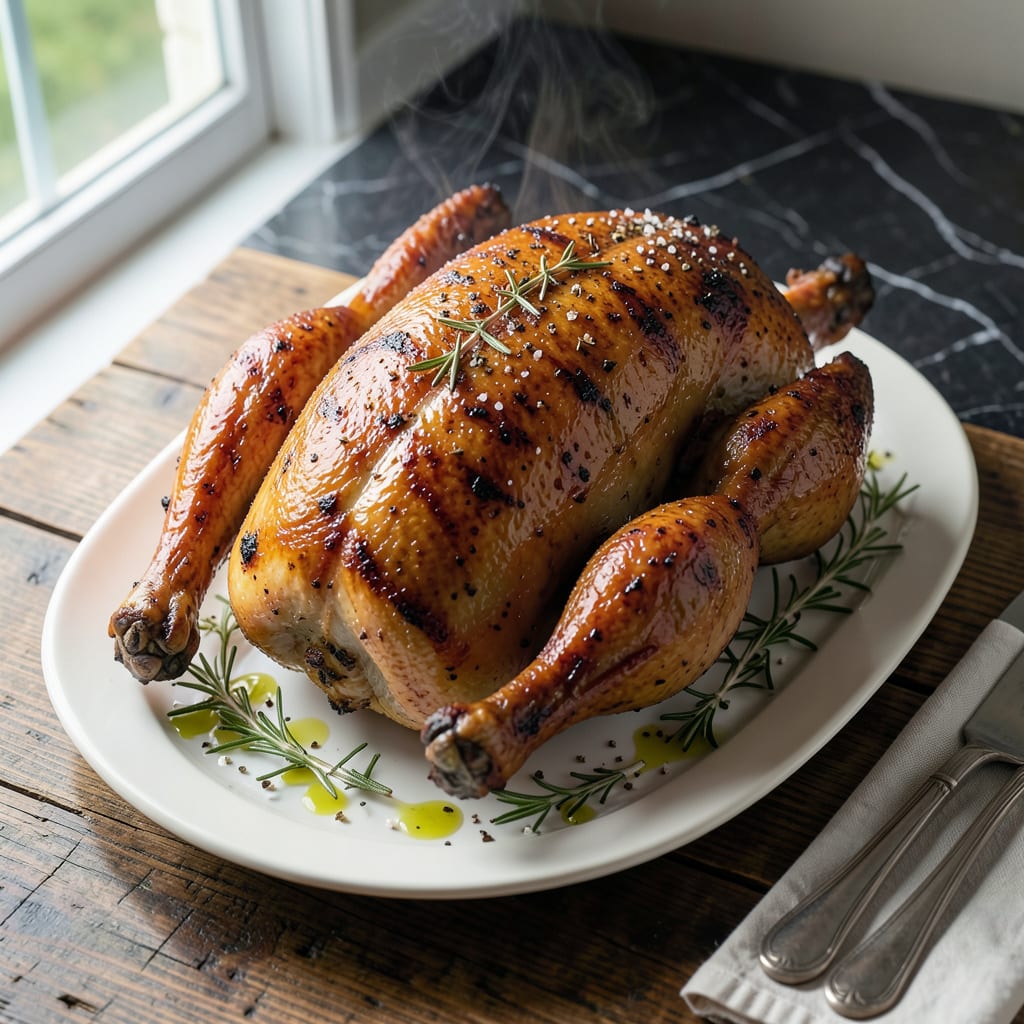
This method delivers evenly cooked turkey with golden skin every time. Spatchcocking the bird ensures faster cooking and better heat distribution on the grill.
My pitmaster experience taught me this technique—simple preparation, precise temperatures, and perfect results. The grill imparts smoky depth that complements the seasoned meat beautifully.
Ingredients for Grilled Spatchcock Turkey
These carefully selected ingredients ensure perfectly seasoned, evenly cooked turkey with golden skin every time.
| Ingredient | Amount | Notes |
|---|---|---|
| Whole Turkey 🦃 | 12 lb | Fresh or thawed, giblets removed |
| Diamond Crystal Kosher Salt 🧂 | 2 tbsp | For seasoning cavity and skin |
| Freshly Ground Black Pepper 🌶️ | 1 tbsp | Coarsely ground preferred |
| Dried Thyme 🍃 | 1 tbsp | Rubbed between fingers to release oils |
| Dried Rosemary 🌿 | 1 tbsp | Crushed before using |
| Garlic Powder 🧄 | 1 tbsp | Not garlic salt |
| Onion Powder 🧅 | 1 tbsp | Enhances depth of seasoning |
| Smoked Paprika 🌶️ | 1 tsp | Adds subtle smokiness |
| Unsalted Butter 🧈 | ½ cup | Softened for under-skin rub |
| Fresh Rosemary Sprigs 🌿 | 4 whole | For cavity aromatics |
| Fresh Thyme Sprigs 🍃 | 4 whole | For cavity aromatics |
| Lemon 🍋 | 1 whole | Halved, for cavity |
| Yellow Onion 🧅 | 1 whole | Quartered, for cavity |
| Olive Oil 🫒 | 2 tbsp | For grill grate preparation |
[recipe_ingredient_scaler]
The turkey itself is paramount—source a fresh, high-quality bird from a reputable butcher or Whole Foods. Spatchcocking requires a 12-14 lb turkey for optimal grill performance. The Diamond Crystal kosher salt is non-negotiable for precision seasoning; its coarse texture adheres better to the skin. Fresh herbs in the cavity (rosemary, thyme) infuse subtle aroma without overpowering the natural turkey flavor.
For the dry rub, freshly ground black pepper offers superior punch over pre-ground. No smoked paprika? Regular paprika with a pinch of cayenne approximates the depth. The unsalted butter under the skin can be swapped for duck fat if you want extra richness. Cavity aromatics are flexible—oranges or apples work as well as the lemon and onion, but avoid overcrowding the cavity.
Store the turkey uncovered in the fridge for 12-24 hours before cooking to dry the skin—this ensures maximum crispness. Leftover turkey keeps 4-5 days refrigerated or freezes for 3 months. Always bring the bird to room temperature for 1 hour before grilling for even cooking.
Why You’ll Love This Recipe
- No-Fuss Prep: I love how spatchcocking flattens the turkey so it cooks evenly on the grill—no rotating, no hassle.
- Herb Crust Perfection: Diamond Crystal salt and those dried herbs create the most aromatic, crispy skin I’ve ever tasted.
- Holiday or Tuesday: Honestly, this works just as well for a summer cookout as it does for Thanksgiving.
- Leftovers for Days: One 12-pound turkey gives us sandwiches, tacos, and soup—my freezer thanks me every time.
Step-by-Step Instructions for Grilled Spatchcock Turkey
Precision and technique ensure even cooking and perfectly crisped skin every time.
Step 1: Prepare and Spatchcock the Turkey
Begin by removing the giblets from the 12 lb Whole Turkey if present. Place the turkey breast-side down on a cutting board. Using kitchen shears, cut along both sides of the backbone from neck to tail, then remove and discard the backbone.
Flip the turkey over and press down firmly on the breastbone with the heels of your hands until you hear it crack. This flattens the bird for even cooking. Pat the entire turkey completely dry with paper towels—this is essential for crispy skin.
Step 2: Season Inside and Out
Rub the cavity with 2 tbsp Diamond Crystal Kosher Salt, 1 tbsp Freshly Ground Black Pepper, 1 tbsp Dried Thyme, 1 tbsp Dried Rosemary, 1 tbsp Garlic Powder, 1 tbsp Onion Powder, and 1 tsp Smoked Paprika. Place 1 whole Lemon (halved), 1 whole Yellow Onion (quartered), 4 whole Fresh Rosemary Sprigs, and 4 whole Fresh Thyme Sprigs in the cavity.
Next, gently separate the skin from the breast meat and rub 0.5 cup Unsalted Butter underneath. Then rub the remaining butter over the entire exterior. This creates a flavor barrier and promotes browning.
Step 3: Preheat and Oil the Grill
Set up your grill for indirect medium heat (350-375°F). Clean the grates thoroughly, then use 2 tbsp Olive Oil on a folded paper towel to oil the grates. This prevents sticking and helps achieve those beautiful grill marks.
Place the turkey skin-side up on the grill over the indirect heat zone. The flattened shape ensures even exposure to heat, so the breast and dark meat finish cooking simultaneously.
Step 4: Grill to Perfection
Cover the grill and cook for 1.5 to 2 hours, maintaining the temperature between 350-375°F. Rotate the turkey 90 degrees halfway through for even browning. Avoid flipping it—this prevents the skin from tearing.
Start checking the turkey’s temperature after 1.5 hours. It’s done when the thickest part of the breast reaches 160°F and the thigh reaches 170°F on an instant-read thermometer. The skin should be deep golden brown and crisp.
Step 5: Rest and Carve
Transfer the turkey to a cutting board and tent loosely with foil. Let it rest for 30 minutes before carving. This allows the juices to redistribute, ensuring moist, flavorful meat.
Remove the lemon, onion, and herb sprigs from the cavity. Carve the turkey by separating the legs and thighs first, then slicing the breast against the grain. Serve immediately for the best texture and flavor.
Pro Tips For Making Grilled Spatchcock Turkey
- Butterfly Thoroughly: Cut all the way through the backbone and press down hard on the breastbone to flatten—this guarantees even cooking on the grill and crispy skin all over.
- Salt Overnight: Rub the turkey with Diamond Crystal Kosher Salt at least 12 hours before grilling; it’s the easiest way to ensure juicy meat and seasoning that goes deep.
- Skip the Wet Bird: Pat the turkey dry inside and out before seasoning—excess moisture steams the skin instead of letting it crisp up over the flames.
- Use Indirect Heat: Start skin-side down over direct heat for color, then move to a cooler part of the grill and cover; this prevents burnt herbs while cooking the turkey through.
Troubleshooting This Recipe
Uneven Cooking
If dark meat finishes before breast, your grill likely has hot spots. I always use a dual-probe thermometer to monitor both zones. Move the turkey to a cooler area or adjust burner settings to maintain 350-375°F throughout. 🌡️
Skin Not Browning
Pat the turkey drier before grilling—moisture prevents crisping. If skin still pales, brush with 1 tbsp olive oil mixed with 1 tsp smoked paprika halfway through cooking. Avoid opening the grill too often; temperature drops cause uneven browning.
Dry Turkey
Overcooking is the main culprit. Pull the bird when breast hits 160°F and thigh 170°F—it’ll rise 5°F while resting. I learned this the hard way at my first local BBQ competition. Resting for 30 minutes is non-negotiable.
Sticking to Grates
Clean grates thoroughly and oil them with 2 tbsp olive oil on a paper towel before cooking. If turkey sticks, don’t force it—wait for it to release naturally. A well-oiled, hot grate creates a natural non-stick surface.
Grill Flare-Ups
Fat dripping onto coals causes flames. Trim excess fat from the cavity and place a drip pan under the turkey. Keep a spray bottle of water nearby for emergencies. I also avoid placing aromatics directly over open flames.
Seasoning Fails
If skin tastes bland, you likely under-seasoned. Use the full 2 tbsp Diamond Crystal Kosher Salt and press it into the skin. For extra flavor, add 1 tsp garlic powder to the butter under the skin. This is where my French training shines. ✨

Trained in classic French technique but raised on slow-cooked ribs and spicy rubs, she blends culinary skill with smoke and soul.
- Recipe for Boneless Pork Chops in Cast Iron Skillet: Sear and Baste to Juicy Perfection - October 3, 2026
- Recipe for Boneless Cross Rib Roast: Slow-Roasted Beef with Herb Crust - October 3, 2026
- Hamburgers in Sauce Recipe Crock Pot: Slow-Cooked Savory Delight - October 3, 2026