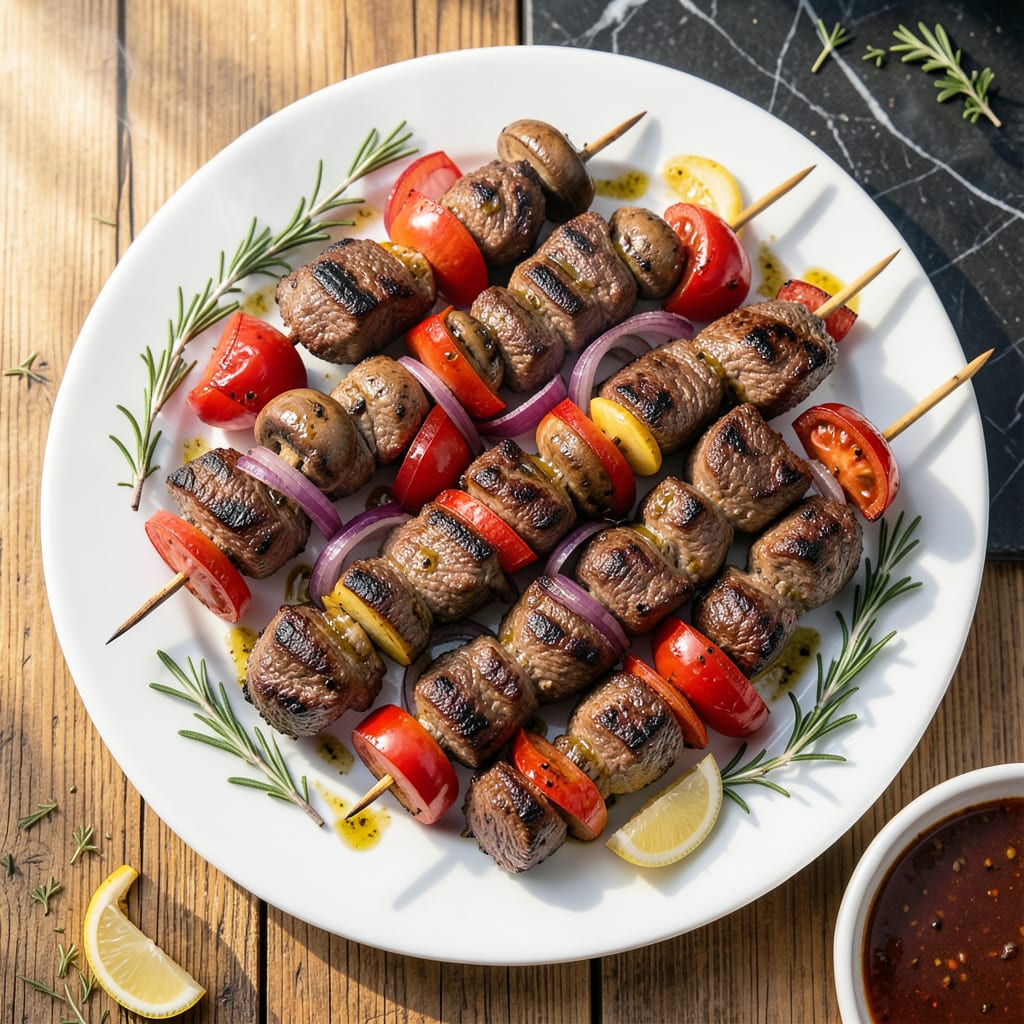
Fire up the grill for steak kebabs that deliver juicy tenderness with charred edges every time. My years of pitmaster experience taught me that proper skewering and high heat make all the difference.
This method transforms simple ingredients into a restaurant-quality dish. The marinade infuses deep flavor, while quick cooking over direct heat locks in moisture and creates that perfect sear.
Ingredients for Grilled Steak Kebabs
Ribeye and vibrant veggies meet a bold marinade for restaurant-quality results every time.
| Ingredient | Amount | Notes |
|---|---|---|
| Ribeye Steak 🥩 | 1 ½ lb | Cut into 1.5-inch cubes |
| Red Bell Pepper 🌶️ | 2 whole | Cut into 1.5-inch pieces |
| Red Onion 🧅 | 1 whole | Cut into 1.5-inch chunks |
| Mushrooms 🍄 | 8 oz | Cremini or button, halved |
| Cherry Tomatoes 🍅 | 2 cups | Whole, stems removed |
| Olive Oil 🫒 | ½ cup | Extra-virgin for marinade |
| Soy Sauce 🥢 | ¼ cup | Low-sodium preferred |
| Worcestershire Sauce 💧 | 2 tbsp | For umami depth |
| Garlic Cloves 🧄 | 4 cloves | Minced for marinade |
| Dijon Mustard 🟡 | 1 tbsp | For tangy kick |
| Black Pepper 🌶️ | 1 tsp | Freshly cracked preferred |
| Kosher Salt 🧂 | 1 tsp | Diamond Crystal preferred |
| Fresh Rosemary 🌿 | 2 tbsp | Chopped, for marinade |
| Lemon Juice 🍋 | 2 tbsp | Freshly squeezed |
[recipeingredientscaler]
The steak is non-negotiable here. Ribeye offers the perfect marbling for juicy kebabs—New York strip works too but lacks that buttery richness. Source from a trusted butcher like Whole Foods or Local Butcher Shop for prime cuts. For the mushrooms, cremini add meaty depth, but white buttons work in a pinch. Always cut vegetables slightly larger than the steak to prevent overcooking.
No ribeye? Sirloin is a leaner alternative—just don’t overcook it. Swap bell peppers for zucchini or eggplant (cut into similar sizes). Out of Worcestershire? Fish sauce at half the amount mimics the umami. For a brighter marinade, red wine vinegar can replace lemon juice. Skewers can be metal (reusable) or bamboo (soak 30 minutes first).
Marinate the steak for 2-4 hours—longer and the acid starts breaking down the meat. Prep veggies just before skewering to avoid wilting. Leftovers keep 3-4 days in the fridge, though they’re best fresh off the grill. Freeze uncooked marinated steak for up to 3 months.
Why You’ll Love This Recipe
- I’ll be real: they taste even better the next day in a wrap or over greens. Zero waste, all flavor.
- Skewer & Grill: I spend more time eating than prepping—just cube the ribeye and veggies, thread them on, and let the grill do the work.
- Charred & Juicy: Honestly, the ribeye’s fat renders into the peppers and mushrooms, making every bite ridiculously good.
- Backyard Star: Here’s what sold me—it’s my go-to for summer cookouts, but works just as well on a weeknight under the broiler.
Step-by-Step Instructions for Grilled Steak Kebabs
Master the technique for perfectly charred kebabs with juicy ribeye and vibrant vegetables.
Step 1: Marinate the Ribeye and Vegetables
In a large bowl, whisk together the 0.5 cup olive oil, 0.25 cup soy sauce, 2 tbsp Worcestershire sauce, 4 cloves garlic cloves, 1 tbsp Dijon mustard, 1 tsp kosher salt, 1 tsp black pepper, 2 tbsp fresh rosemary, and 2 tbsp lemon juice until fully emulsified. This marinade delivers umami depth and herbaceous brightness.
Add the 1.5 lb ribeye steak cubes, 2 whole red bell pepper pieces, 1 whole red onion chunks, 8 oz mushrooms, and 2 cups cherry tomatoes to the marinade. Toss gently to coat every piece evenly. Let marinate at room temperature for 30 minutes—longer than this and the acidity can begin to break down the meat texture.
Step 2: Skewer the Ingredients Strategically
If using wooden skewers, soak them in water for 30 minutes to prevent burning. Thread the marinated ingredients onto skewers, alternating between the ribeye, red bell pepper, red onion, mushrooms, and cherry tomatoes. Leave a small gap between each piece to ensure even cooking and proper char development.
I recommend grouping similar items together—keep the cherry tomatoes clustered rather than scattered, as they cook faster than the denser vegetables. This prevents some pieces from overcooking while others remain underdone. Aim for skewers that aren’t overcrowded; this allows heat to circulate properly.
Step 3: Grill Over Direct High Heat
Preheat your grill to high heat (about 450-500°F). Clean and oil the grates thoroughly to prevent sticking. Place the skewers on the grill and cook for 3-4 minutes per side, rotating occasionally for even charring. The ribeye should develop a deep brown crust while the vegetables achieve tender-crisp texture.
Watch for flare-ups from the marinade’s oil content. If flames appear, move the skewers to a cooler part of the grill momentarily. The kebabs are done when the ribeye reaches medium-rare (about 130-135°F internal temperature) and the vegetables show slight char marks. The cherry tomatoes should be blistered but still intact.
Step 4: Rest and Serve Immediately
Transfer the kebabs to a clean platter and let them rest for 5 minutes. This allows the juices in the ribeye to redistribute, ensuring each bite is moist and flavorful. The vegetables will continue to cook slightly from the residual heat during this resting period.
Serve the kebabs hot, either directly on the skewers or slides the ingredients onto a serving platter. The ribeye should be tender with a perfect char, the red bell pepper and red onion sweet and slightly caramelized, while the mushrooms and cherry tomatoes retain some bite. The marinade’s flavors will be most pronounced when served immediately.
Pro Tips For Making Grilled Steak Kebabs
- Cut Evenly: Slice the ribeye, bell peppers, and onions into uniform 1-inch chunks—this guarantees everything cooks at the same rate without some pieces turning to charcoal while others stay raw.
- Soak the Skewers: If using wooden skewers, soak them in water for at least 30 minutes before threading. I learned this the hard way after my first batch of kebabs turned into a smoky bonfire.
- High Heat First: Start with a screaming hot grill to sear the steak chunks quickly, then move to medium heat to finish cooking. This locks in juices and gives you that coveted crust on the ribeye.
- Thread Smartly: Alternate steak with veggies, but leave a tiny gap between each piece so the heat circulates properly—crowding them steams instead of grills. Sounds weird, but it works.
Health Benefits of These Flavors
Protein Powerhouse
The ribeye in these kebabs delivers 30g of protein per 4 oz serving, essential for muscle repair and growth. This high-quality protein contains all nine amino acids your body needs. I notice my energy levels stay steady after eating protein-rich meals like this. 💪
Iron and Zinc Boost
Beef is one of the best sources of heme iron, which your body absorbs more easily than plant-based iron. A 6 oz ribeye provides about 30% of your daily iron needs, plus a healthy dose of zinc for immune support.
Vitamin B Complex
This dish is packed with B vitamins, especially B12 and B6 from the ribeye. These nutrients support energy metabolism and brain function. The vegetables add vitamin C, which helps your body absorb that iron more efficiently.
Rich in Antioxidants
The colorful vegetables bring more than just visual appeal. Red bell peppers are loaded with vitamin C and beta-carotene, while mushrooms provide selenium. These antioxidants help protect your cells from damage.
Healthy Fats
Ribeye contains monounsaturated fats similar to those in olive oil. The 0.5 cup olive oil in the marinade also contributes heart-healthy fats. These fats help your body absorb fat-soluble vitamins from the meal.
Balance these kebabs with a side salad for a complete, nutritious meal.

Trained in classic French technique but raised on slow-cooked ribs and spicy rubs, she blends culinary skill with smoke and soul.
- Recipe for Boneless Pork Chops in Cast Iron Skillet: Sear and Baste to Juicy Perfection - October 3, 2026
- Recipe for Boneless Cross Rib Roast: Slow-Roasted Beef with Herb Crust - October 3, 2026
- Hamburgers in Sauce Recipe Crock Pot: Slow-Cooked Savory Delight - October 3, 2026