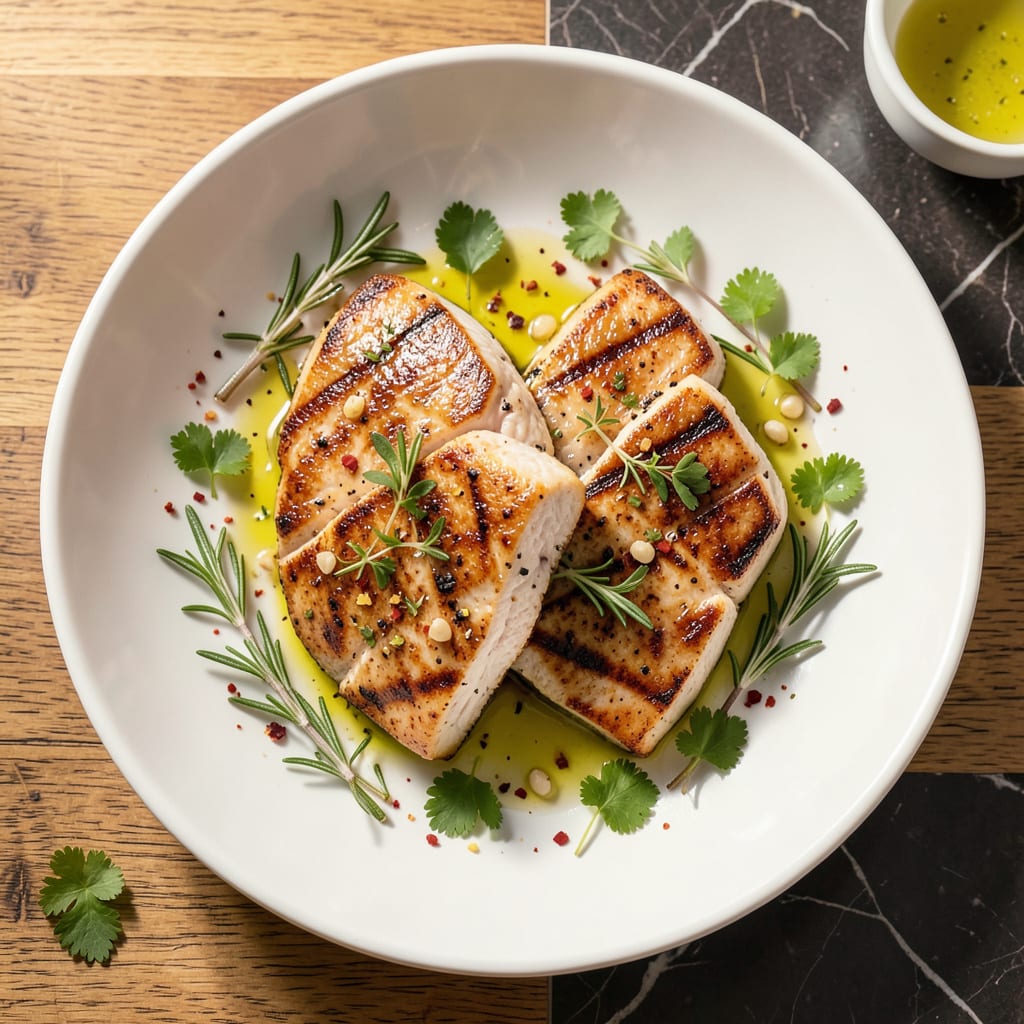
There’s nothing quite like the smoky char of perfectly grilled swordfish, its firm texture standing up beautifully to high heat. My Mediterranean herb crust adds layers of flavor without overpowering the fish’s natural richness.
This method delivers restaurant-quality results with simple techniques. High heat creates a caramelized crust while keeping the interior moist and flaky. The herb blend enhances without competing with the swordfish’s clean, meaty flavor.
Ingredients for Grilled Swordfish Steak
Firm swordfish, vibrant herbs, and bold citrus create this Mediterranean-inspired masterpiece on the grill.
| Ingredient | Amount | Notes |
|---|---|---|
| Swordfish Steaks 🐟 | 4 pieces | 1-inch thick, skin removed |
| Extra-Virgin Olive Oil 🫒 | ¼ cup | Divided for brushing and crust |
| Fresh Rosemary 🌿 | 2 tbsp | Finely chopped, stems discarded |
| Fresh Thyme Leaves 🍃 | 2 tbsp | Stems removed, loosely packed |
| Fresh Flat-Leaf Parsley 🌿 | 2 tbsp | Finely chopped, stems discarded |
| Garlic Cloves 🧄 | 4 cloves | Minced to fine paste |
| Lemon Zest 🍋 | 1 tbsp | From 1 large lemon |
| Lemon Juice 🍋 | 2 tbsp | Freshly squeezed |
| Dijon Mustard 🧂 | 1 tbsp | Whole-grain preferred |
| Sea Salt 🧂 | 1 ½ tsp | Coarse flakes, divided |
| Black Pepper 🌶️ | 1 tsp | Freshly cracked, coarse grind |
| Red Pepper Flakes 🔥 | ½ tsp | Optional, for subtle heat |
| Dry White Wine 🍷 | ¼ cup | For deglazing, optional |
[recipeingredientscaler]
Swordfish quality is paramount. Seek out sushi-grade steaks from a trusted fishmonger—look for vibrant color, moist texture, and a clean ocean scent. Avoid any with a fishy odor or dry edges. The herbs should be fresh and fragrant; Whole Foods or local farmers markets typically carry the best selection. For the olive oil, California Olive Ranch offers excellent flavor without breaking the bank.
No fresh herbs? Dried at one-third the amount works in a pinch, though the flavor won’t be as bright. Swordfish can be swapped for halibut or mahi-mahi—both hold up well to grilling. Out of white wine? Substitute with additional lemon juice or skip entirely. The mustard adds tang; whole-grain provides texture, but smooth Dijon works too.
The herb crust can be prepped 1 day ahead and stored in the fridge. Cooked swordfish keeps for 2-3 days refrigerated, though it’s best served immediately. Leftovers make excellent fish tacos or salads. Always bring fish to room temperature before grilling for even cooking.
Why You’ll Love This Recipe
- Minimal Effort: I just rub the swordfish with olive oil, toss on the herbs, and grill—no marinating, no fuss.
- Herb Infused: That fresh rosemary and thyme with the char from the grill? Ridiculously good.
- Dinner Party Hero: It looks fancy but honestly takes less time than baking chicken.
- Leftovers Win: Cold swordfish in a salad the next day tastes even better.
Step-by-Step Instructions for Grilled Swordfish Steak
Master these techniques for perfectly charred swordfish with a vibrant herb crust every time.
Step 1: Prepare the Mediterranean Herb Crust
In a small bowl, combine the 2 tbsp fresh rosemary, 2 tbsp fresh thyme leaves, and 2 tbsp fresh flat-leaf parsley with the 4 cloves garlic cloves, 1 tbsp lemon zest, 1 tbsp Dijon mustard, 0.5 tsp red pepper flakes, 1.5 tsp sea salt, and 1 tsp black pepper.
Drizzle in 2 tbsp of the extra-virgin olive oil and mix until a thick paste forms. This aromatic blend will create a flavorful crust that adheres beautifully to the swordfish steaks. The herbs should be finely chopped to ensure even distribution and maximum contact with the fish.
Step 2: Coat and Marinate the Swordfish
Pat the 4 pieces swordfish steaks dry with paper towels to remove excess moisture. This ensures a good sear and prevents the fish from steaming. Brush each steak lightly with the remaining extra-virgin olive oil, then spread the herb crust evenly over all surfaces, pressing gently to adhere.
Place the coated swordfish on a plate, cover, and let marinate at room temperature for 15-20 minutes. This allows the flavors to penetrate the fish without overpowering its natural sweetness. The steaks should look vibrant with a thick, even layer of herbs.
Step 3: Grill to Smoky Perfection
Preheat your grill to medium-high heat (about 400°F). Clean the grates thoroughly and oil them lightly to prevent sticking. Place the swordfish steaks on the grill and cook undisturbed for 4-5 minutes per side, depending on thickness.
Look for distinct grill marks and opaque flesh that flakes easily when tested with a fork. Avoid moving the steaks too soon—wait until they release naturally from the grates. If using a gas grill, keep the lid closed as much as possible to maintain consistent heat.
Step 4: Deglaze and Rest Before Serving
Transfer the swordfish to a serving platter and tent loosely with foil. For added depth, deglaze the grill grates with 0.25 cup dry white wine using a grill brush or tongs to lift any caramelized bits. Drizzle the wine reduction over the swordfish just before serving.
Let the fish rest for 5 minutes to allow the juices to redistribute. Serve immediately, garnished with a squeeze of 2 tbsp lemon juice for brightness. The swordfish should be moist and flaky with a fragrant, slightly charred herb crust.
Pro Tips For Making Grilled Swordfish Steak
- Pat the Steaks Dry: Swordfish releases moisture as it cooks, so blot the steaks thoroughly with paper towels first—this guarantees a proper sear instead of steaming.
- Preheat the Grill Hot: I learned this the hard way—crank the grill to high heat before adding the swordfish, or you’ll end up with pale, sad-looking steaks instead of that beautiful charred crust.
- Skip the Over-Marinating: Swordfish is lean and absorbs flavors quickly, so a 15-20 minute sit in olive oil and herbs is plenty—leave it longer and the texture turns mushy.
- Use Fresh Herbs Only: Dried rosemary and thyme won’t cut it here—fresh sprigs bruised with your fingers release oils that actually stick to the fish and infuse every bite.
Pro Cooking Tips for This Dish
High Heat is Key
I always preheat my grill to 400°F for swordfish—this creates that perfect smoky char while sealing in juices. A hot grill prevents sticking and gives you those beautiful crosshatch marks. I use a Weber Genesis for consistent heat distribution. 🌡️
Don’t Overcrowd the Grill
Leave at least 2 inches between steaks so heat circulates properly. Crowding causes steaming instead of searing, and you’ll lose that coveted crust. I learned this the hard way at my first local BBQ competition—lesson remembered!
Single Flip Rule
Resist the urge to poke or flip repeatedly. Cook undisturbed for 4-5 minutes per side, then flip once. The fish will release naturally when ready. This patience rewards you with a perfect sear and moist interior.
Oil the Grates Well
Use tongs and a folded paper towel dipped in extra-virgin olive oil to coat the grates just before cooking. This creates a non-stick surface. I prefer California Olive Ranch for its high smoke point and clean flavor.
Use the Finger Test
For doneness, gently press the thickest part—it should feel slightly firm but still yield to pressure. The internal temp should reach 145°F. Overcooking dries out swordfish, so pull it off just as it hits temperature.
Rest Before Serving
Always let your swordfish rest for 5 minutes under foil. This allows the juices to redistribute throughout the steak. I use this time to deglaze the grates with dry white wine for extra flavor. 💡

Trained in classic French technique but raised on slow-cooked ribs and spicy rubs, she blends culinary skill with smoke and soul.
- Recipe for Boneless Pork Chops in Cast Iron Skillet: Sear and Baste to Juicy Perfection - October 3, 2026
- Recipe for Boneless Cross Rib Roast: Slow-Roasted Beef with Herb Crust - October 3, 2026
- Hamburgers in Sauce Recipe Crock Pot: Slow-Cooked Savory Delight - October 3, 2026