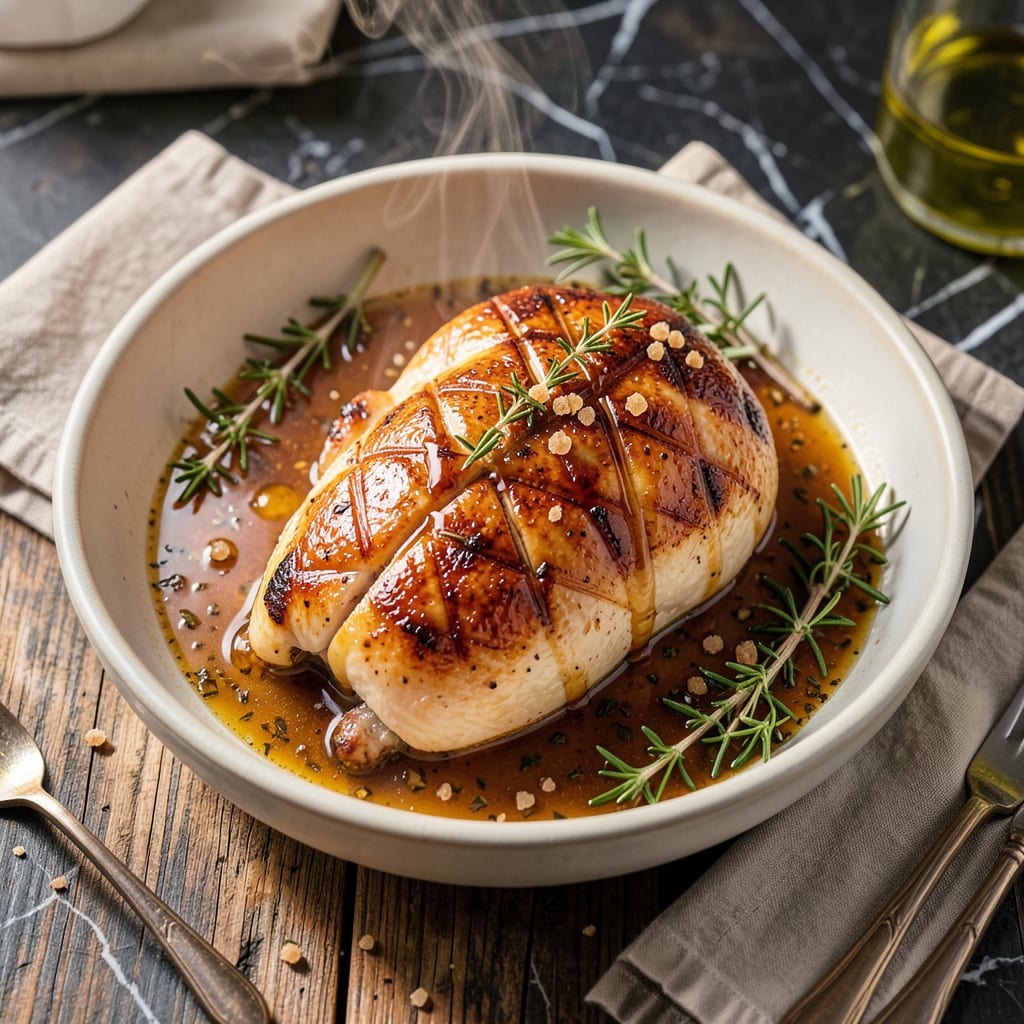
This brine transforms grilled turkey with a proven technique that guarantees tender, juicy meat every time. The balance of salt, sugar, and aromatics works overnight to enhance flavor and moisture without overwhelming the natural taste of the bird.
Perfect for holiday gatherings, this method requires minimal effort for maximum impact. The turkey emerges from the grill with a golden crust and interior that stays succulent, even when carved and served to a crowd.
Ingredients for Grilled Turkey Brine
Nine ingredients transform ordinary turkey into a holiday showstopper with this brine.
| Ingredient | Amount | Notes |
|---|---|---|
| Water 💧 | 1 cup | Filtered or distilled preferred |
| Kosher Salt 🧂 | ¾ cup | Diamond Crystal brand recommended |
| Light Brown Sugar 🍚 | ½ cup | Packed for even distribution |
| Honey 🍯 | ¼ cup | Local raw honey for depth |
| Fresh Rosemary 🌿 | 4 sprigs | Stems removed, roughly chopped |
| Fresh Thyme 🍃 | 6 sprigs | Stems removed, roughly chopped |
| Garlic Cloves 🧄 | 8 cloves | Smashed to release flavor |
| Orange Zest 🍊 | 1 tbsp | From 1 medium orange |
| Black Peppercorns 🌶️ | 1 tbsp | Whole, lightly crushed |
| Bay Leaves 🍃 | 2 pieces | Dried, whole leaves |
[recipe_ingredient_scaler]
For optimal results, use filtered or distilled water to avoid any off-flavors. Diamond Crystal kosher salt dissolves most evenly, but Morton’s works in a pinch—just reduce by 25%. The brown sugar adds caramelized depth, while honey (preferably local raw) enhances moisture retention. Fresh herbs are non-negotiable—Whole Foods or a farmers market will have the most vibrant sprigs.
Out of rosemary or thyme? Fresh sage or marjoram at equal amounts will work. No fresh herbs at all? Use dried at one-third the quantity. Swap honey for maple syrup if needed, but avoid granulated sugar—it lacks complexity. The citrus zest can be lemon or lime instead of orange, though orange’s sweetness complements turkey best.
The brine keeps for 24 hours refrigerated but is best used fresh. Discard after brining—never reuse. Prep herbs and aromatics the night before to save time. Store-bought stock can replace water for extra depth (use low-sodium).
Why You’ll Love This Recipe
- No-Fuss Brine: I just dump water, salt, sugar, honey, and rosemary in a pot—no chopping, no fuss, and it’s ready in the time it takes to heat the grill.
- Sweet & Herby: The honey and brown sugar give the turkey a caramelized crust, while the rosemary slips into every bite like a secret handshake.
- Holiday or Tuesday: I’ve used this brine for Thanksgiving birds and weeknight turkey burgers—honestly, it works for both without missing a beat.
- Leftovers for Days: One brined turkey feeds us for sandwiches, tacos, and soup—between us, it’s the gift that keeps on giving.
Step-by-Step Instructions for Grilled Turkey Brine
This professional method ensures maximum moisture retention and flavor penetration for tender holiday turkey.
Step 1: Combine Water with Dry Ingredients
In a large saucepan, add the 1 cup Water and set over medium-high heat. Bring to a gentle simmer, then immediately reduce heat to medium. This controlled temperature prevents scorching while allowing the dry ingredients to dissolve properly.
Add the 0.75 cup Kosher Salt and 0.5 cup Light Brown Sugar to the warm water. Stir constantly with a silicone spatula until both are completely dissolved—you should see no visible grains. The sugar adds subtle sweetness while the salt initiates the brining process at the cellular level.
Step 2: Incorporate Aromatic and Sweet Components
Remove the saucepan from heat and let it cool for 2 minutes before adding the delicate aromatic ingredients. This prevents heat from degrading their essential oils and volatile compounds.
Stir in the 0.25 cup Honey until fully incorporated. Then add the 4 sprigs Fresh Rosemary, 6 sprigs Fresh Thyme, 8 cloves Garlic Cloves, 1 tbsp Orange Zest, 1 tbsp Black Peppercorns, and 2 pieces Bay Leaves. The combination creates a complex flavor profile that penetrates the turkey during brining.
Step 3: Cool the Brine Completely
Transfer the brine mixture to a heatproof container and add 3 cups of cold water or enough to bring the total volume to 4 cups. This dilution ensures the proper salt concentration for effective brining without over-curing the meat.
Let the brine cool to room temperature, then refrigerate until completely chilled to 40°F or below. This step is crucial—adding warm brine to raw turkey creates an unsafe temperature zone that promotes bacterial growth. The cooling process typically takes 1-2 hours in the refrigerator.
Step 4: Submerge and Brine the Turkey
Place your turkey in a brining bag or large container that fits in your refrigerator. Pour the chilled brine over the turkey, ensuring it is fully submerged. If necessary, weigh down the turkey with a plate to keep it below the liquid surface.
Refrigerate for 12-24 hours, turning the turkey once halfway through the brining time. This ensures even distribution of the brine solution throughout the meat. The longer brining time maximizes moisture retention and flavor penetration, resulting in exceptionally tender turkey when grilled.
Pro Tips For Making Grilled Turkey Brine
- Chill the Brine: Always refrigerate your brine to 40°F or below before adding the turkey—I learned this the hard way after a lukewarm batch led to uneven seasoning and a nervous wait for safe temps.
- Crush the Rosemary: Lightly crush the fresh rosemary sprigs before adding them to release more oils; sounds small, but it actually changes the outcome in the final flavor.
- Dissolve the Sugar: Heat 1 cup of the water with the brown sugar and honey until fully dissolved, then cool before mixing with the rest—skipping this step leaves grainy bits clinging to the turkey.
- Brine Overnight: Give it a full 12-16 hours in the fridge; I was skeptical until I tried it, but shorter soaks just don’t penetrate the meat the same way.
Common Mistakes When Making grilled turkey brine
Over-Salting the Brine
Using too much Kosher Salt can turn your turkey into a salty disaster. Stick to the 0.75 cup measurement—this is the sweet spot for flavor without overpowering. I learned this the hard way at my first local BBQ competition. 💡
Skipping the Cooling Step
Never add warm brine to raw turkey. This creates a dangerous temperature zone between 40-140°F where bacteria thrive. Always chill your brine to 40°F or below first—this takes 1-2 hours in the fridge.
Incomplete Submersion
If any part of the turkey peeks above the brine, it won’t absorb flavor evenly. Use a brining bag or weigh it down with a plate. I like to check mine every 4 hours during the 12-24 hour soak.
Reusing the Brine
Brines are single-use only. Once it’s touched raw turkey, it’s contaminated with bacteria. Discard it after use—no exceptions. I know it feels wasteful, but safety comes first.
Over-Brining Time
More than 24 hours in the brine can make your turkey mushy. The 12-24 hour window is ideal for moisture and flavor without breaking down the meat’s texture. Set a timer if you’re forgetful like me.
Using Table Salt
Diamond Crystal kosher salt is coarser and dissolves more evenly. Table salt is finer and can make your brine too concentrated. If you must substitute, reduce the amount by 25%.

Trained in classic French technique but raised on slow-cooked ribs and spicy rubs, she blends culinary skill with smoke and soul.
- Recipe for Boneless Pork Chops in Cast Iron Skillet: Sear and Baste to Juicy Perfection - October 3, 2026
- Recipe for Boneless Cross Rib Roast: Slow-Roasted Beef with Herb Crust - October 3, 2026
- Hamburgers in Sauce Recipe Crock Pot: Slow-Cooked Savory Delight - October 3, 2026