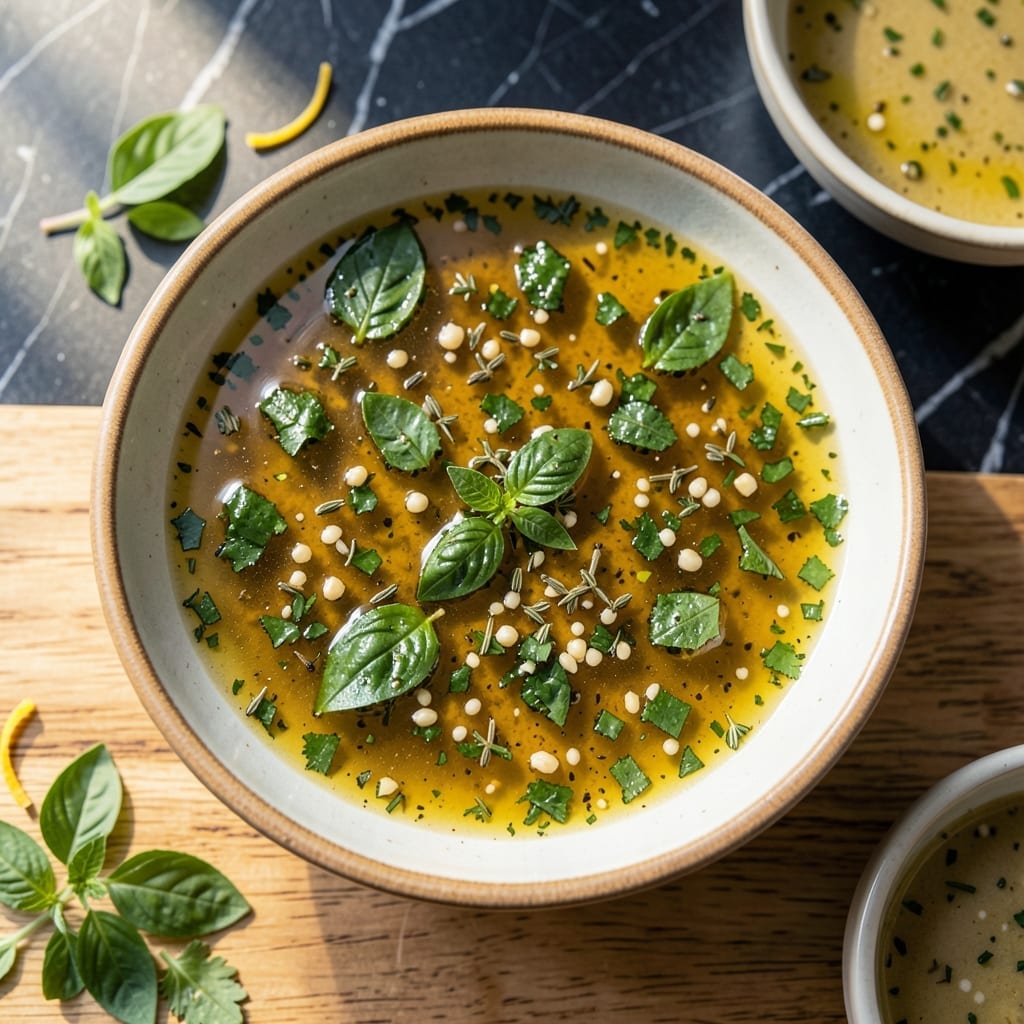
This dressing transforms any salad into a restaurant-quality dish with its bright, herbaceous character. I developed this recipe to complement smoky grilled vegetables, but it works beautifully with greens too.
The secret lies in balancing fresh herbs with tangy vinegar and a touch of sweetness. No cooking required—just whisk and serve. It keeps for 5 days in the fridge.
What sets it apart is the depth of flavor from toasted spices and fresh garlic. The herbs infuse the oil with aromatic complexity that elevates every bite.
Drizzle over warm vegetables or chilled greens. The versatility makes it a kitchen staple.
Ingredients for Grilled Vegetable Salad Dressing
Eleven ingredients create this bright, herbaceous dressing with depth and complexity.
| Ingredient | Amount | Notes |
|---|---|---|
| Extra-Virgin Olive Oil 🫒 | ¾ cup | High quality, cold-pressed preferred |
| White Wine Vinegar 💧 | ¼ cup | Bright and tangy variety |
| Fresh Basil Leaves 🌿 | ¼ cup | Packed, finely chopped |
| Fresh Parsley Leaves 🍃 | ¼ cup | Flat-leaf variety, chopped |
| Fresh Thyme Leaves 🌿 | 1 tbsp | Stems removed, minced |
| Garlic Cloves 🧄 | 2 cloves | Freshly minced for best flavor |
| Dijon Mustard 🟡 | 1 tbsp | Smooth, high-quality brand |
| Pure Maple Syrup 🍁 | 1 tbsp | Grade A or B for depth |
| Ground Cumin 🌾 | ½ tsp | Toasted lightly for warmth |
| Sea Salt 🧂 | ½ tsp | Fine grain for even distribution |
| Freshly Ground Black Pepper 🌶️ | ¼ tsp | Coarse grind for texture |
[recipe_ingredient_scaler]
The olive oil is foundational here. California Olive Ranch or Cobram Estate offer consistent quality for extra-virgin. Fresh herbs are non-negotiable—they must be vibrant and fragrant. Look for basil with unblemished leaves and parsley with crisp stems. Toasting the cumin (30 seconds in a dry pan) unlocks its earthy warmth. Penzeys or bulk bins at natural food stores are excellent sources for spices.
No white wine vinegar? Apple cider vinegar at equal volume works, though it’s slightly fruitier. Short on fresh herbs? Dried herbs at one-third the amount can substitute, but rehydrate them in warm vinegar first. Maple syrup can be swapped for agave nectar—use the same quantity. For a nutty depth, toasted sesame oil can replace a portion of the olive oil (start with 2 tbsp).
The dressing keeps 5 days in the fridge—store in an airtight container to preserve freshness. The flavors meld and intensify over 24 hours, so it’s best made ahead. If separation occurs, whisk or shake vigorously before serving. Avoid freezing, as it can dull the herbs’ brightness.
Why You’ll Love This Recipe
- 5-Minute Whisk: I just dump the olive oil, vinegar, and herbs in a jar and shake—no chopping, no fuss.
- Herb-Packed Punch: Honestly, that combo of basil, parsley, and thyme with the tangy vinegar makes even plain lettuce taste luxurious.
- Drizzle on Everything: I’ve used it on grilled zucchini, as a marinade for chicken, and even to finish off roasted potatoes.
- Stays Fresh for Days: The flavors actually get better after a day or two in the fridge, so I always make a double batch.
Step-by-Step Instructions for Grilled Vegetable Salad Dressing
Master this herb-infused dressing with precise technique and balanced flavors for any salad.
Step 1: Prepare the Herb and Garlic Base
Finely chop the 0.25 cup Fresh Basil Leaves and 0.25 cup Fresh Parsley Leaves until uniform in size. This ensures even distribution in the final dressing. Mince the 1 tbsp Fresh Thyme Leaves and 2 cloves Garlic Cloves until nearly paste-like.
I always chop herbs just before using to preserve their volatile oils. The garlic should release its aroma as you mince—this signals it’s fresh and potent. Combine all chopped herbs and garlic in a medium bowl to create your aromatic foundation.
Step 2: Whisk the Acid and Emulsifiers
In a separate small bowl, combine the 0.25 cup White Wine Vinegar, 1 tbsp Dijon Mustard, and 1 tbsp Pure Maple Syrup. The vinegar’s brightness will cut through the richness of the oil, while the mustard acts as a natural emulsifier.
Whisk vigorously for 30 seconds until the mixture is smooth and slightly thickened. The mustard’s lecithin helps stabilize the emulsion, preventing separation. You’ll notice the color deepen slightly as the ingredients fully incorporate.
Step 3: Incorporate the Oil and Spices
Slowly drizzle in the 0.75 cup Extra-Virgin Olive Oil while whisking continuously. This gradual addition is critical—adding it too quickly will cause the dressing to break. Pour in a thin, steady stream, maintaining constant motion with your whisk.
Once the oil is fully incorporated, add the 0.5 tsp Ground Cumin, 0.5 tsp Sea Salt, and 0.25 tsp Freshly Ground Black Pepper. Whisk for another 15 seconds to distribute the spices evenly. The dressing should appear creamy and cohesive, with no visible oil separation.
Step 4: Rest and Adjust Seasoning
Let the dressing rest for 10 minutes at room temperature. This allows the flavors to meld and the herbs to infuse the oil. You’ll notice the herbs plump slightly as they absorb the liquid, and the garlic’s sharpness will mellow.
Taste and adjust seasoning if needed. If the dressing tastes too sharp, a pinch more Sea Salt can balance it. If it’s too thick, whisk in a teaspoon of water to reach your desired consistency. The final product should coat the back of a spoon lightly but still flow freely.
Pro Tips For Making Grilled Vegetable Salad Dressing
- Infuse the Oil: Gently heat the olive oil in a pan with the basil, parsley, and thyme for 2-3 minutes—just until fragrant, not smoking. I learned this the hard way: raw herbs in dressing can taste bitter, but warming them first mellows the flavors beautifully.
- Balance the Acid: Start with less white wine vinegar than you think you need, then taste and adjust. Sounds weird, but it works: a 3:1 oil-to-vinegar ratio is my sweet spot, but some batches need a splash more to cut through the richness.
- Skip the Blender: After burning out two blenders on herb dressings, I finally figured out that a simple whisk and a little patience emulsify the oil and vinegar just as well—no cleanup, no fuss.
- Use Fresh Herbs Only: My grandmother swore by this, and she was right: dried herbs won’t give you that bright, vibrant flavor. If your basil or parsley looks wilted, revive it in ice water for 10 minutes before chopping.
Dietary Considerations for This Recipe
Vegan and Plant-Based
This dressing is naturally 100% vegan—no animal products whatsoever. The base of extra-virgin olive oil and white wine vinegar ensures it’s plant-derived, while the herbs and spices add depth without any dairy or meat-based ingredients. Perfect for vegan, vegetarian, or plant-based diets. 🌱
Gluten-Free Friendly
All ingredients in this recipe are inherently gluten-free. The Dijon mustard is the only potential concern—always check the label for additives. I recommend Annie’s or Maille brands, which are certified gluten-free and maintain consistent quality.
Nut-Free and Allergen Safe
This dressing contains no nuts, soy, or dairy, making it safe for most common allergies. The only major allergen to confirm is the mustard—some brands process in facilities with nuts. For absolute safety, use organic Dijon from dedicated allergen-free facilities.
Low-Sodium Option
To reduce sodium, cut the sea salt by half or omit it entirely. The fresh herbs and garlic provide plenty of flavor. If needed, finish with a pinch of salt-free seasoning blend like Mrs. Dash for extra depth. 💡
Sugar-Conscious Variation
For a lower-sugar version, replace the maple syrup with 1 tsp monk fruit sweetener or simply omit it. The natural sweetness of the herbs and vinegar will still balance the dressing beautifully.
Nutrition Facts
Frequently Asked Questions
How long does this dressing stay fresh?
It keeps for 5 days in an airtight container in the fridge. The flavors actually improve after 24 hours as the herbs infuse.
Can I make this without fresh herbs?
Yes, use dried herbs at one-third the amount. Rehydrate them in warm vinegar first for better flavor distribution.
What if my dressing separates?
Just whisk or shake vigorously before serving. A pinch of extra mustard can help stabilize it if needed.
Can I adjust the sweetness?
Reduce or omit the maple syrup, or swap it for 1 tsp monk fruit sweetener. The herbs provide natural sweetness too.

Trained in classic French technique but raised on slow-cooked ribs and spicy rubs, she blends culinary skill with smoke and soul.
- Recipe for Boneless Pork Chops in Cast Iron Skillet: Sear and Baste to Juicy Perfection - October 3, 2026
- Recipe for Boneless Cross Rib Roast: Slow-Roasted Beef with Herb Crust - October 3, 2026
- Hamburgers in Sauce Recipe Crock Pot: Slow-Cooked Savory Delight - October 3, 2026