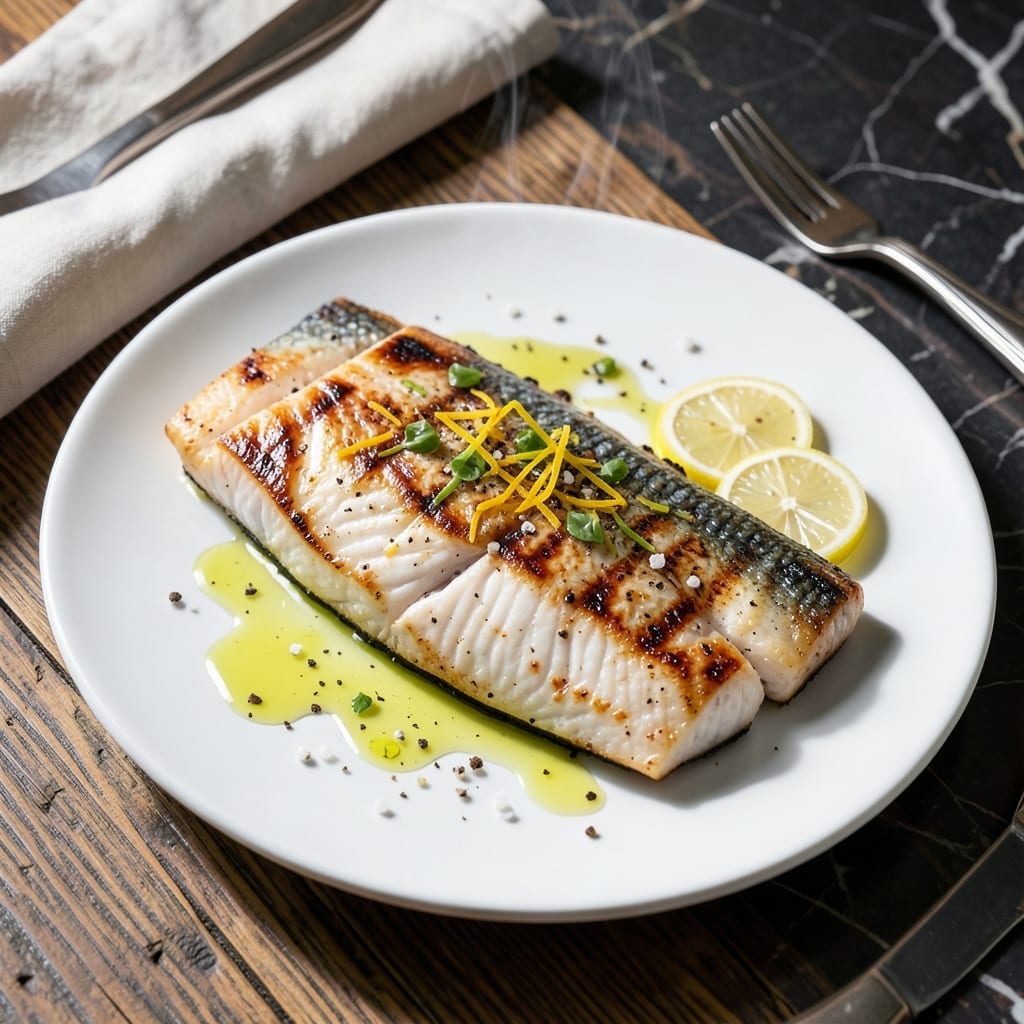
This grilled white bass delivers the flaky texture and charred edges that make fresh-caught fish unforgettable. My French training taught me that simple preparations let quality ingredients shine.
The key is high heat and precise timing. A quick oil rub and lemon zest enhance the natural sweetness without overpowering. The grill imparts that signature smoky kiss that complements the delicate flesh.
You’ll achieve perfectly cooked fish with a crisp exterior and tender, moist interior. The lemon-kissed char adds a bright contrast to the rich, buttery white bass.
Serve immediately with a squeeze of fresh lemon and a sprinkle of chopped herbs for a dish that tastes like a coastal breeze.
Ingredients for Grilled White Bass
Fresh white bass and a handful of bright ingredients create this coastal-inspired dish.
| Ingredient | Amount | Notes |
|---|---|---|
| White Bass Fillets 🐟 | 1 ½ lb | Skin-on, scaled, pin bones removed |
| Extra-Virgin Olive Oil 🫒 | 3 tbsp | Divided for rubbing and finishing |
| Lemon Zest 🍋 | 1 tbsp | Finely grated from large lemons |
| Fresh Lemon Juice 🍋 | 2 tbsp | Newly squeezed for brightness |
| Kosher Salt 🧂 | 1 tsp | Diamond Crystal preferred for texture |
| Freshly Ground Black Pepper 🌶️ | ½ tsp | Coarse grind for finish |
| Fresh Flat-Leaf Parsley 🌿 | ¼ cup | Finely chopped for garnish |
| Fresh Dill 🌿 | ¼ cup | Finely chopped, stems removed |
| Garlic Cloves 🧄 | 2 cloves | Minced for subtle depth |
| Unsalted Butter 🧈 | 2 tbsp | Melted, for basting (optional) |
[recipe_ingredient_scaler]
The fish is everything here. White bass fillets should smell like the ocean, never fishy, with firm, translucent flesh. Whole Foods or a trusted local fishmonger are your best bets—ask for skin-on fillets with pin bones removed. If you’re catching your own (lucky you), clean and fillet within hours for peak freshness. Look for glistening, moist fillets that spring back when pressed.
No white bass? Branzino or sea bass work beautifully. Swap dill for tarragon or chives if that’s what’s growing in your garden. Lemon zest can be lime or orange for a twist. The butter is optional but adds richness—vegan butter works if you’re avoiding dairy. Fresh herbs are non-negotiable though—dried just won’t cut it for that bright finish.
Fish cooks fast, so prep everything before firing the grill. Best eaten immediately, but leftovers keep 1-2 days in the fridge. Reheat gently in a skillet with a splash of water. The lemon-kissed char holds up surprisingly well, though the texture is best fresh off the grill.
Why You’ll Love This Recipe
- 20-Minute Meal: I can get this from fridge to plate faster than ordering takeout. Just oil, lemon, salt, and the grill does the rest.
- Bright & Zesty: That hit of lemon zest and juice with the smoky char? It’s summer on a fork.
- Feeds a Crowd: One batch serves my whole family, and the fillets stay moist even if I double the recipe.
- Budget Win: White bass is affordable, and I’m using pantry staples I already have. No extra grocery trips needed.
Step-by-Step Instructions for Grilled White Bass
Here’s how I achieve perfectly flaky, lemon-kissed fish with beautiful grill marks every time.
Step 1: Prep the White Bass Fillets with Citrus and Herbs
Pat the 1.5 lb white bass fillets completely dry with paper towels—this is non-negotiable for preventing sticking. Place them skin-side down on a plate and drizzle with 2 tbsp of the extra-virgin olive oil, reserving 1 tbsp for later.
In a small bowl, combine the 1 tbsp lemon zest, 1 tsp kosher salt, and 0.5 tsp freshly ground black pepper. Sprinkle this mixture evenly over the fillets, pressing gently to adhere. Add the 2 minced garlic cloves, 0.25 cup fresh flat-leaf parsley, and 0.25 cup fresh dill, patting them onto the surface. Let the fish sit at room temperature for 10 minutes to absorb the flavors.
Step 2: Preheat and Clean the Grill
Preheat your grill to medium-high heat (about 400°F). I use a gas grill for precise temperature control, but charcoal works beautifully too. Clean the grates thoroughly with a grill brush to remove any debris—this prevents the delicate fish from sticking.
Lightly oil the grates by dipping a folded paper towel in the remaining 1 tbsp extra-virgin olive oil and using tongs to rub it over the hot grates. You should see a slight shimmer but no smoke. This creates the perfect non-stick surface for the fish to release cleanly after grilling.
Step 3: Grill the Fillets to Flaky Perfection
Place the fillets skin-side down on the grill. Close the lid and cook undisturbed for 4-5 minutes. The key here is patience—resist the urge to move or flip the fish. You’ll know it’s ready to turn when the edges turn opaque and the fillet releases easily from the grates with a gentle nudge.
Flip the fillets carefully using a thin, flexible spatula. For extra richness, brush the cooked side with the 2 tbsp melted unsalted butter. Close the lid and grill for another 2-3 minutes until the fish is opaque throughout and flakes easily when tested with a fork. The internal temperature should reach 145°F.
Step 4: Finish and Serve Immediately
Transfer the grilled white bass to a serving platter. Drizzle with the 2 tbsp fresh lemon juice and any remaining melted butter. Garnish with a sprinkle of the reserved herbs from the prep bowl for a fresh, vibrant finish.
Serve immediately while hot—the flaky texture and bright lemon-kissed char are best enjoyed right off the grill. The skin should be crispy and golden, while the flesh stays tender and moist. This method guarantees a restaurant-quality dish with minimal effort and maximum flavor.
Pro Tips For Making Grilled White Bass
- Preheat the Grill: Get those grates screaming hot—medium-high heat, at least 400°F—before the fillets hit the oil. I learned this the hard way after too many fish sticking to lukewarm grates.
- Pat Fillets Dry: Blot the white bass fillets with paper towels until they’re bone-dry, then brush with olive oil. Sounds tedious, but it’s the only way to get that crisp, golden crust instead of steamed fish.
- Skip the Overcrowding: Leave at least an inch between fillets on the grill—any closer and they’ll steam instead of sear. After ruining a batch with soggy edges, I finally accepted that patience pays off.
- Zest Before Juicing: Grate the lemon zest first, then cut and juice the same lemon. My grandmother swore by this, and she was right: it’s faster, and you won’t waste a drop of flavor.
Pro Cooking Tips for Great grilled white bass
Grill Temperature Control
Maintain 400°F consistently for perfect grill marks and even cooking. I use a grill surface thermometer to monitor heat zones. Charcoal grills may need adjustment—keep coals in an even layer for steady heat. 🌡️
Prevent Sticking
Always start with clean, oiled grates—I use tongs and a paper towel dipped in oil. Pat fillets completely dry before grilling to create a non-stick barrier. The skin will crisp beautifully without tearing.
Timing Perfection
Cook skin-side down for 4-5 minutes without moving. The fillet will release naturally when ready. Flip only once and cook 2-3 minutes more until reaching 145°F internal temperature.
Herb Adhesion Trick
Press the lemon zest, parsley, and dill mixture firmly onto the fillets before grilling. This creates a flavorful crust that adheres during cooking. Let the fish rest 10 minutes before grilling for maximum herb absorption. 💡
Butter Basting
Brush with melted unsalted butter after flipping for added richness. Use a silicon basting brush to avoid flare-ups. This step is optional but adds a luxurious finish to the fish.
Serving Freshness
This dish is best served immediately while hot. The lemon juice and herbs should be added just before serving to preserve their bright, fresh flavors. The texture is most flaky when eaten right off the grill.
Nutrition Facts
Frequently Asked Questions
What’s the best way to prevent the fish from sticking to the grill?
Start with clean, oiled grates and pat fillets completely dry before grilling. This creates a non-stick barrier for crispy skin.
Can I use a different type of fish for this recipe?
Branzino or sea bass work beautifully as substitutes. They have similar flaky textures and pair well with lemon and herbs.
How do I know when the fish is done cooking?
The fillets should reach an internal temperature of 145°F and flake easily when tested with a fork. This takes about 4-5 minutes per side.
How long can I store leftovers?
Leftover fish keeps 1-2 days in the fridge. Reheat gently in a skillet with a splash of water to maintain moisture.

Trained in classic French technique but raised on slow-cooked ribs and spicy rubs, she blends culinary skill with smoke and soul.
- Recipe for Boneless Pork Chops in Cast Iron Skillet: Sear and Baste to Juicy Perfection - October 3, 2026
- Recipe for Boneless Cross Rib Roast: Slow-Roasted Beef with Herb Crust - October 3, 2026
- Hamburgers in Sauce Recipe Crock Pot: Slow-Cooked Savory Delight - October 3, 2026