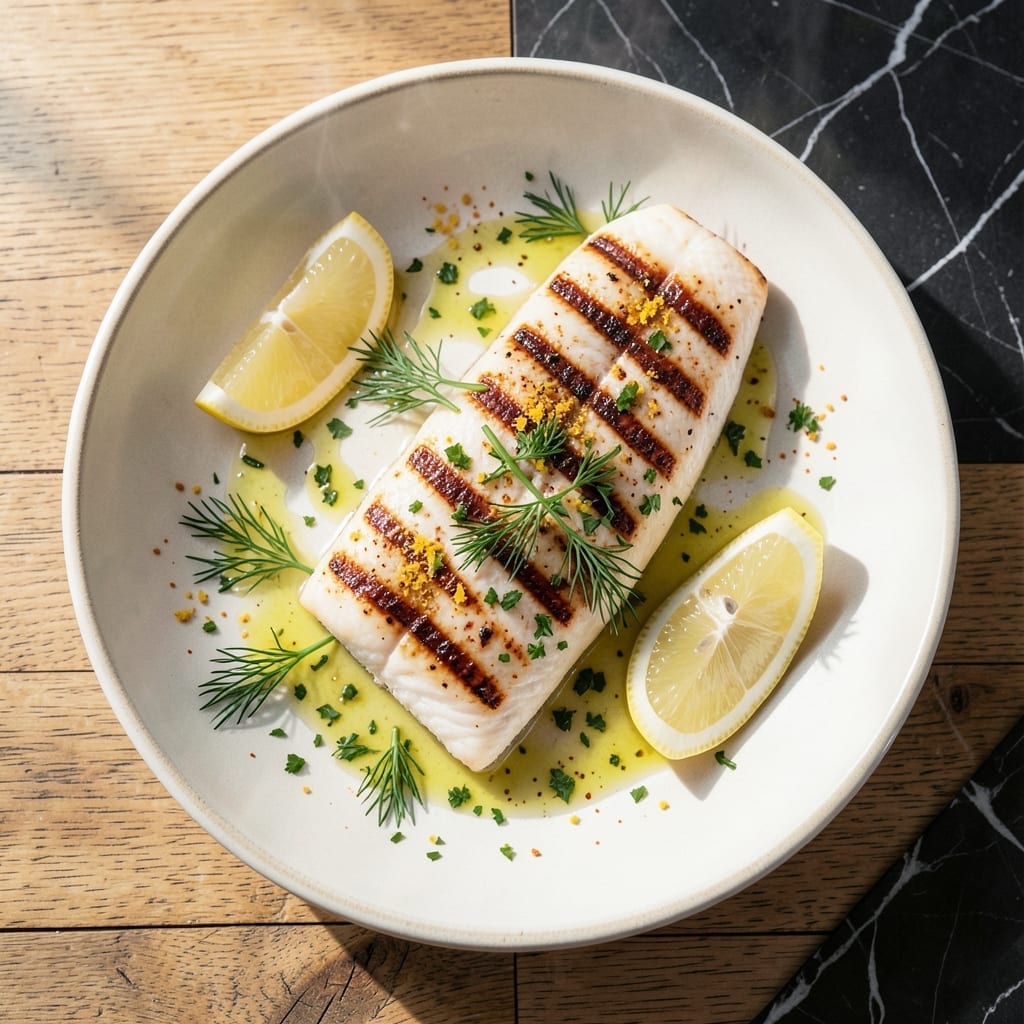
I’ve spent years perfecting the art of grilling fish to achieve that ideal flaky, moist texture that separates good from extraordinary. The secret lies in high heat and precise timing.
This method transforms delicate white fish into a dish with a lightly charred exterior and perfectly tender interior. A simple lemon-herb marinade enhances the natural sweetness without overpowering it.
What emerges from the grill is restaurant-quality fish that holds its shape yet falls apart at the touch of a fork. The citrus and herbs create a bright finish that complements the clean flavor of the fish.
Serve immediately with fresh vegetables or a light grain pilaf to complete the meal. The results speak for themselves.
Ingredients for Grilled White Fish Fillet
High-quality fish and a bright mix of herbs and citrus create this standout dish.
| Ingredient | Amount | Notes |
|---|---|---|
| White Fish Fillets 🐟 | 1 ½ lb | Cod, halibut, or mahi-mahi recommended |
| Extra-Virgin Olive Oil 🫒 | ¼ cup | For marinade and grilling |
| Fresh Lemon Juice 🍋 | 3 tbsp | About 1 large lemon |
| Lemon Zest 🍋 | 1 tbsp | Finely grated from fresh lemon |
| Fresh Dill 🌿 | 2 tbsp | Chopped, stems removed |
| Fresh Parsley 🌿 | 2 tbsp | Chopped, flat-leaf variety |
| Garlic Cloves 🧄 | 3 cloves | Minced for marinade |
| Dijon Mustard 🟡 | 1 tbsp | Smooth variety preferred |
| Salt 🧂 | 1 tsp | Kosher or sea salt |
| Black Pepper 🌶️ | ½ tsp | Freshly ground preferred |
| Paprika 🌶️ | ½ tsp | Sweet or smoked variety |
[recipe_ingredient_scaler]
The fish selection is critical here. Wild-caught cod or halibut from Whole Foods or a trusted seafood counter provides the best texture and flavor. Look for fillets that are firm, translucent, and have a mild scent—any fishy odor indicates it’s past its prime. For the herbs, fresh dill and parsley from the produce section or your garden elevate the marinade significantly.
No fresh dill? Dried dill at one-third the amount works, though it’s less vibrant. Out of fresh lemon? Bottled lemon juice can substitute, but fresh zest is non-negotiable for that bright citrus note. If you don’t have Dijon, whole-grain mustard adds a nice texture. The olive oil should be extra-virgin for the best flavor, but any neutral oil works in a pinch.
Marinate the fish for no more than 30 minutes—any longer and the acid starts to cook it. Grill immediately after marinating for best results. Leftovers (if any) keep for 1-2 days in the fridge, but this dish is truly best served fresh off the grill.
Why You’ll Love This Recipe
- 5-Minute Prep: I just drizzle the fillets with olive oil, lemon, and dill—no marinating, no fuss.
- Bright and Zesty: That combo of lemon zest and fresh dill makes every bite taste like a seaside dinner.
- Weeknight Hero: Honestly, it’s my go-to for busy Tuesdays when I need something light but satisfying.
Step-by-Step Instructions for Grilled White Fish Fillet
This method guarantees moist, flaky results with bright citrus and herb notes.
Step 1: Prepare the Lemon-Herb Marinade
In a medium bowl, whisk together the 0.25 cup extra-virgin olive oil, 3 tbsp fresh lemon juice, 1 tbsp lemon zest, 1 tbsp Dijon mustard, 1 tsp salt, 0.5 tsp black pepper, and 0.5 tsp paprika until fully emulsified. The mixture should appear thick and slightly pale.
Add the 2 tbsp fresh dill, 2 tbsp fresh parsley, and 3 cloves garlic cloves to the bowl. Stir to combine, pressing the herbs lightly with the back of a spoon to release their essential oils. Let the marinade sit for 5 minutes to allow the flavors to meld.
Step 2: Marinate the Fish Fillets
Place the 1.5 lb white fish fillets in a shallow dish or resealable plastic bag. Pour the marinade over the fillets, ensuring they are fully coated. Turn the fillets once or twice to distribute the marinade evenly.
Cover the dish or seal the bag and refrigerate for 20-30 minutes. Do not exceed 30 minutes, as the acid in the lemon juice will begin to “cook” the fish, altering its texture. The fillets should appear slightly translucent at the edges when ready.
Step 3: Preheat and Prepare the Grill
Preheat your grill to medium-high heat (about 400°F). Clean the grates thoroughly with a grill brush to prevent sticking. Lightly oil the grates by dipping a folded paper towel in a small amount of oil and using tongs to rub it across the grates.
This step is critical for achieving those attractive grill marks and preventing the delicate fish from tearing when you flip it. The grates should be hot enough that a drop of water sizzles and evaporates immediately upon contact.
Step 4: Grill the Fish to Perfection
Remove the white fish fillets from the marinade, letting any excess drip off. Place the fillets skin-side down on the preheated grill. Close the lid and cook for 4-5 minutes without moving them. The edges should begin to turn opaque and the skin should release easily from the grates when ready to flip.
Gently flip the fillets using a thin, flexible spatula. Cook for an additional 3-4 minutes with the lid closed until the fish reaches an internal temperature of 145°F and flakes easily with a fork. The flesh should appear opaque throughout with no translucent spots remaining.
Step 5: Rest and Serve Immediately
Transfer the grilled white fish fillets to a platter and let them rest for 2-3 minutes. This brief rest allows the juices to redistribute throughout the flesh, ensuring maximum moisture in every bite.
Serve immediately while hot, garnished with additional fresh dill or parsley if desired. The fish should have distinct grill marks on the outside and a tender, flaky interior that separates easily with minimal pressure from a fork.
Pro Tips For Making Grilled White Fish Fillet
- Preheat the Grill: I learned this the hard way—if your grill isn’t screaming hot, the fish will stick and tear. Give it a full 10 minutes on high before oiling the grates.
- Pat Fish Dry: Sounds tedious, but it works: blot the fillets with paper towels before oiling. Wet fish steams instead of searing, and you’ll lose that beautiful crust.
- Skip the Overcrowding: Resist the urge to cook all fillets at once. Leave at least an inch between each piece so they cook evenly and don’t steam each other.
- Zest Before Juicing: My grandmother swore by this, and she was right: zest the lemon first, then cut it for juice. It’s nearly impossible to do it the other way around without making a mess.
Wine and Beer Pairings for grilled white fish fillet
Crisp White Wines
I always reach for a Sauvignon Blanc from New Zealand with grilled fish—the zesty lime and grapefruit notes mirror the lemon in your marinade perfectly. A Pinot Grigio from Northern Italy offers a lighter, more delicate pairing that won’t overpower the dish. 🍷
Rich White Options
For a creamier pairing, try a Chardonnay from Sonoma Coast with its balanced acidity and subtle oak. The buttery notes complement the fish’s natural richness while the citrus undertones harmonize with your lemon-herb marinade.
Light Beer Choices
A crisp pilsner like Samuel Adams Noble Pils cleanses the palate beautifully between bites. The carbonation cuts through any oiliness while the mild hop bitterness contrasts the fish’s sweetness. 🍺
Wheat Beer Pairing
I love a Belgian witbier such as Hoegaarden—its citrus and coriander notes echo the dish’s flavors. The slight spice from the witbier’s yeast profile adds an interesting dimension without overwhelming the fish.
Rosés to Consider
A dry Provence rosé brings strawberry and melon notes that complement the grilled fish’s delicate flavor. Serve it chilled to 45-50°F for the best experience. This pairing works especially well on warm summer evenings.
Nutrition Facts
Frequently Asked Questions
What’s the best fish to substitute?
Try tilapia, haddock, or snapper for similar texture and mild flavor. Avoid oily fish like salmon.
How do I know when it’s done?
The flesh should reach 145°F internally and flake easily with a fork. Opaque color means it’s ready.
Can I use a grill pan instead?
Yes! Heat the pan to medium-high and cook for 3-4 minutes per side. Ensure it’s very hot first.
Why does my fish stick to the grill?
Clean and oil the grates well, and don’t move the fillets until they release naturally. Patience prevents tearing.

Trained in classic French technique but raised on slow-cooked ribs and spicy rubs, she blends culinary skill with smoke and soul.
- Recipe for Boneless Pork Chops in Cast Iron Skillet: Sear and Baste to Juicy Perfection - October 3, 2026
- Recipe for Boneless Cross Rib Roast: Slow-Roasted Beef with Herb Crust - October 3, 2026
- Hamburgers in Sauce Recipe Crock Pot: Slow-Cooked Savory Delight - October 3, 2026