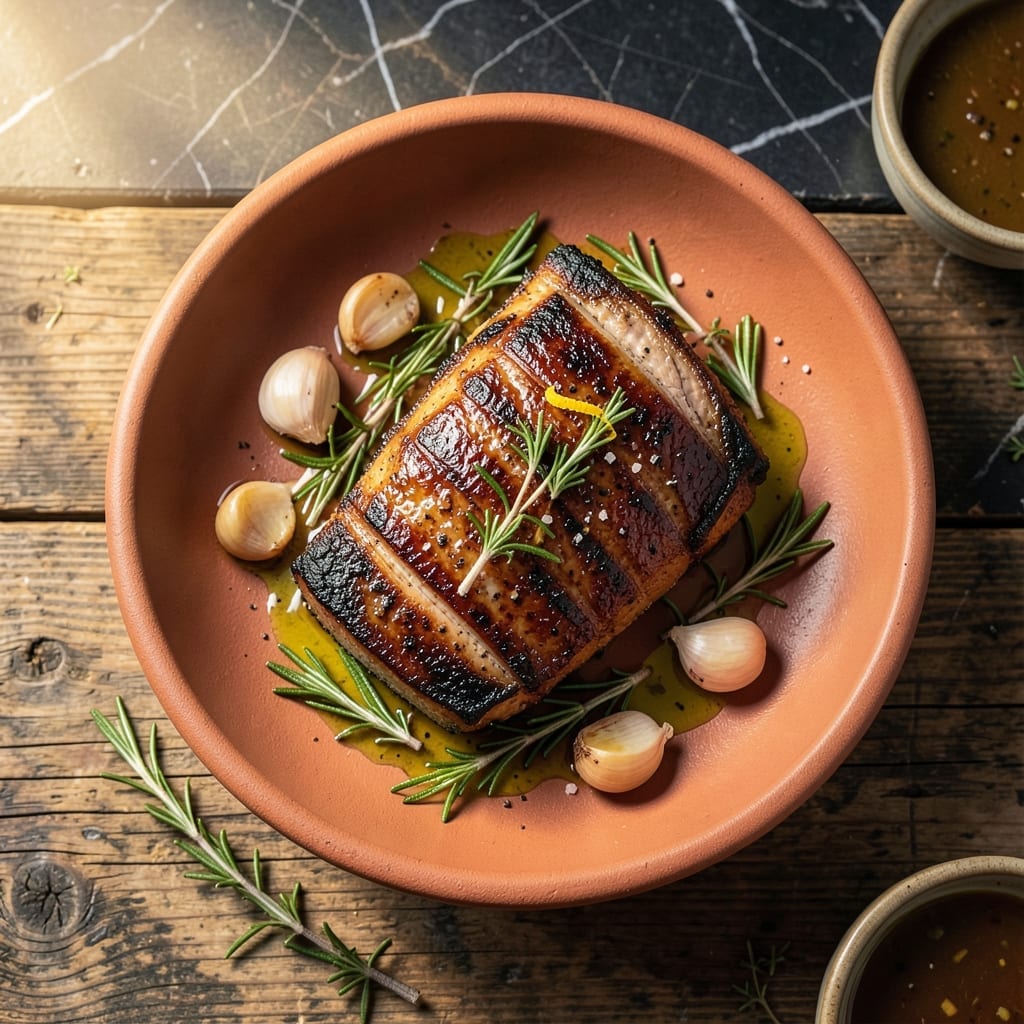
There’s nothing like the aroma of herb-crusted pork loin sizzling over an open flame. This method brings together my pitmaster roots and French training for a dish that’s both rustic and refined.
I start with a simple rub of fresh herbs, garlic, and olive oil—no fancy techniques, just bold flavor. The key is a hot grill and indirect heat, ensuring the outside caramelizes while the inside stays succulent.
After years of refining this recipe, I’ve found the perfect balance: a crisp, aromatic crust and meat so tender it nearly falls apart. The result is a centerpiece worthy of any gathering.
Serve with roasted vegetables or a fresh salad for a complete meal that impresses without effort.
Ingredients for Grilled Whole Pork Loin
Herb-crusted pork loin needs just a handful of bold ingredients for maximum impact.
| Ingredient | Amount | Notes |
|---|---|---|
| Pork Loin 🥩 | 2 ½ lb | Boneless, center-cut preferred |
| Fresh Rosemary 🌿 | 2 tbsp | Finely chopped, stems removed |
| Fresh Thyme 🌿 | 2 tbsp | Leaves stripped from stems |
| Garlic Cloves 🧄 | 6 cloves | Minced for maximum flavor |
| Extra-Virgin Olive Oil 🫒 | ¼ cup | Divided for rub and basting |
| Kosher Salt 🧂 | 2 tsp | Diamond Crystal preferred |
| Black Pepper 🌶️ | 1 tsp | Freshly ground for best results |
| Dijon Mustard 🟡 | 2 tbsp | For crust adhesion |
| Brown Sugar 🟤 | 1 tbsp | Light or dark variety |
| Lemon Zest 🍋 | 1 tbsp | From one large lemon |
| Red Wine Vinegar 💧 | 1 tbsp | For brightness in crust |
| Vegetable Oil 🫒 | 1 tbsp | High smoke point for grilling |
[recipe_ingredient_scaler]
The pork loin is the star—look for center-cut at Costco or Whole Foods for even thickness. Bonus points if it’s got a nice fat cap (don’t trim it off). Fresh herbs make a difference here, so grab them from the produce section, not the dried aisle. Rosemary and thyme should smell pungent and look vibrant (no wilted bunches). If you’re buying pre-minced garlic, stop—it tastes like regret.
No fresh herbs? Dried work at one-third the amount (but the crust won’t be as vibrant). Out of Dijon? Whole-grain mustard adds a nice texture, or skip it entirely and use an extra tablespoon of oil. Brown sugar can be swapped for maple syrup if you’re out (use 2 tbsp). The lemon zest is non-negotiable though—it cuts through the richness.
The rub keeps in the fridge for 24 hours if you prep ahead. Pork loin stays fresh in the fridge for 3-4 days, or freeze it for up to 6 months. Leftovers? Slice thin for sandwiches—reheats beautifully (trust me on this).
Why You’ll Love This Recipe
- Minimal Prep: It’s just a quick rub of olive oil, garlic, rosemary, and thyme before it hits the grill—no marinating, no fuss.
- Herb-Infused Goodness: The fresh rosemary and thyme crust gives every bite this crazy aromatic punch that’s way better than dried stuff.
- Feeds a Crowd: One whole loin means I can serve six without breaking a sweat, and it’s just as good sliced for sandwiches the next day.
- Budget Friendly: Pork loin is lean, flavorful, and costs less than half of what rib chops do at my butcher.
Step-by-Step Instructions for Herb-Crusted Grilled Pork Loin
Here’s how to nail this dish with perfect crust and juicy meat every time.
Step 1: Create the Herb Marinade
In a bowl, combine the 2 tbsp Fresh Rosemary, 2 tbsp Fresh Thyme, 6 cloves Garlic Cloves, 0.25 cup Extra-Virgin Olive Oil, 2 tsp Kosher Salt, and 1 tsp Black Pepper. This aromatic blend will infuse the pork loin with deep, herbaceous flavor.
Stir in the 2 tbsp Dijon Mustard, 1 tbsp Brown Sugar, 1 tbsp Lemon Zest, and 1 tbsp Red Wine Vinegar. The mustard helps the rub adhere, while the sugar and vinegar balance the richness. Let it sit for 5 minutes so the flavors meld together.
Step 2: Coat and Marinate the Pork Loin
Pat the 2.5 lb Pork Loin dry with paper towels—this ensures the marinade sticks properly. Rub the herb mixture all over the surface of the pork, pressing it into the meat so it clings. Don’t skip the ends; every bite should be packed with flavor.
Place the pork loin in a resealable bag or dish and let it marinate at room temperature for 30 minutes. If you have more time, refrigerate it for up to 4 hours for even deeper flavor penetration. The pork should look well-coated, with herbs and garlic visible on the surface.
Step 3: Preheat and Prepare the Grill
Preheat your grill to medium-high heat (about 400°F). Use the 1 tbsp Vegetable Oil to lightly grease the grates—this prevents sticking and helps achieve those beautiful grill marks. A clean, well-oiled grate is essential for even cooking and easy flipping.
If using a charcoal grill, bank the coals to one side for indirect heat after searing. For gas grills, preheat all burners, then reduce to medium once the pork goes on. You want consistent heat to cook the pork loin evenly without charring the herb crust.
Step 4: Grill to Perfection
Place the pork loin on the grill and sear for 4-5 minutes per side until the crust is deep golden brown. Resist the urge to move it—let the crust develop fully before flipping. The herbs should be slightly charred but not burnt.
Reduce the heat to medium and continue grilling, turning occasionally, until the internal temperature reaches 145°F (about 20-25 minutes total). Use a meat thermometer inserted into the thickest part for accuracy. The pork loin is done when it feels slightly firm to the touch but still yields to pressure.
Step 5: Rest and Slice
Transfer the pork loin to a cutting board and tent loosely with foil. Let it rest for 10-15 minutes—this allows the juices to redistribute, ensuring every slice is moist and tender. The internal temperature will rise a few degrees during resting, which is normal.
Slice the pork loin against the grain into ½-inch thick pieces. The crust should be crispy and fragrant, with a juicy, slightly pink interior. Serve immediately while warm, with any accumulated juices spooned over the top for extra flavor.
Pro Tips For Making Grilled Whole Pork Loin
- Sear Over Direct Heat: Start with the pork loin over direct high heat for 2-3 minutes per side to lock in juices—then move to indirect heat to finish cooking through.
- Score the Fat Cap: Make shallow cuts in the fat cap every inch or so so the rosemary, thyme, and garlic can penetrate deeper and flavor the meat.
- Don’t Overlook Resting: Pull the loin off the grill at 145°F and let it rest for at least 10 minutes under foil—skipping this makes it dry out fast.
- Use a Meat Thermometer: I learned this the hard way—guessing leads to overcooked pork, so check internal temp in the thickest part to nail it perfectly every time.
Pro Cooking Tips for This Dish
Perfect Searing Technique
Get your grill screaming hot—400°F is ideal for that initial sear. I oil the grates with vegetable oil right before adding the pork loin to prevent sticking. The first 4-5 minutes are critical: don’t touch it! Let that herb crust form a beautiful golden-brown layer. 🔥
Indirect Heat Mastery
After searing, move the pork to the cooler side of the grill for indirect cooking. On my charcoal setup, I bank the coals to one side. For gas grills, turn off one burner. This even heat prevents burning the herbs while cooking the meat through.
Temperature Control
Use a meat thermometer—I swear by my ThermoWorks Instant Read. Pull the pork at 145°F internal temp. Remember, the temperature will rise 5-10°F during resting. This ensures perfectly juicy meat every time.
Resting is Non-Negotiable
Tent the pork loosely with foil and let it rest for 10-15 minutes. This step lets the juices redistribute. I learned this the hard way—slicing too soon sends all that flavor onto the cutting board, not your plate.
Slicing Like a Pro
Slice against the grain into ½-inch thick pieces. Look at the muscle fibers—they’ll be running lengthwise. Cut perpendicular to them for the most tender bites. A sharp knife helps maintain those beautiful grill marks.
Herb Crust Preservation
Press the herb mixture firmly into the meat before grilling. This creates better adhesion. If using fresh herbs from the farmers market, pat them dry first—excess moisture can steam the crust instead of charring it. ✨
Nutrition Facts
Frequently Asked Questions
How do I know when it’s done?
Use a meat thermometer and pull it at 145°F internal temperature. The pork will continue cooking while resting, reaching the perfect doneness.
Can I use a gas grill instead of charcoal?
Preheat to 400°F and use indirect heat after searing. Gas grills work just as well for even cooking and that perfect crust.
Should I trim the fat cap?
No, leave the fat cap on! It helps keep the meat moist during grilling and adds flavor. Trim only after cooking if desired.
What if my herb crust burns?
Lower the heat and move to indirect cooking. If using fresh herbs, pat them dry first to reduce moisture that can cause burning.

Trained in classic French technique but raised on slow-cooked ribs and spicy rubs, she blends culinary skill with smoke and soul.
- Recipe for Boneless Pork Chops in Cast Iron Skillet: Sear and Baste to Juicy Perfection - October 3, 2026
- Recipe for Boneless Cross Rib Roast: Slow-Roasted Beef with Herb Crust - October 3, 2026
- Hamburgers in Sauce Recipe Crock Pot: Slow-Cooked Savory Delight - October 3, 2026