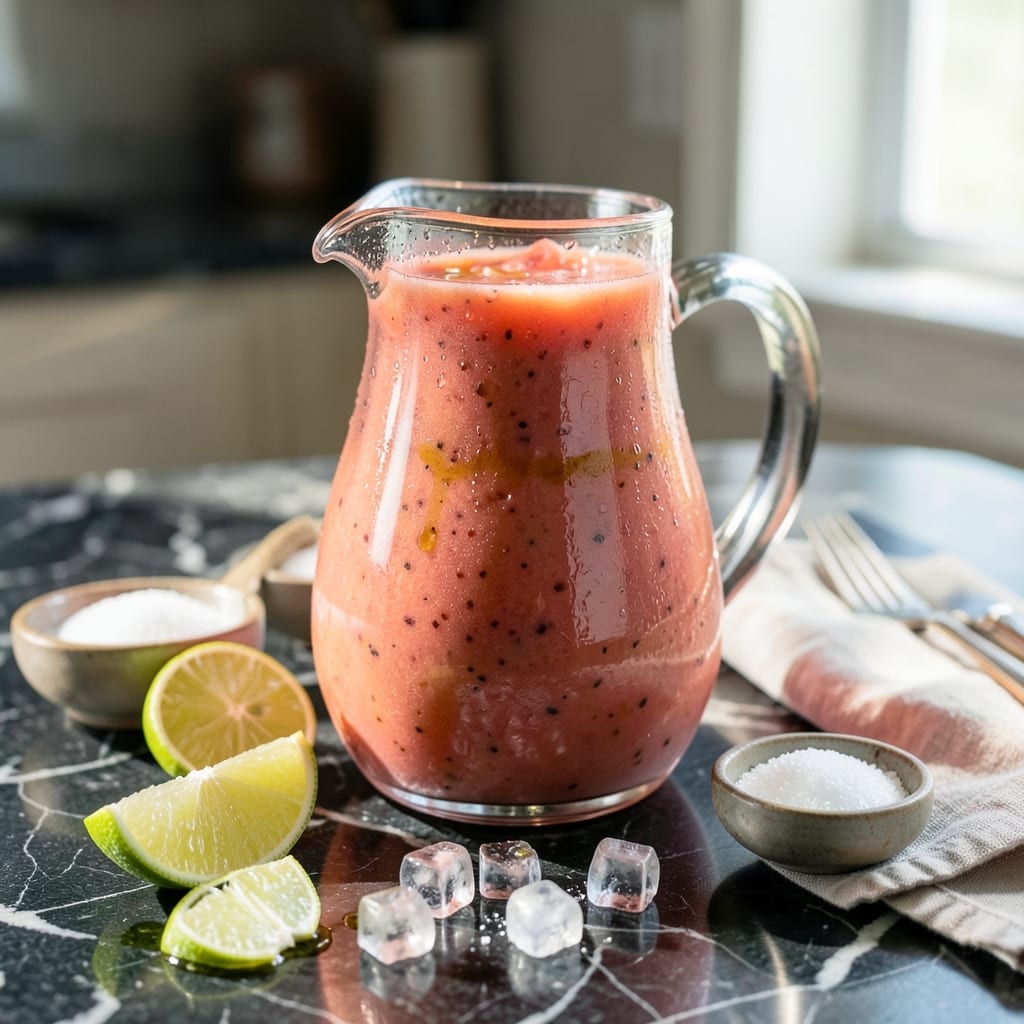
I’ve tested this guava pulp method in my tiny Boston kitchen more times than I’d like to admit. It’s the simplest way to capture that tropical sweetness in a versatile base for smoothies or sauces.
The process is straightforward: just peel, blend, and strain. No special equipment needed, just ripe guavas and a little patience. The result is a smooth, vibrant pulp that keeps its bright flavor for days.
What makes this special is its adaptability. Use it in cocktails, drizzle over desserts, or stir into yogurt. It’s the kind of staple that elevates both sweet and savory dishes effortlessly.
Store in an airtight container in the fridge for up to a week. The flavor only deepens with time.
Ingredients for Guava Pulp
Six simple ingredients transform ripe guavas into vibrant tropical pulp for endless uses.
| Ingredient | Amount | Notes |
|---|---|---|
| Ripe Guavas 🍈 | 6 whole | Peeled, seeded, chopped |
| Granulated Sugar 🍚 | ¼ cup | Adjust to taste preference |
| Fresh Lime Juice 🍋 | 2 tbsp | About 1 lime, freshly squeezed |
| Water 💧 | ¼ cup | For blending consistency |
| Ice Cubes ❄️ | 4 pieces | Optional for chilled pulp |
| Pinch of Salt 🧂 | 1 pinch | Balances sweetness |
[recipe_ingredient_scaler]
Guavas are the soul of this. Look for ripe, fragrant fruit at Latin markets or well-stocked Whole Foods—they should yield slightly to gentle pressure and smell incredibly sweet. Avoid green ones; they’ll be tart and hard. If you can only find firm guavas, leave them at room temperature for a day or two. The sugar is optional, but a touch enhances the natural sweetness without overpowering.
No fresh limes? Bottled lime juice works in a pinch (about 1.5 tbsp). Want it smoother? Strain the blended pulp through a fine-mesh sieve to remove any lingering seeds. The water helps the blender, but you can use coconut water for extra tropical flair. If your guavas are extra juicy, you might not need any liquid at all.
This keeps beautifully in an airtight container in the fridge for up to 1 week. For longer storage, freeze in ice cube trays—perfect for smoothies. The flavor actually intensifies after a day, so make it ahead if you can.
Why You’ll Love This Recipe
- No-Fuss Blending: I just chop the guavas, toss everything in the blender, and it’s done—no fancy techniques or equipment.
- Tropical Sweet-Tart: The ripe guava’s natural sweetness paired with that zing of lime juice is ridicously good.
- Endless Uses: I use this pulp in smoothies, mocktails, or even drizzled over ice cream for an instant tropical twist.
- Budget Stretch: A bag of guavas and a little sugar makes a big batch, so it’s my go-to when I need to feed a crowd without breaking the bank.
Step-by-Step Instructions for Guava Pulp
This simple process transforms fresh fruit into smooth, vibrant pulp perfect for any recipe.
Step 1: Prepare the Guavas for Processing
Start by washing all 6 whole ripe guavas thoroughly under cool running water. I like to give them a gentle scrub with my fingers to remove any surface dirt or wax. This ensures your final pulp is clean and safe to use in any dish.
Peel the guavas using a sharp knife or vegetable peeler, removing just the outer skin. Cut each guava in half and use a spoon to scoop out the seeds and any tough central membrane. Chop the peeled guava flesh into 1-inch pieces—this makes them easier to blend smoothly later on.
Step 2: Blend the Guava with Liquids
Place all the chopped guava pieces into a blender. Add the 0.25 cup water and 2 tbsp fresh lime juice. The water helps create the right consistency for blending, while the lime juice adds a bright, tangy note that balances the natural sweetness.
Blend the mixture on high speed for 30-45 seconds until completely smooth. Pause and scrape down the sides of the blender with a rubber spatula if needed, then blend for another 10-15 seconds to ensure no chunks remain. You’re looking for a silky, uniform texture with no visible pieces.
Step 3: Sweeten and Season to Taste
Add the 0.25 cup granulated sugar and 1 pinch of salt to the blended guava mixture. The salt might seem like a small addition, but it truly enhances all the flavors and prevents the pulp from tasting one-dimensional.
Blend again for just 5-10 seconds to incorporate the sugar and salt. Taste the mixture and adjust the sweetness if needed—remember the sugar quantity is just a starting point. The pulp should taste balanced, with the natural guava flavor shining through.
Step 4: Chill for the Perfect Consistency
For a refreshing, chilled pulp, add the 4 pieces ice cubes to the blender. Blend for 15-20 seconds until the ice is fully incorporated and the mixture reaches your desired temperature.
The ice cubes also help create a slightly thicker, more luxurious texture. If you prefer your pulp at room temperature, simply skip the ice—this step is completely optional. Your guava pulp is now ready to use in smoothies, sauces, or any recipe calling for tropical fruit puree.
Pro Tips For Making Guava Pulp
- Chill the Guavas: Pop the guavas in the fridge for 30 minutes before processing—I learned this the hard way after ending up with a watery pulp from overripe fruit that was too warm.
- Strain Twice: After the first blend, run the pulp through a fine-mesh sieve, then do it again. It removes those pesky seeds and gives you that smooth texture everyone expects.
- Skip the Over-Sweetening: Start with half the sugar you think you need, taste, then adjust. Guavas vary wildly in sweetness, and I’ve ruined batches by dumping in all the sugar upfront.
- Use Cold Water: Always mix the pulp with ice-cold water or it’ll separate before you even get it to the glass. Sounds weird, but it works.
Dietary Considerations for This guava pulp
Naturally Vegan
This creation is completely plant-based by default, requiring only ripe guavas, sugar, and lime juice. No animal products are involved, making it perfect for vegan diets. I love that it delivers tropical flavor without any dairy or eggs. 🌱
Gluten-Free Friendly
With no grains or flours in the recipe, this is naturally gluten-free. All ingredients—guavas, granulated sugar, lime juice, and salt—are inherently free from gluten. Always check your sugar brand to be certain, though.
Low-Calorie Option
For a lighter version, reduce the sugar to 2 tbsp or skip it entirely if your guavas are very sweet. This cuts calories while keeping the vibrant tropical taste intact. The lime juice adds brightness without adding many calories.
Allergen-Free
This recipe is free from common allergens like nuts, soy, and dairy. The only potential concern is sulfites in some store-bought lime juices, so I recommend using fresh lime juice to avoid this completely. 💡
Diabetic Considerations
Guava has a moderate glycemic index, but the fiber helps slow sugar absorption. For diabetics, I suggest using a sugar substitute like erythritol or monk fruit instead of granulated sugar. Always monitor portion sizes.
Keto Adaptation
While guava is naturally higher in carbs, you can make a keto-friendly version by blending just 3 guavas with 1 tbsp lime juice and a keto sweetener. This reduces the carb count per serving significantly.
Nutrition Facts
Frequently Asked Questions
What can I make with guava pulp?
Use it in smoothies, cocktails, or as a topping for ice cream. It also works beautifully in salad dressings, marinades, or drizzled over pound cake for a tropical twist.
How do I pick the best guavas?
Choose fruit that yields slightly to gentle pressure and has a strong, sweet aroma. Avoid green or hard ones—they won’t be ripe enough. Look for yellow or light green skin with minimal blemishes.
Can I skip straining the pulp?
You can, but straining removes seeds and creates a smoother texture. For a rustic version, leave it unstrained. If using in drinks, straining is highly recommended for best results.
How long does homemade pulp last?
Stored in an airtight container, it stays fresh in the fridge for up to 1 week. For longer storage, freeze in ice cube trays for up to 3 months.

Trained in classic French technique but raised on slow-cooked ribs and spicy rubs, she blends culinary skill with smoke and soul.
- Recipe for Boneless Pork Chops in Cast Iron Skillet: Sear and Baste to Juicy Perfection - October 3, 2026
- Recipe for Boneless Cross Rib Roast: Slow-Roasted Beef with Herb Crust - October 3, 2026
- Hamburgers in Sauce Recipe Crock Pot: Slow-Cooked Savory Delight - October 3, 2026