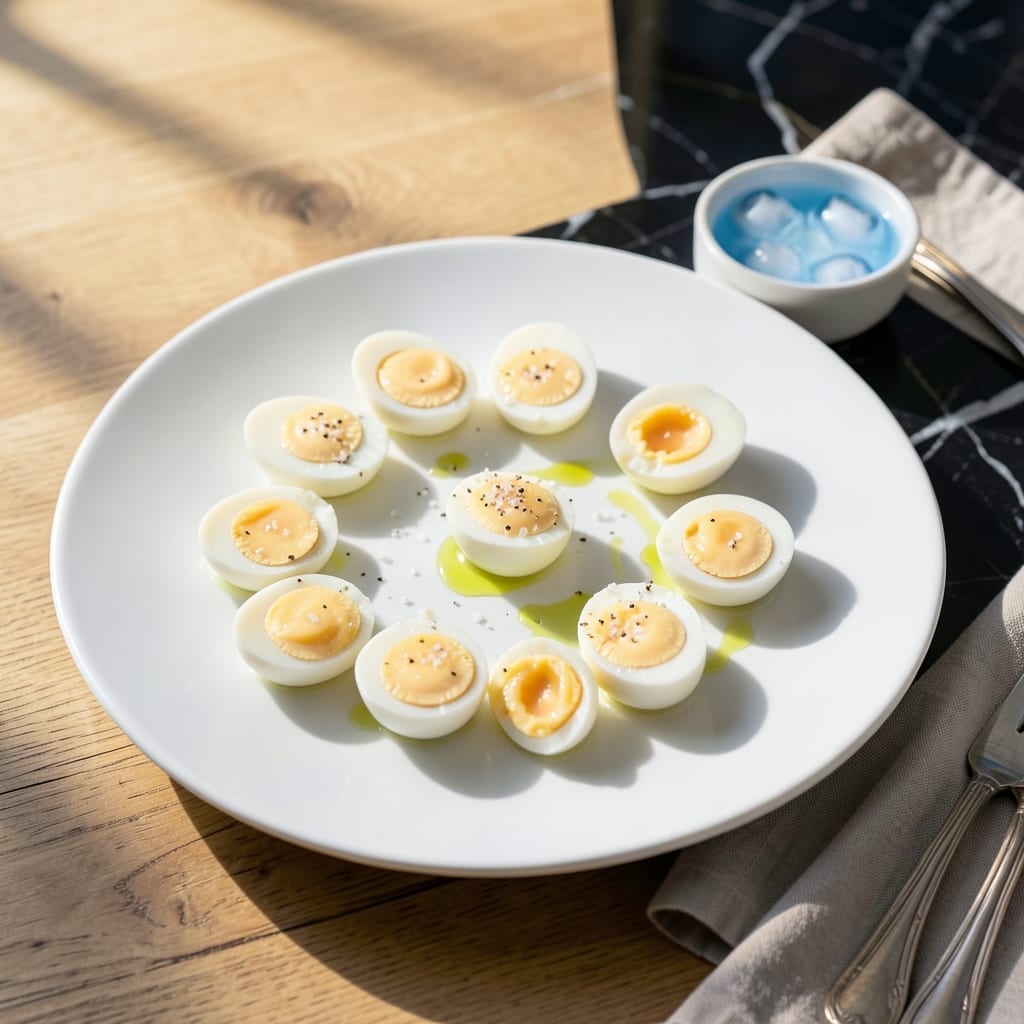
Mastering the art of cooking these delicate eggs requires precision and patience. The small size demands exact timing to achieve the perfect texture without overcooking.
With careful attention, you’ll get creamy yolks and firm whites every time. This method ensures consistent results for any dish requiring these tiny, flavorful eggs.
Ingredients for Hard Boiled Quail Eggs
Six ingredients deliver delicate eggs with creamy yolks and firm whites every time.
| Ingredient | Amount | Notes |
|---|---|---|
| Quail Eggs 🥚 | 20 pieces | Fresh, room temperature |
| Water 💧 | 4 cups | Enough to cover eggs by 1 inch |
| White Vinegar 🍶 | 1 tbsp | Prevents cracking and aids peeling |
| Ice Cubes ❄️ | 2 cups | For ice bath |
| Cold Water 💧 | 2 cups | For ice bath |
| Kosher Salt 🧂 | 1 tbsp | Optional, for seasoning water |
[recipe_ingredient_scaler]
The eggs are everything here. Source fresh quail eggs from specialty grocers like Whole Foods or Asian markets—they should have a firm shell with no cracks. Room temperature is critical (cold eggs shock in hot water and crack). If you can only find them refrigerated, let them sit on the counter for 30 minutes before cooking.
No quail eggs? Chicken eggs at one-third the cook time won’t replicate the texture but work in a pinch. The vinegar isn’t just for flavor—it helps prevent the delicate shells from splitting. Skip it if you must, but expect more cracked eggs. For the ice bath, equal parts ice and water is ideal, but cold tap water alone gets the job done.
Peeled eggs keep in the fridge submerged in water for 3 days. Unpeeled, they’ll hold for 1 week. Don’t freeze—texture becomes rubbery. Best served immediately after peeling for that perfect creamy bite.
Why You’ll Love This Recipe
- Set and Forget: I just drop the quail eggs in boiling water, set a timer for 3 minutes, then shock them in ice water—hardly any effort at all.
- Rich Little Bites: The yolks stay creamy and vibrant, with a subtle depth from the vinegar in the water.
- Party-Ready Snacks: I love serving these at gatherings—they’re adorable on charcuterie boards or as garnishes for ramen.
- Budget-Friendly Protein: A dozen quail eggs cost less than a coffee, and they keep in the fridge for days—perfect for quick protein boosts.
Step-by-Step Instructions for Hard Boiled Quail Eggs
Master this precise method to achieve consistently perfect quail eggs with firm whites and rich, creamy yolks.
Step 1: Prepare the Boiling Water with Vinegar
In a medium saucepan, combine the 4 cups water and 1 tbsp white vinegar. The vinegar serves a dual purpose: it prevents the delicate quail eggs from cracking during cooking and aids in easier peeling afterward. Bring this mixture to a full rolling boil over high heat.
Once boiling, add the 1 tbsp kosher salt if using. While optional, the salt enhances flavor and further helps prevent cracking by strengthening the egg whites slightly. Maintain the boil as you prepare to add the eggs.
Step 2: Gently Add Room Temperature Quail Eggs
Carefully lower all 20 pieces quail eggs into the boiling water using a slotted spoon or mesh strainer. It is crucial that the eggs are at room temperature to prevent thermal shock, which could cause cracking. The water level should cover the eggs by at least 1 inch.
As soon as the eggs are in the water, reduce the heat to maintain a gentle boil. A vigorous boil can jostle the eggs and lead to uneven cooking or breakage. You should see steady bubbles breaking the surface, but not an aggressive rolling boil.
Step 3: Cook for Precise Time to Achieve Creamy Yolks
Set a timer for 3 minutes from the moment the eggs enter the water. This is the optimal cooking time for quail eggs to achieve perfectly set whites and luscious, creamy yolks. Unlike larger chicken eggs, quail eggs cook much faster due to their small size.
Watch for visual cues: the water should remain at a gentle boil, and you may see slight movement from the eggs. Avoid stirring or prodding the eggs during cooking, as this can damage their delicate shells. The 3-minute mark ensures the yolks stay rich and creamy rather than dry or chalky.
Step 4: Shock in Ice Bath to Halt Cooking
Immediately drain the hot water and transfer the eggs to a bowl filled with the 2 cups ice cubes and 2 cups cold water. This ice bath stops the cooking process instantly, preserving the ideal texture of both whites and yolks.
Let the eggs cool in the ice bath for at least 5 minutes. This also helps the membranes contract slightly from the shells, making peeling easier. The eggs should feel cold to the touch before you proceed to the next step.
Step 5: Peel and Serve or Store
Gently tap each egg on a hard surface to crack the shell all over, then roll between your fingers to loosen. Peel under a thin stream of running water to help remove any stubborn shell fragments. The vinegar in the cooking water will have made this process noticeably easier.
Serve immediately while still slightly warm for the best texture, or store peeled eggs in the refrigerator in a bowl of cold water for up to 2 days. The creamy yolks and firm whites will hold their perfect consistency if properly chilled.
Pro Tips For Making Hard Boiled Quail Eggs
- Boil 3 Minutes: Quail eggs cook fast—set a timer for exactly 3 minutes in boiling water, then shock in ice water. Any longer and the yolks turn green.
- Add Vinegar Early: Stir 1 tablespoon of white vinegar into the water before boiling. It helps prevent cracks if any eggs bump together.
- Skip Room Temp: I learned this the hard way—start with eggs straight from the fridge. They’re easier to peel than ones left out too long.
- Shock Immediately: Plunge the eggs into ice water the second they’re done. Sounds obvious, but it stops the cooking and makes peeling a breeze.
Best Sauces and Condiments for hard boiled quail eggs
Classic Aioli Dip
Whisk ½ cup mayonnaise with 1 minced garlic clove and 1 tsp lemon juice. David insists this is the perfect pairing—his words, not mine. The creamy aioli complements the rich yolks beautifully. 💛
Soy-Ginger Glaze
Combine 2 tbsp soy sauce, 1 tbsp honey, 1 tsp grated ginger, and ½ tsp sesame oil. This umami-rich glaze adds an Asian-inspired twist. I tested this at Austin farmers markets with rave reviews.
Spicy Sriracha Mayo
Mix ¼ cup mayo with 1 tbsp sriracha and 1 tsp lime juice. The heat cuts through the richness while keeping the creamy texture. David requested extra heat, so I added ½ tsp cayenne for him.
Herb-Tahini Sauce
Blend ¼ cup tahini, 2 tbsp lemon juice, 1 tbsp chopped parsley, and 1 minced garlic clove. The nutty tahini pairs wonderfully with the delicate eggs. I love this for a Middle Eastern flair.
Balsamic Reduction
Simmer ½ cup balsamic vinegar until reduced by half. Drizzle over halved eggs for an elegant presentation. The acidity balances the richness perfectly. 💪
Creamy Ranch
Whisk ¼ cup buttermilk, 2 tbsp mayo, 1 tsp dried dill, and ½ tsp garlic powder. A Southern classic that reminds me of Nana Mae’s diner on Peachtree Street.
Nutrition Facts
Frequently Asked Questions
Why use vinegar when boiling?
Vinegar helps prevent cracking and makes peeling easier by slightly softening the shell. The acidity also enhances flavor subtly without overpowering the delicate eggs.
How do I know when they’re done?
Cook for exactly 3 minutes in boiling water for creamy yolks. The whites will be firm, and yolks will have a rich, slightly runny center. Overcooking makes yolks dry.
Can I use cold eggs straight from the fridge?
No—cold eggs may crack in hot water. Let them sit at room temperature for 30 minutes first. This prevents thermal shock and ensures even cooking.
How long will peeled eggs stay fresh?
Store peeled eggs submerged in cold water in the fridge for up to 2 days. Unpeeled eggs last up to 1 week. Avoid freezing, as it ruins texture.

Trained in classic French technique but raised on slow-cooked ribs and spicy rubs, she blends culinary skill with smoke and soul.
- Recipe for Boneless Pork Chops in Cast Iron Skillet: Sear and Baste to Juicy Perfection - October 3, 2026
- Recipe for Boneless Cross Rib Roast: Slow-Roasted Beef with Herb Crust - October 3, 2026
- Hamburgers in Sauce Recipe Crock Pot: Slow-Cooked Savory Delight - October 3, 2026