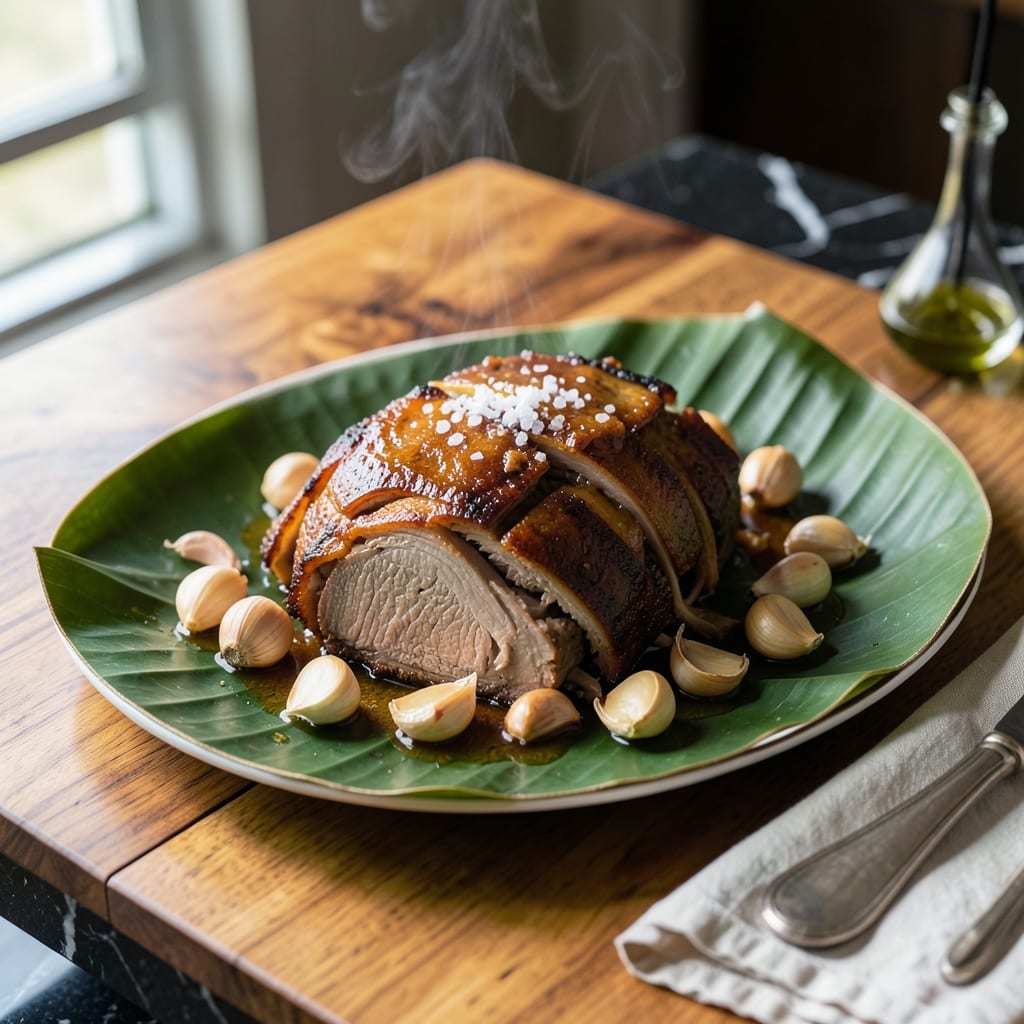
This oven method brings traditional Hawaiian kalua pork flavors to your kitchen without a pit or smoker. I developed this technique after years of experimenting with different approaches to replicate the island’s signature dish.
The secret is slow-roasting pork shoulder with liquid smoke and sea salt at low heat. This creates tender meat that falls apart with that characteristic smoky taste. Hawaiian tradition meets modern convenience in this foolproof adaptation.
You’ll end up with juicy, shreddable pork that tastes like it came from an imu. The oven does most of the work while you prepare sides like rice or cabbage. It’s the closest you’ll get to authentic island flavor at home.
Perfect for luaus, potlucks, or family dinners. Here’s how to make this island classic in your own kitchen.
Ingredients for Hawaiian Kalua Pork Recipe Oven
Pantry staples plus a quick stop at the Asian market. Nothing exotic, just island-ready ingredients.
| Ingredient | Amount | Notes |
|---|---|---|
| Pork Shoulder 🍖 | 5 lb | Bone-in preferred for flavor |
| Hawaiian Sea Salt 🧂 | 2 tbsp | Coarse grain, traditional alaea salt |
| Liquid Smoke 💨 | 2 tbsp | Hickory or mesquite variety |
| Banana Leaves 🍌 | 4 pieces | Rinsed and dried, for wrapping |
| Water 💧 | 1 cup | For moisture in roasting pan |
| Garlic Cloves 🧄 | 6 cloves | Smashed, peeled |
| Ginger Root 🌿 | 2 tbsp | Freshly grated |
| Green Onions 🧅 | 6 whole | Chopped, for garnish |
| Fresh Cilantro 🌿 | ½ cup | Roughly chopped, optional |
| Black Pepper 🌶️ | 1 tsp | Freshly cracked |
| Red Pepper Flakes 🔥 | ½ tsp | Optional for heat |
[recipe_ingredient_scaler]
The pork shoulder is non-negotiable here. Bone-in gives the best texture and flavor—ask your butcher to leave the fat cap on. Costco has great prices on large cuts (perfect for feeding a crowd). Hawaiian sea salt (alaea) is traditional for that authentic taste, but any coarse sea salt works. Whole Foods or Asian markets usually stock it. The banana leaves are worth hunting down—they add a subtle aroma and help steam the meat.
No banana leaves? Parchment paper works in a pinch, but you’ll miss some of that signature flavor. Liquid smoke brands vary—Wright’s is the gold standard for this. Short on time? Skip the banana leaves, but add an extra tablespoon of liquid smoke. The garlic and ginger can be swapped for powdered at one-third the amount, but fresh is always better. Green onions and cilantro are flexible—use what you have.
Leftovers (if there are any) keep beautifully. Store in the fridge for 4-5 days or freeze for 3 months. Reheats wonderfully—shred and crisp up in a pan for tacos or pile onto rice. The flavor actually deepens over time.
Why You’ll Love This Recipe
- Set It and Forget: I just rub the pork shoulder with Hawaiian sea salt, add liquid smoke, wrap it in banana leaves, and let the oven do the work.
- Smoky Island Flavor: The banana leaves and liquid smoke give it that authentic kalua taste without a smoker.
- Feeds a Crowd: One pork shoulder makes enough for a luau or meal prep for the week.
- Leftovers for Days: Honestly, it tastes even better the next day in tacos, rice bowls, or sandwiches.
Step-by-Step Instructions for Hawaiian Kalua Pork Oven
Here’s the straightforward, tested method that brings island flavor to your kitchen without the imu pit.
Step 1: Season and Prepare the Pork Shoulder
Rub the 5 lb Pork Shoulder all over with the 2 tbsp Hawaiian Sea Salt and 1 tsp Black Pepper. I press the seasoning in firmly so it adheres to the meat. Drizzle the 2 tbsp Liquid Smoke evenly over the surface, using your hands to work it into every crevice.
This step creates that signature smoky flavor authentic to traditional kalua pork. Don’t be shy with the liquid smoke—it’s concentrated, but 2 tbsp gives you the perfect level of smokiness without overpowering. Let the seasoned pork sit at room temperature while you prepare the next components.
Step 2: Prepare the Banana Leaf Wrapping
Lay out the 4 pieces Banana Leaves on your work surface. If they’re stiff, briefly pass them over a low flame for a few seconds to soften and make them pliable. This traditional wrapping method imparts subtle flavor and helps retain moisture during the long cooking process.
Place the seasoned pork shoulder in the center of the banana leaves. Distribute the 6 cloves Garlic Cloves and 2 tbsp Ginger Root around the meat. These aromatics will infuse the pork as it cooks. Fold the banana leaves up and around the pork, securing them with kitchen twine if needed to keep everything contained.
Step 3: Slow Roast in the Oven
Preheat your oven to 300°F. Place the banana leaf-wrapped pork in a roasting pan and add the 1 cup Water to the bottom of the pan. This creates steam that keeps the meat moist during the long cooking process.
Cover the pan tightly with foil and place it in the preheated oven. Roast for 5 to 6 hours, or until the pork is fall-apart tender. You’ll know it’s done when a fork inserted into the thickest part twists easily with no resistance. This low-and-slow method mimics the traditional imu pit cooking.
Step 4: Rest and Shred the Pork
Remove the pork from the oven and let it rest, still wrapped, for 30 minutes. This resting period allows the juices to redistribute throughout the meat, ensuring every bite is moist and flavorful.
Unwrap the pork and discard the banana leaves. Using two forks, shred the meat into bite-sized pieces. The pork should pull apart effortlessly, with a beautiful smoky aroma filling your kitchen. If there’s any resistance, return it to the oven for another 30 minutes.
Step 5: Garnish and Serve
Transfer the shredded pork to a serving platter. Sprinkle the chopped 6 whole Green Onions and 0.5 cup Fresh Cilantro over the top for freshness and color. For a little heat, add the 0.5 tsp Red Pepper Flakes if desired.
Serve immediately with traditional sides like steamed rice and macaroni salad. The pork should be incredibly tender with a perfect balance of smoky, salty, and aromatic flavors that transport you straight to Hawaii.
Pro Tips For Making Hawaiian Kalua Pork Recipe Oven
- Low and Slow: Set your oven to 300°F and let that pork shoulder cook for 6-8 hours—rushing it with higher heat just dries it out. I learned this the hard way after pulling tough, chewy meat from the oven at 375°F.
- Salt Generously: Use Hawaiian sea salt and don’t be shy; rub at least 1 tablespoon per pound all over the pork. Sounds like a lot, but it’s what gives kalua pork that authentic, deep flavor.
- Wrap It Tight: Seal the pork completely in banana leaves and foil to trap steam—otherwise, the meat loses moisture and the liquid smoke flavor fades. Skip this and you’ll end up with dry, bland pork.
- Add Extra Liquid Smoke: Brush the pork with a little extra liquid smoke halfway through cooking if you want that smoky depth to penetrate every bite. My first few batches tasted underwhelming until I started doing this.
Common Mistakes When Making Great hawaiian kalua pork recipe oven
Skipping the Banana Leaves
I see many home cooks skip banana leaves because they’re hard to find. But this misses their moisture-retaining magic. Without them, your pork can dry out during the long cook. If you must substitute, use parchment paper in a pinch, but add extra 1 tbsp liquid smoke to compensate.
Overdoing Liquid Smoke
It’s tempting to add more liquid smoke for intensity, but 2 tbsp is the sweet spot. I once used 3 tbsp and the pork tasted like a campfire—overpowering and bitter. Measure carefully, as brands vary in potency. Wright’s is my go-to for consistent flavor.
Rushing the Cook Time
Low and slow is non-negotiable for kalua pork. Pulling it out at 4 hours because you’re hungry ruins the texture. The connective tissue needs that full 5-6 hours at 300°F to break down properly. Trust me, the wait is worth it. 💪
Neglecting the Rest
Skipping the 30-minute rest means juices will spill onto your cutting board. I learned this the hard way—my first kalua pork turned into a sad, dry pile. Let it rest wrapped to retain moisture.
Using Wrong Pork Cut
Pork shoulder is essential—don’t substitute with loin or tenderloin. These lean cuts won’t shred and lack the fat for flavor. Ask your butcher for bone-in shoulder with the fat cap. Costco has great options.
Forgetting the Water
The 1 cup water in the pan creates steam that prevents drying. Without it, even banana leaves can’t save your pork from turning into jerky. I add it right before the pan goes into the oven.
Nutrition Facts
Frequently Asked Questions
Can I use a different cut of pork?
Stick with pork shoulder for the best results. Other cuts like loin or tenderloin lack the fat and connective tissue needed for that perfect shredded texture. Ask your butcher for bone-in shoulder with the fat cap intact.
What if I don’t have banana leaves?
Use parchment paper as a substitute, but add an extra 1 tbsp liquid smoke to compensate for the missing flavor. The leaves help retain moisture, so keep the pork well-covered during cooking.
How do I know when it’s done?
The pork is ready when it reaches an internal temperature of 195°F and a fork twists easily in the meat. Plan for 5-6 hours at 300°F for fall-apart tenderness.
Can I make this ahead of time?
The flavor actually improves overnight. Store shredded pork in the fridge for up to 4 days or freeze for 3 months. Reheat gently with a splash of water to keep it moist.

Trained in classic French technique but raised on slow-cooked ribs and spicy rubs, she blends culinary skill with smoke and soul.
- Recipe for Boneless Pork Chops in Cast Iron Skillet: Sear and Baste to Juicy Perfection - October 3, 2026
- Recipe for Boneless Cross Rib Roast: Slow-Roasted Beef with Herb Crust - October 3, 2026
- Hamburgers in Sauce Recipe Crock Pot: Slow-Cooked Savory Delight - October 3, 2026