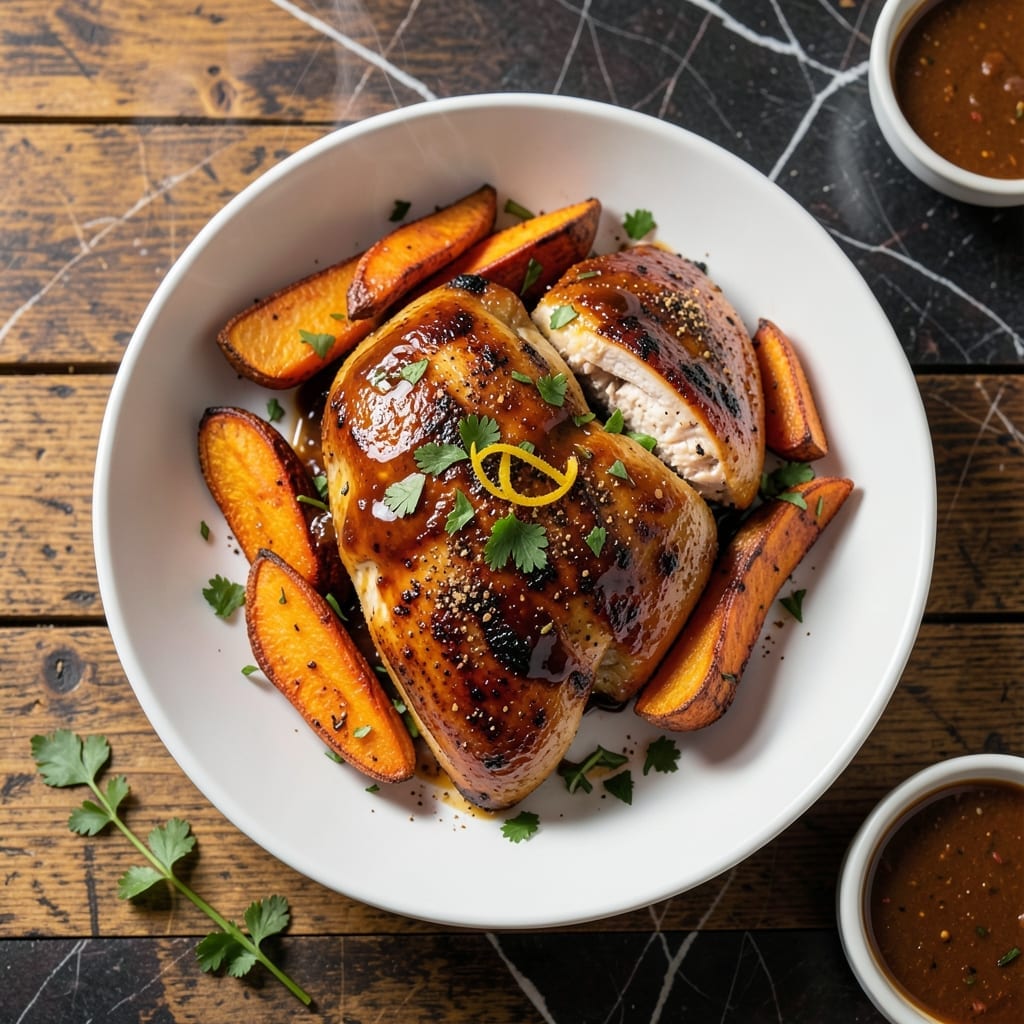
Achieving smoke-kissed barbecue flavor without excess fat is simpler than most realize. This method delivers tender, juicy chicken with a caramelized exterior.
Using skinless pieces and a reduced-sugar sauce, we create a dish that satisfies barbecue cravings while keeping it healthy. The technique proves flavor doesn’t require compromise.
Ingredients for Healthy Barbecue Chicken
Lean chicken meets bold barbecue flavors with minimal effort and maximum taste.
| Ingredient | Amount | Notes |
|---|---|---|
| Boneless Skinless Chicken Breasts 🍗 | 1 ½ lb | Pounded to even thickness |
| Olive Oil 🫒 | 1 tbsp | For brushing chicken |
| Kosher Salt 🧂 | 1 tsp | Diamond Crystal preferred |
| Black Pepper 🌶️ | ½ tsp | Freshly ground |
| Smoked Paprika 🌶️ | 1 tsp | For smoke-kissed flavor |
| Garlic Powder 🧄 | 1 tsp | Not garlic salt |
| Onion Powder 🧅 | 1 tsp | Balances sweetness |
| Low-Sugar Barbecue Sauce 🍯 | 1 cup | Store-bought or homemade |
| Apple Cider Vinegar 💧 | 1 tbsp | Adds tang and depth |
| Worcestershire Sauce 🍶 | 1 tsp | For umami complexity |
| Liquid Smoke 🔥 | ½ tsp | Optional for extra smokiness |
| Brown Sugar 🍚 | 1 tbsp | Reduced quantity for health |
| Fresh Cilantro 🌿 | ¼ cup | Chopped, for garnish |
[recipe_ingredient_scaler]
The chicken quality is paramount here. Boneless, skinless breasts ensure lean protein without excess fat. Source from Whole Foods or Costco for consistent thickness and freshness. Pounding to even thickness (about 1/2-inch) prevents dry spots during cooking. Diamond Crystal kosher salt is ideal for precise seasoning—its flaky texture adheres better to the meat.
For the barbecue sauce, low-sugar varieties like G Hughes or Primal Kitchen maintain the dish’s healthy profile without sacrificing flavor. No liquid smoke? A pinch of chipotle powder adds depth. Apple cider vinegar can be swapped with white vinegar (use half the amount), but the former’s fruitiness complements the chicken better. Fresh cilantro is optional—flat-leaf parsley works if you’re not a fan.
Store raw chicken in its original packaging on the bottom shelf of the fridge—use within 2 days or freeze for up to 9 months. Cooked chicken keeps 3-4 days refrigerated. The barbecue sauce blend can be prepped a day ahead; flavors meld better overnight.
Why You’ll Love This Recipe
- One Pan Magic: I just toss the chicken with olive oil, salt, and smoked paprika, then let the oven do the work.
- Smoky & Juicy: The smoked paprika gives it that deep barbecue flavor without the heavy sauce.
- Meal Prep Hero: I make a big batch on Sunday and it stays perfect for salads or wraps all week.
- Budget Stretcher: Boneless chicken breasts are affordable and this recipe uses just a handful of pantry staples.
Step-by-Step Instructions for Smoked Barbecue Chicken
Here’s the method. Straightforward, tested, works every time.
Step 1: Prep and Season the Chicken
Pat the 1.5 lb boneless skinless chicken breasts dry with paper towels, then pound them to an even ½-inch thickness using a meat mallet. This ensures even cooking and prevents dry spots.
Drizzle the chicken with 1 tbsp olive oil, then evenly distribute 1 tsp kosher salt, 0.5 tsp black pepper, 1 tsp smoked paprika, 1 tsp garlic powder, and 1 tsp onion powder. Rub the seasoning into both sides, pressing gently to adhere.
Let the seasoned chicken sit at room temperature for 15-20 minutes while you preheat the grill or oven. This step allows the salt to penetrate the meat, enhancing flavor and moisture retention.
Step 2: Create the Barbecue Sauce Mixture
In a bowl, combine the 1 cup low-sugar barbecue sauce, 1 tbsp apple cider vinegar, 1 tsp Worcestershire sauce, 0.5 tsp liquid smoke, and 1 tbsp brown sugar. Whisk until the brown sugar fully dissolves and the mixture is smooth.
Taste and adjust seasoning if needed, though the balance of tang from the apple cider vinegar and depth from the Worcestershire sauce should complement the low-sugar barbecue sauce perfectly. The liquid smoke adds that signature smoky flavor without the need for a smoker.
Step 3: Cook the Chicken to Perfection
Preheat your grill to medium-high heat (about 375-400°F) or preheat your oven to 400°F. For oven cooking, use a wire rack set over a baking sheet to allow air circulation.
Cook the chicken for 6-7 minutes per side on the grill, or 20-25 minutes in the oven, flipping once. The chicken is done when the internal temperature reaches 165°F and the juices run clear. Avoid overcooking to maintain moisture.
Step 4: Glaze and Finish
During the last 2-3 minutes of cooking, brush the chicken generously with the barbecue sauce mixture. Flip and brush the other side, ensuring a thick, glossy coating. This creates a caramelized, sticky glaze without burning the sugars.
If grilling, move the chicken to a cooler part of the grill to prevent the sauce from charring. For oven cooking, switch to broil for the final 1-2 minutes to achieve a slight char on the sauce.
Step 5: Rest and Garnish
Transfer the cooked chicken to a cutting board or serving platter and tent loosely with foil. Let it rest for 5-10 minutes to allow the juices to redistribute, ensuring every bite is tender and flavorful.
Slice the chicken against the grain if desired, then garnish with 0.25 cup fresh cilantro. The bright, fresh flavor of the cilantro cuts through the richness of the barbecue glaze, adding a vibrant finish to the dish.
Pro Tips For Making Healthy Barbecue Chicken
- Pound the Breasts: Boneless skinless chicken breasts cook unevenly if left thick—pound them to 1/2-inch thickness with a rolling pin or pan. I learned this the hard way after pulling dry, rubbery centers out of perfectly charred outsides.
- Oil Before Spice: Coat the chicken lightly with olive oil first so the kosher salt, black pepper, and smoked paprika actually stick. Sounds simple, but I used to skip it and my seasoning would slide right off.
- Don’t Rush the Rest: Let the chicken rest 5–7 minutes after grilling, tented with foil. After burning three batches by cutting too soon, I finally figured out this keeps the juices where they belong—in the meat.
- Double the Paprika: Smoked paprika loses intensity when heated, so use a full teaspoon per breast for that real barbecue depth. My grandmother swore by this, and she was right.
Dietary Considerations for This Recipe
Gluten-Free Option
This dish is naturally gluten-free when using certified gluten-free barbecue sauce. I recommend G Hughes or Primal Kitchen brands. Always check labels, as some sauces contain hidden wheat-based thickeners. 💡
Keto Adaptation
To make this keto-friendly, reduce the brown sugar to 1 tsp or replace with a sugar-free sweetener like Swerve. The low-sugar barbecue sauce already keeps carbs minimal, but verify net carbs per serving.
Dairy-Free Note
This recipe contains no dairy, making it safe for those with lactose intolerance. The only potential dairy source would be in store-bought sauces, so opt for dairy-free certified brands if needed.
Lower Sodium
Cut the kosher salt to ½ tsp and use a low-sodium barbecue sauce. Boost flavor with extra smoked paprika or garlic powder instead. I often add fresh herbs like thyme for depth without salt.
Allergen Awareness
Common allergens to watch: soy (in some sauces) and mustard (in Worcestershire). For soy-free, use coconut aminos instead. For mustard-free, skip Worcestershire or find a substitute. 🌱
Meal Prep Friendly
This dish stores well for 3-4 days refrigerated. Reheat gently to avoid drying. The flavors actually deepen overnight, making it perfect for weekly meal prep. Portion before storing for easy grab-and-go lunches.
Nutrition Facts
Frequently Asked Questions
What’s the best way to prevent dry chicken?
Pound breasts to ½-inch thickness for even cooking and don’t exceed 165°F internally. Let it rest 5-10 minutes after cooking to redistribute juices.
Can I make this without a grill?
Yes! Use your oven at 400°F on a wire rack for 20-25 minutes. Switch to broil for the last 1-2 minutes to char the sauce.
How do I store leftovers?
Refrigerate in an airtight container for 3-4 days. Reheat gently to avoid drying out the meat.
Can I use bone-in pieces instead?
but adjust cooking time to 30-35 minutes at 375°F. Bone-in stays juicier but takes longer to reach 165°F.

Trained in classic French technique but raised on slow-cooked ribs and spicy rubs, she blends culinary skill with smoke and soul.
- Recipe for Boneless Pork Chops in Cast Iron Skillet: Sear and Baste to Juicy Perfection - October 3, 2026
- Recipe for Boneless Cross Rib Roast: Slow-Roasted Beef with Herb Crust - October 3, 2026
- Hamburgers in Sauce Recipe Crock Pot: Slow-Cooked Savory Delight - October 3, 2026