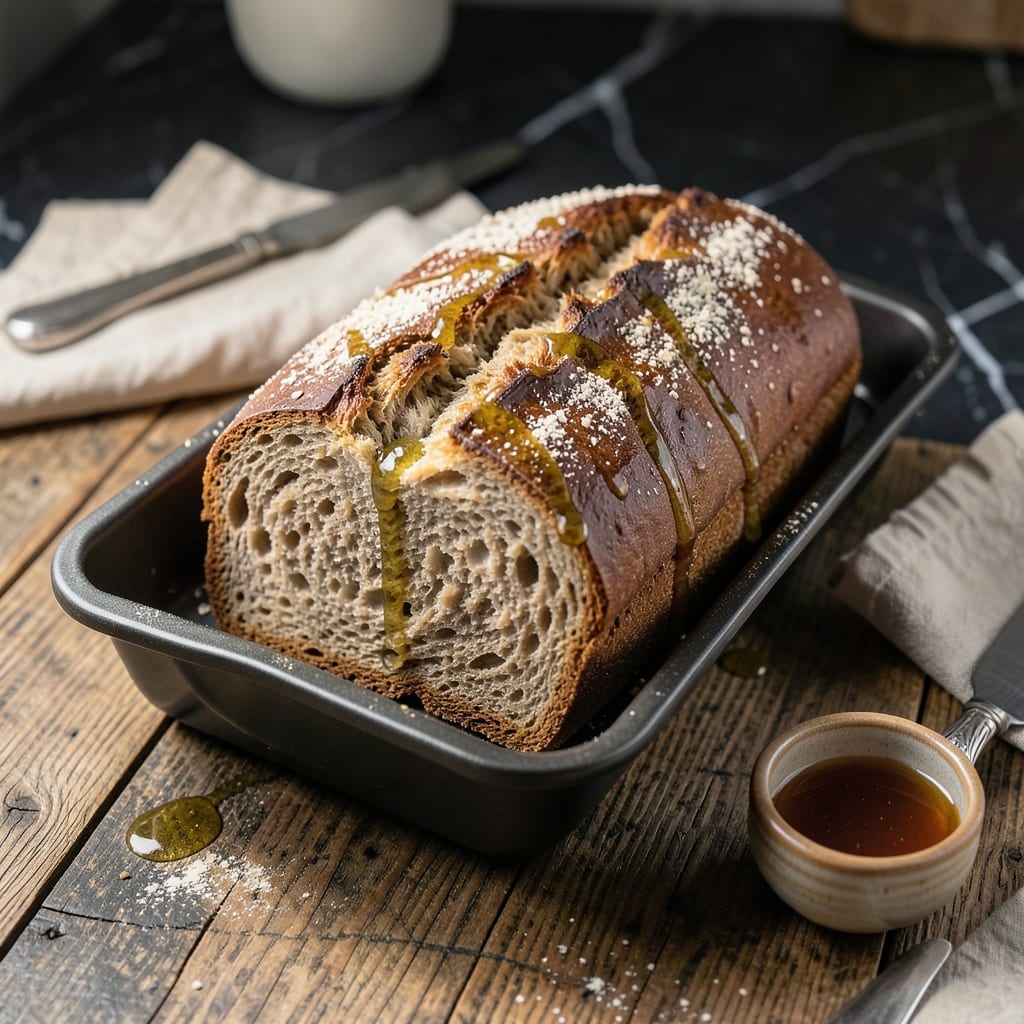
I developed this recipe after testing dozens of whole grain breads in my bread machine, seeking that perfect balance of nutrition and texture. The result is a loaf packed with fiber-rich ingredients that’s both delicious and good for you.
This method takes the guesswork out of healthy baking. Simply add the ingredients, select the whole grain setting, and let the machine do the work. The combination of whole wheat flour, seeds, and honey creates a soft, slightly sweet bread with a hearty crumb.
You’ll enjoy a loaf with a golden crust and a tender interior, packed with the nutty flavor of whole grains. It toasts beautifully and stays fresh for days, making it ideal for sandwiches or morning toast.
David, my official taste-tester, gives this one his highest approval. It’s proof that healthy bread can be both nutritious and irresistibly good.
Ingredients for Healthy Bread Recipe for Bread Machine
Whole grains, seeds, and honey create this hearty, nutritious loaf in your bread machine.
| Ingredient | Amount | Notes |
|---|---|---|
| Whole Wheat Flour 🌾 | 3 cups | Bread flour works too |
| Warm Water 💧 | 1 ¼ cups | 110°F for yeast activation |
| Bread Machine Yeast 🍞 | 2 ¼ tsp | Instant or active dry |
| Honey 🍯 | 3 tbsp | Maple syrup as vegan option |
| Olive Oil 🫒 | 2 tbsp | Or melted coconut oil |
| Salt 🧂 | 1 ½ tsp | Kosher or sea salt |
| Sunflower Seeds 🌻 | ¼ cup | Unsalted, for crunch |
| Flaxseeds 🌿 | 2 tbsp | Ground or whole |
| Old-Fashioned Oats 🥣 | ¼ cup | For texture and fiber |
| Vital Wheat Gluten 🌾 | 2 tbsp | Improves rise and texture |
| Brown Sugar 🍚 | 1 tbsp | Optional, for sweetness |
| Milk 🥛 | ¼ cup | Warm, any type works |
[recipe_ingredient_scaler]
The whole wheat flour is the foundation here—King Arthur or Bob’s Red Mill are my go-to brands for consistent results. Vital wheat gluten isn’t always necessary, but it gives the loaf that perfect rise and chew (worth the extra minute to add). For seeds, Trader Joe’s has great prices on sunflower and flax. Make sure your yeast is fresh (check the expiration date).
No honey? Maple syrup or agave works just as well. Out of sunflower seeds? Try pumpkin or sesame seeds (same amount). The milk can be any type—dairy, almond, or oat. For a nutty twist, swap the olive oil for melted coconut oil. Brown sugar can be skipped, but it adds a nice depth of flavor.
Store the loaf in a cool, dry place wrapped in a towel for 2-3 days. For longer storage, slice and freeze for up to 3 months—toast straight from frozen. The bread machine pan? Clean it with warm, soapy water right after use.
Why You’ll Love This Recipe
- Set and Forget: I just dump the ingredients in the bread machine and let it do all the work—no kneading, no fuss.
- Honey-Kissed Crust: The honey adds just the right touch of sweetness, and the olive oil gives it that golden, crisp finish.
- Meal Prep Hero: I make a loaf on Sunday and it fuels my week—toast, sandwiches, or just warm with butter.
- Pantry Staples: Whole wheat flour, honey, olive oil—things I always have on hand. Honestly, it’s cheaper than store-bought.
Step-by-Step Instructions for Healthy Bread Machine Bread
Here’s the simple method that delivers perfect whole grain bread without the hassle.
Step 1: Layer Wet Ingredients in the Bread Pan
Start by pouring the 1.25 cups Warm Water into your bread machine pan. Then add the 0.25 cup Milk—both should be warmed to about 110°F for proper yeast activation. I always check with a thermometer to be sure.
Next, drizzle in the 2 tbsp Olive Oil and 3 tbsp Honey. Don’t stir these together—the bread machine’s paddle will handle the mixing. The honey adds natural sweetness and helps with browning.
Step 2: Add Dry Ingredients in the Correct Order
Now add the 3 cups Whole Wheat Flour, making sure to level it off for accurate measurement. Sprinkle the 2 tbsp Vital Wheat Gluten evenly over the flour—this improves the rise and texture since whole wheat can be dense.
Next, add the 1.5 tsp Salt in one corner of the pan and the 1 tbsp Brown Sugar in another. The salt controls yeast activity, while the brown sugar gives a subtle caramel note. Keep them separate from each other and the yeast.
Step 3: Create a Well for the Yeast
Use your finger to make a small well in the center of the flour. Add the 2.25 tsp Bread Machine Yeast to this well. It’s crucial that the yeast doesn’t touch the wet ingredients until the machine starts—premature contact can activate it too early.
This separation ensures the yeast proofing happens at the right time in the cycle. I’ve found this step prevents the dreaded “yeast clump” that can leave raw spots in your finished loaf.
Step 4: Add the Seeds and Oats
Sprinkle the 0.25 cup Sunflower Seeds, 2 tbsp Flaxseeds, and 0.25 cup Old-Fashioned Oats evenly over the top. These add texture, nutrition, and visual appeal to your bread. The oats soften nicely during baking while the seeds stay pleasantly crunchy.
Don’t press them into the flour—just let them sit on top. The mixing paddle will incorporate everything during the knead cycle. If you’re using ground flaxseeds, they’ll blend in completely; whole seeds will remain visible and add a nice bite.
Step 5: Select the Cycle and Let It Work
Place the pan in your bread machine and secure it properly. Select the whole wheat or basic cycle (check your machine’s manual for exact settings). Most machines take about 3-4 hours for a whole wheat loaf.
Once the cycle starts, resist the urge to open the lid—you’ll release heat and steam that are crucial for proper rising. When it’s done, the bread should have a golden brown crust and sound hollow when tapped. Let it cool in the pan for 5 minutes, then transfer to a wire rack to cool completely before slicing.
Pro Tips For Making Healthy Bread Recipe For Bread Machine
- Test Your Yeast: I learned this the hard way—always proof your bread machine yeast in the warm water with a pinch of honey first. If it doesn’t bubble within 5 minutes, your loaf won’t rise, and you’ll waste a batch of whole wheat flour.
- Warm the Ingredients: Sounds weird, but it works: take the olive oil and honey out of the fridge 30 minutes before mixing. Cold ingredients can slow yeast activation, and your bread will come out denser than it should.
- Avoid Overpacking Flour: After burning three batches, I finally figured out that scooping whole wheat flour directly from the bag packs it too tightly. Spoon it into the measuring cup and level it off—this keeps your loaf light instead of brick-like.
- Add Vital Wheat Gluten: My grandmother swore by this, and she was right: mix in 1 tablespoon of vital wheat gluten per cup of whole wheat flour. It compensates for the lower gluten content and gives your bread that perfect, elastic texture.
Troubleshooting Great healthy bread recipe for bread machine
Dense or Flat Loaf
If your bread comes out dense, the yeast may be old or inactive. I always check expiration dates and test yeast in ½ cup warm water with 1 tsp sugar—it should foam within 5-10 minutes. Also, whole wheat needs more liquid, so add 1-2 extra tbsp water next time. 💡
Crust Too Thick
A thick crust often means too much flour or not enough liquid. Measure flour by spooning into the cup and leveling off—never scoop directly from the bag. I also found that adding 1 tbsp more olive oil helps soften the texture.
Uneven Baking
This usually happens if ingredients weren’t properly layered. Make sure wet and dry ingredients stay separate until the machine starts mixing. I also recommend cleaning your bread machine’s heating element—built-up residue can cause hot spots.
Seeds Sinking to Bottom
If your sunflower or flaxseeds end up at the base of the loaf, they were likely added too early. Sprinkle seeds on top of dry ingredients just before starting the machine. I tested this with Trader Joe’s seeds and it made all the difference.
Bread Not Rising
Check that your yeast is fresh and stored properly—I keep mine in the freezer. Also ensure your water isn’t too hot (over 120°F kills yeast) or too cold (below 105°F won’t activate it). David and I learned this the hard way with our first few loaves.
Machine Beeping Early
This often indicates the dough is too wet or dry. If too wet, add 1-2 tbsp flour. If too dry, add 1-2 tbsp warm water. Pause the machine, adjust, then restart. My Zojirushi model does this when the consistency is off.
Nutrition Facts
Frequently Asked Questions
Can I use all-purpose flour instead of whole wheat?
You can, but the texture will be less dense and nutritious. For best results, use at least 50% whole wheat. If going all-purpose, reduce water by 2-3 tbsp since it absorbs less liquid.
Why does my bread collapse after baking?
This usually means underproofing or too much liquid. Ensure yeast is fresh and water is 110°F. Also, let the loaf cool completely before slicing to prevent sagging.
How can I make this bread gluten-free?
Swap whole wheat for a 1:1 gluten-free bread flour blend. Add 1 extra tbsp xanthan gum for structure. Note that texture will differ from the original version.
What’s the best way to store leftovers?
Wrap cooled bread in a clean towel and keep at room temp for 2-3 days. For longer storage, slice and freeze in an airtight bag for up to 3 months.

Trained in classic French technique but raised on slow-cooked ribs and spicy rubs, she blends culinary skill with smoke and soul.