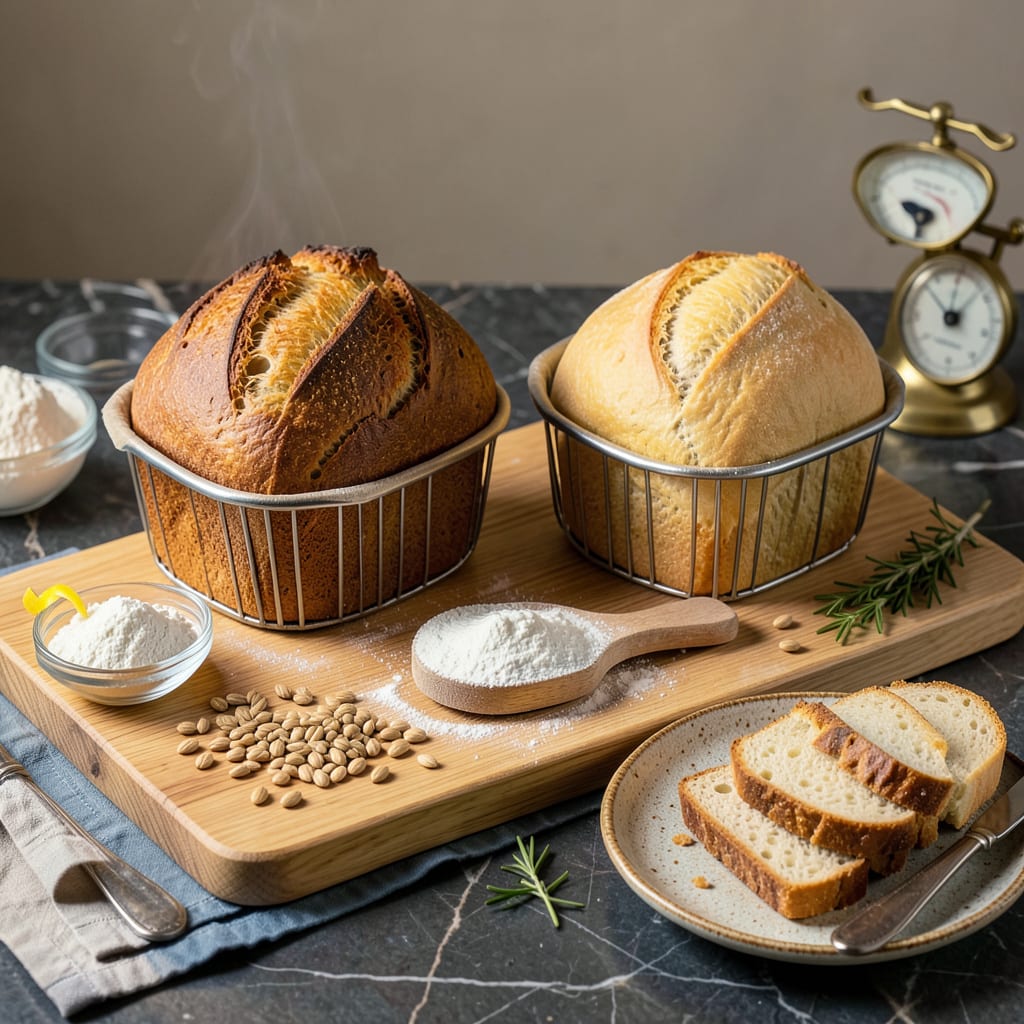
Yes, you can substitute bread flour for all-purpose in most recipes, but expect a chewier texture due to its higher protein content. It works best for breads and pizza dough, but may make cakes or cookies denser. Adjust liquid slightly if needed.
I’ve tested this swap countless times in my kitchen, and the key difference comes down to gluten development. Bread flour’s extra protein creates stronger gluten strands, giving your baked goods more structure and chew. This makes it ideal for recipes where you want that satisfying bite, like rustic sourdough or chewy bagels. 🔥
However, for delicate items like angel food cake or shortbread cookies, I’d recommend sticking with all-purpose. The higher protein can make these treats tougher than intended. When I do make the substitution, I often add an extra 1-2 tablespoons of liquid per cup of flour to compensate for the increased absorption.
💡 In This Article
- How Protein Content Changes Baked Goods with Bread Flour
- Best Recipes for Bread Flour Substitution (And Which to Avoid)
How Protein Content Changes Baked Goods with Bread Flour
Here’s what’s actually happening when you swap flours: bread flour packs 12-14% protein compared to all-purpose’s 10-12%. That extra protein translates to more gluten formation during mixing and kneading. Gluten is what gives dough its elasticity and structure—imagine it as a stretchy network that traps gas bubbles during fermentation.
The stronger this network, the chewier your final product becomes. 🔥
Let me break down the numbers: for every 1 cup of flour, you’re adding about 2-4 extra grams of protein with bread flour. This might not sound like much, but in baking, small changes make big differences. The additional gluten absorbs more water—about 2-3% more liquid by weight—so you’ll often need to adjust hydration.
I’ve found that adding 1-2 tablespoons extra water per cup of bread flour usually does the trick.
The texture transformation is most noticeable in yeasted doughs. When I make pizza crust with bread flour, the dough develops a satisfying chew that holds up beautifully to toppings.
The higher protein also supports better oven spring (that dramatic rise in the first 10 minutes of baking) because the gluten network can stretch further before breaking. This is why professional bakeries often use bread flour for their artisanal loaves.
But there’s a trade-off: the same properties that create wonderful bread can make cakes and cookies dense. The extra gluten interferes with the tender crumb we want in cakes by creating too much structure.
In my test kitchen, angel food cakes made with bread flour collapsed more often because the gluten network couldn’t support the delicate foam structure. For cookies, you might notice they spread less and have a slightly tougher bite.
Temperature matters too when using bread flour. The gluten forms more aggressively at warmer temperatures (75-85°F dough temps), which is great for bread but can make pastries tough. I recommend chilling cookie dough made with bread flour for at least 30 minutes before baking to relax the gluten.
This simple step prevents overly dense results while still benefiting from the flour’s superior browning properties. ✨
Consider these key differences in action:
- Breads: Better rise, chewier crumb, crispier crust (ideal for sourdough, bagels)
- Pizza dough: More elastic, holds toppings better, develops deeper flavor
- Cakes: Denser texture, may collapse if structure can’t support weight
- Cookies: Less spread, chewier center, slightly crispier edges

Trained in classic French technique but raised on slow-cooked ribs and spicy rubs, she blends culinary skill with smoke and soul.
- Recipe for Boneless Pork Chops in Cast Iron Skillet: Sear and Baste to Juicy Perfection - October 3, 2026
- Recipe for Boneless Cross Rib Roast: Slow-Roasted Beef with Herb Crust - October 3, 2026
- Hamburgers in Sauce Recipe Crock Pot: Slow-Cooked Savory Delight - October 3, 2026